
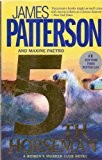
The 5th Horseman
2,609-word summary 12 min read 410 pages in the book
- First published
- 2006
- Publisher
- Little, Brown and Company
- Pages
- 410
- ISBN
- 9780316159777
- Series
- Women's Murder Club (#5)
Reading options
What's inside (8 sections)
I picked this one up because I had already read the first four Women's Murder Club books and wanted to see how the formula held up once the novelty had worn off. It came out in 2006 from Little, Brown, and it is the fifth entry in the series, with Maxine Paetro sharing the writing again. What surprised me is how willing the book is to split its attention. Rather than one tidy investigation, it runs two ugly cases in parallel and lets them collide in a hospital and a courtroom. That choice is the reason I kept turning pages, and also the reason the ending feels a little crowded.
The series has always been built out of very short chapters, sometimes only a page or two, and this book keeps the habit. The effect is that the story never sits still for long. A scene in an interrogation room is followed by a snippet from a newspaper, then a few lines of hospital procedure, then a conversation between the four friends. It is a style that rewards reading in short bursts, and it also hides a lot of transitions that a longer chapter would make obvious. I noticed myself accepting leaps in the plot that I would have questioned in a slower book, which is both a compliment to the pacing and a warning about how the structure works on you.
A hospital where the wrong people keep dying
The story opens with a killer the papers call the Night Walker, who kills a patient named Jessie Falk. The setting is San Francisco Municipal Hospital, and the murders carry a signature that is difficult to forget. The victims are people whose diagnoses were not putting their lives in danger, and after they die someone places buttons on their eyes. It is a strange, almost ceremonial detail, and Patterson and Paetro use it to make the hospital feel like a place where the usual rules have quietly stopped applying.
Lindsay Boxer is the inspector who has to make sense of it. By this point in the series she is the acknowledged center of a small group of friends who trade clues and favors outside official channels. She is still the same blunt, physical presence she was in the early books, more comfortable with a suspect in an interrogation room than with a doctor explaining a chart. Watching her work a hospital case is half the fun, because she has to pick up a new vocabulary as she goes and ask questions a clinician would never think to ask.
The hospital deaths are not random, though it takes a while to learn why. Several of the patients had been treated there for conditions that should have been survivable. That pattern pulls in a second thread, a malpractice suit brought on behalf of twenty plaintiffs whose relatives died at Municipal after medication errors, or perhaps after something worse than errors. The suit gives the hospital plot a legal clock. Every time a lawyer makes a move in court, the police side has to hustle to keep up.
What I enjoyed here is the way the hospital is treated as a closed world with its own rules. Lindsay can question a nurse or a doctor, but she cannot simply order people around the way she would on a street. She has to be let in, and the book is full of small moments where she waits for someone to return a call or hand over a record. That frustration feels real. It also makes the setting more than a backdrop, because the hierarchy of the place is part of how the killings stay hidden. A person who knows which rooms are empty at which hour can do a great deal of damage before anyone notices.
The case of the Car Girls
Running alongside the hospital murders is a serial killer case that the team nicknames the Car Girls. Young women are found dead, posed inside expensive cars, dressed in clothing from Nordstrom. The cars seem chosen at random and the victims have little in common, which is exactly the kind of puzzle that frustrates Lindsay. She wants a link, and for a long time the only link she can see is the clothes.
That instinct turns out to matter. The clothes are the connection, because one of the killers works at Nordstrom and steals the outfits used to dress the bodies. It is a small, almost silly detail next to the violence, but it is the kind of concrete clue this series does well. The investigation eventually leads to Kenneth Guthrie and Louise Bennet, a prostitute known as Cherrie. Lindsay catches them, and the aftermath is brutal in a way the book does not soften: Louise jumps from a window rather than be taken.
The best pages in this thread are the ones where the team argues about what the evidence means. Someone wants to treat the cars as the key because they are the most visible part of the scene. Someone else keeps coming back to the clothing, mostly because it is the one thing the victims did not choose for themselves. That disagreement is small, but it gives the investigation a human texture. The reader gets to watch the group think rather than simply being told that a clue was found. It is the closest the book comes to showing how a real inquiry moves, with false starts and arguments instead of a straight line to the answer.
I have mixed feelings about this plot line. The idea of victims staged like mannequins in luxury cars is memorable, and the Nordstrom angle gives the case a specific texture that generic thriller writing often lacks. At the same time, the two killers arrive feeling a bit thin, more like mechanisms for the clue than people with a motive the reader can weigh. The book is more interested in how they were caught than in who they were, and that is a fair trade for a fast read but a weak spot if you want character depth.
Yuki's mother and the reason the club matters
The hospital case becomes personal when one of the victims turns out to be Keiko Castellano, the mother of Yuki Castellano. Yuki is a prosecutor who has been drifting toward the edges of the group, and this loss pulls her fully into the case. She asks her friends for help, and the request reminds the reader why the Women's Murder Club exists in the first place. These are not colleagues following a chain of command. They are friends who happen to have complementary skills, and they use those skills because someone they love is in trouble.
This is the part of the book that works best for me. The procedural puzzle is fine, but the emotional logic is cleaner. Yuki's grief gives the hospital murders a weight they would not have had as an abstract pattern, and it also gives Lindsay a reason to push past the usual bureaucratic resistance. Claire Washburn, the medical examiner, can read the bodies in a way the police cannot. Cindy Thomas, the reporter, can lean on contacts in the press. Jill Bernhardt brings the legal eye. Each of them has a job in the recipe, and the book is at its best when all four are in the same room.
I like that the club is not an official unit with badges and a budget. It is a group of friends who meet because their work overlaps and because they trust one another, and that makes the moments when they share information feel earned rather than convenient. Yuki's request also reminds the reader that the group has grown. She is not one of the original four, and pulling her in changes the balance slightly. The book does not make a big speech about it, which is probably the right call. A quiet shift in who sits at the table says enough about how the series is aging with its characters.
I do wish the writing gave Yuki more of her own interior life here. She is defined almost entirely by being the daughter of a victim and the friend of the group, and her profession is used mostly as a plot device. The earlier books had the same problem with Cindy and Jill, and it has not improved much by book five. The result is a hierarchy within the club: Lindsay and Claire get the texture, and the others get the tasks.
The lawsuit and the eighteen million dollars
The malpractice suit is where the book gets greediest, and I mean that as both a description and a mild complaint. The ER doctor Dennis Garza and the prosecutor Maureen O'Mara are lovers, and they are also at the center of the civil case against the hospital. Garza flubs his testimony on purpose, which lets the hospital lose, and the two of them plan to split an eighteen million dollar reward from the victory. It is a scheme that turns a medical story into a crime story, and for a few chapters it is the most energetic thing on the page.
The scheme falls apart in a way that is pure Patterson: an outraged father of a dead patient confronts Garza, Garza kills him, and Lindsay catches up before he can get away. There is no subtlety in the confrontation, and the book does not pretend otherwise. It is a clean piece of payoff writing, where the legal thread and the police thread finally snap together. I found it satisfying even though I could see the gears turning.
The civil case also lets the book ask, in a blunt way, what a hospital owes the families it fails. The plaintiffs are not looking for a tidy explanation. They want someone to admit that the deaths were more than bad luck, and the suit is the only door they have. Garza and O'Mara twist that door for money, which makes the scheme feel nastier than a simple fraud. The wrongdoing is not only that they cheat the system but that they use other people's grief as the tool for doing it. That is the one part of the conspiracy that gave me a real reaction beyond following the plot.
What bothers me is how much of the hospital plot depends on this financial conspiracy. The buttons on the eyes suggest a ritual, a mind, a reason. The actual answer is a money grab dressed up as a lawsuit, and the gap between the eerie setup and the mundane motive is a letdown. The book spends so much effort making the deaths feel strange that a mundane explanation almost feels like a cheat.
The nurse behind the Night Walker
The real Night Walker turns out to be Marie Saint-Germaine, a nurse at the hospital. The reveal comes after she makes one more attempt, this time on a patient who is actually an undercover agent. That trap is the kind of device this series leans on: put a tempting victim in front of the killer and wait. It works well enough here, mostly because the earlier chapters have made the hospital setting feel closed and watchable, a place where a nurse can move between rooms without anyone thinking twice.
Saint-Germaine is the most interesting villain in the book, and she is also the least explained. The plot gives her a method and a signature but very little inner life. I kept waiting for a scene that would tell me why buttons, why the non-dangerous diagnoses, why the ritual at all. The answer never really arrives. For readers who like their killers as puzzles, that might be fine. For me it left the central mystery feeling underwritten compared with the hospital and courtroom machinery around it.
By the time the arrest happens, the two cases have converged and the book can end quickly. Patterson and Paetro do not linger. There is a last burst of action, a few lines of resolution, and then the team is ready for the next novel. That speed is a signature of the series, and I respect it. The short chapters keep the whole thing moving even when a scene is only there to deliver a fact.
What works, what drags, and who this is for
The strongest thing here is the structure. Two cases, one hospital, and a friendship group that can cross between them gives the book more shape than a single investigation would have had. The very short chapters are still a strength. They make it easy to read in fragments, and they give the book a pulse even during the slower explanatory passages. The Nordstrom clue and the buttons on the eyes are the kind of specific details that stick in memory long after the plot has faded.
The drag is the crowding. There are a lot of moving parts: a serial killer, a hospital murderer, a civil suit, a romantic conspiracy, and a personal loss for Yuki. Each one is competent on its own, but together they leave several characters under-served and the central mystery thinner than it should be. If you came to this book hoping for a deep study of any one character, you will probably finish it wanting more. If you came for a brisk puzzle with friends you already know, it delivers almost exactly what you expect.
I would tell a new reader to start with the first book and come here in order. The relationships are the real continuity, and the series assumes you already care about Lindsay, Claire, Cindy and Jill. On its own, this is a solid but not essential entry. It is a good example of what the collaboration does well: clean momentum, sharp scene transitions, and a setting that feels specific enough to be memorable. It is also a good example of the cost of that speed, which is that the people at the center of the story sometimes get less attention than the cases they are solving. That trade is the reason I kept reading and also the reason I closed the book without feeling that it had fully paid off the promise of its opening chapter.
Compared with the fourth book, this one spends less time on Lindsay's personal life and more on the machinery of the two cases. That is a reasonable choice given how much plot there is to carry, but it makes the book feel colder than its predecessors. The friendships are still here, and the banter still lands, yet they often read as a pause between investigations rather than a story of their own. If you read this series for the four women, you may find yourself skimming the hospital meetings. If you read it for the puzzle, those same meetings are the reason the ending works.
Either way, the book is a clean example of what a mid-series entry looks like when the writers trust the structure. It does not try to reinvent the club or add a grand new theme. It takes two settings that the series had not used heavily, a hospital and a civil courtroom, and runs the familiar characters through them. Some of that works beautifully, especially the hospital material. Some of it feels like a case study written to length. I finished it in a few sittings and understood why the formula kept selling, while also understanding why readers sometimes describe these books as fast rather than deep. Both descriptions are true, and this is a good place to see the balance in action.
FAQ
What is the exact title and publication year of this book?
The published title is The 5th Horseman, and it was first released in 2006 by Little, Brown and Company. James Patterson wrote it with Maxine Paetro, as with several other entries in the series.
Where does it fall in the Women's Murder Club series?
It is book five, following 4th of July and coming before The 6th Target. The series string used on this site is Women's Murder Club.
Who is the Night Walker in this novel?
The Night Walker is Marie Saint-Germaine, a nurse at San Francisco Municipal Hospital. She is caught after attempting to kill another patient who is actually an undercover agent.
Similar books
More from Women's Murder Club first, then related titles.
1st to Die
Lindsay, Claire, Cindy and Jill hunt a honeymoon killer terrorizing San Francisco.
2,536-word summary · 11 min read

2nd Chance
Lindsay Boxer and the Women's Murder Club hunt the Chimera killer after a church shooting in San Francisco.
2,572-word summary · 11 min read

3rd Degree
The third Women's Murder Club novel follows a San Francisco terror cell and a three-day killing schedule, and it costs the club a member.
2,685-word summary · 12 min read

4th of July
Lindsay Boxer shoots two armed teenagers in self-defense, faces a wrongful-death trial, and spends her leave chasing a string of throat-slashing murders in…
2,192-word summary · 10 min read
Jack & Jill
A senator is killed with a nursery-rhyme calling card as a child is murdered near Alex Cross's home. The third Alex Cross novel pulls him toward two cases, one…
2,646-word summary · 12 min read
Along Came a Spider
Detective Alex Cross hunts Gary Soneji after two children vanish from a Washington school and a Lindbergh echo grows.
2,523-word summary · 11 min read
The Running Grave
In the seventh Cormoran Strike novel, Robin goes undercover inside a Norfolk cult while Strike digs into a child's death from decades earlier.
2,615-word summary · 12 min read
The Keeper of Lost Causes
Jussi Adler-Olsen introduces Carl Mørck and Department Q, a Copenhagen cold-case unit in a basement, and a missing politician whose file refuses to stay closed.
2,759-word summary · 12 min read
Fractured
In Karin Slaughter's second Will Trent novel, a mother kills the wrong man in an Atlanta mansion, and a GBI agent with a hidden reading difficulty finds a…
2,219-word summary · 10 min read

Rules of Prey
Minneapolis detective Lucas Davenport hunts a killer who leaves a new rule at every scene and treats murder as a game of wits.
1,914-word summary · 9 min read
Troubled Blood
Strike and Robin take a year long cold case: doctor Margot Bamborough vanished in 1974, with a nurse hiding more.
2,211-word summary · 10 min read
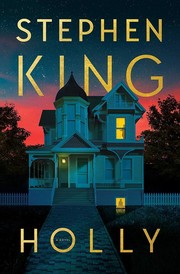
Holly
Grieving detective Holly Gibney takes a missing-girl case in 2021 and traces it to two polite retired professors with a basement secret.
2,607-word summary · 12 min read
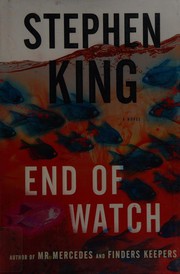
End of Watch
A dying Bill Hodges and Holly Gibney face Brady Hartsfield again, as rigged game consoles push hurt teens toward suicide.
2,923-word summary · 13 min read
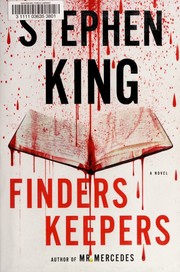
Finders Keepers
A boy finds a murdered writer's notebooks while the killer leaves prison hunting them and Hodges closes in.
2,157-word summary · 10 min read
Mr. Mercedes
Retired Hodges hunts Mercedes killer Brady Hartsfield concert plot.
2,281-word summary · 10 min read

The Beach House
A young valet is beaten to death at a Hamptons party, and his law-student brother spends a year building a case against the family that covered it up.
2,049-word summary · 9 min read
Kiss the Girls
Cross hunts Casanova kidnapping women including niece Naomi.
2,397-word summary · 11 min read
Make Me
Reacher drifts into a quiet Midwestern town and finds a missing investigator, a trail of killers, and a deep web secret.
2,352-word summary · 10 min read
Zero Day
Army investigator John Puller is sent alone to a West Virginia coal town to solve a colonel's murder, and finds a much larger secret buried nearby.
3,434-word summary · 15 min read
The Word Is Murder
A fictionalised Anthony Horowitz is talked into chronicling a prickly ex-detective's case: a woman murdered hours after planning her own funeral. A clever…
2,296-word summary · 10 min read
The Unquiet Grave
In Dervla McTiernan's fourth Cormac Reilly novel, a body found in a Galway bog turns out to be a missing school principal, and the case opens into something…
2,253-word summary · 10 min read
The Midnight Line
A West Point class ring in a Wisconsin pawnshop sends Jack Reacher across the Midwest, from a biker's lie to a wounded veteran hiding from the opioid trade.
2,590-word summary · 12 min read
The Hard Way
A man Reacher sees drive a ransom-laden Mercedes pulls him into a retired colonel's hunt for his missing wife and stepdaughter.
2,637-word summary · 12 min read
The Girl Who Takes an Eye for an Eye
Lisbeth Salander investigates a secret childhood experiment from prison while Mikael Blomkvist uncovers a twin conspiracy behind a wealthy businessman.
2,059-word summary · 9 min read
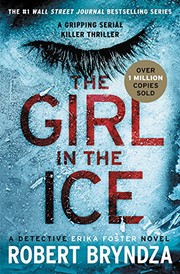
The Girl in the Ice
A young socialite is found frozen beneath the ice in a south London park, and DCI Erika Foster returns to work to lead the case. Grief, privilege and three…
2,492-word summary · 11 min read
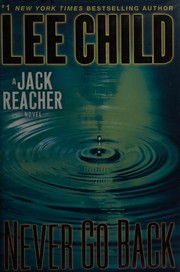
Never Go Back
Reacher returns to his old military unit to find Major Susan Turner jailed and two invented cases hiding an opium smuggling ring.
2,245-word summary · 10 min read
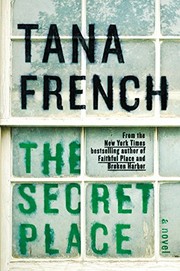
The Secret Place
Two Dublin detectives revisit a murder on the grounds of a girls' boarding school, where a bulletin board note and rival cliques hide the truth.
2,271-word summary · 10 min read
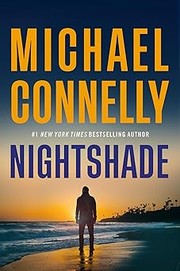
Nightshade
Connelly launches Detective Stilwell on Catalina Island, where a beheaded buffalo and a Jane Doe in the harbor pull a quiet sheriff's post into violence and…
2,272-word summary · 10 min read
Never Flinch
Holly Gibney works two cases at once: a killer promising fourteen deaths and a threat against a feminist writer's lecture tour. King braids them into a…
2,245-word summary · 10 min read

What She Knew
Rachel lets her eight-year-old son run ahead in a Bristol park, and the nine-day search turns her into a suspect in the public eye.
2,952-word summary · 13 min read