
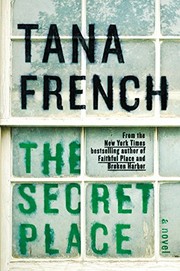
The Secret Place
2,271-word summary 10 min read 452 pages in the book
- First published
- 2014
- Publisher
- Viking
- Pages
- 452
- ISBN
- 9780670026326
- Series
- Dublin Murder Squad (#5)
Reading options
What's inside (9 sections)
I came to this book because I had already met two of its main characters in earlier Dublin Murder Squad novels and wanted to see what French would do with them. Stephen Moran and Holly Mackey were both supporting players before this, and here they step into the middle of a case. The Secret Place was published in 2014 by Viking and is the fifth book in the series. It runs about 452 pages in the first American edition. It is also the odd one out in the sequence. A good portion of it takes place inside a girls' boarding school, and much of it is told by the girls themselves rather than by a detective. That decision is the engine of the novel, and it is also the reason it divides readers.
A body on the school grounds
The setting is St. Kilda's, a girls' boarding school in Dublin. On its grounds, a teenage boy named Chris Harper was killed. The police investigated at the time and got nowhere. A year later the case is still open in the way that cold cases are open, meaning nobody is working on it and nobody expects a call.
French gives us the school first, before the detectives arrive. The corridors, the dorms, the rules, the small rituals of a place where girls live together almost all the time, all of it is described with the care she usually saves for police stations. She understands that a school is an enclosed world with its own laws. Adults think they can walk in and read it quickly. They cannot. The longer the novel goes on, the more clear it becomes that the people who live there know things the police will never extract in an interview room.
What makes the school setting work is that it is a place built on overlapped authority. There are teachers, prefects, house rules, and the unwritten code that governs which girls sit together at meals. Every one of those systems has its own way of rewarding silence. A detective looking for a murderer has to get through all of them before he can get to a witness.
The note on the board
The novel starts moving when Holly Mackey, sixteen years old, brings Stephen Moran a photograph. She is a student at St. Kilda's, and she has found the picture on a school bulletin board known as the Secret Place. The board is a place where girls post things they cannot say out loud: notes, confessions, accusations, jokes that curdle. The photograph is of Chris Harper. Written on it are the words "I know who killed him."
Moran takes it seriously. He has reason to. He is not a Murder Squad detective at this point; he works in Missing Persons and is still trying to prove he belongs with the serious investigators. The photograph is his chance, and the novel is honest about the fact that his ambition is part of his interest in the case. He brings the note to the Murder Squad, where he is assigned to work with Antoinette Conway.
Conway is a presence. She is sharp, impatient, and unimpressed by most people, including her own colleagues. She has no time for Moran's hopes of a transfer and no patience for the idea that a scrap of paper from a school board is a lead. She still takes the case seriously, because that is her job, and because she is better at it than she lets on. Their partnership is one of the quiet pleasures of the book. Moran is careful and a little eager. Conway is blunt and certain she has seen every version of this kind of thing. Neither of them is entirely right.
The eight girls
French alternates her chapters between the investigation and the girls of St. Kilda's. There are eight of them who matter to the case, and they are divided into rival cliques. This is where the novel asks the reader to do real work. The girls' chapters are written in their voices, with the slang, shorthand, and text-message habits that sixteen-year-olds actually use. Some readers find this exhausting. I found it convincing, at least for a while, because it makes the point that these girls are not specimens being studied by the police. They are people with their own language, and the detectives are the ones who need a translator.
The cliques matter because the case turns on who was close to Chris. Moran and Conway question all eight girls, and they learn that several of them had relationships with him that were more complicated than anyone admitted at the time. Some were friends. Some were something else. Some were angry. The point is not that any one of them is an obvious killer. The point is that a dead boy can be at the centre of many different stories, and every girl has a reason to shape the story she tells.
French is very good at the small cruelty of teenage friendship. A group can be fiercely loyal and absolutely ruthless in the same week, sometimes in the same conversation. A shared secret can hold people together and also give one of them power over the others. That double quality is what the novel keeps returning to. The girls are not written as cute or as monstrous. They are written as people who are smart enough to know exactly what they are doing and young enough to be surprised by the consequences.
What the board knows
The Secret Place of the title is more than a clue. It is the place where the girls put the things they cannot say to a teacher or a parent. That makes it a kind of unofficial record of the school. When Holly finds the photograph of Chris there, she is not just finding evidence. She is reading a conversation that has been going on for a year without any adult knowing about it.
This is where French's interest in stories and storytelling becomes visible. The board is full of competing versions of events. A note can be a confession, a threat, a joke, or a bid for attention, and the difference between those things depends entirely on who is reading it. The detectives want the board to hand them a fact. The girls know it cannot do that, because everything on it was written by someone with an agenda.
That problem becomes the shape of the investigation. Moran and Conway can question a girl for an hour and come away with a version of events that makes her look reasonable. They can question another girl and hear the same night described as a completely different event. What they need is not a confession but a way to compare the stories, and the gaps between them are where the truth sits. French has written this kind of structure before, and she handles it well here, though the middle of the book does take its time getting to the point.
Frank Mackey walks in
The other major thread concerns Holly's father, Frank Mackey. Readers of Faithful Place and The Likeness will know him. He is a detective, he is used to getting his own way, and he has a history with this department that is not entirely clean. When the investigation starts pressing Holly, he intervenes. That is a father's instinct, but it is also the move of a man who understands exactly how the system works and how it can be used.
His involvement complicates the case in two ways. First, it puts Moran and Conway in a difficult position, because they are now investigating a colleague's daughter and a colleague who has his own reasons to steer things. Second, it adds a family story to the murder story. Holly is not just a witness. She is the child of a man whose career and reputation are part of the backdrop of this investigation, and her loyalty to him is part of what the novel is examining.
This is where the book connects back to the earlier novels in the series. French does not write tie-ins so much as she writes about the same institution from different angles. Mackey's presence reminds us that the Murder Squad is not a neutral place. It is made of people with histories, grudges, and favours, and those things do not stop existing when a murder case begins. Moran wants into that world. Conway is stuck in it. Mackey knows how to work it. All three of them are being tested by a case involving a sixteen-year-old who is related to one of them.
I should say plainly that the family material is the part of the book I found most convincing. The crime plot is intricate, but the question of what a father will do for a daughter, and what a daughter will do to protect a father, is handled with much more restraint. French never tells us what the right answer is. She just shows the damage that follows from people choosing loyalty over honesty, which is a theme she returns to throughout the series.
Friendship and betrayal
The book's real subject is not the murder. It is the set of relationships that surround it. Kirkus described the novel as an exploration of friendship, loyalty, and betrayal among adolescents and within the police force, and that seems exactly right. The same questions keep coming up in both settings. Who do you tell the truth to? How much do you owe the person who has covered for you? When does protecting someone become a way of protecting yourself?
The girls' cliques and the detectives' squad are mirror images in that sense. Both are closed groups with their own codes. Both punish people who step outside those codes. Both have ways of making a person feel that the group is safer than the truth. Conway's workplace is not so different from St. Kilda's, and French knows it. The detectives are adults with badges, but they are still playing the same game of who is in and who is out.
The Washington Post named this one of the five best thrillers of 2014, and it is easy to see why it earned that kind of attention. It has a strong hook, a closed circle of suspects, and a setting that feels fresh for the genre. But the thing that stays with me is the way French refuses to make the girls easy to dismiss. They are the ones who see the most and understand the least, which is a fair description of most people at that age. She lets them be smart, funny, cruel, and frightened, often in the same paragraph.
The ending points back toward Holly's own circle, and that is where the book's moral pressure lands. The investigation finds evidence linking Chris's murder to the group Holly belongs to. What happens next is less a triumph than a reckoning, because the people who have been protecting one another now have to decide what protection was actually for. French does not give us a clean resolution. She gives us a case that closes over a set of relationships that will not close so neatly.
What drags
I want to be fair about the parts that did not work for me. The slang and the text-message chapters are the main complaint, and it is a real one. The Boston Globe noted that the teenagers' language slows the pace, and the New York Times made a similar point about the American slang feeling less Irish than the earlier books. Both reviews are onto something. There are passages where I had to reread an exchange to work out who was speaking and what had actually happened. French is trying to reproduce the way these girls think, and sometimes the effect is that the story stops moving while the voice performs itself.
The middle also sags a little. Once the eight girls have been interviewed, the novel spends a while circling the same ground, with Moran and Conway comparing accounts and the girls' chapters revisiting old incidents from slightly different angles. Some of that is necessary for the solution. Some of it feels like the book is checking its own homework. At roughly 450 pages, it could have been shorter without losing anything important.
There is also the issue of what the reader is being asked to care about. Chris Harper is dead at the start of the book, and he stays mostly an absent figure, reconstructed from what other people say about him. That is a deliberate choice, and it fits a novel about stories rather than facts, but it does make the case feel less urgent than the people around it. I cared much more about what happened to Holly and to the friendship groups than I did about solving the murder.
Even so, this is a strong entry in the series. It does something the other books had not done, which is to put the detectives and the suspects on roughly equal footing in terms of who gets to narrate. Moran's ambition is handled with sympathy and without excuses. Conway is as good here as she is in The Trespasser, which came later and gave her the lead. And the school itself is one of French's best pieces of setting. If the voice gets in the way for you, this may not be the book to start with. If you already care about these characters, it is a rewarding one to spend time with.
FAQ
Is The Secret Place part of a series?
Yes. It is the fifth Dublin Murder Squad novel, between Broken Harbour and The Trespasser, and it brings back Stephen Moran, Holly Mackey and Frank Mackey from earlier books.
Who tells the story?
The chapters alternate between detective Stephen Moran and the girls of St. Kilda's, an unusual choice for this series that puts the suspect group on equal footing with the police.
Is it more a mystery or a character novel?
The case matters, but the character work is stronger. The investigation hinges on the relationships among eight schoolgirls, and the ending leaves several tensions unresolved.
Similar books
More from Dublin Murder Squad first, then related titles.
In the Woods
A detective investigates a girl's murder in the woods where his own friends vanished twenty years earlier.
2,773-word summary · 12 min read
The Likeness
A detective poses as her murdered double and moves in with four graduate students to find the killer.
2,751-word summary · 12 min read
Faithful Place
Undercover Frank Mackey returns to Faithful Place when lost love Rosie suitcase is found.
2,161-word summary · 10 min read
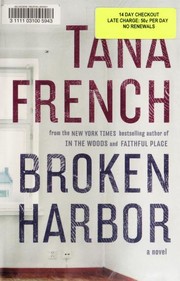
Broken Harbor
A family is found slaughtered in a half-built Dublin estate where no one broke in, and star detective Scorcher Kennedy must explain the holes in the walls.
2,308-word summary · 10 min read

The Trespasser
A Dublin Murder Squad detective investigates a staged dinner-party killing and finds a cover-up that reaches into her own department.
2,051-word summary · 9 min read
The Unquiet Grave
In Dervla McTiernan's fourth Cormac Reilly novel, a body found in a Galway bog turns out to be a missing school principal, and the case opens into something…
2,253-word summary · 10 min read
The Keeper of Lost Causes
Jussi Adler-Olsen introduces Carl Mørck and Department Q, a Copenhagen cold-case unit in a basement, and a missing politician whose file refuses to stay closed.
2,759-word summary · 12 min read
The Girl in the Ice
A young socialite is found frozen beneath the ice in a south London park, and DCI Erika Foster returns to work to lead the case. Grief, privilege and three…
2,492-word summary · 11 min read
Nightshade
Connelly launches Detective Stilwell on Catalina Island, where a beheaded buffalo and a Jane Doe in the harbor pull a quiet sheriff's post into violence and…
2,272-word summary · 10 min read

Rules of Prey
Minneapolis detective Lucas Davenport hunts a killer who leaves a new rule at every scene and treats murder as a game of wits.
1,914-word summary · 9 min read

The Late Show
Exiled to the LAPD night shift after accusing her supervisor, Renée Ballard keeps two cases that were meant to be handed off at dawn: a brutal assault and a…
2,563-word summary · 11 min read
The Bat
Oslo detective Harry Hole aids Sydney police after a young Norwegian woman is murdered and finds a wider pattern. Grief, drink, and a lost partner shape the…
2,766-word summary · 12 min read
The Last Coyote
On stress leave, Harry Bosch reopens the unsolved murder of his mother, a prostitute strangled when he was twelve, and finds corruption reaching the DA's…
2,069-word summary · 9 min read
The 5th Horseman
Two linked cases pull Lindsay Boxer and the Women's Murder Club into a hospital full of strange deaths and a luxury-car murder spree.
2,609-word summary · 12 min read
The Word Is Murder
A fictionalised Anthony Horowitz is talked into chronicling a prickly ex-detective's case: a woman murdered hours after planning her own funeral. A clever…
2,296-word summary · 10 min read
The Running Grave
In the seventh Cormoran Strike novel, Robin goes undercover inside a Norfolk cult while Strike digs into a child's death from decades earlier.
2,615-word summary · 12 min read
The Girl Who Takes an Eye for an Eye
Lisbeth Salander investigates a secret childhood experiment from prison while Mikael Blomkvist uncovers a twin conspiracy behind a wealthy businessman.
2,059-word summary · 9 min read
The Fix
Amos Decker watches a government contractor shoot a teacher outside FBI headquarters, then turn the gun on himself. The DIA wants the case shut.
2,315-word summary · 10 min read
Jack & Jill
A senator is killed with a nursery-rhyme calling card as a child is murdered near Alex Cross's home. The third Alex Cross novel pulls him toward two cases, one…
2,646-word summary · 12 min read
Fractured
In Karin Slaughter's second Will Trent novel, a mother kills the wrong man in an Atlanta mansion, and a GBI agent with a hidden reading difficulty finds a…
2,219-word summary · 10 min read
The Black Ice
Harry Bosch works a Christmas-night death the Robbery-Homicide Division does not want him near, and the trail runs from a dead cop to a drug operation across…
2,399-word summary · 11 min read
Never Flinch
Holly Gibney works two cases at once: a killer promising fourteen deaths and a threat against a feminist writer's lecture tour. King braids them into a…
2,245-word summary · 10 min read
How the Light Gets In
Gamache investigates the murder of the last Ouellet quintuplet while the Sûreté he served is dismantled from inside by the man who took his protégé.
2,279-word summary · 10 min read
Bury Your Dead
Recovering from a failed raid that killed his officers, Gamache investigates a murder in a Quebec City library while Beauvoir reopens a case in Three Pines.
2,022-word summary · 9 min read
The Last Mile
Melvin Mars is hours from execution for his parents' murder when another man confesses, and FBI cold case detective Amos Decker goes looking for the trap.
2,746-word summary · 12 min read

3rd Degree
The third Women's Murder Club novel follows a San Francisco terror cell and a three-day killing schedule, and it costs the club a member.
2,685-word summary · 12 min read
The Redbreast
Harry Hole chases an ageing sniper through modern Oslo while two Norwegian volunteers on the Eastern Front carry a fifty-year-old betrayal toward a royal…
2,453-word summary · 11 min read
Triptych
A GBI agent with dyslexia hunts a rapist while two Atlanta cops hide pasts.
2,576-word summary · 11 min read
Cruel & Unusual
Scarpetta links an execution to a boy's murder while someone steals bodies.
2,533-word summary · 11 min read
The Man in the Brown Suit
Anne Beddingfeld sees a Tube death in London and chases a paper clue to South Africa, diamonds, and the hidden Colonel.
2,292-word summary · 10 min read