
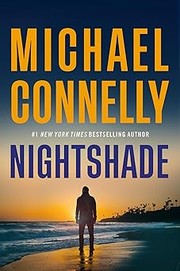
Nightshade
2,272-word summary 10 min read 352 pages in the book
- First published
- 2025
- Publisher
- Little, Brown and Company
- Pages
- 352
- ISBN
- 9780316588485
- Series
- Jack Stilwell (#1)
Reading options
What's inside (8 sections)
Michael Connelly's Nightshade was published in 2025 by Little, Brown and Company, runs 352 pages, and carries ISBN 9780316588485. It introduces Los Angeles County Sheriff's Detective Stilwell, an investigator exiled to a low-key post on Catalina Island after department politics pushed him off the mainland homicide desk. The publisher calls it a Catalina Novel, and it is meant to launch a new recurring character in Connelly's universe. I picked it up curious about whether a new series could work without one of Connelly's familiar names on the cover, and the answer, for this book at least, is that the setting does most of the heavy lifting.
Connelly's books usually arrive with a familiar name attached, whether it is Bosch or Ballard or Haller. Nightshade asks the reader to start over with someone new, and it does so without leaning on a cameo to make the transition easier. That is a risk. A long-running series can coast on the affection readers already have for its characters. A new one has to earn that affection from the first page. Stilwell earns it slowly, mostly by being a decent investigator in a place that would rather he did not make a fuss.
The island is the draw. Catalina is presented as an insular place where the sheriff's department handles drunks and petty theft until two cases turn violent. That small-town scale is the appeal. There is nowhere to hide, everyone knows everyone's business, and the arrival of a real murder feels like an intrusion into a place that has arranged itself to avoid one. Connelly builds the book around that claustrophobia, and Stilwell's exile gives him a reason to notice it. He is a mainland homicide detective stuck on an island that does not think it needs one.
Stilwell, exiled to Catalina
Stilwell is not a happy exile, but he is not a bitter one either. He is a professional who has been moved aside by department politics and now works a post where his skills are mostly wasted. That frustration runs under the whole book. He rushes through paperwork, he wants to get to scenes, and he has to keep reminding himself that he is not on the mainland anymore. That impatience is not arrogance. It is the habit of someone who has spent years learning that time matters at a crime scene, and who now works in a place where a poaching call and a drunk in the street fill the log.
There is a quiet better-than-this quality to him that Connelly never overstates. Stilwell does not give speeches about being wasted. He simply keeps doing the work at the level it deserves, even when the work is small. That is what makes him likable. He is a professional who has been passed over and has decided that the decision was someone else's mistake, not his problem to solve.
The supporting cast around him gives the island its texture. His girlfriend, Tash Dano, is the assistant harbormaster, which puts her in a position to know about boat traffic and the doings around the harbor. His partner, Frank Sampedro, is along for the work. Mayor Doug Allen represents the civic side, and his priorities become part of the story. These are not big-city players. They are people whose lives overlap in a small place, and Connelly uses that overlap to make the procedural feel personal.
When an old rival, Detective Rex Ahearn, comes from the mainland to take charge, the island's informal order is disrupted further. Ahearn warns Stilwell off. Captain Corum reprimands him. The department has a hierarchy, and Stilwell keeps bumping into it. That tension between a detective who wants to follow the evidence and a system that wants him to stay in his lane is a familiar Connelly theme, and it plays well here on a smaller stage.
A headless buffalo and a body in the harbor
The first case begins with a poaching report. Stilwell rushes through paperwork to execute a search warrant near Avalon and finds blood on a saw at Island Mystery Tours. He suspects the owner, Oscar "Baby Head" Terranova, of beheading a federally protected buffalo. It is an odd opening crime, almost absurd on its face, but Connelly treats it with procedural seriousness. A search warrant, a saw with blood on it, a suspect with a nickname that sounds like a joke: these are the pieces of a real investigation, even if the crime itself seems minor. Connelly knows that readers of police procedurals enjoy the process as much as the result, and he gives the poaching case enough procedure to make it feel like a genuine case rather than a piece of local color.
It also establishes the island's economy early. Island Mystery Tours is a business, and the buffalo is an attraction. When the motive for the mutilation eventually turns out to be commercial, the case pays off the detail Connelly planted at the start. What looked like a strange aside becomes a clue about what this place will do for money.
The second case arrives with a body in Avalon harbor. It is a young woman with a purple streak in her hair, initially identifiable only as a Jane Doe. Mayor Doug Allen urges Stilwell to keep the death quiet to protect tourism, and that request tells you a lot about the island's economy and its priorities. The news nonetheless runs on the front page beside the report of the headless buffalo. The two stories sit next to each other in print, and that juxtaposition is Connelly being neat. A bizarre animal mutilation and a dead woman become twin symbols of a place that is not as quiet as it wants to appear.
The mayor's request also tells us whose interests the island protects. Allen is not a villain in a cartoon sense, but his first instinct is to manage the story rather than confront what it means. That instinct runs through the book. Tourism, local business, and the appearance of calm keep getting in the way of the truth, and Stilwell's job is to push through them. The conflict is small in scale but familiar in shape.
The missing marlin statue
Stilwell links the dead woman to a missing statue from the exclusive Black Marlin Club. The accused thief, Leigh-Anne Moss, had purple-streaked hair, which gives the Jane Doe a possible name. The club's manager, Charles Crane, says Moss was dismissed for flirting with members and may have stolen the statue out of spite. It is a ready explanation, the kind that a busy department might accept, but Stilwell keeps pulling at it.
Working with Tash, he studies footage of boat traffic around the club. That partnership works because her access and his method combine into something neither has alone. From the footage he comes to suspect that Moss was struck with the missing marlin statue and dumped from the sailing yacht Emerald Sea. It is a specific and unpleasant theory, and it turns a theft into a possible murder weapon. The statue stops being a club ornament and becomes the center of the case.
He questions the yacht's owner, Mason Colbrink, and a crewman, Duncan Forbes. Forbes eventually admits that gear was stolen while the boat lay at the club and that he replaced it without telling Colbrink. That small admission matters. Someone was on the boat who should not have been, and someone covered it up. Connelly is good at these details, the way a minor dishonesty opens a door onto a larger one. The marlin statue itself is a nice piece of setting. The Black Marlin Club is exclusive, the kind of place where members' behavior is overlooked and staff are expected to absorb the consequences. Crane's ready explanation about Moss, that she was dismissed for flirting and stole out of spite, has the sound of a story told often enough to be believed.
Around this time Henry Gaston, a man questioned at the tour warehouse, disappears. A witness going missing raises the temperature on both cases at once. Until then the two investigations had been parallel, sharing a location but not much else. Gaston's disappearance pulls them toward each other, because he has connections to the tour warehouse and, as it turns out, to the buffalo. One missing man links the two halves of the book.
Ahearn arrives and Gaston talks
Stilwell's old rival Ahearn comes from the mainland to take charge and warns him off, but Stilwell keeps digging even after Captain Corum reprimands him. His persistence earns him a place on the case alongside Ahearn and Sampedro. That is a small victory, and it is characteristic of the book. Stilwell does not win by arguing his case. He wins by refusing to stop, until keeping him on the investigation becomes easier than shutting him out.
Gaston reappears seeking protection and admits that Terranova paid him to mutilate the buffalo to attract tour customers. That resolves the strange opening case in a way that is both petty and ugly: a protected animal killed for business. Gaston also implicates Mayor Allen in a scheme to force approval of an unpopular Ferris wheel. Suddenly the poaching case and the harbor case are both reaching into the same civic circles. The corruption is not separate from the violence. It is the environment the violence grew in. That is the book's strongest connecting idea. The mayor's Ferris wheel scheme, the tour business, and the harbor death are not three unrelated stories but three expressions of a place where officials and businessmen assume they can arrange things to suit themselves.
Ahearn's arrival is useful because it puts Stilwell's stubbornness in relief. Ahearn wants control of the case and wants Stilwell away from it. The mainland detective represents the institutional view that an island post should stay quiet. Stilwell's refusal to step back is not presented as heroic rebellion. It is simply what he does when he thinks a case is being mishandled. That stubbornness costs him, and the book is honest about the cost.
Spivak, the kidnapping, and the fallout
While Gaston is detained, Merris Spivak kills him and escapes with his confession. That is a brutal turn, and it also removes the paper trail that could have backed up what Gaston said. Spivak later kidnaps Tash, and the case stops being professional for Stilwell. He tracks her phone, rescues Tash, and kills Spivak, though he is suspended pending an Internal Affairs review. The suspension is the cost of doing it his own way, and it is a consequence the book does not wave away.
He secretly records Crane implying that he killed Moss after she ended their affair. That is the thread that ties the dead woman to the club manager, and it fits what Stilwell suspected from the boat footage. Terranova's testimony helps bring about the mayor's arrest on corruption charges. That the Buffalo poacher becomes the witness who brings down the mayor is a neat piece of plotting, and it ties the book's two cases together in a way that feels earned rather than convenient. The small, ugly crime and the civic corruption turn out to be part of the same arrangement.
In the end Stilwell finds Tash at a secluded campsite, and the two reunite. After the gunfire and the suspensions, that quiet reunion is the closest thing the book offers to a settled ending. It is a deliberately modest note to finish on. The focus is not a parade or a promotion but two people safe in a quiet place, which suits a novel about an island that has been made unsafe by people who would not leave it alone.
I liked that Connelly lets the resolution stay messy. Stilwell is suspended, not celebrated. Some of what happened depends on a recorded remark and a bargain with a man who mutilated a buffalo for tourists. The cases close in the way real cases close, with partial answers and a few loose ends rather than a clean bow.
The island as a character
Reviewers praised the claustrophobic island atmosphere, tight plotting, and realistic dialogue, with several comparing the book to John D. MacDonald's crime fiction. That comparison makes sense. Like MacDonald's Florida, Connelly's Catalina is a place where the scenery is part of the crime, where tourism and local business shape what people will overlook. Kirkus noted that the conclusion leaves some questions unresolved, and that is fair. The book is more interested in the texture of the place and the work of the investigation than in tying every thread into a neat knot.
That is also where it fell short for me in spots. The mayor's Ferris wheel scheme and the tour business angle are drawn broadly, and some characters, including Terranova with his memorable nickname, skirt caricature. The book leans on the idea of a corrupt small town a little hard. But the procedural core holds up. The boat footage, the statue, the missing witness, the recorded confession: these are solid pieces, and Connelly arranges them with the patience of someone who knows exactly how a case should come together.
Nightshade works because it trusts its setting. It does not need a famous detective to carry it, and Stilwell is interesting enough to anchor a series. He is a man doing a smaller job than he is capable of, in a place that keeps producing bigger problems than it can handle. For readers who like Connelly's plotting and can accept an ending that leaves a little air around it, this is a strong start.
FAQ
Is Nightshade the start of a new series?
Yes. The publisher calls it a Catalina Novel, and it launches the recurring character Detective Stilwell, a Los Angeles County sheriff's detective reassigned to Catalina Island.
Who is Detective Stilwell?
He is an investigator pushed off the mainland homicide desk by department politics and sent to Catalina Island, where he works with partner Frank Sampedro and girlfriend, assistant harbormaster Tash Dano.
Does Nightshade have a tidy ending?
No. Kirkus noted that the conclusion leaves some questions unresolved, and Stilwell finishes the book suspended pending an Internal Affairs review rather than celebrated for his work.
Similar books
More from Jack Stilwell first, then related titles.

The Late Show
Exiled to the LAPD night shift after accusing her supervisor, Renée Ballard keeps two cases that were meant to be handed off at dawn: a brutal assault and a…
2,563-word summary · 11 min read

The Unquiet Grave
In Dervla McTiernan's fourth Cormac Reilly novel, a body found in a Galway bog turns out to be a missing school principal, and the case opens into something…
2,253-word summary · 10 min read
The Keeper of Lost Causes
Jussi Adler-Olsen introduces Carl Mørck and Department Q, a Copenhagen cold-case unit in a basement, and a missing politician whose file refuses to stay closed.
2,759-word summary · 12 min read

The Girl in the Ice
A young socialite is found frozen beneath the ice in a south London park, and DCI Erika Foster returns to work to lead the case. Grief, privilege and three…
2,492-word summary · 11 min read
Fractured
In Karin Slaughter's second Will Trent novel, a mother kills the wrong man in an Atlanta mansion, and a GBI agent with a hidden reading difficulty finds a…
2,219-word summary · 10 min read

The Secret Place
Two Dublin detectives revisit a murder on the grounds of a girls' boarding school, where a bulletin board note and rival cliques hide the truth.
2,271-word summary · 10 min read

The Trespasser
A Dublin Murder Squad detective investigates a staged dinner-party killing and finds a cover-up that reaches into her own department.
2,051-word summary · 9 min read

Rules of Prey
Minneapolis detective Lucas Davenport hunts a killer who leaves a new rule at every scene and treats murder as a game of wits.
1,914-word summary · 9 min read

3rd Degree
The third Women's Murder Club novel follows a San Francisco terror cell and a three-day killing schedule, and it costs the club a member.
2,685-word summary · 12 min read
The Bat
Oslo detective Harry Hole aids Sydney police after a young Norwegian woman is murdered and finds a wider pattern. Grief, drink, and a lost partner shape the…
2,766-word summary · 12 min read

The Last Coyote
On stress leave, Harry Bosch reopens the unsolved murder of his mother, a prostitute strangled when he was twelve, and finds corruption reaching the DA's…
2,069-word summary · 9 min read

The Reversal
Mickey Haller prosecutes a child killer's retrial with ex-wife Maggie and half-brother Harry Bosch on his team.
2,056-word summary · 9 min read
The Brass Verdict
Mickey Haller takes over a murdered lawyer's caseload and a Hollywood double-murder trial, with Harry Bosch circling the edges.
2,672-word summary · 12 min read

The Black Ice
Harry Bosch works a Christmas-night death the Robbery-Homicide Division does not want him near, and the trail runs from a dead cop to a drug operation across…
2,399-word summary · 11 min read

There Will Be Bodies
Digging out a villa buried by Vesuvius, Flavia Albia finds chained corpses and a death someone tried to hide for ten years.
2,152-word summary · 10 min read
The 5th Horseman
Two linked cases pull Lindsay Boxer and the Women's Murder Club into a hospital full of strange deaths and a luxury-car murder spree.
2,609-word summary · 12 min read
The Word Is Murder
A fictionalised Anthony Horowitz is talked into chronicling a prickly ex-detective's case: a woman murdered hours after planning her own funeral. A clever…
2,296-word summary · 10 min read
The Running Grave
In the seventh Cormoran Strike novel, Robin goes undercover inside a Norfolk cult while Strike digs into a child's death from decades earlier.
2,615-word summary · 12 min read
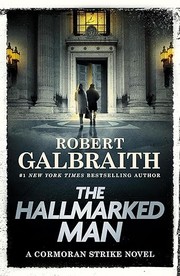
The Hallmarked Man
A body in a silver vault behind Freemasons' Hall sends Strike and Robin into a world of coded letters, secret societies and a girl whose whole identity may be…
3,084-word summary · 14 min read

The Girl Who Takes an Eye for an Eye
Lisbeth Salander investigates a secret childhood experiment from prison while Mikael Blomkvist uncovers a twin conspiracy behind a wealthy businessman.
2,059-word summary · 9 min read
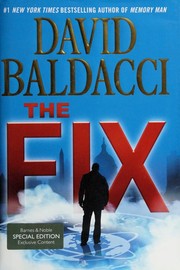
The Fix
Amos Decker watches a government contractor shoot a teacher outside FBI headquarters, then turn the gun on himself. The DIA wants the case shut.
2,315-word summary · 10 min read
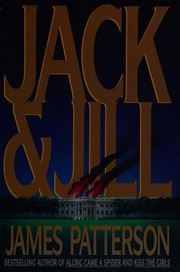
Jack & Jill
A senator is killed with a nursery-rhyme calling card as a child is murdered near Alex Cross's home. The third Alex Cross novel pulls him toward two cases, one…
2,646-word summary · 12 min read
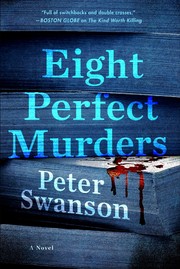
Eight Perfect Murders
A Boston bookseller's old blog post listing eight perfect fictional murders becomes the blueprint for a real killer, and the narrator knows more than he admits.
2,292-word summary · 10 min read
Never Flinch
Holly Gibney works two cases at once: a killer promising fourteen deaths and a threat against a feminist writer's lecture tour. King braids them into a…
2,245-word summary · 10 min read
How the Light Gets In
Gamache investigates the murder of the last Ouellet quintuplet while the Sûreté he served is dismantled from inside by the man who took his protégé.
2,279-word summary · 10 min read
Bury Your Dead
Recovering from a failed raid that killed his officers, Gamache investigates a murder in a Quebec City library while Beauvoir reopens a case in Three Pines.
2,022-word summary · 9 min read
The Last Mile
Melvin Mars is hours from execution for his parents' murder when another man confesses, and FBI cold case detective Amos Decker goes looking for the trap.
2,746-word summary · 12 min read
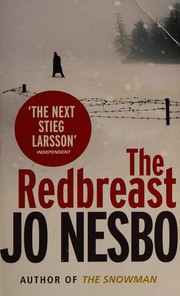
The Redbreast
Harry Hole chases an ageing sniper through modern Oslo while two Norwegian volunteers on the Eastern Front carry a fifty-year-old betrayal toward a royal…
2,453-word summary · 11 min read

Broken Harbor
A family is found slaughtered in a half-built Dublin estate where no one broke in, and star detective Scorcher Kennedy must explain the holes in the walls.
2,308-word summary · 10 min read
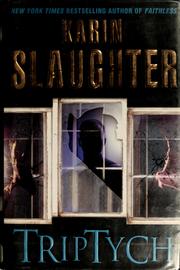
Triptych
A GBI agent with dyslexia hunts a rapist while two Atlanta cops hide pasts.
2,576-word summary · 11 min read