

The Girl Who Takes an Eye for an Eye
2,059-word summary 9 min read 347 pages in the book
- First published
- 2017
- Publisher
- Norstedts Förlag
- Pages
- 347
- ISBN
- 9780451494320
- Original title
- Mannen som sökte sin skugga
- Series
- Millennium (#5)
Reading options
What's inside (8 sections)
Two cases in one book
This is the fifth novel in the Millennium series and the second written by David Lagercrantz after Stieg Larsson's death. It was published in Sweden in September 2017 under the original title Mannen som sökte sin skugga, which means "The Man Who Sought His Shadow." The English translation appeared the same year. The site has the earlier Millennium books, so the characters need no introduction: Lisbeth Salander and Mikael Blomkvist are back, and the book moves between them in the familiar pattern.
Lagercrantz does not waste time on the mechanics of the sentence. Lisbeth is in jail because of what she did to protect August Balder, and the book treats that as settled history. What matters is the transfer to Flodberga, which is presented as a punishment within a punishment. She has been threatened, and instead of being protected she is moved somewhere worse. The prison is described as a place where the official rules are thin and the real rules are made by the inmates and the corrupt staff who deal with them. It is a fitting environment for a character who has spent her life being placed in institutions that claim to know what is best for her.
The opening chapters establish Faria Kasi's torment in detail. Benito torments her nightly, and the other prisoners and the guards look away. Faria has no one to believe her. That sense of being unheard runs through the book and connects the prison story to the Registry investigation. Both are about people in institutions, and both are about the moment when someone in authority decides which account of events counts.
The novel runs two investigations side by side. One is a prison story. Lisbeth is serving a two-month sentence for crimes she committed while protecting August Balder, and after threats against her she is transferred to maximum-security Flodberga Prison, which is rife with corruption. There, a Bangladeshi prisoner named Faria Kasi is tormented nightly by another prisoner, Beatrice Andersson, who goes by Benito. The other investigation begins when Lisbeth's former guardian Holger Palmgren visits and mentions a set of medical files from her childhood.
Those files point to something called the Registry. That is where the book's larger, stranger story begins.
The Registry
Palmgren tells Lisbeth that a former secretary from St Stefan's, the institution where she was committed as a child, gave him her medical files. He cannot come to see her again, which is a warning in itself. Lisbeth forces the warden to let her use his computer and learns what the Registry was: a secret project that placed exceptional children in specific environments to test the effects on their development. She was one of the children.
Palmgren's visit is one of the saddest scenes in the book. He is old and failing, and he has spent much of his life trying to make up for the way the system treated Lisbeth as a child. The file he has obtained is both a gift and a burden. He knows that giving it to her will set something dangerous in motion, and he does it anyway. His warning that he cannot come again is the book's first clear signal that the people who helped Lisbeth are going to be made to pay for it.
Lisbeth cannot investigate from inside a prison, so she asks Blomkvist to do it for her. She gives him the name Leo Mannheimer, a wealthy businessman whose name appeared in a Registry file. It is a characteristic move on her part. She does not ask for help often, and when she does, she gives the smallest possible amount of information and expects results.
Blomkvist starts digging and finds that Mannheimer is behaving strangely. People who know him describe moods and absences that do not fit the man they thought they knew. Blomkvist eventually comes to suspect that Mannheimer has a twin named Dan Brody who has been impersonating him. That suspicion is one of the book's better pieces of detection, because it grows out of small inconsistencies rather than a dramatic discovery.
Meanwhile, Palmgren recognizes another name in Lisbeth's files, Martin Steinberg, and calls him. Steinberg panics and contacts Rakel Greitz, a dying woman with stomach cancer who poses as a nurse, poisons Palmgren and steals the file. Blomkvist arrives too late. With his last breaths, Palmgren tells him to find Hilda von Kanterborg, a former Registry agent whose initials were in the file.
The dragon and the child
Blomkvist tracks Hilda down. She doubts the identity theft, but she confirms that the twins were real and that Greitz tried to take Lisbeth from her family as a child for the experiment. Then she tells him something that rewrites the origin of the character we have been reading about. Lisbeth reacted violently and escaped. She hid in a church, and while she was there she saw a statue of a dragon being slain. The image became the emblem of her fight against injustice, and eventually her dragon tattoo.
This is the most interesting passage in the novel. Lagercrantz is writing a prequel origin story inside a sequel, and he does it in a few pages. The tattoo has been a given of the series since the first book. Here it acquires a cause. A frightened child in a church sees a dragon being killed and decides that she will be the one who fights back. It is slightly too neat, and some reviewers found the mythologizing excessive, but it is hard to resist as a story.
Blomkvist confronts Mannheimer, whose situation is rescued when Dan saves him from Greitz's henchman Benjamin. Dan's history is extraordinary. He was raised on a farm by an abusive adoptive father, found music as a way out, fled to America and lived as a jazz musician. A coworker mistook him for Leo, and he came to Sweden to find the brother he did not know he had. The twins confronted Greitz together. She and Benjamin poisoned Leo and blackmailed Dan into burying him and taking his identity. Dan secretly saved his brother instead, and the two swapped places, with Leo living in America under Dan's name. They have been plotting revenge ever since.
That story takes up a large portion of the book, and it is the part that most clearly belongs to Lagercrantz rather than Larsson. The Millennium novels have always had elaborate backstories, but this one has a quantity of coincidence and identification that pushes toward the baroque. A writer who had been with the series from the beginning might have been more restrained.
Faria's story
The prison plot gives the book its emotional weight. Benito is preparing to kill Faria, and it emerges that she was hired by Faria's own brothers. Faria's family treated her as a slave. Her older brothers Bashir and Ahmed planned to sell her into marriage. She fell in love with Jamal Chowdhury, a Bangladeshi man branded a heretic by Islamists, and her younger brother Khalil murdered him on the older brothers' orders. In anger, Faria pushed Ahmed to his death. She was arrested, and Bashir hired Benito to finish the job inside prison.
Lisbeth stops the attack and severely injures Benito, sending her to the hospital. After her release, she and Blomkvist's sister Annika investigate Faria's past. This is where the book's title comes from. The phrase about taking an eye for an eye is not a metaphor for legal punishment. It is a description of what Faria's brothers did to her and what she did in return, a chain of injury in which everyone believes they are avenging something.
Lisbeth tricks Bashir into confessing on video and convinces Khalil to confess to the police after Bashir flees. It is satisfying detective work, but the book is less interested in the mechanics of the confession than in what it costs Faria to have her story believed. For most of the novel, nobody listens to her. The prison staff treat her as a troublemaker, and her brothers treat her as property. She is believed only when there is a recording.
Then Lisbeth is kidnapped by Bashir and the escaped Benito. Her alert to her hacker allies lets them track the truck and notify the police. With Faria's help, the police find them just as Lisbeth escapes, and Benito, Bashir and their colleagues are arrested. Lisbeth recovers from a wound sustained in getting away.
The reckoning
The two plots converge when Lisbeth confronts Greitz and Benjamin. She subdues them, and she spares Greitz deliberately, because being arrested and having her reputation ruined will be a worse punishment than death. It is one of Lisbeth's coldest decisions in the series, and it is entirely in character. Faria's charges are lowered and she is presumably released. Steinberg and the others go to prison. Millennium publishes the story of Leo and Dan, though a stock market crash preempts it, which is a bitterly funny reminder that the world does not pause for a good scoop.
The novel ends at Palmgren's funeral, where Lisbeth delivers a speech about her guardian. It is a quiet close after a great deal of plotting, and it is the right one. Palmgren is the person who gave her a chance when she was a difficult child, and the book's emotional center is his dying effort to pass her the file that explains what was done to her.
I also want to note how the book handles Blomkvist. He is the steady center of the series, the man who keeps showing up when Lisbeth calls, and Lagercrantz writes him with respect. His investigation into Leo Mannheimer is patient and unglamorous, built from interviews and records rather than inspiration. When he finally understands what has happened with the twins, the realization arrives as the result of work, which is the way it should be. In a book full of elaborate conspiracies, Blomkvist's ordinary competence is the most reassuring thing on offer.
Reception was mixed. The Washington Post found that the book intensifies the mythic elements of Larsson's vision, which is a fair description of the dragon origin and the twin conspiracy. The Guardian criticized the sluggish plotting. USA Today and Paste both noted that Salander is relatively absent from a book that carries her name on the cover. I understand all three complaints. The twin plot has so much material that Lisbeth's prison story sometimes feels like a separate novel that has been interleaved with it.
What I took from it
The book works best when it is small. The scenes in Flodberga are excellent: the corruption of the prison, the way Faria is disbelieved, Lisbeth's cold fury at being transferred and threatened. Lagercrantz writes a good Lisbeth, and he understands that her most characteristic quality is not violence but refusal. She refuses to be managed, refuses to be pitied and refuses to let other people's stories about her stand.
The Registry material is less successful. The idea of a secret project that manipulates children is strong, but the explanation arrives late and depends on a chain of coincidences involving twins, mistaken identities, poisonings and a jazz career in America. The novel asks the reader to accept a great deal in order to get to the dragon in the church. Whether that exchange is worth it depends on how much you want the mythology of Lisbeth Salander expanded.
The title is from a biblical phrase about an eye for an eye, and the book uses it as a description of Faria's family rather than a moral program. Her brothers sell her, her lover is killed, she kills one brother in anger, and the survivors hire someone to kill her in prison. Nobody in the chain is avenging justice. They are all answering harm with harm, which is what makes the phrase bitter rather than satisfying.
I finished it glad to have spent time with the character again and slightly wary of the direction. The book is a competent continuation, and it is much better than a lesser writer would have produced. But it is also a novel in which a great deal happens to people rather than being chosen by them, which is the opposite of what made Lisbeth compelling in the first place.
FAQ
What is the Registry in the novel?
It was a secret Swedish project that placed exceptional children in specific environments to study how they developed. Lisbeth Salander was one of the children, and her medical files lead her and Blomkvist into the conspiracy.
What does the Swedish title mean?
Mannen som sökte sin skugga translates as The Man Who Sought His Shadow. The book was first published in Sweden in September 2017 and is the second Millennium novel written by David Lagercrantz.
Where does Lisbeth's dragon tattoo come from?
The novel gives it an origin: as a child she hid in a church after escaping an institution and saw a statue of a dragon being slain. The image became the emblem of her fight against injustice.
Similar books
More from Millennium first, then related titles.

The Girl with the Dragon Tattoo
Stieg Larsson's The Girl with the Dragon Tattoo explained: Blomkvist at Vanger, Lisbeth Salander, the Vanger family secret, and the long mid-book hush.
2,254-word summary · 10 min read

The Girl Who Played with Fire
Lisbeth Salander is framed for murder while Blomkvist digs into trafficking and her past.
3,101-word summary · 14 min read

The Girl Who Kicked the Hornet's Nest
Shot and buried, Lisbeth Salander survives to face trial and the secret Section that destroyed her life.
1,923-word summary · 9 min read

The Girl in the Spider's Web
Blomkvist chases a murdered AI scientist's story while Salander shields an autistic boy who draws killers.
2,035-word summary · 9 min read

The 5th Horseman
Two linked cases pull Lindsay Boxer and the Women's Murder Club into a hospital full of strange deaths and a luxury-car murder spree.
2,609-word summary · 12 min read

The Word Is Murder
A fictionalised Anthony Horowitz is talked into chronicling a prickly ex-detective's case: a woman murdered hours after planning her own funeral. A clever…
2,296-word summary · 10 min read
The Unquiet Grave
In Dervla McTiernan's fourth Cormac Reilly novel, a body found in a Galway bog turns out to be a missing school principal, and the case opens into something…
2,253-word summary · 10 min read
The Running Grave
In the seventh Cormoran Strike novel, Robin goes undercover inside a Norfolk cult while Strike digs into a child's death from decades earlier.
2,615-word summary · 12 min read
The Keeper of Lost Causes
Jussi Adler-Olsen introduces Carl Mørck and Department Q, a Copenhagen cold-case unit in a basement, and a missing politician whose file refuses to stay closed.
2,759-word summary · 12 min read

The Ice Princess
Camilla Läckberg's debut follows writer Erica Falck and detective Patrik Hedström as a frozen bathtub in a small Swedish town unravels a secret kept for…
2,321-word summary · 10 min read

The Girl in the Ice
A young socialite is found frozen beneath the ice in a south London park, and DCI Erika Foster returns to work to lead the case. Grief, privilege and three…
2,492-word summary · 11 min read

Jack & Jill
A senator is killed with a nursery-rhyme calling card as a child is murdered near Alex Cross's home. The third Alex Cross novel pulls him toward two cases, one…
2,646-word summary · 12 min read
Fractured
In Karin Slaughter's second Will Trent novel, a mother kills the wrong man in an Atlanta mansion, and a GBI agent with a hidden reading difficulty finds a…
2,219-word summary · 10 min read

The Secret Place
Two Dublin detectives revisit a murder on the grounds of a girls' boarding school, where a bulletin board note and rival cliques hide the truth.
2,271-word summary · 10 min read

Nightshade
Connelly launches Detective Stilwell on Catalina Island, where a beheaded buffalo and a Jane Doe in the harbor pull a quiet sheriff's post into violence and…
2,272-word summary · 10 min read
Never Flinch
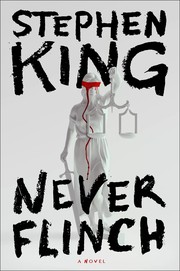
Holly Gibney works two cases at once: a killer promising fourteen deaths and a threat against a feminist writer's lecture tour. King braids them into a…
2,245-word summary · 10 min read

The Trespasser
A Dublin Murder Squad detective investigates a staged dinner-party killing and finds a cover-up that reaches into her own department.
2,051-word summary · 9 min read

Rules of Prey
Minneapolis detective Lucas Davenport hunts a killer who leaves a new rule at every scene and treats murder as a game of wits.
1,914-word summary · 9 min read

The Late Show
Exiled to the LAPD night shift after accusing her supervisor, Renée Ballard keeps two cases that were meant to be handed off at dawn: a brutal assault and a…
2,563-word summary · 11 min read

3rd Degree
The third Women's Murder Club novel follows a San Francisco terror cell and a three-day killing schedule, and it costs the club a member.
2,685-word summary · 12 min read

The Redbreast
Harry Hole chases an ageing sniper through modern Oslo while two Norwegian volunteers on the Eastern Front carry a fifty-year-old betrayal toward a royal…
2,453-word summary · 11 min read

The Poet
A crime reporter investigates his twin brother's apparent suicide and uncovers a killer who leaves Edgar Allan Poe quotes behind, in the novel that took…
2,020-word summary · 9 min read

Broken Harbor
A family is found slaughtered in a half-built Dublin estate where no one broke in, and star detective Scorcher Kennedy must explain the holes in the walls.
2,308-word summary · 10 min read

Cruel & Unusual
Scarpetta links an execution to a boy's murder while someone steals bodies.
2,533-word summary · 11 min read

The Man in the Brown Suit
Anne Beddingfeld sees a Tube death in London and chases a paper clue to South Africa, diamonds, and the hidden Colonel.
2,292-word summary · 10 min read

2nd Chance
Lindsay Boxer and the Women's Murder Club hunt the Chimera killer after a church shooting in San Francisco.
2,572-word summary · 11 min read

The Bat
Oslo detective Harry Hole aids Sydney police after a young Norwegian woman is murdered and finds a wider pattern. Grief, drink, and a lost partner shape the…
2,766-word summary · 12 min read
Troubled Blood
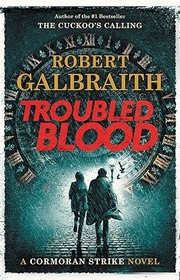
Strike and Robin take a year long cold case: doctor Margot Bamborough vanished in 1974, with a nurse hiding more.
2,211-word summary · 10 min read

Holly
Grieving detective Holly Gibney takes a missing-girl case in 2021 and traces it to two polite retired professors with a basement secret.
2,607-word summary · 12 min read

Faithful Place
Undercover Frank Mackey returns to Faithful Place when lost love Rosie suitcase is found.
2,161-word summary · 10 min read