
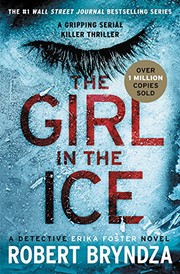
The Girl in the Ice
2,492-word summary 11 min read 394 pages in the book
- First published
- 2016
- Publisher
- Bookouture
- Pages
- 394
- ISBN
- 9781910751770
- Series
- Detective Erika Foster (#1)
Reading options
What's inside (10 sections)
I picked this up during a cold spell, which probably explains why the image of a young woman frozen under a sheet of ice got under my skin so quickly. It is the first of Robert Bryndza's Detective Erika Foster books, published in 2016 by Bookouture, and it introduces a detective who is very good at her job and badly damaged by it. What I found was a police procedural with a serial killer at its centre and an argument about class running quietly underneath. It works best when it stays with the investigators rather than the villains. By the end I had a clear sense of who Erika was and why she keeps making enemies, along with a few annoyances I could not quite shake.
A detective sent back to work too soon
Erika Foster is a Detective Chief Inspector who has spent six months at home after a drug raid she commanded went badly wrong. The raid happened in Manchester, where she worked before this book moves her to London. Her husband Mark, also a police officer, was killed in it, and four other officers died with him. Erika was the commanding officer, so the blame and her own guilt stick to her. Bryndza gives her an immigrant's background to explain part of that outsider feeling. She was born in Slovakia, came to Manchester at eighteen to work as an au pair and learn English, met Mark there, and trained as a police officer alongside him. Even after twenty-five years in Britain she is treated, and tends to treat herself, as someone a little apart.
That history matters because the book is as much about a woman rebuilding a career as it is about a murder. She is transferred to Lewisham Row in south London, handed a fresh team, and told in fairly plain terms that her last big operation left five people dead. Colleagues watch her. Her new boss, Marsh, is sceptical and sharp with her, and a DCI called Sparks would plainly prefer her to fail. Bryndza does not soften any of this. Erika arrives with a short fuse, drinks too much alone at night, and can be cold and rude to people trying to help her. She is not always a likeable person, and I found that honesty about her more interesting than most of the plot turns.
The personal grief is not decoration. It is the engine that drives her into the case and the reason she takes risks a more stable detective would avoid. When the body turns up, she throws herself into the work partly because the work is the only place she still feels useful. Bryndza returns to Mark's memory at intervals, never letting the reader forget what she is carrying, and the final pages come back to it directly.
The body beneath the ice
The victim is Andrea Douglas-Brown, twenty-three years old, rich, and the daughter of Lord and Lady Douglas-Brown. She is engaged to marry Giles Osborne, a wealthy man, and the book makes clear that the attraction has little to do with his looks or his personality. The opening reaches back to her last night. Andrea storms out of a pub after a fight, drunk, and walks up a lonely hill on a dark street in a south London park, trying to find a signal for her phone. A car draws up beside her. She knows the driver, which is why the moment turns from awkward to frightening, and she runs into the trees of the park. She stumbles and drops her phone and her purse in the dark. The figure from the car catches her, drags her back, binds her arms and legs, and strangles her.
A week later a young boy finds her body under the ice of a frozen lake in the park. Her fingers are poking through the surface. A park worker heard a phone ringing, and the phone was still working when she was found. The pathologist estimates she had been in the water for at least seventy-two hours, which lines up with the cold snap. It is a striking opening image, and Bryndza earns it by making the discovery feel like an accident that shatters an ordinary winter morning.
Because Andrea's father is a lord with influence, the media descend and the case becomes a priority. Erika is put in charge, with an instruction that she is not to ask painful questions or do anything that might damage the family's reputation. Anyone who has read a crime novel can guess how well that instruction sits with her. The scene is set for a collision between a detective who wants facts and a family that wants quiet.
The family who want the questions stopped
Erika's early interviews with the Douglas-Browns tell her what the official story cannot. The family wants the investigation managed, not solved. Simon Douglas-Brown protects secrets and uses his position to lean on people, and the pressure reaches into the police hierarchy. Erika is told to keep the family name clean and to accept the tidy version of Andrea as a privileged young woman with everything to live for.
What interests Erika is the gap between that version and the facts. Andrea spent time in a rough neighbourhood and a pub known for trouble, and she was there with a man who was not her fiancé. Bryndza uses these details to pull the investigation away from the comfortable story the family prefers. Erika keeps asking why a socialite with a perfect life would end up dead under the ice in a public park, and the people around her keep deciding that she should stop asking.
The friction extends beyond the family. Some of the male officers resent being led by a woman with a ruined reputation, and they make her work harder at every chance. DCI Sparks is openly hostile. Marsh oscillates between anger at her methods and a grudging recognition that she gets results. I believed the team politics more than I believed the higher-level conspiracy. Bryndza has Erika fighting what the author called sinister forces in the British establishment, and that part of the book is drawn in broader strokes. Lords, pressure from above, and a family closing ranks are familiar machinery, and the novel never quite makes them feel specific.
The women nobody counted
The strongest thread in the book is the one Erika pulls when she starts looking at older cases. Andrea's death begins to resemble the murders of three prostitutes, young women strangled with their hands bound and dumped in water around London. Those deaths went nowhere. The women were poor, foreign, and in Britain illegally, and the police and press treated them as disposable. Nobody gave them the resources that are suddenly lavished on the daughter of a lord.
That contrast is the book's moral centre, and Bryndza handles it without a lecture. The point comes through in the paperwork and the reactions: the same method of killing, the same water, and a completely different level of attention because one victim had a title and money. Erika's insistence on treating those earlier deaths as part of the same case is what makes her a good detective and what puts her at odds with her superiors. Once the possibility of a serial killer is on the table, the investigation widens. The team has to reconstruct Andrea's movements, work out who knew her, and try to protect the next likely victim.
As Erika closes in, the killer starts to pay attention to her. She is watched, then threatened, and the danger to her becomes another reason her bosses want the case wrapped up. Her career is already on a knife edge after the Manchester raid, so every risky step carries a cost. Bryndza keeps the pressure on her rather than on the wider city, and that choice keeps the book grounded even when the plot starts to pile up coincidences.
A team that slowly comes around
Erika does not win her team over immediately. Detective Kate Moss and Detective Peterson keep their distance at first, along with the forensic specialist known as Strong. Moss is a lesbian married to Celia, with a child called Jacob, and Peterson is black and single. Bryndza gives them enough private detail to feel like people rather than functions, and they grow into the story as Erika's directness and refusal to follow the easy path start to earn their respect. Their loyalty at the end is hard won, which is why it lands.
The investigation proceeds the way a procedural should, with records checked, phones traced, and accounts examined. Erika finds money moving between Simon Douglas-Brown, Andrea's fiancé Giles Osborne, and a man called Igor. The three men have an answer ready when questioned: the transfers paid for an exotic tree from New Zealand. It is a neat bit of misdirection and the men are unbreakable under interview, so the money trail leads nowhere she can use. Meanwhile Erika disobeys orders, pokes the media, and irritates politicians and senior officers in equal measure. She is relentless in a way that is both admirable and exhausting.
There is a cost to all this momentum. The book moves quickly, and some of the discoveries arrive a little too smoothly, as if the evidence is waiting to be found exactly when Erika looks for it. A few reviewers have noted that some twists border on the farfetched, and I understood the complaint. The plotting is engineered, and the reader can feel the hand on the wheel at times. What kept me going was the procedural texture and the sense that Erika's flaws were driving the mistakes as much as the author's need to keep the pages turning.
The answer in a photograph
The breakthrough comes from a place nobody takes seriously. Erika goes back to the Douglas-Brown house and studies the photographs on a corkboard, pictures of the younger daughter Linda with her cat, Boots, and the family together. Linda has a mental handicap, and the adults treat her as someone whose account does not matter. Erika notices that one person is missing from the images. She leaves a recorded message for Moss asking Peterson to question Linda about the cats, then goes into Linda's room to look around.
Linda tells Peterson that David killed her cat and all those women. David Douglas-Brown is Andrea's brother and Simon's son, and he is the killer. He rapes and murders young women, and his father knew what he was doing. The money moving through those accounts was Simon's way of covering for his son and supplying him with victims. Andrea found out what David had done and threatened to go to the police, so David strangled her and hid her body under the ice. He is also responsible for the deaths of the other women Erika connected to the case, including a woman called Ivy.
I found the reveal clever but slightly uncomfortable. The decisive witness is a young woman with a mental handicap whose importance everyone has dismissed, which gives the scene real poignancy, but the mechanism that gets Erika there, a missing face in a set of photographs, feels tidy beside the messier business of the earlier investigation. David confronts Erika in the house, hits her until she is unconscious, and puts her in the boot of his car alongside the body of another prostitute. He drives off with Eurostar tickets in his pocket. It is a conventional thriller trap, sprung efficiently, and it works.
The lake and the grave
Her team tracks Erika through her phone. Once they learn David has tickets for the Eurostar, they work out that he must be heading for the station, and Marsh authorises Moss and Peterson to take a helicopter. From the air they see David's car go into the water near the station. The helicopter lands and Peterson runs into the lake and gets Erika out of the car. It is a physical, straightforward rescue after all the talking, and it is the moment when the team she has spent the book alienating shows exactly what she means to them.
The aftermath is brisk. David is arrested and charged. Sir Simon falls into disgrace and loses his title. Marsh, who has spent most of the book needling Erika, shows a softer side and tells her he will be there as a friend. In the epilogue, three months on, Erika stands near Mark's grave with Edward. Moss calls to say the team misses her and wants her back. Erika promises she is coming, then breaks down talking to Mark about how much she misses him and how hard life has become. She ends by telling herself she needs to get a grip and try to move on.
That ending is the right choice for this book. The killer is caught, but the grief is not resolved and nobody pretends it is. Erika's decision to return to work is a small, stubborn thing rather than a triumph, and it fits a character who has spent the story being hard on herself and everyone else.
What works and what grates
The case for the book rests on Erika herself and on the class argument underneath the mystery. Bryndza writes a flawed lead who is capable, prejudiced in her own way, and genuinely driven by a sense of justice. The scenes in which she insists that the dead prostitutes matter as much as the socialite are the ones I remember. The team around her, particularly Moss and Peterson, gives the procedural a warmth that balances her coldness, and the frozen body of the opening is an image the novel does not waste.
The case against it is the machinery. Some twists are a touch farfetched, the establishment cover-up is broader than it needs to be, and the final few chapters bring several threads together with more neatness than the rest of the book earns. Readers looking for a gentle mystery, or for a puzzle that plays fair at every step, may find the violence and the coincidences too much. This is a novel for people who can enjoy a rough, driven detective and a story willing to say that money changes how a murder is investigated. It is not a book that offers comfort, and it is better for that honesty.
If you like character-led crime fiction with a procedural spine, the Erika Foster books start here with a strong sense of who she is and what she is running from. Go in expecting a messy lead and a plot that sometimes strains for effect, and the parts that work will land harder. I closed it wanting to know how Erika would handle a second case, which is probably the truest test of whether a first novel has done its job.
FAQ
Is The Girl in the Ice the first Erika Foster book?
Yes. It was first published in February 2016 and introduces DCI Erika Foster, who transfers from Manchester to a south London police station after six months of leave.
What is the book mainly about?
It follows Erika's investigation into the murder of a young socialite found under ice, while she tries to rebuild her career after the deaths of her husband and four colleagues in a raid she commanded.
Is this a cozy mystery?
No. It is a violent police procedural with a serial killer, a good deal of personal grief, and a plot that sometimes relies on farfetched twists.
Similar books
More from Detective Erika Foster first, then related titles.

Rules of Prey
Minneapolis detective Lucas Davenport hunts a killer who leaves a new rule at every scene and treats murder as a game of wits.
1,914-word summary · 9 min read
The Keeper of Lost Causes
Jussi Adler-Olsen introduces Carl Mørck and Department Q, a Copenhagen cold-case unit in a basement, and a missing politician whose file refuses to stay closed.
2,759-word summary · 12 min read
The Secret Place
Two Dublin detectives revisit a murder on the grounds of a girls' boarding school, where a bulletin board note and rival cliques hide the truth.
2,271-word summary · 10 min read
Nightshade
Connelly launches Detective Stilwell on Catalina Island, where a beheaded buffalo and a Jane Doe in the harbor pull a quiet sheriff's post into violence and…
2,272-word summary · 10 min read
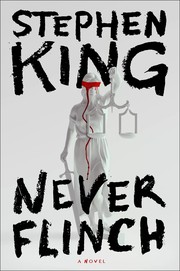
Never Flinch
Holly Gibney works two cases at once: a killer promising fourteen deaths and a threat against a feminist writer's lecture tour. King braids them into a…
2,245-word summary · 10 min read

The Trespasser
A Dublin Murder Squad detective investigates a staged dinner-party killing and finds a cover-up that reaches into her own department.
2,051-word summary · 9 min read

The Late Show
Exiled to the LAPD night shift after accusing her supervisor, Renée Ballard keeps two cases that were meant to be handed off at dawn: a brutal assault and a…
2,563-word summary · 11 min read

3rd Degree
The third Women's Murder Club novel follows a San Francisco terror cell and a three-day killing schedule, and it costs the club a member.
2,685-word summary · 12 min read
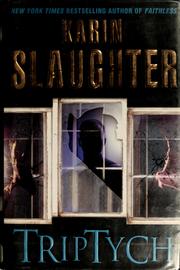
Triptych
A GBI agent with dyslexia hunts a rapist while two Atlanta cops hide pasts.
2,576-word summary · 11 min read
The Bat
Oslo detective Harry Hole aids Sydney police after a young Norwegian woman is murdered and finds a wider pattern. Grief, drink, and a lost partner shape the…
2,766-word summary · 12 min read
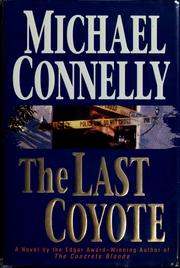
The Last Coyote
On stress leave, Harry Bosch reopens the unsolved murder of his mother, a prostitute strangled when he was twelve, and finds corruption reaching the DA's…
2,069-word summary · 9 min read
The 5th Horseman
Two linked cases pull Lindsay Boxer and the Women's Murder Club into a hospital full of strange deaths and a luxury-car murder spree.
2,609-word summary · 12 min read
The Word Is Murder
A fictionalised Anthony Horowitz is talked into chronicling a prickly ex-detective's case: a woman murdered hours after planning her own funeral. A clever…
2,296-word summary · 10 min read
The Unquiet Grave
In Dervla McTiernan's fourth Cormac Reilly novel, a body found in a Galway bog turns out to be a missing school principal, and the case opens into something…
2,253-word summary · 10 min read
The Running Grave
In the seventh Cormoran Strike novel, Robin goes undercover inside a Norfolk cult while Strike digs into a child's death from decades earlier.
2,615-word summary · 12 min read
The Girl Who Takes an Eye for an Eye
Lisbeth Salander investigates a secret childhood experiment from prison while Mikael Blomkvist uncovers a twin conspiracy behind a wealthy businessman.
2,059-word summary · 9 min read
The Fix
Amos Decker watches a government contractor shoot a teacher outside FBI headquarters, then turn the gun on himself. The DIA wants the case shut.
2,315-word summary · 10 min read
Jack & Jill
A senator is killed with a nursery-rhyme calling card as a child is murdered near Alex Cross's home. The third Alex Cross novel pulls him toward two cases, one…
2,646-word summary · 12 min read
Fractured
In Karin Slaughter's second Will Trent novel, a mother kills the wrong man in an Atlanta mansion, and a GBI agent with a hidden reading difficulty finds a…
2,219-word summary · 10 min read

The Black Ice
Harry Bosch works a Christmas-night death the Robbery-Homicide Division does not want him near, and the trail runs from a dead cop to a drug operation across…
2,399-word summary · 11 min read
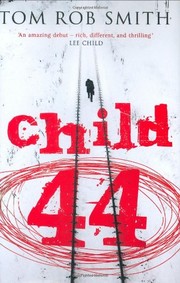
Child 44
Tom Rob Smith's 2008 debut follows Soviet secret policeman Leo Demidov as he hunts a child killer in a country that officially has no crime.
2,428-word summary · 11 min read

How the Light Gets In
Gamache investigates the murder of the last Ouellet quintuplet while the Sûreté he served is dismantled from inside by the man who took his protégé.
2,279-word summary · 10 min read

Bury Your Dead
Recovering from a failed raid that killed his officers, Gamache investigates a murder in a Quebec City library while Beauvoir reopens a case in Three Pines.
2,022-word summary · 9 min read
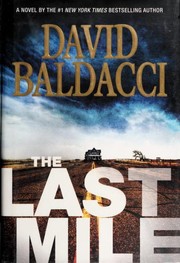
The Last Mile
Melvin Mars is hours from execution for his parents' murder when another man confesses, and FBI cold case detective Amos Decker goes looking for the trap.
2,746-word summary · 12 min read
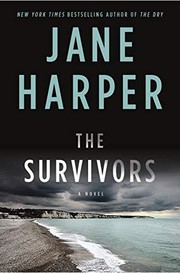
The Survivors
Kieran Elliott returns to Evelyn Bay twelve years after a storm killed his brother, and a young woman's murder forces the town to face what it has concealed.
2,571-word summary · 11 min read

The Woods
Twenty years after two teenagers were murdered and two vanished at summer camp, prosecutor Paul Copeland identifies a fresh corpse as one of the missing.
2,490-word summary · 11 min read

The Redbreast
Harry Hole chases an ageing sniper through modern Oslo while two Norwegian volunteers on the Eastern Front carry a fifty-year-old betrayal toward a royal…
2,453-word summary · 11 min read
The Poet
A crime reporter investigates his twin brother's apparent suicide and uncovers a killer who leaves Edgar Allan Poe quotes behind, in the novel that took…
2,020-word summary · 9 min read
Broken Harbor
A family is found slaughtered in a half-built Dublin estate where no one broke in, and star detective Scorcher Kennedy must explain the holes in the walls.
2,308-word summary · 10 min read
Cruel & Unusual
Scarpetta links an execution to a boy's murder while someone steals bodies.
2,533-word summary · 11 min read