
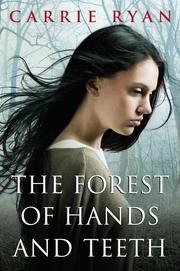
The Forest of Hands and Teeth
2,337-word summary 10 min read 310 pages in the book
- First published
- 2009
- Publisher
- Delacorte Press
- Pages
- 310
- ISBN
- 9780385736817
- Series
- The Forest of Hands and Teeth (#1)
Reading options
What's inside (9 sections)
I picked this up thinking I was in the mood for a straight zombie chase, and the first surprise was that the fence matters more than the zombies. Mary Cave, the narrator, has never seen the ocean. She believes it exists because her mother told her stories about it, and because she has a photograph or two that nobody else in the village will look at. everybody else has accepted the story they are told: that this one fenced village is all that is left of humanity, and that the forest beyond the walls is full of the Unconsecrated, the dead who hunger for the living. Mary is sixteen or so, old enough to be married off, and she is not willing to accept that story. That stubborn refusal is the engine of the whole book.
The novel came out in 2009 from Delacorte Press, an imprint of Random House, and it reads like a piece of YA horror written by someone who understood how much fear comes from rules rather than monsters. The monsters are the easy part. What frightens Mary is the Sisterhood, the order of women who run the village, assign husbands, and decide who is allowed to have children. Published as the first book in a series that Carrie Ryan later called The Forest of Hands and Teeth, it stands on its own as a coming of age story with a body count.
The village and the thing beyond the fence
Mary's village is a compact place of wooden houses, a Cathedral, and a high fence that Guardians patrol and repair. The Guardians carry swords and watch the wall day and night, because the Unconsecrated press against it constantly, mindless and patient. A single scratch or bite from one of them means death and then a return as one of them. The villagers have two choices when someone is bitten: kill the person outright, or cast them out into the forest to turn. It is a brutal mercy, and Ryan describes it without flinching.
Mary lives with her mother, her older brother Jed, and Jed's wife Beth. Her father went into the forest some months before the story opens and never came back, presumed dead and turned. Her mother nonetheless keeps watch at the fence, convinced he will return, and Mary and Jed have to guard her from getting too close to the wall. That vigilance fails. One afternoon, while Mary lingers with a neighbor and forgets to watch her mother, the siren sounds. Her mother has been bitten at the fence. She chooses the forest over the knife, and Mary stays with her through the long hours until the change takes her. It is a hard scene, made harder by the fact that Mary blames herself and Jed blames Mary.
The Unconsecrated themselves are mostly slow and clumsy, a shambling mass rather than a sprinting horde. That detail matters because the danger in this book is always arithmetic. One or two are nothing. A hundred pushing at a weak point in the fence is the end of the world. Ryan understands that terror scales with numbers, and she uses the fence as a pressure gauge throughout the early chapters. You feel the village holding its breath.
Sisters, sons, and a borrowed dream
After her mother's death, Mary is sent to the Cathedral to be evaluated and trained by the Sisterhood. She takes a vow of silence, reads Scripture, and learns the rules of a society that treats curiosity as a moral failing. Sister Tabitha runs the place with a cool, watchful authority. Mary is to forget the forest, forget the ocean, and accept whatever husband the Sisterhood approves. The women raising her are not cartoon villains. They genuinely believe they are preserving the last good thing on earth, and that belief is what makes them frightening.
The romantic knot is the most ordinary part of the book, and also the most contrived. Mary loves Travis, the younger brother of her friend's husband. But Travis takes Mary's friend Cass to the Harvest Celebration, and Mary, desperate not to be left without a betrothal, goes with Harry, Travis's older brother. Harry expects to claim her. She agrees because a proposal means a life outside the Cathedral, even if that life is with the wrong brother. I found this triangle the weakest strand of the story for a while. Harry is decent, Travis is brooding, and Mary's heart is obvious to everyone but the people who need to know. Yet Ryan keeps it from feeling like pure soap opera by tying it to the village's rules about who may speak for whom and who may bear children. Love here is not a free choice. It is a permission slip.
Mary breaks her vow of silence to tell Travis about the ocean when he is laid up in the Cathedral hospital with a broken leg. He is the one person who indulges her dream, and that small act of listening is the emotional core of their relationship. The problem is that Sister Tabitha notices. She grows suspicious of Mary's questions and her attachment to Travis, and she has reason to be. Mary is the kind of narrator who keeps quiet in public and thinks loudly in private, and her thoughts are full of the things the Sisterhood forbids.
Gabrielle and the number on the glass
The plot accelerates with the arrival of an Outsider, a young woman named Gabrielle who is dragged into the village and thrown to the Unconsecrated. She disappears, and Mary later learns that she has become something different from the usual dead. Gabrielle is fast and vicious, a predator rather than a shambler, and her transformation is tied to experiments the Sisterhood has been hiding. Sneaking through a tunnel under the Cathedral, Mary finds a room of handwritten notes about turning young women into Unconsecrated. In Gabrielle's old room she sees the letters XIV written on the glass. She does not know yet that they are Roman numerals.
This is the point where the book quietly shifts from zombie survival into a mystery about what the villages have been doing to one another. Mary is not bright enough yet to solve it, and that is part of her appeal. She notices the numbers, the metal tags on the gates, the sonnets in the attic, but she files each one away without connecting them. Watching her assemble the pattern is one of the genuine pleasures of the novel. The Sisterhood's secret research feels thinly explained, and the book never fully accounts for why the experiments were done or who authorized them. That gap annoyed me a little. But the mood of a religious order conducting private work beneath a Cathedral is well handled, and it gives the story a villain that is a system rather than a person.
Travis is taken into quarantine, Gabrielle vanishes into the forest, and Harry unexpectedly agrees to speak for Mary. The betrothal is permitted. Mary accepts Harry at the Binding Ceremony while still loving Travis, which is the sort of compromise a person makes when every other door is locked. She does not have long to enjoy it.
The night the fences gave way
The breach comes on the morning after the ceremony. Sirens wake the village, the fences give, and the Unconsecrated pour in. Gabrielle leads them and kills Sister Tabitha, a moment that lands because the Sisterhood has spent the whole book insisting it is untouchable. Mary and Harry flee onto one of the fenced paths that run through the forest, narrow corridors screened by wire on both sides, with the dead pressing against the mesh. Harry saves a small boy named Jacob during the escape. Travis and Cass join them, then Jed and Beth, and Mary's dog Argos, until the survivors form a ragged column moving deeper into the trees.
The cost is immediate. Beth is bitten during the escape, and Jed, faced with the choice the village always taught him, kills his own wife before she can turn. Ryan writes this without ceremony, and the bluntness makes it worse. There is no time to grieve because the path keeps moving. This is where the novel earns its horror label. The forest is not a place of natural beauty so much as a corridor of snarls and scratching, with safety only on one narrow strip of ground.
What struck me is how quickly the social order dissolves. The Sisterhood is gone, the Guardians are scattered, and the people who once assigned husbands and births are just more bodies in the dark. Harry, who was raised inside that order, becomes the group's protector almost by default. He never holds Mary's love against her, and he quietly takes charge of Cass and Jacob too. There is a decency to him that the story never quite rewards, and I found that both admirable and a little sad.
A path made of numbers
The fenced paths are marked at each branch with metal tags stamped in Roman numerals. Mary does not understand them at first, but they keep reappearing. When the group chooses the path marked XIV, the same number Gabrielle wrote on her window, they come to a large village that has been overrun. The survivors split into two parties. Mary and Travis hole up in a well stocked brick house, while Harry, Cass, Jed, and Jacob take refuge in platforms and tree houses elsewhere in the settlement. For several weeks the two groups live apart, communicating across the ruins.
In the attic of the brick house, Mary finds old trunks and photographs that hint at the epidemic which caused the Return years ago. She finds a picture of the ocean, and it refuels her obsession. She also finds a book of Shakespeare's sonnets whose numbered labels match the symbols on the gates. Slowly she understands that the numerals are not random. The villages were once connected on purpose, linked by a system of numbered paths built by people who had a plan. This is the book's best idea, and it turns Mary's private daydream into an actual inheritance. She is not crazy. She is the only one paying attention.
Living in the brick house gives Mary and Travis a strained version of domestic life, and it does not satisfy either of them. He admits that Gabrielle told him the shore is dangerous, overrun with the dead and worse, which complicates the dream Mary has carried for years. She realizes that even a life with Travis inside those walls would not be enough. She needs the ocean itself. That admission is the most mature thing she does in the book, and it costs her the comfortable ending a lesser novel would have given her.
What the fire took
The dead eventually break into the brick house, and Mary and Travis escape across a rope strung to the tree houses with the dog Argos helping in the confusion. The reunion is brief. Jacob accidentally starts a fire in the tree house settlement, and the whole group has to flee back to the fenced path. Travis sacrifices himself to secure the rope for everyone else, and he has been bitten, either in the earlier escape or during this one. The book is ambiguous about the exact moment, and the ambiguity did not bother me. By the time Mary reaches him he is turning, and she ends it herself before he can become one of the Unconsecrated. It is a grim, necessary act, and Ryan does not dress it up as triumph.
I think this is the emotional center of the novel, more than any of the romantic material. Mary loses the person she loved in order to keep moving toward the thing she has always believed in. The scene is brutal and short, and the grief that follows is given real weight in the pages after it. The surviving group is smaller, hungrier, and quieter. The fire has taken their last shelter as well as Travis, and there is nothing left to do but keep walking the path.
Gate one, and the water
The survivors press on until they reach a gate marked I. Mary alone grasps what it means. This is the first gate, the beginning of the system, built by the people who linked the villages long ago. When the others hesitate, she runs out into the forest because she senses the ocean is close. Jed runs after her. Together they fight off the Unconsecrated, and in their flight they climb down toward a rushing river in a canyon. Jed falls and is lost. A dead thing pulls Mary into the current, and she washes up on a sandy beach at the edge of the sea.
A man is there, beheading Unconsecrated that have come down the river. He lives in a lighthouse up the shore and kills the dead to protect a nearby town. Mary swims in the water she has dreamed of her whole life, unable to find her brother, hoping the others made it out. Then she walks with the man toward the lighthouse. That is where the novel stops, with Mary at the ocean but alone and uncertain about nearly everything else.
The ending is deliberately open, and it is the right choice for this story even though it withholds the reunion the reader wants. What stays with me is not the twist about the numbered paths or the Sisterhood's experiments. It is Mary's insistence on wanting something her whole world told her did not exist. She is stubborn to the point of recklessness, and she loses almost everyone she loves, but she was right about the water. Carrie Ryan wrote a book where the dream is real and the cost of reaching it is everything else. That is a hard thing to do for a young adult audience, and it is the reason this book still feels sharper than most of its imitators.
FAQ
Is The Forest of Hands and Teeth part of a series?
Yes. It is the first book in The Forest of Hands and Teeth series by Carrie Ryan, published by Delacorte Press in 2009.
Who are the Unconsecrated in this novel?
They are the reanimated dead who prowl the forest beyond the village fence. A single bite kills a person, who then returns as one of them unless killed first.
Does Mary ever reach the ocean?
Yes. After the final breach and the loss of her brother Jed, she washes up on a beach and meets a lighthouse keeper, though the fate of her remaining companions is left unknown.
Similar books
More from The Forest of Hands and Teeth first, then related titles.
Warm Bodies
Zombie R eats Perry, spares Julie, and starts turning human again.
2,366-word summary · 11 min read

The Prince
Kiera Cass's 2013 novella replays the opening of The Selection from Prince Maxon's side, from his nerves before the lottery to his sharp first meeting with…
2,651-word summary · 12 min read
Circus of the Damned
A rogue master vampire arrives in St. Louis and Anita Blake is caught in an undead turf war, with a science teacher in the crossfire.
2,757-word summary · 12 min read
Reveal Me
A Shatter Me novella told by Kenji, set between Defy Me and Imagine Me, as the rebels learn Anderson has taken hostages and Juliette faces Emmaline.
2,098-word summary · 9 min read
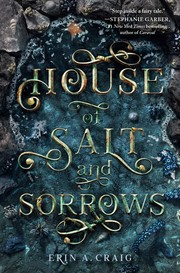
House of Salt and Sorrows
Annaleigh Thaumas investigates her sister's death in a cursed island manor where the balls are illusions and the sea god is always listening.
2,025-word summary · 9 min read

Wither
In a future where women die at twenty, sixteen-year-old Rhine is sold as a bride to a wealthy stranger and plots an escape from a beautiful prison.
2,395-word summary · 11 min read
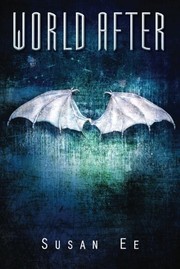
World After
Penryn wakes from near-death to find her altered sister Paige hunted as a monster, and follows her into the angels' scorpion factory and Uriel's coup.
2,213-word summary · 10 min read
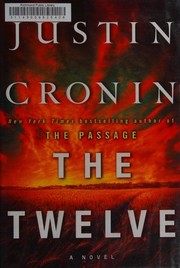
The Twelve
The middle volume of the Passage trilogy braids the year America died, a picnic massacre decades earlier, and the survivors' war against the twelve master…
2,089-word summary · 9 min read

Anna Dressed in Blood
Ghost hunter Cas meets Anna, the ghost who kills back.
2,622-word summary · 12 min read
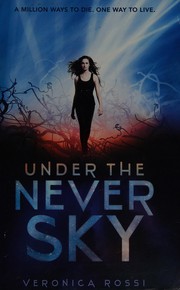
Under the Never Sky
Exiled from her Pod, Aria crosses a storm-scarred wilderness with Outsider Perry to find family and the fabled Still Blue.
2,572-word summary · 11 min read
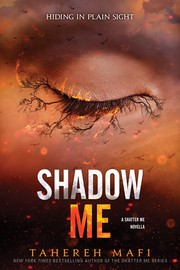
Shadow Me
Kenji Kishimoto narrates for the first time as he joins Nazeera on a quiet mission after Restore Me, carrying painful secrets into Defy Me.
2,512-word summary · 11 min read
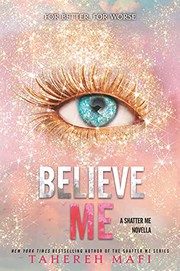
Believe Me
Warner narrates life after Imagine Me as he and Juliette try to marry amid Sanctuary repairs.
2,217-word summary · 10 min read
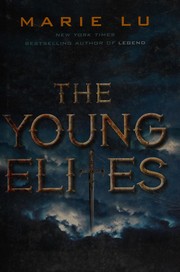
The Young Elites
Adelina survives fever and execution to join a secret group of gifted malfettos plotting against the queen of Kenettra.
3,310-word summary · 15 min read

Requiem
Lena fights in the Wilds while cured Hana marries into Portland power.
2,232-word summary · 10 min read
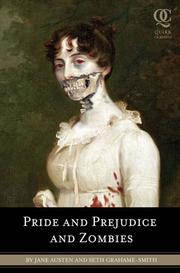
Pride and Prejudice and Zombies
Austen's courtship plot survives intact while Elizabeth and Darcy battle zombies, from the Netherfield ball to a duel with Lady Catherine.
2,526-word summary · 11 min read
Stalking Jack the Ripper
Lord's daughter Audrey Rose studies corpses in secret while the Ripper works Whitechapel beside Thomas.
2,030-word summary · 9 min read
Reached
Cassia, Ky, and Xander serve the Rising undercover as plague spreads, then chase a cure that tests love, loyalty, and who should lead after the Society.
2,690-word summary · 12 min read
Fracture Me
Adam Kent narrates this short bridge story after Omega Point falls, hiding with his little brother James while facing his fading place beside Juliette. Best…
3,004-word summary · 13 min read
Bird Box
A mother and two small children risk a blindfolded river trip after sight itself turns deadly.
3,229-word summary · 14 min read
Angelfall
After angels destroy the world, Penryn trades help with a wingless angel to rescue her sister from their stronghold.
2,420-word summary · 11 min read
Imagine Me
Juliette remembers who she was and storms the capital to end the Reestablishment for good.
2,090-word summary · 9 min read
Pandemonium
Lena survives the Wilds and spies in New York after losing Alex at the fence.
2,314-word summary · 10 min read
Crossed
Cassia crosses the Outer Provinces canyons seeking Ky after labor camp, while Xander returns as medic with Rising secrets to shift her search.
2,322-word summary · 10 min read
King's Cage
Chained by Maven with Silent Stone, Mare endures while Cal and the Guard gamble on rescue and alliance.
2,001-word summary · 9 min read
The Crown
Eadlyn Schreave must rule Illea and finish her Selection, torn between Kile, Henri, and translator Erik.
3,015-word summary · 13 min read
Restore Me
Juliette, now Supreme Commander, faces rule, the truth about Ella and Emmaline, and a summit that ends in blood.
2,963-word summary · 13 min read
Destroy Me
Shot by Juliette, Warner holds his base together while his father arrives with harsher plans for her.
2,556-word summary · 11 min read