
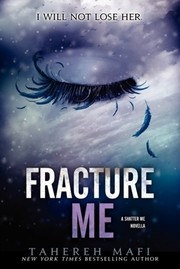
Fracture Me
3,004-word summary 13 min read
- First published
- 2013
- Publisher
- HarperCollins
- ISBN
- 9780062284839
- Series
- Shatter Me (#2.5)
Reading options
What's inside (9 sections)
I picked up Fracture Me because I had finished Unravel Me and felt annoyed with Adam. That sounds harsh, but I think a lot of readers know the feeling. Juliette had started to change in big ways, Warner had become much harder to dismiss, and Adam was still standing in the same spot, sweet and stuck. When I heard there was a short book from his point of view, set right after everything falls apart, I wanted to hear him out. The 2013 HarperCollins novella is listed as Shatter Me number 2.5, between Unravel Me and Ignite Me, and it is told entirely by Adam Kent. I read it in one evening, and then I sat with it longer than I expected for something so brief.
The basic setup is simple. Omega Point has fallen. The hidden base that Castle ran, the place where people with abilities were supposed to be safe, has been hit by Anderson and his soldiers. Juliette is gone from Adam. His little brother James is with him. The two brothers are on their own for much of the story, moving and hiding and trying not to be found. Adam spends his time keeping James safe while turning over what happened with Juliette and what it means that he cannot touch her the way Warner seems able to do.
If you have not read the series, this is not the place to start. Shatter Me introduced Juliette Ferrars, a girl whose touch can kill, locked away by a harsh military rule called the Reestablishment. Unravel Me brought her to Omega Point and deepened the love triangle between Adam, the soldier who first protected her, and Warner, the commanding officer's son who claimed to be immune to her touch. Destroy Me, the earlier novella numbered 1.5, gave Warner his own side story. Fracture Me does the same job for Adam. It is a bridge. It does not move the main plot a huge distance. It shows the same stretch of time from a different window.
I want to retell it the way I experienced it, in order, with room for why Adam acts the way he does and where the book feels thin. Because it is short, I will also pull in series context along the way. That is the only honest way to get to a full picture of a novella like this without padding it with invented scenes.
Where this story sits in Shatter Me
Shatter Me came first and worked as an origin. Juliette alone in a cell. Adam as the new cellmate who seemed kind. Warner as the cold young officer who kept her close for reasons that were not clear at first. The writing was full of striking images and crossed out lines, and the romance carried a lot of the early interest. Adam mattered there because he was safety. He knew Juliette from before. He could touch her, or so it seemed for a time, and that made him feel like proof that she was not a monster.
Unravel Me widened the world. Omega Point entered, with Castle and Kenji and a group of young people with gifts of their own. Juliette learned more about her power and about Warner. Adam learned that his own ability to touch Juliette came with limits and costs, and that his training as a soldier did not prepare him for a fight where his girlfriend was becoming stronger than him. By the end of that book, Anderson had struck hard, people were scattered, and Juliette was pulled toward Warner in ways Adam could feel but could not stop.
Destroy Me set the pattern for these short books. It was Warner's turn to speak, and it changed how many readers saw him. He went from villain to someone with a past and a private logic. Fracture Me tries to do the same for Adam at the moment when readers were starting to leave him behind. That timing matters. Without this novella, Adam would go from Unravel Me straight into Ignite Me with a gap in his story. With it, we see what the gap cost him.
The novella assumes you know all of this. It does not reintroduce the Reestablishment from scratch. It does not explain Omega Point at length. It drops you with Adam and James after the fall and trusts you to remember why that fall hurts. For fans in the middle of a reread, that trust feels good. For a newcomer, it would feel cold. I think that is fair to say up front. This is bonus material with a clear audience.
One more piece of context helped me. Mafi wrote these books quickly in the early 2010s, when young adult dystopia was everywhere, and Shatter Me stood out because of voice rather than worldbuilding. The voice in the main books is Juliette, intense and lyrical and full of feeling. Adam never sounded like that. His chapters in the main books, when we got them, were plainer. Fracture Me keeps that plainer sound. It reads fast. It repeats phrases when Adam is stressed. It circles back to Juliette the way a person circles back to a fight they cannot fix.
Adam Kent when no one is watching
Adam narrates, and the first thing you notice is how tired he is. Not noble tired. Just worn down. He has been a soldier, a boyfriend, a son of a difficult home, and now he is basically a guardian on the run. He does not have Castle to tell him the plan. He does not have Juliette to give him a reason that feels simple. He has James.
What I liked here is how ordinary his worries are. He thinks about food. He thinks about whether James is sleeping enough. He thinks about whether a noise outside means soldiers or just wind. He tries to sound steady for his brother while his own thoughts run fast. That split, calm voice outside and loud worry inside, felt true to who Adam has always been in the series. He performs steadiness.
He also thinks about Juliette almost constantly. Not in a grand romantic way. More in a looping way. He replays moments from Unravel Me. A look she gave him. A time she pulled away. A time Warner was there instead. He tries to tell himself he is being fair. He tries to tell himself he wants her to be strong even if it means she does not need him. Then a minute later he is angry that she seems to need Warner. That back and forth can be frustrating to read, and I think it is meant to be. Adam is not growing in this novella so much as he is admitting he is stuck.
His power, or rather his complicated resistance to Juliette, hangs over everything. In the early books the fact that he could touch her set him apart. Here that difference feels smaller. He knows Warner can touch her too, and that knowledge eats at him. He does not have long speeches about it. He has short bursts. He wonders if he was ever special to her or just safe. He wonders if safe is enough when the world is burning. I found those passages sadder than any battle scene in the book.
If you disliked Adam before, this section will not magically fix him for you. He is still passive in the way critics point to. He reacts more than he plans. But you do understand his passivity better. He was raised to keep his head down and keep James alive. Now the people with plans, like Castle and Warner and even Juliette, are moving in directions he cannot follow. He is left holding the most human job, care of a child, with no backup.
James and the weight of being the older brother
James is ten, funny, and sharp in the way younger siblings often are in books like this. He notices more than Adam wants him to notice. He asks where Juliette is. He asks when they can stop running. He tries to joke even when he is scared. Adam loves him with a focus that pushes everything else aside, and that love is the strongest part of the novella.
Their scenes together give the book its few light moments. James complains about being bored. James wants real food instead of whatever Adam has found. James pretends to be brave and then admits he is not. Adam tries to answer honestly without scaring him. Those exchanges reminded me why Adam mattered in Shatter Me in the first place. He was the only person who treated care as action rather than talk. He made soup. He stayed awake. He carried bags. Here he does all of that under worse pressure.
His world narrows to a room, a road, and a brother.
I kept thinking about how James functions for the fandom too. Readers who found the love triangle tiring often still liked James. He is loyal without being part of the romance. He likes Juliette. He looks up to Adam. He is scared of soldiers in a plain way that cuts through the more stylized suffering of the older teens. In Fracture Me he gets more page time than in either main novel up to that point, and the book is better for it. When Adam fails to explain things, James asks the simple question that makes Adam try again.
There is one thread I want to keep general because the novella itself keeps it tense rather than detailed. Adam and James are not safe for long. Soldiers are still searching. Anderson's reach is still long even after the damage at Omega Point. Adam has to decide when to stay still and when to move, and every choice feels risky with a child in tow. Mafi does not turn this into a long chase with clever traps. It is more about waiting, listening, and trying to read signs. That choice fits Adam. He is not a strategist. He is a brother trying not to make a fatal mistake.
Life off the grid after Omega Point
The fall of Omega Point is the shadow over the whole book. In Unravel Me that place felt like an answer. Underground rooms. Training. People like you. A leader in Castle who spoke about change. Then Anderson proved it was not hidden enough. The attack scattered everyone Adam trusted. Fracture Me lives in the mess after that promise breaks.
Adam does not give a full battle report. He gives flashes. Alarms. Running. Losing sight of people. Not knowing who was taken and who got out. That vagueness frustrated me at first. I wanted a clear timeline. Then I realized the vagueness is the point for Adam. He was not in the command room. He was trying to hold onto James while stronger people fought. His memory of the fall is personal rather than tactical.
What follows is a stretch of hiding that will feel familiar if you have read a lot of dystopia. Finding shelter. Conserving supplies. Avoiding patrols. Checking for cameras or trackers. Sleeping in shifts. Adam is good at the small parts of this and bad at the big picture. He can keep James quiet. He cannot build a new plan. He waits for word from others. He hopes Juliette is alive and safe, and he dreads what safe might mean if it means she is with Warner.
Compared with the training drive of Unravel Me, this book is stiller, and readers who need constant action will feel that slowness.
One thing the novella does well is show how the Reestablishment controls people even when soldiers are not in the room. Adam watches what he says. He watches James. He assumes any stranger could report them. That fear does not need a long speech about politics. It lives in small choices. Do not use a real name. Do not stay where you were seen. Do not trust a quiet road. For readers who sometimes found the series too focused on romance, these pages are a reminder of the dystopia frame. The world outside is still run by men like Anderson, and soft moments can end fast.
Juliette from across the divide
Juliette is mostly absent, and that absence is the engine. Adam thinks about her, dreams about her, worries about her, and measures himself against Warner through her. He remembers how she looked at him in Shatter Me, like he was proof she could be loved. He remembers how she started to look past him in Unravel Me, toward her own strength and toward Warner, who did not flinch from her power.
To his credit, Adam tries not to make her the villain in his head, but trying and believing are different, and every few pages he slips back into jealousy over Warner.
This is where the book overlaps most with Unravel Me. Some scenes are retold from Adam's side. A conversation looks different when you hear what Adam heard instead of what Juliette heard. A silence means something else. If you read the books close together, that overlap is interesting. You see how two people can live through the same day and keep different memories. If you read them far apart, it can feel like repetition. I read them fairly close, and even I skimmed a little when a familiar argument started again.
Warner hovers without needing many pages. Adam sees him mainly as the rival who can touch Juliette, a view that feels honest but too simple, and I wished Mafi had pushed him one step further toward seeing Warner clearly.
The question of rescue stays vague on purpose. Adam wants to find Juliette. He also knows he cannot reach her alone and cannot risk James to try. He waits, he listens, he hopes others will make contact. Readers looking for a mission where Adam storms in to save her will not find it. This is not that kind of story. It is about the ache of being separated and the slow acceptance that Juliette may save herself in ways that leave Adam behind. That acceptance hurts, and the book does not rush past the hurt.
What repeats and what still works
Let me be direct about the criticism, because a bridge book should be judged as one. Fracture Me is short. It repeats scenes and feelings from Unravel Me. Adam remains passive for long stretches. If you were already tired of the love triangle, hearing Adam loop through jealousy and worry will test your patience. I felt that test around the middle. I liked Adam more after, but I did not find him exciting.
The length cuts both ways. On one hand, the novella does not waste much time. You can finish it in an evening and go straight into Ignite Me with a clearer sense of where Adam stands. On the other hand, so much has to be carried by summary and memory that the present action feels thin. Hide, wait, remember, worry, move. Hide again. For a series known for intense feeling, the feeling here sometimes circles instead of building.
And yet some parts land. The bond with James never feels fake. The picture of life after Omega Point adds weight to Ignite Me, because you know what failure cost the people who were not leaders. The reframing of Unravel Me from Adam's side helps explain why he steps back in the next book rather than fighting harder for Juliette. His withdrawal makes more sense when you have heard him admit he feels outmatched. That context is useful even if the prose is not Mafi's strongest.
Reception has split along those lines. Adam loyalists call it essential, Warner converts call it skippable, and I land in the middle. Worth reading if you care about the full triangle, skippable if you only care about plot.
Adam's plainer narration never sparks the way Juliette's does, which suits his character but makes this less fun sentence by sentence than the main novels.
Should you read it and where it leaves Adam
If you are reading Shatter Me in order, read Fracture Me between Unravel Me and Ignite Me. It takes little time and it puts you in Adam's head right before his role shrinks. You will see why he pulls back. You will see how much James costs him in attention and love. You will see that his distance from Juliette comes from shame, fatigue, and a clear sense that she is moving toward a fight he cannot lead.
Where does it leave him. Hiding, but less self deceived. Still in love with Juliette, but less sure that love is enough. Still devoted to James, and clearer than ever that James comes first. Still wary of Warner, Anderson, Castle, Kenji, and everyone with a plan, because plans have kept failing the people he loves. He is not ready to lead a rebellion. He is ready to keep his brother alive and to stop lying to himself about the romance.
I closed the book feeling kinder toward Adam than when I opened it. That is probably what the novella exists to do. Not to make him the hero again, but to keep him human while the series turns toward Juliette and Warner. In a long saga full of superpowers and secret bases, that small human job, feeding a kid, staying awake, letting go of a girl who is outgrowing you, felt real. The book is slight, repetitive in places, and carried by context. It also has a quiet honesty about losing that I did not expect from a bridge novella. For Adam loyalists it will feel necessary. For others it will feel like a pause before Ignite Me picks up speed. Either way, it is short enough to try, and it gave me a better reason to root for Adam to find his own path rather than just waiting for Juliette to return.
FAQ
Where does Fracture Me fit in the Shatter Me series?
It is Shatter Me number 2.5, set between Unravel Me and Ignite Me. It follows the earlier novella Destroy Me, which gave Warner the same side-story treatment.
Do I need to read Fracture Me to follow Ignite Me?
No. Ignite Me still makes sense without it. Fracture Me adds Adam's view of the separation after Omega Point falls and explains his distance from Juliette.
Who narrates Fracture Me?
Adam Kent narrates the whole novella, unlike the main novels which follow Juliette Ferrars. His little brother James is the other central presence throughout.
Similar books
More from Shatter Me first, then related titles.

Shatter Me
Juliette Ferrars, whose touch kills, is locked up by the Reestablishment until Adam and Warner pull her into war.
2,115-word summary · 9 min read
Destroy Me
Shot by Juliette, Warner holds his base together while his father arrives with harsher plans for her.
2,556-word summary · 11 min read
Unravel Me
Juliette trains at Omega Point while Warner hunts her and Adam's touch starts to hurt them both.
2,262-word summary · 10 min read
Ignite Me
Juliette must rebuild after Omega Point falls, face Anderson, and choose between Adam and Warner as war closes in.
2,253-word summary · 10 min read
Restore Me
Juliette, now Supreme Commander, faces rule, the truth about Ella and Emmaline, and a summit that ends in blood.
2,963-word summary · 13 min read
Shadow Me
Kenji Kishimoto narrates for the first time as he joins Nazeera on a quiet mission after Restore Me, carrying painful secrets into Defy Me.
2,512-word summary · 11 min read

Defy Me
Kidnapped to Oceania, Ella faces her cruel parents and dying sister while Warner and Kenji fight to reach her.
2,833-word summary · 13 min read

Reveal Me
A Shatter Me novella told by Kenji, set between Defy Me and Imagine Me, as the rebels learn Anderson has taken hostages and Juliette faces Emmaline.
2,098-word summary · 9 min read
Imagine Me
Juliette remembers who she was and storms the capital to end the Reestablishment for good.
2,090-word summary · 9 min read
Believe Me
Warner narrates life after Imagine Me as he and Juliette try to marry amid Sanctuary repairs.
2,217-word summary · 10 min read

The Lost Sisters
Taryn Duarte writes a letter to her twin, Jude, explaining how she fell for Locke and why she stayed silent while he used them both.
1,914-word summary · 9 min read

Wither
In a future where women die at twenty, sixteen-year-old Rhine is sold as a bride to a wealthy stranger and plots an escape from a beautiful prison.
2,395-word summary · 11 min read

Never Fade
Ruby, now a leader in the Children's League, must track down the boy whose memories she erased, because he holds the only proof of what caused the disease that…
2,188-word summary · 10 min read
World After
Penryn wakes from near-death to find her altered sister Paige hunted as a monster, and follows her into the angels' scorpion factory and Uriel's coup.
2,213-word summary · 10 min read

Under the Never Sky
Exiled from her Pod, Aria crosses a storm-scarred wilderness with Outsider Perry to find family and the fabled Still Blue.
2,572-word summary · 11 min read
Powerful
Adena survives alone in the Loot and falls for a stranger while Paedyn faces the Trials.
2,229-word summary · 10 min read
The Young Elites
Adelina survives fever and execution to join a secret group of gifted malfettos plotting against the queen of Kenettra.
3,310-word summary · 15 min read

Requiem
Lena fights in the Wilds while cured Hana marries into Portland power.
2,232-word summary · 10 min read
Reached
Cassia, Ky, and Xander serve the Rising undercover as plague spreads, then chase a cure that tests love, loyalty, and who should lead after the Society.
2,690-word summary · 12 min read
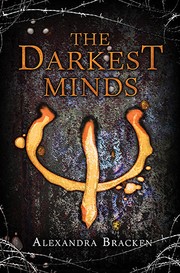
The Darkest Minds
A teen with mind powers escapes a government camp and joins three runaways in Bracken's 2012 dystopia, first in The Darkest Minds series.
2,038-word summary · 9 min read

Angelfall
After angels destroy the world, Penryn trades help with a wingless angel to rescue her sister from their stronghold.
2,420-word summary · 11 min read


Pandemonium
Lena survives the Wilds and spies in New York after losing Alex at the fence.
2,314-word summary · 10 min read
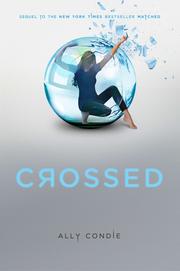
Crossed
Cassia crosses the Outer Provinces canyons seeking Ky after labor camp, while Xander returns as medic with Rising secrets to shift her search.
2,322-word summary · 10 min read
King's Cage
Chained by Maven with Silent Stone, Mare endures while Cal and the Guard gamble on rescue and alliance.
2,001-word summary · 9 min read

The Crown
Eadlyn Schreave must rule Illea and finish her Selection, torn between Kile, Henri, and translator Erik.
3,015-word summary · 13 min read

The Heir
Princess Eadlyn holds her own Selection with 35 suitors while Illea rebels.
2,305-word summary · 10 min read