
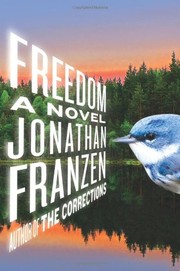
Freedom
2,678-word summary 12 min read 576 pages in the book
- First published
- 2010
- Publisher
- Farrar, Straus and Giroux
- Pages
- 576
- ISBN
- 9780374158460
Reading options
What's inside (8 sections)
I picked up Freedom because The Corrections had stayed with me, and I kept hearing this one described as the follow up that got the big magazine cover and the book club push. Jonathan Franzen published it on August 31, 2010 with Farrar, Straus and Giroux, 576 pages in the first hardcover. It was a Time cover story, an Oprah pick, a president on vacation book. I expected a state of the nation lecture. What I got was closer to a long, crowded family argument where everyone thinks they are acting on principle and almost no one is.
The center is the Berglunds. Walter and Patty, married young, two kids, a house on Ramsey Hill in St. Paul that they fixed up when few college educated liberals were moving back to the city. Walter is a steady, soft spoken lawyer who cares about habitat and sprawl. Patty was a college basketball star, tall and warm and trying hard to be the kind of mother who bakes and volunteers and knows the neighbors. Their daughter Jessica is capable and even tempered. Their son Joey is restless and sharp and allergic to being managed. For a while they look like the model household for a certain generation, Whole Foods bags, compost, good intentions.
Franzen opens with the neighbors watching. We see the Berglunds from outside first, through block gossip, before we learn what the marriage costs inside. The street notices when Joey starts spending time next door with the Monaghans, a loud Republican family with a daughter named Connie who adores him. By the time the Berglunds leave Minnesota for Washington, the myth is already cracked.
Ramsey Hill and the good neighbors
The first part reads like a small town comedy told by people who enjoy other people's trouble a little too much. Patty and Walter bought early, did the work themselves, raised chickens or talked about it, befriended the old timers. Neighbors admired them and also kept score. Were they a bit superior? Did Walter lecture about traffic and leaf blowers? Did Patty smile while holding a grudge?
Joey is the crack in the wall here. As a teenager he finds the Berglund earnestness airless. Next door, Carol Monaghan runs a crowded, blunt, affectionate house where nobody talks about carbon footprints. Her daughter Connie, a year or so younger than Joey, loves him with a plain devotion that embarrasses him and anchors him at the same time. Joey starts sleeping over there, then effectively moves in. For Patty, who built her identity around being a hands on mother, this feels like a public verdict. She drinks more. She picks fights. Walter tries to reason his way through, which helps no one.
I liked how Franzen uses Jessica in these pages. She does not get as much room as the other three, and that is a flaw we can come back to, but her steadiness throws the rest into relief. She does well in school, works jobs that try to do good, keeps ties to both parents without taking sides in the loud way Joey does. When Joey defects to the Monaghans, Jessica stays, watches, remembers. Her loyalty makes Patty's hurt sharper because Patty can see that one child can live with her and the other cannot.
The move east closes this section. With the kids in college, Walter takes work in Washington and Patty follows, unhappy and unmoored. The house in St. Paul becomes a rental and then a memory.
Patty tells her side
Then the book shifts and, for a long stretch, becomes Patty's. At the urging of a therapist, she writes an account she calls Mistakes Were Made. It is the strongest part of the novel for me, by a clear margin, and it changes how you read everything before it.
She grows up in Westchester County in a polished suburban family where achievement is assumed and attention is thin. Her parents are busy and self involved in the particular way of people who think they are open minded. An older sister glows with artistic promise. A younger brother coasts. Patty finds a place on the basketball court. She is good, really good, disciplined and physical, and the game gives her friendship and praise she does not get at home.
Two harms mark those years. At a party she is assaulted by an older boy while drunk, an event she minimizes at first and carries for decades. Later, in college on a scholarship to the University of Minnesota, a knee injury ends the basketball life that had organized her days. Around the same time she falls in with Eliza, a troubled teammate friend who pulls her toward parties and scenes she half wants and half fears. Through Eliza she meets two roommates from Macalester College who will shape her adult life. Richard Katz, handsome and cutting, plays guitar in a scrappy band and holds a room without trying. Walter Berglund, his roommate, is kind and awkward and openly smitten.
Patty chases Richard and gets turned down in a way that wounds her pride. Walter waits, calls, shows up, listens. She marries Walter partly from love and partly from exhaustion, from wanting a safe harbor after years of trying to be wanted by people who withhold. For a long time it works. They have Jessica and then Joey. They buy the Ramsey Hill house. She pours herself into mothering with an athlete's intensity. But the old rejection never fully heals, and when the kids grow distant, the marriage thins. She drinks. She snaps at friends. She starts calling Richard, then seeing him.
What makes this section hold is the voice. Patty is funny about herself without letting herself off. She admits to competitiveness with other mothers, to resentment toward Walter's goodness, to hunger to be chosen first for once. Her account of mothering Joey is especially raw, the way love curdles when a child prefers someone else.
The affair itself happens at the family's lake place in northern Minnesota. It is brief, clumsy, weighted with history rather than passion. Patty does not describe it as rescue. She describes it as a mistake she chose because she wanted to know, once, what it felt like to be wanted by the man who had said no. That honesty is why Walter reading these pages later lands so hard.
Joey moves next door and then farther
Joey gets the next large arc, and his story carries the book through the early 2000s. He is seventeen going on thirty, good with money, impatient with talk. After living with the Monaghans through high school, he goes to the University of Virginia. He wants distance from his mother most of all, and from Connie too, though he does not admit the second part.
At Virginia he rooms with Jonathan, a wealthy, confident student from a connected Northern Virginia family. Jonathan's younger sister Jenna is beautiful and poised and used to attention. Joey, who prided himself on being independent, is dazzled. He chases Jenna while keeping Connie on a fraying line back home. Connie, depressed and stuck working retail jobs, sends him her savings to invest. They marry young in an impulsive ceremony that solves nothing, a fact both of them sense even as they go through with it.
Money enters through Kenny Bartles, a genial operator with contracts tied to the Iraq war. Joey signs on to a subcontract to supply truck parts, seeing quick profit and a way to prove he can make it without his parents. The work takes him to Paraguay and into rooms where paperwork matters less than relationships and nerve. He learns the parts are substandard and that pressure is building to ship them anyway to meet a Defense Department deadline. He likes the cash. He dislikes what the cash requires.
I found these chapters the most uneven. Franzen captures a particular post 9/11 campus mood, the mix of fear, careerism, and ideology. Joey arguing with Jonathan's father, a forceful neoconservative who enjoys debate as sport, shows Joey trying on adult positions to see what fits. His trip with Jenna that ends in embarrassment in a hotel room is painful and human.
On the other hand, the trucking plot gets dense with suppliers, middlemen, and threats. The point comes through, a clever kid learns how easy it is to drift into fraud when you tell yourself you will fix it later, but the path is clogged.
What stays with me is Joey with Connie. Connie loves without strategy, which Joey both needs and resents. When Joey finally turns back toward his father for advice about blowing the whistle, it marks the first time he treats Walter as a person rather than a limit to escape.
Walter and the warbler deal
Walter is the moral center and, for long stretches, the mouthpiece. After years as a lawyer, he goes to Washington to run conservation work for a trust focused on the cerulean warbler, a small blue songbird losing habitat in Appalachia. The money behind the trust comes from coal, through a magnate named Vin Haven who wants to practice a kind of offset. His companies will blast mountaintops in West Virginia for coal, then reshape and replant the land as preserve. Walter knows this bargain stinks. He tells himself the birds will gain more than they lose, and that without private money nothing large gets saved.
Franzen piles on the contradictions on purpose. Walter, who opposed the Iraq war and dislikes sprawl and overconsumption, now shares offices with people who joke about tree huggers. He starts a side project called Free Space, aimed at human overpopulation, which he sees as the driver behind every other harm. He gives money from the trust to fund it. He recruits his young assistant Lalitha, bright and committed and far more radical in style, who admires him and then loves him. Lalitha is maybe twenty years younger, Indian American, impatient with compromise, and she sees Walter's decency more clearly than he does.
Their work scenes have energy. Walter testifying, Walter negotiating with county officials, Walter trying to keep bird counts separate from coal politics. Lalitha pushes him to be bolder. The affection between them grows in offices and rental cars near project sites. Walter does not act on it at first from loyalty to Patty, even though the marriage is already broken in fact.
Then Walter reads Patty's memoir. Richard, trying to force honesty, leaves it where Walter will find it. Walter learns about the lake house affair in Patty's own words. He throws her out. The scene is ugly and believable, full of interrupted sentences and old grievances surfacing at once. Patty moves to Jersey City with Richard. Walter and Lalitha become a couple, guilty and relieved and trying to build something cleaner from a messy start.
This is also where Franzen lets Walter talk too long. The Free Space speeches go on past persuasion into repetition. A character can hold unpopular views without delivering them as essays. The low point is a live television appearance where an exhausted Walter rants and becomes, overnight, a hero to angry young people online. It works as plot, since he gets fired, but the rant itself reads like an op ed inserted into a novel.
Lalitha's death follows soon after. Driving alone to West Virginia to manage a Free Space concert, she is killed in a car crash. Franzen writes it plainly, which is merciful. Walter retreats to the lake house in Minnesota and stops answering most people.
Richard Katz keeps coming back
Richard Katz could have been a caricature, the cool friend who never grows up, but Franzen gives him a working life. Between brief flares of indie success, Richard builds decks and does roofing to pay rent. He is good with his hands and bad with staying. His band days at Macalester with Walter as a kind of manager and fan gave him a myth to live off. Middle age brings a surprise second act with an album called Nameless Lake, brooding songs that critics praise and that Walter correctly hears as shaped by the affair with Patty.
Richard's appeal is that he names what Walter and Patty circle. His time living with Patty in Jersey City exposes both of them. Patty wants devotion. Richard wants space and a room where he can play loud. They last months, not years.
I appreciated that Franzen does not make Richard the prize. Teenage Patty thought choosing Richard meant choosing freedom. Adult Patty learns that Richard's freedom is mostly avoidance. His kindness to her later, encouraging her to write directly to Walter and try to repair, is one of the more grown up gestures in the book.
Richard building things with lumber and nails while singing about lakes and betrayal gives the novel air when the arguments get airless.
Blowups, losses, and the lake
The last third moves quickly after so much buildup. Joey, sick with guilt about the truck parts, calls Walter. Joey decides not to become a whistleblower in the formal sense, but he steps away from Bartles and puts much of the profit toward amends. He and Connie find a steadier footing, not healed but less frantic.
Patty's later years in this stretch are lonely and convincing. After Richard, she stays with old college friends, then goes home to Westchester when her father falls ill with cancer. She settles in Brooklyn, works as a teacher's aide and coaches youth basketball. She runs into Richard by chance. He tells her Walter is alone at the lake and that she should write to him honestly.
Walter at the lake is the book's strangest image. He lives mostly alone in the family cabin near a new development called Canterbridge Estates. He feeds birds. He wages war on the neighborhood's free roaming cats, which he sees as killers of songbirds. Neighbors think he is unhinged, and he half is, from grief for Lalitha and shame about everything else.
Patty sends a second memoir, addressed to Walter, and then appears at the cabin. Slowly, through chores and weather and visits from Jessica and Joey, they rebuild a companionship. It is not forgiveness as event but as practice. They decide after a year to leave the lake for New York to be closer to the kids. At Walter's wish, the lake property is made into a bird sanctuary proofed against cats, named in memory of Lalitha.
So where does that leave the book? For me, Patty's voice carries it. Her memoir sections have humor and self knowledge that the political set pieces lack. Walter's decency holds attention even when his speeches test it. Joey and Connie give the middle its pulse. Jessica deserves more pages than she gets. She is often the adult in the room, and Franzen seems to know it but keeps her at the edge to keep focus on the triangle.
Fair criticism belongs here. The novel is long and sometimes shows it. The population and capitalism arguments repeat. The truck subcontract detail overwhelms character at points. Some readers will find the politics hectoring, especially if they do not share Franzen's environmental worries. Others will find Patty and Walter's fights too familiar to thrill. I felt both pulls. There were evenings I raced through a hundred pages and mornings I set it down during a Free Space meeting.
Who should try it? Readers who like family novels with room to breathe, who do not mind unlikable behavior described with care, who want a portrait of liberal middle age meeting its limits around 2004 to 2010. Readers who want a tight mystery or a fast romance should skip it. This is a book about people trying to use freedom well and learning that choice without care harms others, birds and neighbors and children included. The lake at the end, quieter and fenced against cats, does not solve that problem. It gives Walter and Patty a place to practice better habits. That modest close suited them, and it suited me after so much noise.
FAQ
When was Freedom published?
Farrar, Straus and Giroux published it on August 31, 2010. The first hardcover runs 576 pages (ISBN 9780374158460).
Is Freedom a sequel to The Corrections?
No. It shares themes and a publisher with The Corrections, but it follows the unrelated Berglund family in Minnesota and Washington.
Who are the main characters in Freedom?
Patty and Walter Berglund, their children Jessica and Joey, neighbor Connie Monaghan, rock musician Richard Katz, and Walter's assistant Lalitha.
Similar books
The Corrections
An aging Midwestern couple tries to gather three troubled adult children for one last Christmas at home.
2,094-word summary · 9 min read

A Spool of Blue Thread
Four generations of the Whitshank family in Baltimore, and the silences, resentments and quiet love they hand down without ever saying so.
2,408-word summary · 11 min read
The Most Fun We Ever Had
Four Sorenson sisters orbit perfect parents hiding old cracks.
2,590-word summary · 12 min read

Little Earthquakes
Four Philadelphia women meet during pregnancy and discover that new motherhood is nothing like the plan, while friendship becomes the thing that holds them…
1,997-word summary · 9 min read

Howards End
Forster's 1910 novel follows two families, a house in Hertfordshire, and a burned note, asking whether money and feeling can ever be connected.
2,187-word summary · 10 min read

Marriage for One
Rose marries a cold lawyer to save her coffee shop, then discovers the arrangement was never only business.
2,032-word summary · 9 min read

Days at the Morisaki Bookshop
Heartbroken Takako moves into her uncle's tiny secondhand bookshop in Jimbocho, and the shop and its regulars slowly give her back her life.
2,011-word summary · 9 min read

Olive, Again
Elizabeth Strout returns to Crosby, Maine, as Olive Kitteridge marries Jack Kennison, confronts her son, and faces old age, grief, and small-town judgment.
2,333-word summary · 10 min read
True Colors
Three Grey sisters split over love and duty after their father judges them.
2,596-word summary · 12 min read

The Identicals
Twin sisters swap Nantucket and Martha Vineyard lives for a summer.
2,556-word summary · 11 min read
The Accidental Tourist
Grieving Macon writes travel guides for haters of travel, then Muriel intrudes.
2,252-word summary · 10 min read

Kitchen
Orphan Mikage finds home in a kitchen with Yuichi and Eriko after loss.
2,597-word summary · 12 min read

Heart of the Matter
Two Boston mothers collide after a burn injury puts a single mom in the orbit of another woman's surgeon husband.
2,585-word summary · 11 min read
Summer Sisters
Vix and Caitlin share Martha's Vineyard summers from age twelve into adulthood, through first love, grief, marriage, and a disappearance that still haunts Vix.
3,633-word summary · 16 min read

Fates and Furies
Lauren Groff tells one 24 year marriage twice, first through Lotto's bright luck, then through Mathilde's hidden past and quiet control.
2,992-word summary · 13 min read

The Wedding
Wilson Lewis courts his own wife again with Noah's help as daughter Anna plans her wedding.
2,076-word summary · 9 min read

The Bean Trees
Taylor Greer flees Kentucky, inherits Cherokee toddler Turtle, and roots with Tucson strays.
2,082-word summary · 9 min read
Home Front
A Guard pilot deploys, comes home wounded, while husband and daughters fight to heal together.
2,091-word summary · 9 min read
My Name Is Lucy Barton
Hospitalized for weeks, Lucy Barton is visited by her estranged mother, stirring memories of Amgash poverty, marriage, and becoming a writer.
2,934-word summary · 13 min read

The Vegetarian
After a bloody dream, Yeong-hye stops eating meat, and her ordinary marriage cracks open in Han Kang's spare and unsettling novel.
2,302-word summary · 10 min read

Stoner
William Stoner trades farm life for literature, then endures a cold marriage and petty campus wars in John Williams's quiet classic.
2,282-word summary · 10 min read

Olive Kitteridge
Thirteen linked stories orbit blunt Crosby teacher Olive, husband Henry and son Christopher through love, aging and Maine small-town life.
2,385-word summary · 11 min read
The Pact
After Emily Gold dies from a gunshot, her boyfriend Chris Harte says it was a suicide pact and faces trial for murder.
2,873-word summary · 13 min read
What Alice Forgot
After a gym fall erases ten years, Alice, 39, wakes as her 29 year old self and must relearn her three kids and failing marriage as a stranger.
2,495-word summary · 11 min read

The Memory Keeper's Daughter
On a snowy night a doctor gives away his newborn daughter and tells his wife she died.
2,154-word summary · 10 min read
My Sister's Keeper
Thirteen-year-old Anna sues her parents for medical emancipation so she can refuse to give her dying sister Kate a kidney.
2,332-word summary · 10 min read

What Happened to Goodbye
Mclean has reinvented herself in four towns since her parents divorced. In Lakeview she uses her real name, and for the first time staying put becomes a choice.
2,796-word summary · 12 min read

Revolutionary Road
A Connecticut couple who believe they are too good for the suburbs plan to move to Paris, and the plan slowly exposes everything they cannot say to each other.
2,085-word summary · 9 min read
Lisey's Story
Two years after her novelist husband dies, Lisey Landon follows a trail of clues into his childhood and the other world that made him a writer.
1,998-word summary · 9 min read