
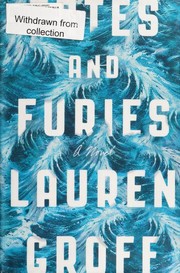
Fates and Furies
2,992-word summary 13 min read 390 pages in the book
- First published
- 2015
- Publisher
- Riverhead Books
- Pages
- 390
- ISBN
- 9781594634475
Reading options
What's inside (7 sections)
I came to this one late, after hearing about it for years. A friend who usually reads crime novels told me it was the only literary marriage book her book group fought about for two full meetings. Then I kept seeing the same line in profiles of Lauren Groff, that Barack Obama had named it his favorite book of 2015. That made me curious and a little wary. Books that get that kind of praise can feel like homework. This one did not, at least not at first. It pulled me in fast and then made me argue with it, which I prefer.
Here are the basics so we are on the same page. Fates and Furies was published by Riverhead Books in 2015, 390 pages in the hardcover first edition. It is Groff's third novel, after The Monsters of Templeton and Arcadia, and it was a finalist for the National Book Award. The structure is the whole trick. The first half, called Fates, tells a 24 year marriage from the husband's point of view. The second half, called Furies, tells the same marriage from the wife's point of view and pulls the rug out. You need both halves for the book to work. If you only read the first, you will think it is one kind of novel. It is not.
The husband is Lancelot Satterwhite, called Lotto. The wife is Mathilde. They meet near the end of college, marry at 22 after knowing each other about two weeks, and stay married for more than two decades. Friends make bets on how fast they will split. They do not split. What looks golden from outside turns out to be stranger and harder than anyone guessed.
The fast marriage that starts everything
Lotto starts as the kind of boy people stare at. He is tall, loud, handsome in a way that fills a room. His father is Gawain, who made money from Florida bottled water. His mother is Antoinette, who before marriage performed as a Weeki Wachee mermaid and later as a Cinderella at Disney World. Groff loves that detail and returns to it. Beauty as a job. Smiling under water while holding your breath.
Gawain dies when Lotto is still young, in a boating accident off the Florida coast. That loss hangs over Lotto for the rest of his life. He grows up with money and with a mother who knows how to use money as a message. Antoinette loves him, in her way, but she is cold and exact. She keeps accounts. She remembers slights. Lotto learns early that love in his family comes with conditions and paperwork.
Then there is his aunt Sallie, Gawain's sister, who stays in Lotto's corner when things get thin. She matters later, when Lotto and Mathilde are broke in New York and pride keeps them from asking for help.
Lotto goes north for college. He is not a great student. He wants to act. He is good on stage in the way big personalities sometimes are, all presence and feeling, and he collects friends easily. At a party near the end of school he meets Mathilde. She is pale, dark haired, quiet in a way that reads as mystery. He falls hard and instant. She seems to fall just as hard.
Two weeks later they marry. No big wedding. No parental blessing. Antoinette is furious. Mathilde has almost no family present, which Lotto barely registers at the time. I found that detail stuck in my throat on a second pass. At first it looks romantic. Two beautiful kids against the world. Later it looks like a warning. One of them has no past he can see.
They move to New York with almost nothing. This part of the book felt true to me in a way that surprised me. Groff writes early marriage poverty well. The walk up apartment that smells of other people's cooking. The jobs that pay rent but eat the day. Mathilde works office jobs she hates and keeps them afloat. Lotto waits tables, goes to auditions, gets close and does not get cast. They have a lot of sex and a lot of fights about money and they tell each other they are happy. For a while they are.
Friends cycle through. There is Chollie, Lotto's closest friend from school, funny and loyal. There is a whole theatre crowd that drifts through their living room. Groff is good at that particular New York feeling, when you are 24 and everyone is talented and no one can pay for dinner.
What holds Lotto and Mathilde together in these years is partly hunger. They want success so badly it feels like a third person in the apartment. Lotto wants to be great. Mathilde wants him to be great. That sounds sweet. It also lets them avoid asking harder questions about who Mathilde is when she is not helping Lotto become someone.
Fates, or Lotto's bright half
The first half belongs to Lotto completely. We stay close to his thoughts. He believes he is fated for greatness. The word fate here is doing double work. It means luck and destiny, but Groff also means the old Greek Fates, the three sisters who spin and cut the thread of a life. Lotto thinks his thread is golden. For a long stretch, the book lets him believe it.
His acting career stalls. He is too big, too much, too Lotto for the small parts he can get. A friend suggests he try writing. He does, almost by accident, and finds the thing he was actually built for. His first plays are rough and full of feeling. Then they get better. He writes fast, in bursts, and Mathilde types his drafts, makes coffee, tells him what drags. He thanks her in speeches and dedications and means it, without ever quite seeing how much shaping she is doing.
Money stays tight until it does not. One play lands. Then another. Soon Lotto is the celebrated young playwright of downtown New York. Reviews praise his big heart and his stage sense. Actors want to work with him. Rich people invite him to dinners where he is both pet and prize. He handles fame the way he handles everything, with warmth and vanity mixed together. He cheats more than once and tells himself it does not count because his heart stays home. He spends too much. He forgives people who use him because he likes being needed.
Antoinette hovers at the edge of all this. She never likes Mathilde. She thinks Mathilde married for money that was not even there yet, then stayed for fame. She sends letters that are polite and cutting at once. She controls a trust that could save them and dangles it. Lotto is caught between his mother and his wife for years and mostly pretends the conflict is smaller than it is. That avoidance felt very real to me. He loves both women and understands neither.
Groff threads little chorus moments through Lotto's story. Short paragraphs that step back and talk about marriage or luck, as if a Greek chorus wandered into a SoHo loft. I liked those at first. By the middle of Fates I started skimming some of them, because Lotto's life was moving and the commentary kept pausing it.
Fates covers a lot of time quickly. Years pass in pages. Children do not come, by choice and then by habit. Houses get bigger. First a better rental, then a house upstate, then travel. Lotto's plays keep opening. Some flop. Most do well enough. He and Mathilde develop rituals. Swimming. Parties. Long walks where they do not talk about the things that would hurt.
Then Fates ends with a shock. Lotto dies. He is not old. He and Mathilde are on one of their beach trips, the kind they have taken since they were young, and his body gives out. One minute he is there, bright and talking. Then he is gone. Groff writes it plainly, which makes it worse. No long farewell speech. Just the sudden stop that real death often is.
I sat with that for a bit before turning the page. If the book had ended there, it would have been a sad, fairly traditional story about a talented man and the good wife who held him up. Groff does not end there. She rewinds.
Furies, or Mathilde's hidden half
Furies starts over, but this time we follow Mathilde from the beginning. And her beginning is nothing like what Lotto imagined.
She was born in France, not in the vague happy past Lotto invented for her. Her early childhood includes neglect and violence that I will not lay out beat by beat, because the book reveals it slowly and because some of it is brutal. Her mother is gone. Her father is cold. There is a brother who hurts her in ways that leave marks no one can see at a dinner party. People who should have protected her do not. She learns very young to watch a room, to smile when needed, to keep papers and money where she can reach them.
As a teenager she gets out. A teacher or a distant relative helps, depending on how you read a few guarded scenes. She makes her way to America for college, trims her past down to almost nothing, and builds a new self. Mathilde becomes Mathilde by cutting away everything soft that could be grabbed. When Lotto meets her at that party, he meets the finished version. He never asks what the building cost.
That is the first big reversal. The second is about work. In Fates, Mathilde looks like a supportive wife who types and hosts. In Furies, we learn she was shaping Lotto's career the whole time. She cuts weak scenes. She tells him which ending will play. She reads reviews before he does and decides what he should hear. She befriends producers and quietly freezes out people who treat him badly. Lotto thinks fate favors him. A lot of that favor is Mathilde staying up late with a pencil.
She also works for money in the early years in ways Lotto barely notices. Gallery jobs. Office temp work. Later, when Lotto's plays pay, she manages the money with a hard head. She remembers every slight from Antoinette and answers most of them with silence. Silence, in this book, is a weapon. Mathilde can wait years to settle something. When Antoinette tries to control them through inheritance, Mathilde finds paperwork, talks to lawyers, protects what is theirs. She does not gloat. She just makes sure Antoinette loses that particular fight.
There are uglier secrets. Mathilde has an affair at one point, not from lack of love but from rage and loneliness and a need to have something Lotto does not touch. She helps ruin a critic who hurt Lotto, in a way that goes past what most readers will forgive. She keeps a kind of mental ledger of everyone who ever harmed her or Lotto, and she collects. Groff does not excuse this. She shows how a girl who was once powerless can grow into a woman who loves power too much.
And yet Mathilde loves Lotto. That is what makes Furies hard to put down and hard to like at times. Her love is real and possessive and tired. She knows Lotto cheats and she hates it and she stays. She knows he is vain and she finds the vanity touching. She knows he never fully sees her and she prefers it that way, until she does not. After his sudden death on that beach trip, she is left alone in a house full of his things. Widowhood strips the last cover off. She drinks more. She walks. She looks at what she did and what was done to her without Lotto there to soften the view.
The last pages follow her into old age and illness. I will not spell out the final scene. It is quiet after so much noise. What stayed with me was how alone she is in it, and how Groff lets her be both guilty and grieved without forcing a pardon.
What Groff is doing with myth and marriage
It helps to know the title is literal. The Fates in Greek myth spin, measure and cut life. The Furies punish blood crimes and broken bonds. Lotto lives as if the Fates love him. Mathilde lives as if the Furies raised her. Groff is not being subtle about this, and she knows it. Characters read Greek plays. Lotto writes a play that borrows from Antigone. Friends joke about gods. The chorus bits I mentioned keep nudging you to see this marriage as both ordinary and mythic.
I think the myth frame works best when it stays light. When Groff lets Lotto and Mathilde be two tired people in a kitchen, the old stories hum underneath without shouting. When she stops the plot to explain the parallel, it can feel heavy. Marriage in this book is part privacy and part performance. Lotto plays the golden boy. Mathilde plays the perfect wife.
Art is the other thread. Who makes a play? The name on the poster is Lotto's. The hands on the draft are often Mathilde's. Groff, who is married to a writer herself, writes about creative partnership with a sharp eye. She shows the boring parts. Rewriting at midnight. Cutting a beloved speech because it stops the show. Smiling at donors. She also shows the unfair parts. A wife's labor that looks like love and functions like unpaid work. A husband's gratitude that feels warm and still misses the point.
Place matters too. Florida is Lotto's origin, all sun and water and mothers in mermaid tails. New York is where they try to become people. France is Mathilde's buried country, cold rooms and closed doors. A beach is never only a beach here. It is where Lotto learned to swim, where he dies, where Mathilde keeps going back to look at the water.
Sex is everywhere in this book and mostly not joyful. Lotto wants a lot and takes a lot. Mathilde gives and withholds as a form of speech. Early scenes are hot in the way young love is hot. Later scenes are tired or angry or transactional. Some readers will find this honest. Some will find it cold. I found it honest about this particular couple, even when I did not enjoy reading it.
Where it annoyed me and who should still read it
I should say what wore me down, because plenty did.
Lotto can be exhausting. He is generous and he is selfish in the same hour. He wants applause for growing as well as for succeeding. His cheating is treated by him as minor, and the book makes you sit inside his excuses for a long time before Mathilde gets to answer them. If you need to like the man at the center of a novel, this will be a hard 390 pages. I did not like him for stretches. I believed him, which is different and mostly enough.
Mathilde's backstory piles on. Neglect, assault, loss upon loss, then a brilliant self rescue. Each piece is written well. Together they can feel stacked, as if Groff needed Mathilde to be damaged enough to justify what she later does. A friend of mine said the second half reads like three sad novels pressed into one woman. I see what she meant. The book wants Mathilde to be both victim and avenger and devoted wife, and sometimes those roles fight on the page.
The middle also sags a bit under theatre business. Names of plays, actors, producers, reviews. If you love backstage talk, you will eat this up. I do, up to a point. Past that point I started flipping ahead to get back to the marriage.
And the sentences. Groff writes packed, bright sentences that often run long and spill over. Many are beautiful. Some are too much. When it works, a paragraph about making soup can lift into something larger without leaving the kitchen. When it does not, you get a simple action buried under decoration.
So who should read it? If you like books that take marriage apart without looking away, this is one of the stronger recent ones. It belongs near Gone Girl on the shelf, but it is not a thriller. It is slower and richer and more interested in sentences than twists, even though it has a real twist in the middle. If you liked Edward Albee or Virginia Woolf on marriage, or if you teach creative partnership and invisible labor, you will find a lot to pull apart here.
Who should skip it for now? If you want steady plot and people who learn clean lessons, this will frustrate you. Nobody learns cleanly here. If sexual betrayal on the page bothers you, know it is frequent and frank. If you want Mathilde to be punished or pardoned neatly at the end, you will not get that comfort.
I closed the book thinking about a small moment near the start that Groff replays near the end with different weight. Young Lotto and Mathilde on a beach, broke and sunburned, sure they are special. Old Mathilde on a beach alone, still looking at water. The same place. A different story depending on who tells it. That feels right for what Groff set out to do. Two people can share a bed for 24 years and still live in different marriages. Secrets can hold a couple together as surely as truth can. Whether that is bleak or hopeful will depend on the reader. For me it was both, which is why I am still thinking about Mathilde days later, even as I wish Groff had trusted her with a little less plot and a little more quiet.
FAQ
Is Fates and Furies part of a series?
No. It is a standalone novel published by Riverhead Books in 2015, with Fates and Furies as its two halves, not separate volumes.
Who are Lotto and Mathilde?
Lotto is Lancelot Satterwhite, son of Florida water money and Antoinette, who becomes a New York playwright. Mathilde is his wife of 24 years, who supports his career while hiding her French childhood and settling scores in private.
What do Fates and Furies mean in the book?
Fates points to Lotto's belief that luck favors him, like the Greek sisters who spin life. Furies points to Mathilde's rage and payback, like the Greek avengers who punish broken bonds.
Similar books

A Spool of Blue Thread
Four generations of the Whitshank family in Baltimore, and the silences, resentments and quiet love they hand down without ever saying so.
2,408-word summary · 11 min read

Howards End
Forster's 1910 novel follows two families, a house in Hertfordshire, and a burned note, asking whether money and feeling can ever be connected.
2,187-word summary · 10 min read
The Pilot's Wife
Kathryn Lyons's husband dies in a plane crash, and the investigation reveals a secret life that forces her to rethink their marriage.
2,006-word summary · 9 min read
The Most Fun We Ever Had
Four Sorenson sisters orbit perfect parents hiding old cracks.
2,590-word summary · 12 min read
Freedom
A St. Paul couple and their grown children strain marriage, loyalty, and ideals in 2000s America.
2,678-word summary · 12 min read
To the Lighthouse
On a Scottish island, the Ramsay family and their guests circle one postponed trip to a lighthouse across ten years of loss.
2,548-word summary · 11 min read

The Vegetarian
After a bloody dream, Yeong-hye stops eating meat, and her ordinary marriage cracks open in Han Kang's spare and unsettling novel.
2,302-word summary · 10 min read

Stoner
William Stoner trades farm life for literature, then endures a cold marriage and petty campus wars in John Williams's quiet classic.
2,282-word summary · 10 min read
Truly Madly Guilty
A Sydney barbecue turns when two-year-old Ruby falls in a fountain. Three couples face guilt, marriage strain, and repair.
2,892-word summary · 13 min read
The Paper Palace
Elle faces Jonas choice at Cape Cod while assault memory returns.
2,588-word summary · 12 min read
Brawler
Nine fierce stories spanning the 1950s to today, following swimmers, siblings and heirs torn between their dark and light angels.
3,103-word summary · 14 min read

Revolutionary Road
A Connecticut couple who believe they are too good for the suburbs plan to move to Paris, and the plan slowly exposes everything they cannot say to each other.
2,085-word summary · 9 min read
Lisey's Story
Two years after her novelist husband dies, Lisey Landon follows a trail of clues into his childhood and the other world that made him a writer.
1,998-word summary · 9 min read

Fathers and Sons
Arkady brings the nihilist Bazarov home to his father's estate, and a generational argument turns into love, a duel, and an early death.
2,192-word summary · 10 min read

Unaccustomed Earth
Lahiri’s second story collection follows Bengali families in America and abroad, tracing the quiet distances between parents and children, spouses, and the…
2,333-word summary · 10 min read

The Age of Miracles
A California girl grows up while the Earth's rotation slows, and ordinary adolescence continues alongside slow catastrophe.
2,417-word summary · 11 min read
The Rumor
Two Nantucket best friends, Madeline and Grace, watch a summer of small indiscretions get retold into gossip that reshapes both their households.
2,017-word summary · 9 min read

The Girls in the Garden
Clare moves her daughters to a gated London garden where the community feels safe; at the midsummer party, twelve-year-old Pip finds her sister bleeding in the…
1,973-word summary · 9 min read

Peace Like a River
An asthmatic boy in the early 1960s narrates his family's search for his older brother, who is accused of two killings and has escaped custody.
1,969-word summary · 9 min read

We Are Okay
Marin fled San Francisco after her grandfather vanished and stopped answering anyone. When Mabel visits her college dorm, she has to say what happened.
2,253-word summary · 10 min read
Two by Two
Sparks's twentieth novel turns from first love to a marriage breaking up: Russell Green loses his wife and his job, then rebuilds his life around his…
2,192-word summary · 10 min read

The Chosen
A shattered pair of glasses in a 1944 Brooklyn softball game starts a friendship between a Hasidic boy and his Orthodox neighbor, and their fathers pull them…
2,443-word summary · 11 min read

Sing You Home
A music therapist, her new wife and an evangelical ex-husband end up in court over three frozen IVF embryos.
2,952-word summary · 13 min read
On Chesil Beach
Two newlyweds spend one terrible night on Chesil Beach in 1962, and the rest of their lives is decided by it.
2,456-word summary · 11 min read

At First Sight
Jeremy and Lexie are married and expecting a baby when anonymous emails tell him the child may not be his.
2,317-word summary · 10 min read

2 States: The Story of My Marriage
A Punjabi boy from Delhi and a Tamil Brahmin girl from Chennai meet at IIM Ahmedabad, and turn a love marriage into a campaign to convince two families.
2,634-word summary · 12 min read
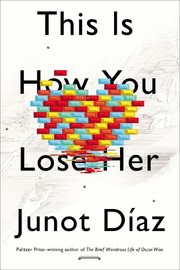
This Is How You Lose Her
Yunior cycles through love affairs and betrayals in nine linked stories, tracing the damage he does and the family history behind it.
2,195-word summary · 10 min read
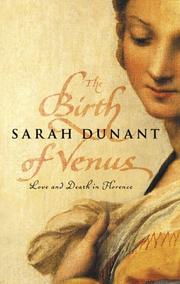
The Birth of Venus
A Florentine merchant's daughter trains as an artist, marries a man who hides a secret, and survives Savonarola's bonfire of the vanities.
2,404-word summary · 11 min read

The Best of Friends
Three lifelong friends discover their teenage sons were hiding more than anyone knew after a night that leaves one dead, one in a coma and one silent.
2,040-word summary · 9 min read
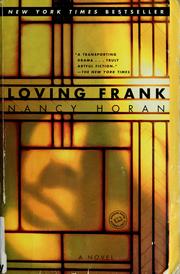
Loving Frank
Mamah Borthwick Cheney leaves her family for Frank Lloyd Wright, and their affair becomes a public scandal that ends in tragedy at Taliesin.
2,034-word summary · 9 min read