
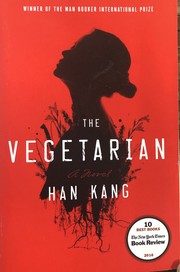
The Vegetarian
2,302-word summary 10 min read 208 pages in the book
- First published
- 2007
- Publisher
- Changbi Publishers
- Pages
- 208
- ISBN
- 9781101906118
- Original title
- Chaesikjuuija
Reading options
What's inside (8 sections)
I picked up The Vegetarian because Han Kang won the Nobel Prize in Literature in 2024 and I wanted to know what kind of writer she is. I expected something grand and difficult. What I found instead was a short, cold, strange book that I read in three sittings and thought about for weeks. I read the Hogarth paperback of the Deborah Smith translation, which runs 208 pages. The novel first appeared in Korean in 2007 from Changbi Publishers, and the English edition came much later.
This is a full retelling, so everything below spoils the plot. That is the point of these notes. I should also warn you plainly that the book contains self-harm, force-feeding, sexual coercion, and long passages about starvation. If any of that is hard for you to read, skip this one or go in carefully. What follows is the story in order, then what I think it means, then what bothered me about it.
An ordinary marriage and a dream
The first part is told by Yeong-hye's husband, a man named Mr. Cheong, speaking in the first person. He opens by telling us his wife struck him as completely ordinary. When he met her, he felt no strong attraction, and that suited him. He wanted a conventional life with a dutiful wife, and Yeong-hye fit the shape of it. They married and lived quietly in Seoul for several years. She did design work, kept the flat, cooked meat dishes without complaint. He went to his office. Nothing seemed wrong.
Then one morning he wakes before dawn and finds her standing in the kitchen in the dark. She has emptied the refrigerator. Bags of meat and fish sit on the floor, and more are in the freezer, already softening. He asks what she is doing, and she answers vaguely that she had a dream.
The dreams, as she describes them in fragments, are full of blood and killing. Dark woods. Barns. Faces smeared with something raw. She does not explain much, and Cheong does not know how to ask. He tries to treat it as a phase. He eats out more. At home the meals grow spare and unfamiliar. Yeong-hye eats less and less and grows thin, and her eyes take on a flat, distant look that scares him a little.
She also refuses to sleep with him, because she says he smells of meat. I want to be honest about this part because it matters later. Cheong forces himself on her anyway, more than once, and the book presents it without commentary, as if it were just another marital fact. Reading it made my stomach turn, and I think it is meant to. This man who calls himself unremarkable believes his wife's body is still available to him even after she has told him no in the clearest possible way.
He copes the way he copes with everything, by calling her family. He tells her parents and her sister that Yeong-hye has stopped eating meat and is wasting away. Everyone agrees something must be done. A family dinner is arranged, and that dinner ends the marriage and nearly ends Yeong-hye's life.
The dinner where everything breaks
The whole family gathers at her parents' home. Her father is a stern older man, a veteran of the Vietnam war, proud and loud about food and discipline. Her mother is anxious and fluttering. Her older sister In-hye comes with her husband, who makes video art, and her brother Yeong-ho is there too. They sit around the table and take turns pressing Yeong-hye to eat.
She refuses, calmly, again and again. Her father grows angry. He slaps her face. Then he tells Cheong and Yeong-ho to hold her arms, and he tries to push a piece of pork into her mouth with his fingers. Yeong-hye tears free, spits the meat out, picks up a fruit knife from the table, and cuts her wrist.
The pages that follow are frantic. Blood, shouting, an ambulance, a hospital. Yeong-hye survives. In the ward, her mother tries to trick her into taking a dark tonic drink, saying it is made from vegetables, and when Yeong-hye learns it is not, she brings all of it back up. Cheong watches his wife grow stranger and thinner and admits to himself that she has come unmoored from ordinary life. At one point she slips out of the hospital and is found holding a small wounded bird in her palm, asking the people around her whether she has done anything wrong.
Cheong divorces her. He cannot handle what she has become, and he says so with the same flat tone he uses for everything. That is the end of the first third of the book, and it leaves Yeong-hye cut off from the one person who was supposed to stand closest to her.
Flowers painted on skin
The second part shifts to the third person and follows a different man, the husband of Yeong-hye's sister In-hye. He is never named. He is a video artist in his thirties whose work has stalled, and he has become haunted by a single image he cannot shake. He keeps picturing two bodies painted with flowers, moving together, and he wants to film it.
Then he remembers something In-hye once mentioned, that Yeong-hye has a Mongolian mark, a bluish birthmark, low on her body, shaped a little like a petal. The idea fixes itself in him. He starts thinking about Yeong-hye constantly. He visits her small flat to check on her after the divorce and finds her thin and bare, unclothed without embarrassment, calm in a way that unnerves him. He asks if she will model for him. She agrees.
He borrows a studio from an art professor friend and spends hours painting large flowers across her shoulders, breasts, back, and legs. He films her standing and lying still under the lights. Then he decides the piece needs two figures, so he brings in a male colleague, paints him the same way, and films the two of them together. When he suggests they actually have sex on camera, the colleague is disgusted and walks out. Left alone with the painted man, Yeong-hye grows visibly aroused, and she later says it was the flowers on his body that moved her, not the man himself.
The brother-in-law cannot let the image go. He gets his ex-girlfriend, who paints, to cover his own body in flowers. He goes back to Yeong-hye's flat with the camera running, and the two of them sleep together while the paint smears between them.
In-hye finds the tape. She watches enough to understand what happened, calls for emergency help, and says both of them are ill. When the attendants arrive, the brother-in-law steps out onto the balcony. For a moment it looks as if he might throw himself off. He stays frozen where he is, and they lead him away. His marriage ends. The middle section closes with two households wrecked and Yeong-hye drifting further from everyone, thinner, quieter, harder to reach.
This section first appeared as a standalone story and won a major Korean literary prize, the Yi Sang award, before the novel existed. Knowing that helped me understand why it feels so complete on its own. It is the most sensual part of the book and also, to my mind, the most troubling, because the camera never leaves Yeong-hye's body even as the story claims to be about art.
The sister who stays
The final part belongs to In-hye. She is divorced now, raising her young son alone, running a small shop, visiting her sister in a psychiatric hospital on a wooded hill outside the city. Of the whole family, she is the only one who keeps showing up.
Yeong-hye is in bad shape. The doctors treat her for an eating disorder and for schizophrenia. She refuses nearly all food and takes only water. She says she is turning into a plant. She seeks sunlight, stands for long stretches, sleeps little. Once she slips out of the ward and is found in the forest in the rain, soaked and still, as if she were trying to root herself among the trees.
In-hye's visits make up most of this section, and they exhausted me in the way long hospital visits do. She brings food her sister will not eat. She argues with the staff. At one point the doctors decide to force feed Yeong-hye through a tube and threaten sedation when she fights it, and In-hye loses control, bites the nurse who holds her back, and clutches her sister to her chest. It is the only violent thing In-hye does in the whole book, and it comes from love, not cruelty.
The sisters are moved to another hospital by ambulance, and the closing pages follow In-hye's gaze out the window at the trees rushing past. She watches the wind move through them and feels something shift in her own chest, a strange pull she does not fully understand. The book does not tell us whether Yeong-hye lives or dies. It does not give In-hye peace either. It ends on motion and leaves, with the forest going by and the question of what In-hye will do with the rest of her life still open.
What the book is really asking
The title misleads a lot of readers, and it misled me. This is not a book about diet or animal rights in any ordinary sense. The choice to stop eating meat is the trigger, not the subject. The subject is what happens when a person refuses, totally and physically, to take part in violence anymore, and how the people around her answer that refusal with more violence.
Food is only the first place it shows. A husband forces sex. A father forces meat. A brother-in-law uses a camera. Doctors force tubes. Every act of care in the book curdles into control. Yeong-hye's answer is to give up more and more of human life. First meat, then cooked food, then food itself, then speech, then movement, until only standing in the sun is left. Her dream is of innocence, of becoming something that does not kill to live. Whether you find that holy or sick probably decides how you feel about the whole novel.
The structure matters here. Three men and women circle Yeong-hye across three parts, her husband, her brother-in-law, her sister, and none of them can fully see her. Her husband wants a normal wife. Her brother-in-law wants an image. Only In-hye tries to see a person, and even she keeps failing, because Yeong-hye has moved somewhere language cannot follow. That circling is the point. The book is about the limits of understanding other people, and about how families can live together for years while remaining strangers.
Han has said in interviews that her questions while writing were about human violence and whether innocence is possible in a world soaked in blood and beauty. I felt both halves of that all the way through. The horror is real, and so is the strange loveliness of the plant passages, the light, the water, the quiet. Some readers hear only the horror. I heard the quiet too, and it stayed with me longer.
What frustrated me, honestly
For all its power, this is a cold book, and I mean that as both praise and complaint. The flat tone keeps every feeling at arm's length. Cheong narrates his own cruelty the way he might describe a commute. The brother-in-law films his obsession the way he might frame a shot. Even In-hye, the warmest of them, spends most of her section ruminating while her sister starves in front of her. I admired the control it takes to write like that, and there were stretches where I wanted someone, anyone, to act like a human being instead of a lens.
The middle section troubled me most. The book knows the brother-in-law is exploiting Yeong-hye, I think, but it still lingers on her painted body in ways that felt easy to enjoy and hard to defend. Yeong-hye agrees to everything, yet her agreement comes from a place so broken that consent starts to lose meaning. The novel never quite reckons with that. It moves on to the sister, and the camera's gaze is left hanging in the air.
There is also the matter of the translation. Deborah Smith learned Korean not long before taking this on, and her English version has been argued over in Korea, with some critics saying she added flourishes and even mixed up who says what in places, while others say her bold choices carried the book to readers who would never have found it. I only read English, so I cannot judge. But it left me aware that the spare voice I admired is really two voices braided together, Han's and Smith's, and that I was hearing the braid, not the source.
So who should read it? If you want a story that resolves, skip it, because it refuses. If you need warmth from your characters, this will starve you. But if you can sit with discomfort for 208 pages, and if you are curious about what fiction from South Korea can do at its strangest, this is worth your evening. I closed it disturbed, a little angry, and strangely moved, and I keep picturing rain on trees when I think of it, not meat or blood at all.
FAQ
Is The Vegetarian really about vegetarianism?
Only at the start. The refused meat is the trigger. The book follows control, family pressure, and Yeong-hye's slow retreat from human life toward something plant-like.
Do I need background in Korean literature to follow it?
No. You need nothing going in. The Seoul family scenes carry the story, and the three narrators explain what you need as they circle closer to Yeong-hye.
Is the book graphic or disturbing?
Yes, in places. It includes self-harm, force-feeding, sexual coercion inside a marriage, and long passages about starvation. Readers sensitive to those should approach carefully.
Similar books

Howards End
Forster's 1910 novel follows two families, a house in Hertfordshire, and a burned note, asking whether money and feeling can ever be connected.
2,187-word summary · 10 min read

A Spool of Blue Thread
Four generations of the Whitshank family in Baltimore, and the silences, resentments and quiet love they hand down without ever saying so.
2,408-word summary · 11 min read
The Most Fun We Ever Had
Four Sorenson sisters orbit perfect parents hiding old cracks.
2,590-word summary · 12 min read
Whidbey
Three women orbit one murdered abuser in this tense island whodunnit.
2,221-word summary · 10 min read
Fates and Furies
Lauren Groff tells one 24 year marriage twice, first through Lotto's bright luck, then through Mathilde's hidden past and quiet control.
2,992-word summary · 13 min read
Freedom
A St. Paul couple and their grown children strain marriage, loyalty, and ideals in 2000s America.
2,678-word summary · 12 min read
Stoner
William Stoner trades farm life for literature, then endures a cold marriage and petty campus wars in John Williams's quiet classic.
2,282-word summary · 10 min read
The Paper Palace
Elle faces Jonas choice at Cape Cod while assault memory returns.
2,588-word summary · 12 min read
She's Come Undone
Abused as a girl, divorced and struggling with weight, Dolores Price slowly finds healing after years of trauma.
2,550-word summary · 11 min read
Revolutionary Road
A Connecticut couple who believe they are too good for the suburbs plan to move to Paris, and the plan slowly exposes everything they cannot say to each other.
2,085-word summary · 9 min read

Lisey's Story
Two years after her novelist husband dies, Lisey Landon follows a trail of clues into his childhood and the other world that made him a writer.
1,998-word summary · 9 min read

Fathers and Sons
Arkady brings the nihilist Bazarov home to his father's estate, and a generational argument turns into love, a duel, and an early death.
2,192-word summary · 10 min read

Unaccustomed Earth
Lahiri’s second story collection follows Bengali families in America and abroad, tracing the quiet distances between parents and children, spouses, and the…
2,333-word summary · 10 min read

The Age of Miracles
A California girl grows up while the Earth's rotation slows, and ordinary adolescence continues alongside slow catastrophe.
2,417-word summary · 11 min read
Peace Like a River
An asthmatic boy in the early 1960s narrates his family's search for his older brother, who is accused of two killings and has escaped custody.
1,969-word summary · 9 min read

We Are Okay
Marin fled San Francisco after her grandfather vanished and stopped answering anyone. When Mabel visits her college dorm, she has to say what happened.
2,253-word summary · 10 min read

Two by Two
Sparks's twentieth novel turns from first love to a marriage breaking up: Russell Green loses his wife and his job, then rebuilds his life around his…
2,192-word summary · 10 min read

The Chosen
A shattered pair of glasses in a 1944 Brooklyn softball game starts a friendship between a Hasidic boy and his Orthodox neighbor, and their fathers pull them…
2,443-word summary · 11 min read
Sing You Home
A music therapist, her new wife and an evangelical ex-husband end up in court over three frozen IVF embryos.
2,952-word summary · 13 min read
On Chesil Beach
Two newlyweds spend one terrible night on Chesil Beach in 1962, and the rest of their lives is decided by it.
2,456-word summary · 11 min read

At First Sight
Jeremy and Lexie are married and expecting a baby when anonymous emails tell him the child may not be his.
2,317-word summary · 10 min read
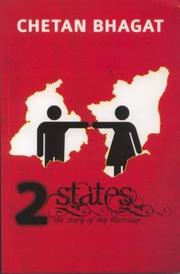
2 States: The Story of My Marriage
A Punjabi boy from Delhi and a Tamil Brahmin girl from Chennai meet at IIM Ahmedabad, and turn a love marriage into a campaign to convince two families.
2,634-word summary · 12 min read

This Is How You Lose Her
Yunior cycles through love affairs and betrayals in nine linked stories, tracing the damage he does and the family history behind it.
2,195-word summary · 10 min read
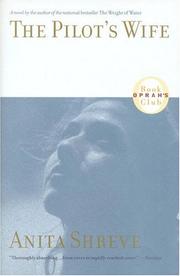
The Pilot's Wife
Kathryn Lyons's husband dies in a plane crash, and the investigation reveals a secret life that forces her to rethink their marriage.
2,006-word summary · 9 min read
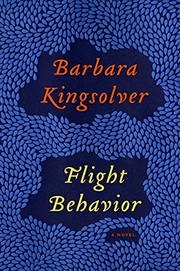
Flight Behavior
Dellarobia Turnbow is stuck in a Tennessee farm marriage until a valley full of monarch butterflies, and the scientist who comes to study them, force her to…
2,051-word summary · 9 min read

And Every Morning the Way Home Gets Longer and Longer
An elderly grandfather, his son, and his grandson share memories and fears as the old man's mind begins to fade, in a short novel about grief and love.
2,078-word summary · 9 min read

The Tiger's Wife
A young doctor in a war-scarred Balkan country chases the stories her grandfather left behind, including a deathless man and a deaf girl who loved an escaped…
2,232-word summary · 10 min read
The Story of Edgar Sawtelle
A mute boy on a Wisconsin dog-breeding farm relives Hamlet as his uncle returns, his father dies in the barn, and the dogs inherit what is left.
2,392-word summary · 11 min read
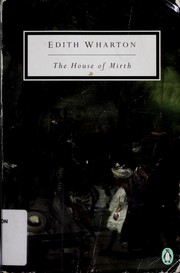
The House of Mirth
Lily Bart, beautiful and penniless at twenty-nine, navigates New York's marriage market until a Dorset yacht scandal strips her of the only currency she has.
2,468-word summary · 11 min read
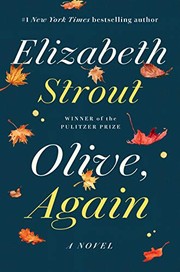
Olive, Again
Elizabeth Strout returns to Crosby, Maine, as Olive Kitteridge marries Jack Kennison, confronts her son, and faces old age, grief, and small-town judgment.
2,333-word summary · 10 min read