
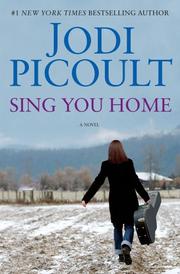
Reading options
What's inside (12 sections)
I read Sing You Home for the music, because the title promised a book built out of songs, and I stayed for the trial, which is where Picoult puts most of the weight. It is the nineteenth novel of a writer who was already a bestseller by then, and the construction shows it: the plot is engineered like a device, every character exists to turn one side of the argument, and the engine runs on grief. This is a novel about whether a woman who wants a child has any right to one when the law has not caught up with the science, and it is more interesting than that sentence sounds, but it is also a courtroom book with music in it rather than the reverse.
Atria Books published it on 1 March 2011. The hardcover I used runs 466 pages and carries the ISBN 9781439102725, and it comes with a companion CD of ten original songs that Picoult wrote and her friend Ellen Wilber performed in Zoe's voice. That soundtrack is not a marketing extra. The novel is literally a playlist, and it works as one.
Ten years of IVF
Zoe Baxter is a music therapist, and before that she spent a decade trying to get pregnant. Four unsuccessful cycles of in vitro fertilization, two miscarriages, and the discovery that she has polycystic ovary syndrome, while Max turns out to carry a genetic condition that leaves him infertile. The infertility is shared inside the family in the worst possible way: Max's brother Reid and Reid's wife Liddy have miscarried too, repeatedly, for the same reason, and their grief sits under everything that happens later.
Then Zoe gets pregnant, and at seven months, at her own baby shower, she loses the baby, a boy she had named Daniel. The novel opens there. A Thomas Jefferson epigraph sets the tone, and the first chapter is Zoe at seven, remembering the day she lost her father, which is where her mother Dara's permanent coolness comes from and why Zoe has spent her life keeping a safe distance from a subject called loss.
Max does not want to keep trying, and the argument that follows ends their marriage. They take an uncontested divorce, and the two of them separate into the worst possible arrangement. Zoe goes back to work. Max moves in with Reid and Liddy, whose house is full of marble disks, one for each baby they have buried, and where the backyard garden becomes the closest thing he has to a church. He drinks. He nearly kills a pedestrian and himself in a car accident, and the near-fatal crash is what drives him into the arms of the Eternal Glory Church and its pastor, Clive Lincoln, a charismatic evangelical who has built a career on what he calls the homosexual agenda.
A life in song
The music therapy is the best of the novel and the least discussed part of it. Zoe works in a nursing home with a man called Mr. Docker, who is in the final stages of dementia and who has responded to her exactly twice in a year. One afternoon he catches her lip with a maraca she has put in his hand, then looks at her with sudden clarity and says that everything is wrong. She plays for burn patients and hospice patients and for children in hospital, including a three-year-old called Marisa who has leukemia and who dies during one of the sessions. The argument Zoe keeps making, in and out of session, is that music is the language of memory, that a song reaches a person nothing else can reach, and that a brain which has lost everything else will sometimes hold on to a tune.
Picoult also uses the songs structurally. Each chapter is headed by a track, and the CD that came with the first edition has ten of them, with the title track, The Mermaid and Sammy's Song among the numbers. The words are Picoult's, the music and the singing are Ellen Wilber's, and Wilber reads in Zoe's voice, so that the reader hears the novel through the character's ears. The ten tracks run from the title song to Sammy's Song, and the arrangement is the argument: a marriage is a duet, and the book is built out of songs.
The funny thing about a book with a soundtrack is how quickly you stop hearing it. By the middle I was simply reading the novel, which is probably the point. The music teaches you to expect that every life arrives with a soundtrack attached.
The book rotates three voices. Zoe, Max and Vanessa each narrate their own chapters, and the typeface changes when the speaker does. That does more work than it sounds like it should, because in the trial sections you read the same fight three times and nobody is lying, and the only thing that changes is where each of them is standing when it happens.
Vanessa
Vanessa Shaw is a guidance counselor at the local high school. She asks Zoe to work with one of her students, a suicidal teenager, and that is how the two of them meet properly. Vanessa pulls Zoe out of the YMCA pool on a morning when Zoe has swum so hard and so far that she cannot get herself to stop, which Zoe later describes as the closest she came to drowning herself. They get coffee. They argue about whether either of them has any right to be happy. They take a hotel room during a storm because going home alone is too much, and that night changes the shape of everything.
What Picoult does well here is the pace of the courtship. It is slow, funny and specific, and it arrives at a kiss during an ordinary trip to the movies rather than in a set piece. Vanessa is the one who pushes Zoe toward her mother, because the telling is easier than the living. Zoe's mother takes it better than Vanessa's, who is still frightened of her daughter's life.
Vanessa proposes with a ring and a question about forever being long enough. They marry in Massachusetts, because in 2011 Rhode Island did not recognize same-sex marriage, and Picoult turns the legal strangeness of that into a subject rather than a detail: the women live in Rhode Island, where their marriage means nothing to the state, so they cannot divorce there and their property falls under a law that does not see them as married at all. The wedding itself is a blizzard, a bowling alley in Fall River, a humanist minister, and everyone they could round up, who turn up in a storm. Vanessa wears a white suit. They honeymoon at an inn in Bethlehem, New Hampshire, and spend the first day of it talking.
Lucy
Lucy DuBois is the teenage girl Vanessa sends to Zoe, and she is the most interesting character in the book. She has long red hair, tattoos on her knuckles that spell a four-letter obscenity, and scars on her wrists. She has just come out of a six-week inpatient program for depressed adolescents. She is funny and hostile and good with a guitar, and she fights the adults who try to help her.
The mermaid
The CD has a track called The Mermaid, and it is about Lucy: she is swimming in circles, she wonders why she is alive, and she dives deeper and deeper while the sailors cry. In the sessions Lucy draws a mermaid while Zoe plays, and the creature becomes the book's image for a young person who cannot decide whether to stay in the human world or leave it. Zoe is drawn to her, and she also breaks rules with her, which is where the trouble starts. In one session she talks to Lucy about her own life, including her sexuality, and says she does it to comfort a girl who is in crisis. It is a reasonable thing to do and it is the seed of everything that follows.
The other thing about Lucy is that she is Pastor Clive's stepdaughter, which Zoe has no way of knowing. Her family attends Eternal Glory. Later, when the case turns, Lucy tells Zoe she was molested by her, and a colleague corroborates the story. The accusation is false. Lucy also turns on her stepfather at some point, and Picoult never quite tells us what she is running from or toward.
Three embryos in a freezer
Zoe and Vanessa ask Max for permission to use one of the three embryos left over from the IVF years, which sit in a clinic in Wilmington, Rhode Island, in a canister of liquid nitrogen. Max says he will think about it. He means something else, and he goes to Pastor Clive, who tells him no child should be raised in a household he considers unbiblical, and then tells him he can have the embryos himself so that Reid and Liddy can have them. Max sues.
The lawsuit is the spine of the novel, and Picoult has done the research: she sat down with family law attorneys and with a lawyer who specializes in fertility law, and the result is a trial that is genuinely about the question the title suggests. Are embryos people or property? What happens when science moves faster than legislation, so that every case like this can come out differently? On the ground, the thing actually at stake is one woman who has lost baby after baby and wants one, and one man who believes he is protecting a soul from an abomination.
Zoe and Vanessa hire Angela Moretti, a lawyer who specialises in gay and lesbian cases and who is funny in the specific way of someone who has spent years being unimpressed by hostility. Max gets Wade Preston, a Christian lawyer, and Ben Benjamin. The judge assigned to the case is not sympathetic to them. Max's side calls an expert witness, a psychologist named Dr. Newkirk, who argues that a child needs the influence of both genders in order to develop properly. Liddy testifies about the marble disks in Reid's yard and about how long she has wanted a child. Reid is put on the stand. Pastor Clive takes the stand too, and argues the case from the Bible.
The trial and the allegation
The trial is where the law does most of the work, and the law is the least interesting thing in it. The Globe and Mail made the point about as well as anyone when the novel came out: Picoult needs room to cite case law and medical research, and it is a lot to get across in one book. There are expert witnesses and contracts and media coverage and protestors from the Westboro Baptist Church outside the courthouse, and the whole apparatus ends by handing the judge one clean question that nobody in the room can answer, because no state law at the time clearly covers it.
Midway through, Wade Preston tells Max that Zoe may be about to be charged over Lucy, and that the possibility alone might sway the judge. The accusation against Zoe of molesting Lucy surfaces in a session of the trial, supported by a colleague's corroboration, and it is false, and it is the most damaging fact in the book, because everyone who hears it has already decided what kind of woman Zoe is.
Zoe's own testimony is where Picoult puts her past on the table: the pregnancies she lost, and an abortion she has never spoken about, which Wade uses against her. Vanessa testifies and is attacked for her own history of mental illness. Dara testifies and says that Vanessa makes her daughter happy. Pastor Clive delivers a sermon in which he argues that liking swimming does not make him a fish.
And then Zoe does the thing that breaks the book open. She withdraws her objection to the embryos going to Max alone. It is not simply loss of nerve. She is a therapist who has spent years sitting with a girl in crisis, and she has worked out that the price of the fight would be paid by Lucy, and she decides the price is too high. The judge awards sole custody to Max.
Sammy's song
Max's victory feels exactly like a defeat, and Picoult writes it that way. In his own chapter he understands at once what he has agreed to: he will watch Liddy carry his genetic child, and he will stand on the sidelines. He feels no joy at all. He goes to Zoe and says he is sorry for her pain, and he gives her a document in which he promises the child a good life. Then the story moves on, because the story has decided that the point is not who wins.
Max has fallen in love with Liddy, which is why he cannot be an uncle standing beside Reid while Liddy carries his child. He gives the embryos back to Zoe and Vanessa, and they let him stay in his daughter's life as a father. Reid, who has watched his wife choose his brother, is not in the picture, and Picoult does not explain what became of him. The epilogue is seven years later and belongs to Sammy, who is six, has a dog called Ollie, calls her mothers Mama Ness and Mommy, and is busy being the luckiest girl in the world. She is annoyed by a classmate's cruelty about her family. She wants to be the flower girl at her father's wedding to Liddy. The arrangement that looked like a scandal when the book opened has turned into a household with two mothers, one father, a dog, and a child who does not feel remotely apologetic about any of it.
And Lucy is not there. Picoult leaves her story open, and she says so herself in the reading guide she published for the book, which lists Lucy's thread among the unresolved subplots. The verdict she leaves in the courtroom is the only thing that gets closed.
What works and what does not
The early chapters are as good as anything Picoult has written. The IVF sequences have a documentary grip: the injections, the ultrasound screen, the little white spark traveling between the blades of grass on the monitor. The loss of Daniel at seven months is brutal in a way that needs no description, and the chapter that follows it, with Max at a bar and a car wreck and a church, is the best writing in the book. His chapters, from a man who has been reduced to his sperm and knows it, carry the other side of the marriage honestly.
The middle sags. Once the lawsuit starts, the novel becomes a courtroom and custody story with music in it, and the plot starts resolving things in a hurry so that the ending can arrive on schedule. The law does a great deal of the argumentative work, and the law is the flattest part of the story. The religious characters are drawn with a heavy thumb, and Zoe and Vanessa are so nearly flawless that they start to feel like positions rather than people. The romance, which I thought would be the center of the book, gets pushed toward the margins once the embryos are in play.
The ending has satisfied and disappointed readers in equal measure. Some readers find the resolution generous, a family assembled out of the wreckage and a little girl who is loved and safe. Others think it is too neat, and point at the plot twists that tie everything up, the parents who get what they want, and the subplots that get skipped. Almost everyone complains that Lucy evaporates. The verdict on the embryos arrives in a page and a half, and the seven-year jump does a lot of work to smooth over what the trial left raw.
It is worth being clear that this is a book with a position, and that the position is not neutral. Picoult wrote it in 2011, when the question of whether a same-sex couple should be allowed to raise a child was still a live courtroom question rather than a settled one. The argument for the other side gets real voice, in Max's grief and in Liddy's marble yard, but the novel's verdict is not in doubt. Readers who wanted a portrait of the difficulty from both directions will feel the tilt.
Who it is for
This is for readers who want a book that puts a hard social question under a microscope without dropping it, and who can accept a plot that runs on a legal mechanism. It is a good choice for a book club, partly because the soundtrack gives you ten songs to argue about, and partly because the questions in Picoult's own reading guide are better than most of the ones readers arrive with.
It is not the book to read if you want the IVF material to be secondary. It is the whole spine of the story, and if you have been there, the early chapters will be exacting and the courtroom will be restful. It is also not the book to read if you want Lucy resolved, because she is not resolved.
I liked it, with the caveat that I liked the first two thirds more than the last. Years on, the book still argues with itself in the way a good novel should. I am not sure the ending earns the emotion it asks for, but I am sure the two women in it are worth the argument.
FAQ
What is Sing You Home about?
Zoe Baxter, a music therapist, loses a baby and her husband, marries Vanessa Shaw, and asks her ex-husband Max for permission to use their three frozen IVF embryos. When his evangelical pastor convinces him to sue, the embryos go to court.
Why does Max sue Zoe and Vanessa?
Max believes a child should not be raised by a same-sex couple. Pastor Clive encourages him to claim parental rights so the embryos can go to his brother Reid and his wife Liddy instead.
What happens to Lucy in the novel?
Lucy, the teenage music therapy client who accuses Zoe of molesting her, is the one thread the book never ties off. Picoult's own reading guide lists her story among the unresolved subplots of the novel.
Similar books

Mrs. Everything
Two Jewish sisters in Detroit grow up, apart and together, across seven decades of American life, from the 1950s to the 2016 election.
2,362-word summary · 10 min read

The Deep End of the Ocean
A three year old vanishes at a Chicago hotel reunion, and nine years later the Cappadoras must face his return as a teen raised by someone else while grief…
2,951-word summary · 13 min read
Plain Truth
An Amish teenager denies a hidden pregnancy after a newborn is found dead, and a city lawyer moves to the farm to defend her.
2,669-word summary · 12 min read
The Pact
After Emily Gold dies from a gunshot, her boyfriend Chris Harte says it was a suicide pact and faces trial for murder.
2,873-word summary · 13 min read
My Sister's Keeper
Thirteen-year-old Anna sues her parents for medical emancipation so she can refuse to give her dying sister Kate a kidney.
2,332-word summary · 10 min read
This Winter
On one difficult Christmas Day, Tori, Charlie, and Oliver Spring try to hold their family together while Charlie's eating disorder makes every tradition a test.
2,034-word summary · 9 min read

Little Earthquakes
Four Philadelphia women meet during pregnancy and discover that new motherhood is nothing like the plan, while friendship becomes the thing that holds them…
1,997-word summary · 9 min read

Howards End
Forster's 1910 novel follows two families, a house in Hertfordshire, and a burned note, asking whether money and feeling can ever be connected.
2,187-word summary · 10 min read
Unaccustomed Earth
Lahiri’s second story collection follows Bengali families in America and abroad, tracing the quiet distances between parents and children, spouses, and the…
2,333-word summary · 10 min read

We Are Okay
Marin fled San Francisco after her grandfather vanished and stopped answering anyone. When Mabel visits her college dorm, she has to say what happened.
2,253-word summary · 10 min read
Two by Two
Sparks's twentieth novel turns from first love to a marriage breaking up: Russell Green loses his wife and his job, then rebuilds his life around his…
2,192-word summary · 10 min read

At First Sight
Jeremy and Lexie are married and expecting a baby when anonymous emails tell him the child may not be his.
2,317-word summary · 10 min read

A Spool of Blue Thread
Four generations of the Whitshank family in Baltimore, and the silences, resentments and quiet love they hand down without ever saying so.
2,408-word summary · 11 min read

2 States: The Story of My Marriage
A Punjabi boy from Delhi and a Tamil Brahmin girl from Chennai meet at IIM Ahmedabad, and turn a love marriage into a campaign to convince two families.
2,634-word summary · 12 min read
The Overdue Life of Amy Byler
A burned-out school librarian gets a summer to herself when her estranged husband returns, and discovers that being a mother does not have to mean losing…
2,055-word summary · 9 min read
On the Come Up
Bri Jackson, a sixteen-year-old rapper in Garden Heights, chases a record deal while a viral song turns her into a symbol she never wanted to be.
2,034-word summary · 9 min read
Flight Behavior
Dellarobia Turnbow is stuck in a Tennessee farm marriage until a valley full of monarch butterflies, and the scientist who comes to study them, force her to…
2,051-word summary · 9 min read
Delilah Green Doesn't Care
Delilah returns to Bright Falls to photograph her stepsister's wedding and falls for Claire, a bookstore owner and single mother, while a cruel bet threatens…
2,315-word summary · 10 min read

Aristotle and Dante Dive into the Waters of the World
Ari and Dante return for senior year in El Paso, navigating first love, AIDS, family grief, and the cost of being openly gay in 1987 Texas.
2,188-word summary · 10 min read
The Storm Sister
Ally D'Aplièse loses her father and her lover within weeks, then follows a brass frog and a Norwegian biography into Anna Landvik's music and the world of…
2,376-word summary · 11 min read
The Most Fun We Ever Had
Four Sorenson sisters orbit perfect parents hiding old cracks.
2,590-word summary · 12 min read
The School for Good Mothers
A mother sent to a reform school fights to keep her daughter under cold surveillance and strict rules.
2,114-word summary · 9 min read
The Poet X
Harlem teen Xiomara finds voice in slam poetry against strict mother, church, and a love she must hide.
2,056-word summary · 9 min read
The Color of Water
A Black journalist presses his white mother about her hidden past, from a Virginia store to twelve college degrees.
2,457-word summary · 11 min read
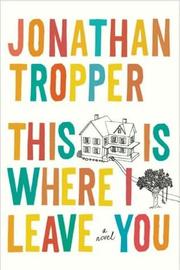
This is Where I Leave You
A separated husband sits shiva for seven days with his siblings after his father's death.
2,818-word summary · 13 min read
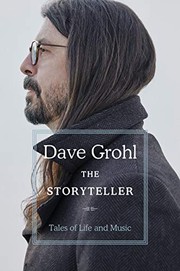
The Storyteller: Tales of Life and Music
Foo Fighters frontman recalls Nirvana, drumming, fatherhood, and life on the road.
2,307-word summary · 10 min read
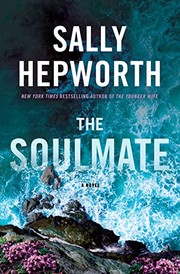
The Soulmate
A cliffside fall leaves a wife doubting her husband as old abuse and buried secrets surface.
2,126-word summary · 9 min read
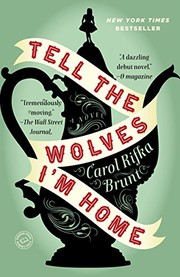
Tell the Wolves I'm Home
A grieving fourteen year old secretly befriends her late uncle's boyfriend in 1980s New York, testing family loyalty and love.
3,014-word summary · 13 min read
Our Ex's Wedding
A struggling wedding planner and a winery owner who share one heartbreaking ex must join forces to pull off that ex's big day.
2,200-word summary · 10 min read
Fly Away
After Kate's death, Tully, Marah, and Dorothy face grief and addiction while trying to rebuild their lives.
2,940-word summary · 13 min read