
Reading options
What's inside (8 sections)
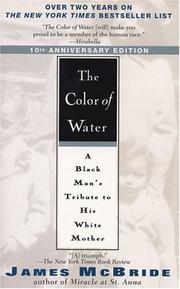
I picked up The Color of Water because a friend told me it was the rare memoir people actually finish, and she was right. James McBride published it with Riverhead Books in 1996, and the edition most people buy now runs 336 pages with ISBN 9781594481925. It spent more than two years on the New York Times bestseller list and it still shows up on school reading lists, which usually makes me suspicious. Books that everyone assigns tend to feel like medicine. This one reads more like sitting at someone's kitchen table while they finally tell you the thing they never tell anyone.
The setup is simple and the execution is not. McBride, a Black journalist and musician raised in Brooklyn, grew up with a mother who refused to answer the most basic questions about herself. What was her maiden name. Where was she born. Why did she look white while all her children were Black. When he asked whether God was Black or white, she told him God was the color of water. That line gives the book its title, and it also gives you Ruth McBride Jordan in one sentence. Practical. Evasive. Done with categories that never fed her children.
The book moves in alternating chapters. James tells his own story in one chapter, then Ruth tells hers in the next, in her own voice, transcribed from interviews. Back and forth, Brooklyn and Virginia, son and mother, until the two stories meet. I found the structure easy to follow, though I will admit the seams show in places. Still, by the last fifty pages I understood why he kept it. He needed her to speak for herself, because nobody else could have carried what she carried.
A mother who answered nothing
Ruth McBride Jordan raised twelve children, sent every one of them to college, and told them almost nothing about where she came from. The children knew not to ask. When they tried, she shut it down with lines that became family jokes. She was light-skinned, she said. That was all anyone needed to know. Her past was behind her. Her family was dead. Get your schoolwork done.
McBride captures how strange this felt from the inside. He is a dark-skinned boy in the Red Hook housing projects with a mother who looks white, rides a bicycle through the neighborhood, and will not explain herself. Other kids notice. Adults notice. Ruth walks through it all like a woman with somewhere to be. She goes to church, she works, she keeps the house in order through force of will. Questions about race bore her. She has twelve mouths to feed and a God she trusts, and everything else is noise.
What I liked here is that McBride does not paint her as a saint. She is strict to the point of hardness. She hits, she yells, she demands. Church three times a week, homework before anything, no excuses about money or color. The children fear her and adore her in the same paragraph, which felt true to me. Parents who hold a big family together under pressure are rarely gentle about it. Ruth's love shows in logistics. Everyone eats. Everyone studies. Everyone graduates. Feelings can wait until after college.
The criticism I would make of this opening stretch is that James circles the same mystery for a while before the book starts paying off. How many ways can a mother dodge a question. After the third or fourth deflection, I wanted him to push harder or move on. But looking back, I think the repetition is doing work. It shows you the size of the wall before he starts digging under it. When Ruth finally starts talking about Suffolk, the relief is real because you felt the silence first.
Suffolk, Tateh, and the store
Ruth was born Rachel Deborah Shilsky, the daughter of Orthodox Jewish immigrants, and raised in Suffolk, Virginia, where her father ran a small store. McBride reconstructs this world from her memories and from his own trip south, and these are the strongest pages in the book. Tateh, as the children called Fishel Shilsky, is a horrible and vivid figure. A failed rabbi from Poland who became a shopkeeper in the South, squeezed his Black customers on credit, cheated his own family on softer terms, and abused Ruth for years. McBride does not linger on the abuse in a graphic way. He gives you enough to understand why Ruth ran and leaves the rest alone. I respected that choice, though readers who want a full accounting may find it thin.
Her mother, Mameh, called Dee Dee by the family, comes through as the opposite force. Gentle, disabled, worn down by a bad marriage, kind to Ruth in the small ways available to her. She slips her daughter food and sympathy. She cannot protect her. The store itself becomes a character. A cramped Southern shop where Black farm workers buy on terms Tateh sets, where Ruth and her siblings stock shelves after school, where the family learns early that money and race and religion are tangled in ways nobody names out loud.
Ruth's break from this life takes up the middle of her story and it moves fast. She leaves Suffolk, spends time in Harlem, reinvents herself. She stops being Rachel Shilsky and becomes Ruth McBride. She converts to Christianity, which her family treats as a death. When she says her family is dead, she means it in both directions. They sat shiva for her, in effect, and she returned the favor by never looking back. McBride went to Suffolk decades later and found relatives who remembered, and those scenes have an awkward charge. Strangers hugging him because of a sister who left. A town that kept receipts.
If there is a weakness here, it is that the Suffolk relatives arrive late and leave early. A few conversations, a meal, some tears, and then back to Brooklyn. I wanted more about what the Shilsky side thought all those years, whether anyone tried to find her, how the store ended. But the book is Ruth's story as she chose to tell it, and she chose to keep Suffolk small. The proportions honor her wishes even when they frustrate the reader.
Red Hook, Dennis, and Hunter Jordan
The Brooklyn chapters ground the book in noise and love. Ruth married Andrew Dennis McBride, a Black Baptist minister she met in New York, and they had eight children together before he died in 1957, when James was still an infant. She later married Hunter Jordan, a hardworking man who helped raise all twelve, and had four more children with him. Twelve kids in the Red Hook projects. One bathroom. Hand-me-downs stacked like cordwood. A mother who ran the house like a small college with a chapel attached.
Dennis McBride matters enormously even though James never knew him. Ruth talks about him the way some widows talk about a first husband, with a softness she gives nobody else. He was educated, steady, funny, a man who loved her without needing her to be anything but what she was. His death nearly broke her. McBride writes about the hole Dennis left without sentimentality. The facts do it. Eight children, no husband, no money, a wife who gets up anyway.
Hunter Jordan gets a quieter portrait, and I wished for a little more of him. He comes across as decent and tired, a man who married a grieving widow with eight children and took on four more of his own with her. He worked, he provided, he died in the early seventies. The children respected him. Ruth relied on him. McBride does not pretend the second marriage had the romance of the first, and that honesty costs him something, because Hunter can feel like a supporting player in his own house. Still, the point stands. Without Hunter, the math of twelve children does not work, and McBride knows it.
What holds these chapters together is Ruth's system. Church constantly. School always. No hanging out, no excuses, no feeling sorry for yourself because you are poor or Black or the child of a white mother who will not explain herself. Outsiders sometimes read this as harshness. Inside the book it reads as strategy. Ruth knew exactly what the world would do to twelve Black children from the projects, and she built a machine to get them past it. Every child graduated from college. Say what you want about her methods. The results are sitting in the record.
James and the question he could not drop
Between Ruth's chapters, James tells his own coming-of-age, and these sections are rockier. He grows up confused about his identity, angry at his mother's evasions, drifting toward the street while his siblings study. He does badly in school for a stretch. He messes with drugs and petty crime. He finds music, which steadies him, and eventually finds his way to Oberlin and Columbia and journalism. Readers who come for Ruth may fidget here. I did, in places. A young man's confusion is less interesting than an old woman's secrets.
But two things save these chapters. First, McBride is honest about how lost he was, without asking for applause for finding himself. He does not turn his teenage years into a hero story. He was a pain to his mother, he knows it, and he writes it plainly. Second, his search gives the book its plot. He goes to Suffolk. He finds the store site. He sits with people who knew Tateh and Mameh. He pieces together the Polish past, the name changes, the immigration papers. Each discovery lands because you watched him grow up without it.
The trip south is my favorite part of his thread. He walks streets his mother walked, eats where she might have eaten, listens to old men remember his grandfather with complicated faces. Tateh cheated them and they know it, but time has softened something, or maybe just tired it out. McBride does not force a reconciliation that never happened. Ruth never forgave her father. Her son does not forgive him on her behalf. He just looks, listens, and brings the details home to her. Their conversations after his trip have a different temperature. She corrects him, she adds a detail, she goes quiet. It is as close as she gets to going back.
My complaint is that the siblings blur. Twelve children and I finished able to describe maybe four. One plays music, one struggles, one keeps the family stories, the rest pass through in groups. With so many names, some compression was inevitable, and McBride chose to spend his pages on Ruth. Fair choice. Still, when he writes about all twelve graduating, I wanted faces to go with the number. A short chapter following two or three siblings through a single week would have made the claim land harder.
Why the back-and-forth works
The alternating structure sounds like a gimmick and turns out to be the point. Ruth's chapters explain James, and James's chapters earn Ruth. When she describes Tateh's store, you understand why she ran a tight house in Brooklyn. When he describes getting stopped or stared at, you understand why her evasions about race felt like abandonment even though she meant them as protection. Each voice corrects the other without arguing.
McBride also lets the two voices stay different on the page. Ruth speaks in plain, funny, church-shaped sentences. She moralizes, she deflects with jokes, she lands a hard truth and moves on before you can ask a follow-up. James writes like a reporter who learned rhythm from music. Longer sentences, more scene-setting, more doubt. The contrast keeps 336 pages moving. You never sit in one register long enough to tire of it.
The risk of this design is repetition, and the book does repeat itself. Ruth tells a story, then James retells it from his angle with a few new details. A detail about the store appears three times. A detail about Dennis appears twice. An editor could have trimmed maybe twenty pages without losing anything. But I came to feel the repetition was partly intentional, the way family stories work. You hear the same events at different ages and they mean different things. The third telling is the one that finally lands.
There is also a quiet argument inside the form. Most memoirs about race from this era pick a lane. Black pain or white guilt or uplift. McBride refuses. His mother is white and Jewish by birth, Black by marriage and church and neighborhood. His father is Black and gone. His stepfather is Black and present. The alternating chapters say identity is a conversation, not a label. You have to hear both people talking.
Where it strains, and who should read it
No memoir survives contact with its readers without some strain, and this one has a few visible seams. The timelines wobble. Ruth's memories of dates contradict records in small ways, and McBride sometimes notes this and sometimes lets it pass. The abuse in Suffolk is handled so gingerly that some readers will feel the book flinches. The siblings blur, as I said. And the ending, with Ruth old and honored and still deflecting, may strike some as abrupt. You expect a big scene of reconciliation or revelation. Instead you get a mother who told what she wanted to tell and kept the rest. That is honest, and it can still feel like a door closing.
I also think readers should know what the book is not. It is not a history of Jews in the South or Black Brooklyn, though it touches both. It is not an investigation with documents on every page. It is a son asking his mother who she is, and a mother answering on her own terms. If you want footnotes, look elsewhere. If you want to understand how one woman carried twelve children across the color line in both directions, this is the book.
Read it if you like memoirs built from interviews, or if you teach or study American identity and want a text students will actually finish. Content notes are mild but real. Racist language quoted in historical context, domestic and sexual abuse discussed without graphic detail, death of parents, poverty and grief throughout. Suitable for teens and up, and genuinely useful in classrooms because Ruth's voice gives students something to argue with. Was she right to hide her past. Did the silence protect her children or wound them. My own answer changed twice while reading, which is about the best thing I can say for a memoir.
FAQ
When was The Color of Water published?
Riverhead Books published it in 1996. The standard paperback runs 336 pages and the ISBN is 9781594481925.
Is The Color of Water part of a series?
No. It is a standalone memoir built from alternating chapters in which James tells his story and Ruth tells hers in her own voice.
Who is Ruth McBride Jordan?
Ruth, born Rachel Deborah Shilsky to Jewish immigrants in Suffolk, Virginia, married Andrew Dennis McBride and later Hunter Jordan, raising twelve children who all graduated from college.
Similar books

Finding Me
Viola Davis traces her path from poverty in Rhode Island to Oscar night with blunt honesty about race and family.
2,823-word summary · 13 min read
Brown Girl Dreaming
Jacqueline Woodson retells her childhood in verse, moving from Ohio to South Carolina to Brooklyn while the civil rights movement reshapes the world around her.
2,727-word summary · 12 min read
The Mothers
Nadia hides abortion from church Mothers while Luke and Aubrey circle for years.
2,078-word summary · 9 min read
Dreams from My Father
Obama traces his Kansas and Kenyan families from Hawaii to Chicago community work to a first trip to Kenya.
2,053-word summary · 9 min read

Untamed
Glennon Doyle leaves a strained marriage, falls for Abby Wambach, and rebuilds life around honesty and desire.
2,561-word summary · 11 min read

Crying in H Mart
Japanese Breakfast singer Michelle Zauner remembers her Korean mother through food, grief, and growing up in Oregon.
2,337-word summary · 10 min read
The Vanishing Half
Twin sisters split as one lives Black and one passes as white.
1,971-word summary · 9 min read

Too Much and Never Enough: How My Family Created the World's Most Dangerous Man
Mary L. Trump's 2020 memoir traces how a cold, zero-sum Queens household shaped her uncle, and uses family tax documents to challenge his self-made story.
2,059-word summary · 9 min read
Unaccustomed Earth
Lahiri’s second story collection follows Bengali families in America and abroad, tracing the quiet distances between parents and children, spouses, and the…
2,333-word summary · 10 min read
Beautiful Boy: A Father's Journey Through His Son's Addiction
David Sheff recounts watching his son Nic slide into meth addiction, and his own desperate, humbling search for how to help without destroying them both.
2,076-word summary · 9 min read

The Magnolia Story
How Chip and Joanna Gaines met, closed their first shop, nearly lost everything in a housing development, and built Fixer Upper.
2,994-word summary · 13 min read

Sing You Home
A music therapist, her new wife and an evangelical ex-husband end up in court over three frozen IVF embryos.
2,952-word summary · 13 min read
This Is How You Lose Her
Yunior cycles through love affairs and betrayals in nine linked stories, tracing the damage he does and the family history behind it.
2,195-word summary · 10 min read
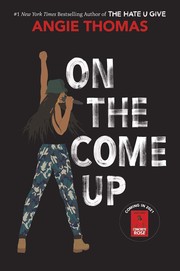
On the Come Up
Bri Jackson, a sixteen-year-old rapper in Garden Heights, chases a record deal while a viral song turns her into a symbol she never wanted to be.
2,034-word summary · 9 min read
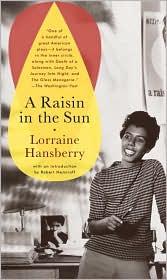
A Raisin in the Sun
Lorraine Hansberry's 1959 play follows the Younger family as a $10,000 insurance check, a house in a hostile neighborhood, and a stolen investment test their…
2,444-word summary · 11 min read
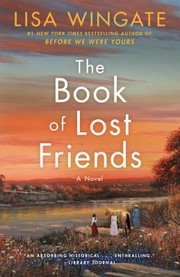
The Book of Lost Friends
Three women trace Lost Friends ads from 1875 to find stolen sons.
2,368-word summary · 11 min read
Sold on a Monday
A reporter hides a Depression photo of children for sale and must face the cost.
2,501-word summary · 11 min read

The Perfect Nanny
A trusted nanny kills two children, and the book traces how love and class hid warning signs.
2,200-word summary · 10 min read

Song of Solomon
Milkman Dead leaves Michigan to hunt for family gold and finds instead the old song of his ancestor Solomon.
2,465-word summary · 11 min read

The Poet X
Harlem teen Xiomara finds voice in slam poetry against strict mother, church, and a love she must hide.
2,056-word summary · 9 min read
Roll of Thunder, Hear My Cry
In Depression-era Mississippi, nine-year-old Cassie Logan learns what her Black family's land costs and why they keep it.
2,273-word summary · 10 min read
Open
Tennis star Andre Agassi recalls hating tennis, falling to No. 141, and rebuilding his life on his own terms.
2,352-word summary · 10 min read
Narrative of the Life of Frederick Douglass
Douglass names names from Maryland slavery to his 1838 escape, showing how literacy, wages, and faith were policed, then answers with defiance.
2,630-word summary · 12 min read

Holidays on Ice
Six Christmas pieces, from a Macy's elf stint to a feral family newsletter. Sedaris at his sharpest and most sentimental.
2,410-word summary · 11 min read
Hidden Valley Road: Inside the Mind of an American Family
The Galvin family raises twelve children while six sons develop schizophrenia across decades of shifting science.
2,492-word summary · 11 min read
All We Ever Wanted
A Nashville photo of a drunk boy over a passed out girl splits three families along money and race lines.
2,278-word summary · 10 min read

The Storyteller: Tales of Life and Music
Foo Fighters frontman recalls Nirvana, drumming, fatherhood, and life on the road.
2,307-word summary · 10 min read
Sing, Unburied, Sing
A Mississippi family drives to Parchman prison while ghosts press close, and a dying grandmother holds the house together.
2,871-word summary · 13 min read
Once and Again
Novak women can redo one moment; Lauren must decide whether to use hers.
2,330-word summary · 10 min read