
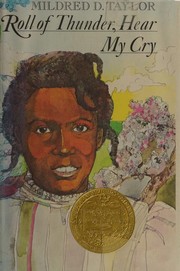
Roll of Thunder, Hear My Cry
2,273-word summary 10 min read 276 pages in the book
- First published
- 1976
- Publisher
- Dial Press
- Pages
- 276
- ISBN
- 9780803774735
- Series
- Logans (#4)
Reading options
What's inside (8 sections)
I first read Roll of Thunder, Hear My Cry in school, the way most people meet it, and I came back to it this month wondering if it would still hit. Mildred D. Taylor published it in 1976 with Dial Press. The first edition runs 276 pages. It won the Newbery Medal in 1977 and was a finalist for the National Book Award. It is the Logans book, the one where nine year old Cassie Logan learns what her family's land costs and why they refuse to give it up. It hit harder this time. As a kid I read it as history. As an adult I read it as a story about parents trying to raise brave children in a place built to punish bravery.
The novel is set in Mississippi in 1933 and 1934, the depth of the Great Depression. The Logans are Black landowners holding four hundred acres in a county where most Black families sharecrop. That land is everything. It feeds them. It shelters them. It lets them answer to no one. Cassie's father David works the railroad in Louisiana for part of the year to pay the mortgage and taxes. Her mother Mary teaches at the Black school. Her grandmother Big Ma holds the house together. Four kids, Stacey twelve, Cassie nine, Christopher-John seven, Little Man six. Around them sits a whole community, the Avery family on nearby land, the Simms family white and poor and mean, Mr. Granger the banker's grandson who wants the Logan acres back, and Mr. Jamison, the white lawyer who stands apart from the rest.
The walk to school
The book opens on the first day of school, and the opening chapters are all small humiliations that build like weather. The Logan kids walk to the Black school while the white children's bus roars past, spraying dust and sometimes muddy water on them on purpose. At school the books handed out are discards from the white school, stamped with slurs and marked for colored students. Little Man, six years old and fussy about his clothes and his cleanliness, refuses his book when he sees the stamp. He would rather have nothing than accept that label. It is a small scene and it tells you the whole novel. Dignity first, even at six, even when dignity costs you the book.
Cassie narrates, and her voice carries the book. She is nine, sharp, protected, and slow to understand the rules white Mississippi lives by. She has grown up on Logan land, where her family answers to no one, so the outside world's contempt keeps blindsiding her. When a white girl humiliates her in town, Cassie cannot process it. When shopkeepers serve white children first and last, she speaks up and gets hushed by her own people, which confuses her more than the insult. Taylor writes childhood incomprehension without making Cassie foolish. The reader sees the danger before Cassie does, and that gap creates a steady ache. You want to warn her. You cannot.
School itself is a second front. Mama teaches from books the county board has approved, history that erases her students, and she quietly pastes her own lessons over the lies. She covers the worst pages. She teaches what actually happened. When the board finds out, it costs her. This thread gives the book its backbone. Education here is not background. It is the battleground. Who gets to tell children what they are worth. Mama risks her job to answer that question honestly, and the price arrives right on schedule.
Stacey, T.J., and the coat
Stacey, the eldest at twelve, gets the hardest storyline of the children, and I found his chapters the most painful. His best friend is T.J. Avery, a boy who talks big, cheats in class, and lets Stacey take the blame. Stacey covers for T.J. out of loyalty and gets whipped for it, by Mama, in front of the class, and the shame reshapes him. He stops performing friendship for applause. He starts watching who actually shows up.
T.J. is one of the great creations in children's literature, funny and maddening and doomed. He is the kid who cannot resist the Simms brothers' attention, two white boys with a car and money and cruelty to spare. They flatter him, lend him things, let him ride along, and T.J. mistakes use for respect. Adults reading will see the trap pages before he does. Kids reading may see a friend who keeps making the wrong call. Either way the dread builds every time R.W. and Melvin Simms appear. They are not friends. They are bait with smiles.
The coat scene broke me both times I read it. At Christmas, Uncle Hammer, David's brother, gives Stacey a fine new coat. Later Stacey gives that coat to T.J., who has little and wants much. It is generosity and guilt braided together, Stacey atoning for the fight they had, T.J. accepting without understanding the cost. Taylor never underlines it. She just lets the coat change shoulders and keeps going, and the image sits in your chest for chapters. When you learn where T.J. ends up, the coat comes back to you uninvited.
The Wallace store and the boycott
The middle of the book turns on the Wallace store. The Wallaces run a shop that sells liquor on credit and lets Black men drink and gamble there, then collects debts in ways that keep families poor and beholden. The night riders who terrorize the county drink at the Wallace place. Everyone knows. Nobody with power acts. When a Black family is burned by riders and the Berrys suffer, vague horror turns specific. Papa and some neighbors organize a boycott of the Wallace store, trying to starve it without firing a shot.
This is where the book shows its craft. A boycott sounds bloodless on paper. Taylor makes it terrifying. Withholding custom in 1933 Mississippi is an act of war against men who burn people. Threats follow. The boycotters get watched. Mama gets fired from her teaching job for her part and for her banned lessons. Mr. Morrison, the big quiet man Papa brought home from the railroad to help protect the family, loses his railroad work and stays on as farm help and guard. The family tightens like a fist. Meals get quieter. David starts sleeping with a gun near. And still the Logans do not bend, because bending would mean the land, and the land is the family.
Cassie keeps stumbling into the edges of this adult war. She and the younger boys shop at the Wallace store once without understanding, and the shame of it teaches her more than any lecture. She watches her mother face down the school board's men. She learns that courage looks less like shouting and more like showing up to work the next day after they punish you. These lessons arrive through scenes, not speeches, a slammed door, a lowered voice, a hand on a shoulder. Taylor trusts the reader to feel the moral without a label on it.
Lillian Jean and the woods
Cassie's own plot peaks with Lillian Jean Simms, and it is the section kids remember longest. Lillian Jean, white and Cassie's age, torments Cassie in town and forces her to apologize for bumping into her on the sidewalk, to call her Miz, to back down in front of everyone. Big Ma makes Cassie give the apology to keep the peace, and Cassie burns with it for weeks. Then Cassie plays a long game. She befriends Lillian Jean. Carries her books. Listens to her secrets. Acts sweet. And one afternoon she lures Lillian Jean into the woods and settles the account with her fists, then makes Lillian Jean swear never to tell and never to call her that name again.
I have complicated feelings about this passage, and I think Taylor wants that. On one hand it is pure satisfaction, the powerless child taking back power. Kids cheer. I cheered, at twelve and again now. On the other hand nothing changes. Lillian Jean's world still runs the county. Cassie's victory is private and cannot be spoken. Taylor lets both truths stand. The fight heals Cassie's pride without touching the system that wounded it. That is honest writing about power. Small wins matter and they are not enough, and a nine year old can hold both ideas while she washes blood off her hands in a creek.
Around the same stretch comes the bus revenge, which I will leave mostly unspoiled except to say the Logan kids and T.J. find a way to stop the hated bus from tormenting them, and the plan works better than anyone intended. It is the book's one clean laugh, muddy and mischievous, and Taylor places it exactly where young readers need air. Then the air runs out, because T.J. has started running with the Simms brothers in earnest, and the last third of the book goes dark fast.
Night riders and the fire
The ending is famous and I will describe it plainly since these are summaries. T.J. joins R.W. and Melvin in robbing the mercantile in town. The robbery goes wrong. The storekeeper is killed. The Simms boys pin it on T.J. and beat him bloody, and a white mob gathers to lynch him. Word reaches the Logans. Papa, who has been hurt and cannot walk well, understands what is coming and makes an unthinkable choice. He sets fire to his own cotton crop. Fire in dry cotton country empties every house for miles, Black and white, because everyone's livelihood burns together. The mob scatters to fight the flames. T.J. is taken to jail instead of a tree.
Then the rain comes, and the last pages are among the most moving in American children's books. The family stands on the hill watching their crop burn out, knowing they may lose the land to debt now, knowing T.J. still faces a trial no Black boy can win. Cassie cries, not only for T.J. but for everything, and Little Man, six years old, asks a question about fairness that no one can answer. Papa holds them. The fire dies. The book ends without comfort and without despair. They are together. The land is scorched. Morning will come with bills and courts. They will meet it standing.
What stuns me is the moral math Papa does. He burns the thing he loves most to save a boy who caused his family nothing but trouble. The crop is the mortgage. It is the year. It may be the land itself. He lights it anyway. Taylor presents this without a halo, Papa grim and limping and certain, and the act contains the whole book. The land matters because it lets the Logans choose right when choosing right costs everything. A sharecropper could never make that choice. A landowner can, and does, and pays.
What holds up and what stings
What holds up is nearly everything. The prose is plain and musical at once, full of food and weather and work, biscuits and cotton rows and rain on a tin roof. The family feels real in the way of people who tease each other at supper. Stacey's pride. Christopher-John's appetite. Little Man's fastidiousness. Uncle Hammer's big laugh and quick temper. Mr. Morrison's size and gentleness, a man children trust on sight. Taylor peoples the book the way memory peoples childhood, everyone vivid, no one wasted.
Cassie's narration holds up too. She sounds nine without sounding simple, and her growth is measured in what she stops asking. Early on she demands why constantly. By the end she watches the fire and understands without a lecture. That arc respects young readers. It assumes they can follow a child learning to read a dangerous world, and it never talks down.
What stings is deliberate. The book contains racist language and scenes of humiliation because 1933 Mississippi ran on both, and Taylor refuses to soften the record. That honesty has put the book on challenged lists for decades, and parents should know it before handing it to a sensitive eight year old. I would say eleven or twelve is the sweet spot, old enough to process, young enough to meet Cassie as a peer. Read it with them if you can. The bus chapters and the apology scene deserve conversation alongside the assignment, not silence after it.
One more honest note. The villains are stark. The Simms brothers, the Wallaces, Mr. Granger, all cruelty with little interior life. I did not mind, because the book's subject is what cruelty does to its targets rather than where cruelty comes from, and Mr. Jamison proves Taylor can write a white conscience when she wants one. But readers who like their antagonists shaded will find them drawn in straight lines here. The depth all went to the Logans, and I think that was the right call for a book meant to center Black dignity.
I finished grateful this book exists and a little angry it is still necessary. The land question it asks, what does it cost to stand upright, has not expired. Cassie's year moves from dust on the road to smoke over the fields, and she walks out of it taller, sadder, and hers. If you read it as a child, read it again. The fire at the end means something different when you know what a mortgage is. And if you are meeting the Logans for the first time, start here, in the dust behind the bus, and walk with them all the way to the rain.
FAQ
When was Roll of Thunder, Hear My Cry published?
Dial Press published it in 1976. The first edition runs 276 pages with ISBN 9780803774735, and it won the Newbery Medal in 1977.
What is it about, and where does it sit in the series?
It follows the Logan family, Black landowners in 1930s Mississippi, through Cassie's eyes as boycotts, night riders, and a trial test them. It is the Logans book, series order 4 per the series list.
What age is it right for?
Eleven or twelve is the sweet spot. The book contains racist language and scenes of humiliation true to its setting, and the bus and apology chapters deserve discussion with an adult.
Similar books
More from Logans first, then related titles.

Little Town on the Prairie
In the spring after the Long Winter, fifteen-year-old Laura sews shirts, studies for a teaching certificate, and helps send her blind sister Mary to college.
2,071-word summary · 9 min read
Song of Solomon
Milkman Dead leaves Michigan to hunt for family gold and finds instead the old song of his ancestor Solomon.
2,465-word summary · 11 min read
The Long Winter
Dakota Territory, 1880: seven months of blizzards cut a town off from the railroad, and a family survives on twisted hay, ground wheat, and a dangerous wheat…
2,210-word summary · 10 min read
Make Way for Ducklings
A pair of mallards raise eight ducklings on the Charles River and lead them across Boston to the Public Garden, with a little help from a friendly policeman.
2,044-word summary · 9 min read

Wide Sargasso Sea
Jean Rhys gives the first Mrs. Rochester a Caribbean childhood, a marriage built on money and suspicion, and a voice that Charlotte Bronte left in the attic.
2,021-word summary · 9 min read
The Borrowers
A family of tiny people live under the floorboards of an English house, borrowing what they need until a lonely boy and a suspicious housekeeper change…
2,164-word summary · 10 min read
Native Son
Richard Wright's landmark novel follows Bigger Thomas through one panicked night in Chicago and the manhunt, trial and reckonings that follow, exposing the…
2,265-word summary · 10 min read
A Raisin in the Sun
Lorraine Hansberry's 1959 play follows the Younger family as a $10,000 insurance check, a house in a hostile neighborhood, and a stolen investment test their…
2,444-word summary · 11 min read
The War That Saved My Life
Ten-year-old Ada has never left her London flat, hidden away because of her clubfoot. Wartime evacuation sends her to Kent, where a reluctant guardian and a…
2,252-word summary · 10 min read
On the Banks of Plum Creek
The Ingalls family trades their horses for a dugout on Plum Creek and bets a single wheat harvest on a house above ground, in Wilder's fourth Little House book.
2,090-word summary · 9 min read
The Book of Lost Friends
Three women trace Lost Friends ads from 1875 to find stolen sons.
2,368-word summary · 11 min read
Sold on a Monday
A reporter hides a Depression photo of children for sale and must face the cost.
2,501-word summary · 11 min read

Esperanza Rising
Esperanza trades ranch life for farm labor camps in California.
2,338-word summary · 10 min read
Anne's House of Dreams
Newlyweds Anne and Gilbert start in a seaside house with kind neighbors.
2,465-word summary · 11 min read
Fantastic Mr. Fox
Mr. Fox raids three cruel farmers to feed his family, then outdigs tractors and a siege to host a feast underground.
2,910-word summary · 13 min read

Heidi
Orphan Heidi blooms with her grandfather in the Swiss Alps, wilts in Frankfurt as a companion, then helps Klara walk.
2,952-word summary · 13 min read
Alexander and the Terrible, Horrible, No Good, Very Bad Day
Alexander has one bad day from gum in his hair to bedtime, while his family copes and his mother stays honest.
2,548-word summary · 11 min read
From the Mixed-Up Files of Mrs. Basil E. Frankweiler
Claudia and Jamie run away to the Met, chase whether a 225 dollar Angel is a Michelangelo, and trade secrets with Mrs. Frankweiler.
2,774-word summary · 12 min read

The Good Earth
Wang Lung, a poor farmer in 1920s China, rises with his wife O-lan through famine and wealth, holding to land above all else.
2,125-word summary · 9 min read
Are You My Mother?
A newborn bird falls from the nest and asks a kitten, a hen, a dog, a cow, a plane and a giant Snort if any will be his mother.
2,351-word summary · 10 min read

Tuck Everlasting
Winnie Foster meets the immortal Tuck family in the woods and must decide whether to drink from their spring.
2,750-word summary · 12 min read
Island of the Blue Dolphins
Left alone on San Nicolas Island for eighteen years, Karana builds shelter, faces wild dogs, and finds company with Rontu.
2,559-word summary · 11 min read
Goodnight Moon
A small bunny says goodnight to each object in the green room in this 1947 bedtime classic.
2,600-word summary · 12 min read
A Light in the Attic
Silverstein's attic poems and line drawings turn chores, monsters, and homework into jokes and small rebellions.
2,998-word summary · 13 min read
The Red Tent
Dinah retells Genesis from the women's tent, loving Jacob's wives and surviving Shechem and Egypt.
2,014-word summary · 9 min read
Matilda
Brilliant Matilda Wormwood teaches herself to read, faces her crooked parents and the fearsome Miss Trunchbull, and finds Miss Honey.
2,296-word summary · 10 min read

The Japanese Lover
A Polish refugee and the son of a Japanese gardener fall in love in San Francisco in 1939, then keep the affair secret for nearly seventy years.
2,286-word summary · 10 min read

Take My Hand
In 1973 Montgomery, a young nurse discovers that two sisters were sterilized without consent, and spends the rest of her life living with what she could not…
2,126-word summary · 9 min read
Brown Girl Dreaming
Jacqueline Woodson retells her childhood in verse, moving from Ohio to South Carolina to Brooklyn while the civil rights movement reshapes the world around her.
2,727-word summary · 12 min read

The Shadow Sister
Star D'Apliese steps out of her sister's shadow and follows a bookshop clue into the Edwardian life of Flora MacNichol, a woman who gave up love for duty.
2,260-word summary · 10 min read