
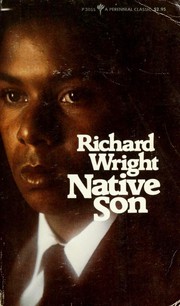
Native Son
2,265-word summary 10 min read 398 pages in the book
- First published
- 1940
- Publisher
- Harper & Row
- Pages
- 398
- ISBN
- 9780060830557
Reading options
What's inside (10 sections)
In March of 1940, a novel appeared that had no interest in making white America comfortable. Native Son, Richard Wright's first novel, put a twenty-year-old Black man named Bigger Thomas at the center of its pages and refused to explain him away. He is a murderer, a liar, a rapist and a thief. He is also the most fully alive person in the book, and the society that surrounds him has spent his whole life arranging the world so that his options run out. Wright wrote with a naturalist's attention to detail and a prosecutor's sense of structure. The result is one of the cornerstones of American literature, and one of the most disturbing.
The Kitchenette
Bigger Thomas lives in a one-room kitchenette on Chicago's South Side with his mother, his sister Vera and his brother Buddy. The room is overrun by rats, and the novel opens with Bigger killing one with a skillet in a scene that makes the family's whole condition visible in a few pages: the screaming, the crowd of neighbors, the blood on the floor, the mother's exhaustion and her son's irritation at being needed. Bigger is twenty and has no work, no education worth the name and no way to turn the fear he carries around into anything useful.
His friends are Gus, G.H. and Jack, a small crew of young men who smoke and talk and plan petty crimes they rarely commit. The big plan that hangs over the first chapters is a robbery of Blum's, a deli owned by a white man, and the whole gang knows that robbing Blum's is different from robbing a Black business. It is the kind of crime that brings a different reaction from the police and the papers. Bigger's fear is the fear that runs the book, and Wright states the problem plainly through the plot: the only crimes available to Bigger are the ones that terrify him.
Then the relief agency sends word that the Daltons, a wealthy white family, need a chauffeur, and Bigger's mother begs him to take the interview. He goes, mostly to end the arguing. What waits for him at the Dalton mansion is the setup for everything that follows.
The Daltons
The Dalton family is rich on a scale Bigger has never been close to. Mr. Dalton owns a real estate company, and he gives money to charity, including donations to Black institutions, while his company maintains the color line in the housing market and charges his Black tenants higher rents. His daughter, Mary, is a college student who talks about injustice and wants to be reported as a friend of the race. His wife is blind. The novel treats all three traits, the liberal generosity, the progressive talk and the literal blindness, as the same kind of blindness, the kind that lets a powerful family feel good about itself while doing daily damage.
Bigger is hired, mostly because Mrs. Dalton's blindness means his skin color matters less for the job than his strength. On his first day, Mary Dalton takes him along for a night on the town with her boyfriend Jan Erlone, a young communist who treats Bigger with a cheerfulness that is almost as unmanageable as the Daltons' money. Jan and Mary insist that Bigger come out with them, sit with them, eat with them. For Bigger, their friendliness is another cage. White people commanding him to break bread with them is still white people commanding him.
The evening ends with Bigger driving Mary home, drunk. He helps her up to her room because she cannot walk, and when he begins to think about what it might mean to touch her, Mrs. Dalton appears in the doorway. She cannot see, but she can hear. In a spasm of sheer terror, Bigger presses a pillow over Mary's face to keep her quiet, and keeps pressing. The girl does not wake up. Bigger has killed a white woman in her own bed in the house of the richest man in the neighborhood, and there is no version of his old life available to him anymore.
The Furnace
What Bigger does next is the practical, terrifying work of the second part of the book. He cannot carry the body out of the house, so he carries it down to the basement and pushes it into the furnace. The corpse does not fit, and he has to cut it apart with a hatchet to make it burn. He wipes up the blood, makes up lies to the housekeeper, gives Mrs. Dalton an account of the evening, and gets away with it, at first. And this is the point where the novel's psychology takes an honest and ugly turn. For the first time in his life, the murder gives Bigger a feeling of power. He has done a thing to the world instead of having things done to him.
The cover-up becomes a scheme. Mary's body is not discovered, snow begins falling, and Bigger decides to extract money from the Daltons by sending them a ransom note signed "Red." He blackmails by inventing an accomplice, and when the family raises the money, Bessie Mears, the young woman Bigger has been seeing, gets pulled into the small details of the crime. Bessie drinks to keep the fear down, pockets the money, and says almost nothing. The reader can see the end coming from the moment she says yes.
The scheme falls apart in one of the great ironic sequences in American fiction. The furnace needs work, the weather pushes the family home early, and the smoke and ash of Mary's body become the evidence that reveals her fate. The Dalton family, the police, and finally the entire city of Chicago learn that a Black chauffeur has killed a white heiress. The press turns the case into a public spectacle before the body is even identified, and Wright uses that feeding frenzy to indict everyone in the chain. Once the crime is public, the machinery of American justice switches on, and Bigger becomes the most wanted man in the country.
Bessie
What Bigger does to Bessie Mears is the part of the novel that readers do not forgive and should not. Terrified that she will break under interrogation and reveal the plan, he takes her to a vacant building in the snow, and there the two of them become the darkest pair in the book. He rapes her, kills her with a brick, and leaves her body in an air shaft, where the snow covers it. Later, when the trial and the papers need their villain, her death gives them the thing they wanted: a murder with an even better story, a Black man murdering a Black woman, proof that he was an animal all along.
Bigger's own account of the crime refuses to make it a romance or a pathology with a clean label. He killed Mary by accident and he killed Bessie on purpose, and both acts, in his private accounting, come out of the same fear. There is a racial dimension too, and Wright does not moralize around it: Bigger's whole life has taught him that the white world's judgment is the only judgment, and Bessie is disposable inside that logic. Native Son lets readers see how a person can be both a victim of a monstrous system and a monster within it, without allowing the second fact to excuse the first.
Flight
The middle third of the novel, labeled Flight, is a manhunt across the rooftops of Chicago in a blizzard. Bigger runs through the tenements, hides in empty apartments, and listens to his own crime narrated to the world on the radio. The police mobilize, the National Guard arrives with machine guns, a crowd of white Chicagoans gathers for the spectacle, and the hunt turns the whole city into a single organism with one appetite: his capture. The rooftop siege, with searchlights and gunfire and a sheriff who nearly shoots an innocent man, is still one of the most cinematic sequences in the American canon.
When they take him, the beating is immediate and continuous. The police bring him back through the crowds, and the novel makes it clear that at this point the legal process is theater. Bigger is beaten inside the jail, questioned by the State's Attorney, and paraded before a public inquest where reporters take notes and the family of the victim sits in the front row. The book pauses here to perform one of its cruelest scenes: Bigger is instructed to kneel and pray for forgiveness while his mother cries, and the spectacle is staged for the papers. The violence that began in a single bedroom has become property, consumed by the public.
Fate
The final third belongs to the law. The State's Attorney, Buckley, prosecutes with a dead body in each hand and the press corps in his pocket, seeking the death penalty in a state that rarely executes murderers like Bigger. The defense is handled by Boris Max, a Jewish lawyer sent by a labor organization, who understands immediately that his real client is not a man but a set of social conditions. Bigger's own position in all of this is stranger and more honest than any of his lawyers: he admits what he did, refuses the cheap comfort of pretending he is a different kind of person, and waits.
Max's closing argument is the novel's thesis, delivered in court. He argues that Bigger's crimes were manufactured by a society that offered him no other way to exist, that the guilt holds the whole of white America, and that condemning Bigger alone is the final act of a long performance. Buckley answers with a jingoistic appeal that shows the other side of that same coin: mercy for the victim, thunder for the criminal, votes for himself. The verdict is guilty. The sentence is death.
In the death house, Bigger has his last encounters with the people who made him. His mother visits, and the pastor's Christianity feels like air from another planet. Jan, the young man he framed and whose girlfriend he killed, comes to the cell and offers a handshake and a broken apology of his own, and Bigger does not know what to do with a communist who wants to call him brother. Max tries to hold on to the intellectual frame, and Bigger, facing the electric chair, arrives somewhere his lawyers never expected: a sense that under all the fear, he has finally felt something of his own. He is going to die for the only thing he ever made. The novel ends before the execution, which is its own verdict on what the society outside the cell looks like.
What the Novel Argues
Native Son is built to be argued about, and it has been for more than eighty years. One reading sees Bigger's crimes as individual choices and insists the novel defends a murderer. Another reads the same pages as a demonstration that a country that cages a population and then demands its gratitude will always be surprised by the anger it stored. Wright's own essays, especially How Bigger Was Born, describe the character as a composite of men he knew, a fear he had carried since Mississippi, and a statement about what the American city actually does to a young Black man. The novel's power is that it stages both cases at once and refuses to file a verdict for the reader. Bigger is guilty. The society that created the conditions is guilty. The book lets those two sentences stand beside each other without collapsing either one.
The prose is worth noting too. Wright writes a flat, forward-driving American realism, heavy on weather and rooms and jobs, and then uses it like a machine to manufacture dread. The three-part structure, Fear, Flight, Fate, maps the whole architecture of a wrongful life, and the foreshadowing is engineered with the precision of a trap. That is why the book still works on readers who hate it. There is no way to float above the pages. You are in the kitchenette, the furnace room, the cell.
The Book's Life
Native Son was the first novel by an African American writer selected by the Book-of-the-Month Club, and its publication in 1940 made it a national event. The club required cuts to sexual passages, and for decades many readers met a version of the novel missing scenes Wright had written, an issue later editions resolved by restoring the full text. Orson Welles adapted the novel for the Broadway stage in 1941, and Wright himself played Bigger Thomas in a 1951 film version shot in Argentina. Wright, born on a plantation near Natchez, Mississippi, in 1908, went on to write Black Boy, The Outsider and much else before his death in Paris in 1960, but Native Son is the book that changed what American fiction was allowed to contain.
It remains hard reading, and it should be handed to new readers with honest warnings: racial violence, sexual violence, murder, and an unsparing view of how the country treats Black lives. It is also essential. No novel from the twentieth century did more to force the American literary establishment to confront what it had been ignoring, and few novels since have matched the sheer force of the last fifty pages. If you have heard about Native Son for years and never read it, the book will be angrier than you expect, and it will be right.
FAQ
Is Native Son based on a true story?
Not on one case. Wright drew on his own life in the South and Chicago and on real murders of the era, including the case of Robert Nixon, known in the press as the brick slayer, for the killing of Bessie Mears.
Why are there different versions of the text?
The 1940 Book-of-the-Month Club edition removed passages the club considered unfit, including part of the Bessie Mears sequence. Editions from 1991 onward restored Wright's full manuscript.
What is the novel's message?
Wright insisted the book was not propaganda but a picture of a condition: a society that confines a young Black man so tightly that violence becomes his only available form of self-assertion.
Similar books
A Raisin in the Sun
Lorraine Hansberry's 1959 play follows the Younger family as a $10,000 insurance check, a house in a hostile neighborhood, and a stolen investment test their…
2,444-word summary · 11 min read
Roll of Thunder, Hear My Cry
In Depression-era Mississippi, nine-year-old Cassie Logan learns what her Black family's land costs and why they keep it.
2,273-word summary · 10 min read
Take My Hand
In 1973 Montgomery, a young nurse discovers that two sisters were sterilized without consent, and spends the rest of her life living with what she could not…
2,126-word summary · 9 min read
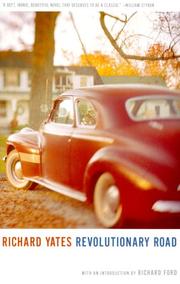
Revolutionary Road
A Connecticut couple who believe they are too good for the suburbs plan to move to Paris, and the plan slowly exposes everything they cannot say to each other.
2,085-word summary · 9 min read
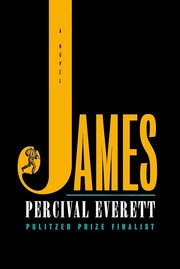
James
Percival Everett retells Huckleberry Finn from Jim's side, giving him a library, a hidden school, and a voice the novel lets loose.
2,211-word summary · 10 min read
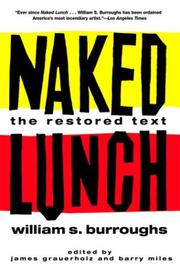
Naked Lunch
Burroughs's banned 1959 collage novel follows Bill Lee through addiction, Tangier, and the nightmare bureaucracy of the Interzone.
2,082-word summary · 9 min read
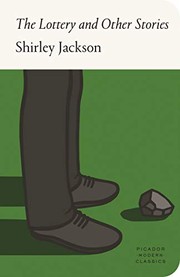
The Lottery
In Jackson's 1948 story, a village draws lots to keep the corn heavy, and the chosen person is stoned by her neighbors.
3,080-word summary · 14 min read

Wide Sargasso Sea
Jean Rhys gives the first Mrs. Rochester a Caribbean childhood, a marriage built on money and suspicion, and a voice that Charlotte Bronte left in the attic.
2,021-word summary · 9 min read

Why I'm No Longer Talking to White People About Race
Reni Eddo-Lodge traces black British history and shows how institutions, culture, and everyday assumptions keep producing racial inequality.
2,071-word summary · 9 min read
The Last of the Mohicans
During the French and Indian War, Hawkeye and two Mohican warriors try to save two British sisters from a Huron chief whose revenge will end the Mohican line.
2,017-word summary · 9 min read
The Memoirs of Sherlock Holmes
Doyle's second Holmes collection gathers twelve Strand stories, including the early case of the Gloria Scott and the confrontation with Moriarty at Reichenbach…
2,390-word summary · 11 min read
The Complete Poems of Emily Dickinson
Thomas H. Johnson's one-volume edition gathers all 1,775 of Emily Dickinson's poems in their restored texts, the standard reading edition since 1960.
2,191-word summary · 10 min read
The Talented Mr. Ripley
A small-time con man is sent to bring a rich man's son home from Italy and decides to become him instead. Highsmith's amoral classic of the first antihero.
2,074-word summary · 9 min read
The Murder on the Links
Poirot arrives in France too late to save his client, who is found stabbed in a grave and was not the man he claimed to be. Christie's second Poirot novel.
2,055-word summary · 9 min read
Razorblade Tears
Two ex-con fathers, one Black and one white, hunt their murdered sons' killers in a Richmond that never gave the boys a fair shake.
2,880-word summary · 13 min read
The New Jim Crow: Mass Incarceration in the Age of Colorblindness
How mass incarceration became a racial caste system after civil rights.
2,413-word summary · 11 min read
The Maltese Falcon
Sam Spade hunts a jeweled bird through lies after his partner is killed.
2,529-word summary · 11 min read
The Guardians
A innocence lawyer reopens a prison murder where the wrong man waits on death row.
2,564-word summary · 11 min read
The Fire Next Time
Baldwin writes his nephew and faith on race in America.
2,463-word summary · 11 min read
So You Want to Talk About Race
Oluo gives plain rules for talking about race at work and home.
2,597-word summary · 12 min read
The Body in the Library
A strange girl found dead in a library pulls Miss Marple into lies about dance halls and film.
2,017-word summary · 9 min read
Song of Solomon
Milkman Dead leaves Michigan to hunt for family gold and finds instead the old song of his ancestor Solomon.
2,465-word summary · 11 min read
The Street Lawyer
Michael Brock survives a hostage morning at his rich D.C. firm, then quits for a street clinic after learning a buried eviction file cost a mother and kids…
2,745-word summary · 12 min read
Sycamore Row
Jake Brigance returns to defend a contested will that leaves a fortune to a Black housekeeper in racially tense Clanton.
2,017-word summary · 9 min read
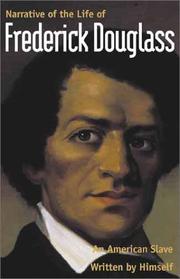
Narrative of the Life of Frederick Douglass
Douglass names names from Maryland slavery to his 1838 escape, showing how literacy, wages, and faith were policed, then answers with defiance.
2,630-word summary · 12 min read
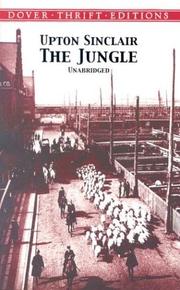
The Jungle
Jurgis Rudkus follows work to Chicago packinghouses, watches his family wear down from low pay and foul food, and ends by joining the socialists.
2,496-word summary · 11 min read
The Chamber
Young Chicago lawyer Adam Hall defends his grandfather Sam Cayhall on Mississippi death row as a gas chamber date nears.
2,828-word summary · 13 min read
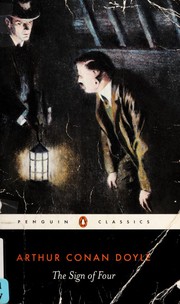
The Sign of Four
Mary Morstan's pearls lead Holmes and Watson from foggy London to Agra treasure and a Thames chase.
2,114-word summary · 9 min read
White Fragility: Why It's So Hard for White People to Talk About Racism
DiAngelo's 2018 bestseller on why cross-racial talk about racism stalls, and what white readers can practice instead.
2,904-word summary · 13 min read