
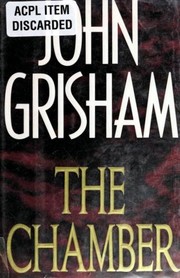
The Chamber
2,828-word summary 13 min read 496 pages in the book
- First published
- 1994
- Publisher
- Doubleday
- Pages
- 496
- ISBN
- 9780385424721
Reading options
What's inside (8 sections)
I picked up The Chamber because I had read The Firm and A Time to Kill and I wanted to see what Grisham does when he slows down and writes about punishment instead of winning. This one came out in 1994 from Doubleday, 496 pages in the first hardcover, and it was his fifth novel. I expected another fast Memphis courtroom chase. What I got was heavier and sadder, a death row countdown in Mississippi with a young lawyer trying to save a man most readers will not like at first.
The basic setup is simple to say and hard to sit with. Sam Cayhall, a former Klansman in his late sixties, waits in the Maximum Security Unit at Parchman for the gas chamber. He was convicted for a bombing in 1967 that killed two small boys. His new lawyer is Adam Hall, twenty six, a junior associate at the big Chicago firm Kravitz and Bane. Adam has no experience with capital cases. He asks for this one. He flies to Memphis and then drives to Parchman with about four weeks left. He does not tell Sam at first that he is Sam's grandson.
What surprised me was how little of the book feels like a trial. Most Grisham books I knew lived in courtrooms and deals. This one lives in a visiting room, in prison corridors, in family kitchens, and in law office late nights where Adam types motions that keep getting denied. My complaint, which I will come back to, is that the middle repeats its legal moves and some family scenes circle the same pain. Still, the last stretch pulled me along because the clock never stops.
The bombing in Greenville
Grisham opens in Mississippi in the late 1960s, not with Adam but with the crime. Marvin Kramer is a Jewish lawyer in Greenville, in the Delta. His family has been in Mississippi for generations as merchants. Marvin could have stayed in business. He chose law, and he chose to support civil rights work at a time when that made him hated by the Klan. That choice is why his office was picked.
The bombing was not Sam acting alone. Grisham lays out three men. Jeremiah Dogan was the local Klan leader who knew the area and gave direction. Sam Cayhall was the older foot soldier who drove, watched, and helped plant. Rollie Wedge was the younger man with real skill with explosives, the one who could vanish after. This was supposed to be their sixth bombing as a group. The pattern before had been late night blasts meant to scare, with a short fuse and no one inside.
This time the plan broke. Sam and Dogan thought the charge would go off in the empty building during the night. Wedge set a timer for the morning instead, close to eight, when Kramer would be at work. Sam drove away to a truck stop, waited, heard nothing, and got uneasy. He drove back toward town to check. The building was still standing. He called Wedge from a pay phone. Wedge told him to leave it alone, that it would go off later.
Marvin Kramer drove to the office that morning with his five year old twin sons, Josh and John. His wife Ruth stayed home. The boys were supposed to go to nursery school after a short stop. They were playing in or near the office when the bomb went off, about fifteen feet from the blast. They were killed at once. Their bodies were found in the ruins by firemen. Kramer was thrown by the force and badly hurt. He survived, which in some ways made the loss harder to carry.
Sam was caught because he was seen driving the suspect car away from the area. That arrest shapes the rest of his life. His first trial ended without a verdict. His second trial did too, helped by a lawyer tied to Klan money and local pressure. For years the case sat. Then, more than a decade later, the FBI leaned on a suspected associate to testify, and the state tried Sam a third time. This time a jury convicted him of capital murder and set death by gas. He went to Parchman and stayed there for about nine years before Adam enters the story.
I found this opening strong because Grisham does not rush past the ugliness. He shows how ordinary the planning felt, phone calls from pay phones, night drives from Clanton to Greenville. It would have been easy to make Sam a cartoon. He is worse in a way, a man who told himself it was only property damage.
Adam Hall asks for the worst case
Adam Hall works in Chicago at Kravitz and Bane, a large firm with Jewish partners and a history of pro bono work against the death penalty. He is twenty six, smart, careful with his suits and his time sheets, on track for money and safety. He grew up in California and Memphis under the name Hall, not Cayhall. His father Eddie Cayhall changed the family name to hide from Sam's record. Eddie later killed himself. Adam's aunt Lee, Sam's daughter, drinks and tries to hold a marriage together in Memphis. Adam has not seen Sam since he was a baby.
Adam volunteers for Sam's case and gets sent to the Memphis office to work under E. Garner Goodman, an older partner who knows capital law and knows how to talk to Southern judges. Goodman is patient in a way Adam is not yet. He warns Adam that he is too close, too young, and too sure that hard work can fix a thirty year wound. Adam hears him and pushes ahead anyway. Part of it is guilt about Eddie. Part of it is a wish to know where his father came from. Part of it is plain ambition, the idea that a young lawyer should take something hard.
The first meetings at Parchman go badly. Sam hates lawyers and says he can handle his own briefs. He has spent years in the prison library learning how to type motions and cite cases. He trusts no one from a big Northern firm, especially a young man in a tie who talks about rights. He taunts Adam about age, about Chicago politics, about Eddie. He forbids Adam from going to the governor to beg for mercy. He says politicians only use men like him.
Adam keeps coming back. He brings a tape recorder. He brings files. He sits in the small visiting room and learns to wait through Sam's silence. Slowly Sam starts to test him with law talk, then with stories about Clanton, then with questions about Lee. Adam does not tell him right away who he is. When the truth comes out, that Adam is Eddie's son, Sam does not soften at once. He gets angry, then quiet, then oddly formal, as if he does not know how to be a grandfather to a man he helped orphan by shame.
I liked Adam more as the book went on, though he annoyed me early. He overprepares and calls Goodman at bad hours. Goodman has to teach him that capital defense in the last month is mostly losing well and keeping a record clean. That lesson, that you can do good work and still lose, is the core here.
Life on death row and the gas chamber fight
Parchman in this book feels hot, loud, and slow at once. Grisham walks us through the tiers, the count, the guards who range from decent to cruel, the visiting rules, the way sound travels at night. Sam lives in the Maximum Security Unit with other condemned men. Sam helps both Black and white prisoners with paperwork, which confuses Adam at first. Prison, Sam says, changes what matters day to day, even if it does not erase what he believed before.
The legal fight centers on time and method. With about a month left, Adam cannot retry facts. He argues that the gas chamber is cruel. Grisham uses a true Mississippi story here, the 1983 execution of Jimmy Lee Gray, where something went wrong and witnesses described a long and awful death. Sam tells Adam about it. They pull records of gas executions that went wrong in other states. Adam puts that history into a motion and asks for a hearing on method. He loses, but the pages about the chamber itself stayed with me.
Other motions follow and fail in turn. Adam claims bad help at trial, new evidence about accomplices, racial bias in jury picks long ago. Each filing needs affidavits, each denial needs a fast appeal. Grisham shows the paper grind without making it read like a manual. Goodman edits Adam's drafts with a red pen and cuts long speeches down to two pages.
This is also where the book drags a little for me. I accept that repetition is the point. Still, three or four chapters in a row of file and deny, drive to Parchman, drive back, type all night, started to blur. The lawyers on the state side get thin. I wanted more of Memphis outside the office.
What saves these chapters is Sam. He is rude, racist at the start, proud of knowledge he picked up late, scared underneath. He coughs. He cleans his cell. He remembers Clanton roads with a clarity that frightens Adam. And he shows small decencies he will not explain, sharing coffee, thanking a guard who treats him plain. Those bits kept me turning even when the motions repeated.
Lee and Eddie and the family Sam broke
If the prison chapters are about law, the Memphis chapters are about family. Lee Cayhall Booth is Sam's daughter and Adam's aunt. She married well, drinks too much, and tries to love a husband who is tired of it. She adores Adam and fears him too, because he asks questions she has spent years drowning. She tells him about growing up Cayhall, about neighbors who knew and said nothing, about Eddie as a boy who took it hardest.
Eddie is dead before the book starts, but he fills it. He was Sam's son, Lee's brother, Adam's father. He changed Cayhall to Hall to get away. He married, had Adam, tried to be normal. He could not outrun the name. He killed himself when Adam was small. Adam grew up with silence and wants Sam to say what happened that morning and who else was there.
Lee's scenes with Adam are the most tender and, for me, the most uneven. When she is sober and telling a story about Eddie fishing, the writing feels warm and easy. When she drinks and repeats herself, Grisham writes the loops on purpose, but a few talks run long. I caught myself skimming a party scene that said twice what one telling would have done.
The payoff matters though. Lee slowly stops hiding. She admits how much she knew as a girl and how little she did. She visits Sam near the end after years away, and the meeting is awkward and short and real. No big speech. Sam tries to joke. Lee cries. Adam watches and finally sees Sam as a father who failed, not only as a client who needs a stay. That shift lets Adam argue with more care and listen better in the visiting room.
I should note one thing Grisham handles well here. He does not excuse Sam because his children suffered. Eddie's death is awful. Lee's drinking is awful. They do not balance dead twins. Adam learns that and Sam learns that, and the book is better for refusing a trade.
Appeals, sealed files and a governor who counts votes
With two weeks left, then one, Adam chases the only path that might open a door. Old state files from a spy unit called the Sovereignty Commission were sealed by lawmakers. Those boxes might hold notes about Klan work in the 1960s. Adam wants them opened. Sam says no. He fears opening them could expose former associates who might hurt Adam or Lee. He also thinks the governor wants those files for his own use, not for justice.
The governor is David McAllister, a Mississippi politician facing pressure from both sides. His aide Nora Stark meets Adam and hints that clemency could be discussed if Sam gives up names. Adam carries the offer to Sam. Sam refuses to trade. He says he will not beg and will not inform, even if silence kills him. Adam thinks it is pride. Goodman thinks it is partly fear, plus a late wish not to soil his grandson with a deal.
Adam also keeps digging into facts that do not sit right. Why did Wedge pick morning? Where did the money come from? Jeremiah Dogan is dead by now, I think, so Adam cannot get answers from him. Rollie Wedge is alive out there under another life, watching. Grisham lets us feel Wedge near Adam without turning the book into a chase. A call with no voice. A car that stays back. It adds fear without stealing focus from Parchman.
Every court says no in the end. A state judge denies. A federal judge denies. An appeals panel denies. The highest court denies. Grisham writes those denials short, which is right. Goodman puts a hand on Adam's shoulder. Adam files again because that is the job. I admired how Grisham shows lawyers losing without making them look foolish. They try to keep Sam alive one more day.
My criticism here is about the governor plot. McAllister and his staff talk like press releases. I did not believe them as people, only as obstacles. Compared with Sam and Lee and Goodman, who feel lived in, the political side feels thin. It still works as pressure. I just wished Grisham had given McAllister one private scene where the math fell away.
The last day and whether you should pick this up
The final days move fast after so much waiting. Visits get shorter. Sam cleans. He asks a chaplain to pray with him and tries to say he is sorry in words that do not sound practiced. He tells Lee he loves her in his clumsy way. He tells Adam to leave before the end and not to watch. He says he is proud of him, which lands because Sam has praised almost no one. He eats little. He asks about the weather outside, which broke me a little.
Grisham does not turn Sam into a saint at the close. Sam says he was wrong about the Klan and wrong about hate, in front of witnesses, not only to Adam. He does not claim he was innocent. He admits his part and refuses to hide behind Wedge, even though Wedge built the bomb and set the clock. That refusal costs him the one secret that might have bought time. He takes it with him. I read it as both loyalty to old evil and a wish to shield his family, plus fear that naming Wedge would get Adam killed after.
The execution itself is written without thrill. Gas, glass, straps, witnesses, a warden reading an order. Adam honors Sam's wish and does not watch up close. Phones stay quiet because no stay comes. After, Adam feels sick and strange and oddly clear. He plans to quit Kravitz and Bane, because corporate hours feel empty after watching the state kill his grandfather. The book ends on that unsettled note, not on triumph.
So who is this for? If you like Grisham for twists and courtroom wins, this will feel slow and bleak. There is no big verdict and no last minute witness who saves the day. If you want a book that sits with the death penalty, with racism in Mississippi, with how shame moves through a family for thirty years, this is his most serious early novel and worth your time.
What drags, to be fair: the middle legal loop repeats, the governor plot feels flat, and Sam is hard to stand beside for the first hundred pages. Grisham asks patience before he pays it off. For me the payoff worked because the last hundred pages are tense and tender at once. I closed the book tired, not thrilled, and I thought about Eddie and the Kramer twins more than about any motion.
If you pick it up, give it room. Read the prison visits slowly. Do not skim the library work about gas executions, hard as it is. Notice how Goodman mentors without speeches. Notice how Adam learns to lose without quitting early. The power here is not in a trick but in a countdown. And when Sam tells Adam to walk away at the end, listen for what he is giving the boy, a life not shaped by watching. I did, and I sat quiet for a while after.
FAQ
When was The Chamber published?
John Grisham published The Chamber in 1994 with Doubleday. The first hardcover runs 496 pages.
Is The Chamber part of a series?
No, it is a standalone legal thriller with no series order. It does not follow Jake Brigance or other Grisham series characters.
What crime is at the center of the story?
In 1967 Sam Cayhall helped bomb Marvin Kramer office in Greenville, killing Kramer five year old twin sons. He was convicted at a third trial and sent to Parchman death row.
Similar books
The Last Juror
A young editor buys a dying Mississippi paper and covers the murder trial that defines his town for a decade. Grisham's small-town novel about race, juries,…
2,528-word summary · 11 min read
The Rainmaker
Broke rookie Rudy Baylor sues an insurer over a denied transplant and faces Leo Drummond at trial.
3,040-word summary · 14 min read

4th of July
Lindsay Boxer shoots two armed teenagers in self-defense, faces a wrongful-death trial, and spends her leave chasing a string of throat-slashing murders in…
2,192-word summary · 10 min read
Defending Jacob
A Newton prosecutor defends his fourteen year old son after a classmate is stabbed in the park.
2,994-word summary · 13 min read
The Brethren
Three disgraced judges run a blackmail scam from a federal prison and accidentally trap a presidential candidate, pulling the CIA into their scheme.
1,967-word summary · 9 min read
Gray Mountain
A Manhattan associate furloughed after the financial crash takes a year of unpaid legal aid work in Appalachian coal country, and finds the case of her life…
2,026-word summary · 9 min read
The Racketeer
A jailed lawyer trades a judge murder secret for freedom and revenge.
2,434-word summary · 11 min read
The Judge's List
Lacy Stoltz hunts a sitting judge who murders off his list.
2,513-word summary · 11 min read
The Guardians
A innocence lawyer reopens a prison murder where the wrong man waits on death row.
2,564-word summary · 11 min read
The Street Lawyer
Michael Brock survives a hostage morning at his rich D.C. firm, then quits for a street clinic after learning a buried eviction file cost a mother and kids…
2,745-word summary · 12 min read

The Partner
A Biloxi lawyer fakes his death, steals $90 million, and hides in Brazil until hired muscle drags him home to trial.
2,221-word summary · 10 min read
Sycamore Row
Jake Brigance returns to defend a contested will that leaves a fortune to a Black housekeeper in racially tense Clanton.
2,017-word summary · 9 min read
The Whistler
A Florida judicial investigator takes a bribery tip that leads to a crooked judge, a tribal casino, and murder.
2,935-word summary · 13 min read
The Runaway Jury
A tobacco trial in Biloxi is quietly rigged from inside the jury box and by a woman offering to sell the verdict.
2,920-word summary · 13 min read
The Pelican Brief
Law student Darby Shaw writes a brief on murdered justices and becomes a target, fleeing with a reporter.
2,994-word summary · 13 min read
The Firm
Young lawyer Mitch joins a Memphis firm with great pay, then learns clients die and the FBI watches.
2,079-word summary · 9 min read
A Time to Kill
Lawyer Jake Brigance defends a father who killed his daughter's attackers.
2,064-word summary · 9 min read

The Beach House
A young valet is beaten to death at a Hamptons party, and his law-student brother spends a year building a case against the family that covered it up.
2,049-word summary · 9 min read
Native Son
Richard Wright's landmark novel follows Bigger Thomas through one panicked night in Chicago and the manhunt, trial and reckonings that follow, exposing the…
2,265-word summary · 10 min read
Presumed Innocent
Rusty Sabich must solve coworker Carolyn Polhemus's murder while hiding his affair with her, then stands accused himself in Turow's 1987 Kindle County debut.
2,726-word summary · 12 min read
House Rules
Jodi Picoult's 2010 House Rules follows Jacob Hunt, a teen with Asperger syndrome accused in his tutor's death, as his mother Emma and brother Theo face police…
3,079-word summary · 14 min read
The Lincoln Lawyer
Mickey Haller defends a rich assault suspect from his Lincoln while doubting his innocence.
2,317-word summary · 10 min read
The Rooster Bar
Three law students buried in debt discover their for-profit law school is a scam, and decide the only way out is to con their way into practicing law before…
2,837-word summary · 13 min read
The Broker
A disgraced Washington lobbyist is pardoned and hidden in Bologna, where the CIA uses him as bait to find out who wants a stolen satellite.
2,211-word summary · 10 min read
A Painted House
In 1952 Arkansas, seven-year-old Luke Chandler picks cotton with his family and learns how quickly poverty, violence, and adult secrets can end a childhood.
2,060-word summary · 9 min read
The Testament
John Grisham's The Testament sends washed-up lawyer Nate O'Riley to the Brazil Pantanal to find missionary heir Rachel Lane and settle her…
2,731-word summary · 12 min read
Camino Island
A Princeton manuscript heist pulls a blocked young writer into spying on a charming Florida bookstore owner who may hold the loot.
2,984-word summary · 13 min read

The Client
Eleven-year-old Mark Sway learns a mob secret in Memphis and hires lawyer Reggie Love for one dollar.
2,536-word summary · 11 min read

What She Knew
Rachel lets her eight-year-old son run ahead in a Bristol park, and the nine-day search turns her into a suspect in the public eye.
2,952-word summary · 13 min read

The Only Good Indians
Four Blackfeet men who killed a pregnant elk are hunted by her spirit a decade later, and the only person who can end the cycle is a teenage girl who was not…
2,010-word summary · 9 min read