
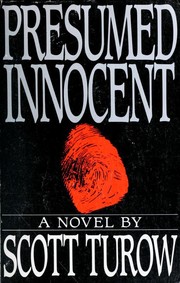
Presumed Innocent
2,726-word summary 12 min read 448 pages in the book
- First published
- 1987
- Publisher
- Farrar, Straus and Giroux
- Pages
- 448
- ISBN
- 9780374231040
- Series
- Kindle County Legal Thriller (#1)
Reading options
What's inside (8 sections)
I came to Presumed Innocent late, after hearing it named as the book that started the modern legal thriller. A friend who clerks for a county judge told me to read it before watching either screen version, because the novel keeps you inside one uncomfortable head for the whole ride. That turned out to be exact. Scott Turow published the book in 1987 with Farrar, Straus and Giroux, the first volume in what became the Kindle County Legal Thriller series, and the first hardback edition ran 448 pages. I read it across three nights, and the middle night kept me up because I kept changing my mind about whether the narrator was lying to me or only to himself.
The narrator is Rozat Sabich, called Rusty, a chief deputy prosecutor in the fictional Kindle County in the Midwest. He is in his late thirties, married, with a young son, and he has built his identity around being the steady man in a messy office. His boss is District Attorney Raymond Horgan, a political animal who is losing a re-election fight. His rival is Nico Della Guardia, once Horgan's protege, now running against him with a reform ticket and a sharp deputy named Tommy Molto. Into this tired office politics comes a death that scrambles everything.
A murder inside the office
Carolyn Polhemus is found dead in her apartment, tied up in a way that first suggests a sexual encounter that turned violent. She has been struck once on the head with a hard object. She was smart, ambitious, and feared. She worked as an assistant prosecutor in the same office as Rusty, handling rape cases, and she had a reputation for winning and for using people to keep winning.
Horgan hands the case to Rusty. On paper it looks like trust. In practice it is pressure. Horgan is trailing in the polls and he needs a quick arrest to show control. He tells Rusty, in so many words, that their futures are tied together. If Horgan loses, Rusty likely loses his job. Rusty accepts, though he knows within hours that he should have refused.
The reason is simple and awful. Rusty had an affair with Carolyn. It lasted a few months and ended months before her death, when she broke it off after deciding he would not push Horgan aside and take power for himself. Rusty describes their time together in hazy, obsessive detail. Hotel rooms. Phone calls. The way she could turn attention on and off. He tells himself it is over. He has even started seeing a psychiatrist to repair his marriage. But he never tells Horgan about the affair, and that silence shapes the whole investigation.
His wife Barbara knows. That fact sits in the house like a second piece of furniture. Their son Nat, whose full name is Nathaniel, is seven or so and loves both parents without seeing the cracks. Barbara is depressed and angry, drinking too much, staying quiet too long, then cutting Rusty with a single sentence. Rusty loves his son in a plain, physical way that feels true. His love for Barbara is knotted with guilt. His memory of Carolyn is knotted with shame and leftover hunger. Turow lets all three feelings sit side by side without sorting them.
The investigator with a secret
Rusty runs the murder inquiry while trying to keep it away from himself. He replaces the assigned detective with his friend Dan Lipranzer, called Lip, a police officer he trusts. Lip is loyal, funny in a tired way, and willing to bend rules for Rusty. Together they look at phone records, neighbors, and the physical traces in Carolyn's apartment.
The details pile up in a procedural rhythm. There is a bar glass with fingerprints. There is semen in the victim. There are carpet fibers that might match a rug from Rusty's house. There is a record of a call from Rusty's home phone to Carolyn's apartment on the night she died. None of it alone proves murder. Together it looks bad, especially once you add motive, which is where the affair would come in if anyone could prove it.
Rusty learns other things he wishes he had not. Horgan also had a brief involvement with Carolyn and cut it off faster, seeing her appetite for advantage more clearly. Judge Larren Lytton, who will later matter a great deal, moved in the same social and professional circle. Nico and Tommy Molto are watching from the campaign trail, waiting for a mistake. Tommy in particular nurses a fierce admiration for Carolyn and a suspicion of everyone who worked near her.
Rusty makes small, stupid choices that later read as consciousness of guilt. He holds back files. He steers interviews away from office gossip. He fails to log certain leads. He tells himself he is protecting the office from embarrassment during an election. A colder reading is that he is protecting himself. Both can be true, and Turow knows it. The section where Rusty interviews potential witnesses while omitting his own name from the list of men Carolyn saw is painful to read because the prose stays calm while the ethics collapse.
At home, Barbara swings between cold distance and sudden warmth. She asks pointed questions and then drops them. She takes care of Nat with steady attention. Rusty goes to therapy and talks about his father, a closed off man whose anger filled the house, and about his fear that he has repeated that pattern by chasing a fantasy with Carolyn to escape a flat stretch in his own life. These sessions slow the plot, but they give the later pages their weight. This is not a puzzle about fingerprints. It is a portrait of a man who wanted to feel chosen and now has to live with what that wanting cost.
Charged with the crime he was hired to solve
Horgan loses the election. Within days of taking office, Nico Della Guardia charges Rusty with the murder of Carolyn Polhemus. Tommy Molto pushes hard for the charge. The press crowds the hallway. Barbara stands beside Rusty for the cameras, holding his arm, playing the loyal wife while her eyes stay elsewhere.
Rusty hires Alejandro Stern, called Sandy, a defense lawyer from Argentina who has faced Rusty many times in court. Sandy is short, precise, formal in speech, and feared by prosecutors because he prepares like a scholar and cross examines like a surgeon. He tells Rusty not to talk, not to help, not to play detective anymore. Rusty obeys badly, because he cannot stop trying to solve the case from inside his own defense.
The judge assigned is Larren Lytton. He is an older man, connected to Horgan by years of politics and lunches, and he dislikes Tommy Molto openly. That dislike will matter. Lytton runs a tight courtroom, impatient with speeches and alert to shortcuts. From the start Sandy watches him closely, looking for pressure points.
The prosecution theory is straightforward. Rusty loved Carolyn, she left him, he called her that night, he went to her apartment, they had sex or he assaulted her, he struck her with something heavy, he tied her to stage a scene, he left, and he then used his position to blunt the inquiry. To support it, Tommy offers the glass with Rusty's prints, the semen said to be consistent with Rusty, the fiber match, the phone call, and testimony about Rusty's foot dragging during the early investigation.
Sandy's answer is that friendship and office gossip are not proof, that the forensic matches are weak, and that the state's timeline has holes. He also hints, without yet showing his cards, that the office had other secrets that point away from Rusty. Rusty, sitting at the defense table, keeps flashing back to Carolyn alive: her laugh in a corridor, her hand on a file, the particular way she said his name when she wanted something. The effect is queasy. You understand why he followed her, and you dislike him for it.
The trial: glass, sperm, and the B-file
The trial becomes a war over paper and procedure. Then the prosecution admits that the bar glass, the single item with clear fingerprints, is missing. It was logged and then lost through careless handling. Lytton refuses to pause the trial to find it. That ruling guts the state's ability to place Rusty physically in the apartment that night, because prints on paper mean less than prints on glass that sat by the bed.
Sandy presses every gap. He brings his own experts to challenge the semen identification, showing how degraded samples and broad blood type matches were overstated. He picks apart the fiber testimony, forcing the state's witness to admit the carpet material is common and the match is only a possible match. He makes a neighbor who claimed to see Rusty admit uncertainty about time and light. He turns Tommy's zeal into a liability, suggesting Tommy decided early that Rusty was guilty and then read every later fact to fit.
Underneath the visible fight is a quieter one about what lawyers in Kindle County call the B-file. Through Lip's digging and Sandy's sources, Rusty learns that Lytton took payments from defendants to rule in their favor, and that Carolyn acted as a courier moving money in that bribery arrangement. Tommy knew something about the payments but was not part of them. Sandy never accuses Lytton in open court. He does not need to. He lets Lytton see that he knows, through questions that brush the edge and through private signals, and Lytton, who wants that file to stay buried, becomes less tolerant of the state's leaps.
Whether Sandy is bluffing about details hardly matters in the room. The dynamic shifts. Lytton sustains Sandy's objections more often. He limits Tommy's longer speeches. He instructs the jury with language that stresses the burden of proof. When the state rests without proving the affair and without the glass, Sandy moves to dismiss. Lytton agrees. The case ends without a verdict from a jury, dismissed by the judge for lack of proof. Rusty walks out blinking into camera flashes, holding Barbara's hand, telling reporters he is grateful, while Sandy warns him quietly not to mistake dismissal for vindication in the eyes of the county.
I found this stretch the most absorbing and also the most frustrating in a useful way. Turow, who worked as a federal prosecutor, writes procedure the way a carpenter talks about joints. Motions, stipulations, chain of custody, hearsay arguments: all of it is here, and it slows the pace. At the same time the slowness feels honest. Cases are often won on a lost exhibit tag or a lab tech who overstates a result, not on a sudden confession.
The acquittal and the hatchet in the garage
Life after dismissal is not clean. Nico's reputation sinks because he charged the wrong man in public. A recall effort grows. Rusty is eventually appointed to fill out the term, a strange promotion built on ruin. He returns to work but the hallways feel different. People smile too long. Files arrive late. Tommy avoids him.
At home the repair Rusty hoped for does not hold. Barbara grows more distant. The couple who survived cameras and court dates cannot survive ordinary evenings. Nat senses the tension and acts out in small ways, asking if his father will go away again, clinging at bedtime.
Then comes the scene that reframes the book. Doing repairs around the house, Rusty picks up a hatchet like tool and notices blood and caught hairs in the handle. His mind runs the inventory of the case: the blow to Carolyn's skull, the missing murder weapon, the fact that no object found in her apartment matched the wound cleanly. He sits with the tool for a long time before speaking to Barbara.
The confrontation is quiet. He lays out what he has pieced together. Barbara had motive after months of humiliation. She knew about the affair. She had access to the house phone that made the call. She could have entered Carolyn's apartment, surprised her, struck her once, tied her in a way that mimicked erotic play to confuse the police, and left the glass with Rusty's prints because Rusty had in fact been there on an earlier night, or because she brought something he had touched. Barbara does not confess in plain language. She answers sideways, with remarks that accept his account without signing it. Her tone says you finally see it, and also says what will you do now that you do.
Rusty decides to protect Nat by protecting Barbara. He cleans the tool. Later, at Christmas, Lip arrives with a shock. He has the missing bar glass. It fell out of the chain through Tommy's sloppy logging and Lip's own quiet decision not to help the new administration. Lip kept it. Rusty talks Lip through the whole reconstruction, how Barbara must have done it, why she left the glass where it could point at Rusty, whether she wanted him to know or wanted him punished or both. While he talks, he washes the glass thoroughly, destroying the last physical link. Lip watches and lets him do it. Their friendship survives because both men agree, without saying it grandly, that a boy should not lose his mother at Christmas to a case the county already botched.
The novel closes almost a year after the murder, still officially unsolved. Rusty reflects on why he entered the affair at all. He calls it an attempt to escape a dead middle period in his life, a wish to feel alive inside a story larger than dockets and school pickups. What Carolyn offered was never love in any durable sense. It was attention without history, and he mistook it for rescue. He keeps his office, he keeps his house, he keeps his silence, and none of it feels like winning.
What holds up and what creaks
The structure holds up remarkably well for a first novel. The voice stays controlled even when Rusty is least reliable, and the trial chapters earn their length because every objection connects to character. Sandy Stern is a creation that justifies his fame. He never raises his voice, he never gives the jury a slogan, he simply removes the floorboards under the state's case one at a time. Tommy Molto is equally well drawn as the opposite type, a man whose loyalty to a dead colleague curdles into certainty. Lytton, Horgan, Nico, Lip: each has a private calculus, and Turow lets you see enough of it to understand moves that look petty from outside.
Two things creak. The first is pace in the opening third. The investigation chapters repeat certain beats, interviews that circle the same gossip, therapy sessions that restate Rusty's guilt, and a reader who wants momentum may skim. I did not mind once I adjusted, because the repetition builds the trap, but a tighter cut would have helped.
The second is Rusty himself. He is self pitying for long stretches, and he describes Carolyn and Barbara in ways that now read as dated. Carolyn is brilliant at work yet reduced in his memory to bedroom scenes and manipulation. Barbara is given more interior pain, but much of it is filtered through Rusty's need to be forgiven. Turow seems aware of this limit, since the final pages allow Barbara a frightening agency that Rusty never granted her, but the middle still leans on a male gaze that sorts women into temptress and wife. Readers who notice that pattern will find it distracting, and fairly so.
Even with those strains, the ending lands because it refuses comfort. There is no courtroom cheer, no restored marriage, no neat proof that justice worked. A guilty person goes free, an innocent man was nearly convicted, a fixer judge stays on the bench, and a child keeps both parents at the price of a lie. The 448 pages earn that bleak arithmetic by showing each small compromise that made it possible, from a reassigned detective to an unlogged glass to a question not asked. I closed the book thinking less about who killed Carolyn Polhemus, which I now knew, than about how many people helped bury the answer without ever picking up a weapon.
FAQ
Who is Rusty Sabich in Presumed Innocent?
He is a Kindle County deputy prosecutor assigned to the Carolyn Polhemus murder, which collapses once his affair with her and his biased investigation come out.
Why does the trial against Rusty fall apart?
The bar glass with his prints goes missing, the forensic matches are weak, and Sandy Stern exposes the gaps until Judge Lytton dismisses the case.
Who actually killed Carolyn Polhemus?
At home he finds blood on a hatchet tool and realizes Barbara killed Carolyn for revenge, then cleans the glass to protect their son Nat.
Similar books
More from Kindle County Legal Thriller first, then related titles.

The Beach House
A young valet is beaten to death at a Hamptons party, and his law-student brother spends a year building a case against the family that covered it up.
2,049-word summary · 9 min read

4th of July
Lindsay Boxer shoots two armed teenagers in self-defense, faces a wrongful-death trial, and spends her leave chasing a string of throat-slashing murders in…
2,192-word summary · 10 min read
Gray Mountain
A Manhattan associate furloughed after the financial crash takes a year of unpaid legal aid work in Appalachian coal country, and finds the case of her life…
2,026-word summary · 9 min read
The Racketeer
A jailed lawyer trades a judge murder secret for freedom and revenge.
2,434-word summary · 11 min read
The Judge's List
Lacy Stoltz hunts a sitting judge who murders off his list.
2,513-word summary · 11 min read
The Guardians
A innocence lawyer reopens a prison murder where the wrong man waits on death row.
2,564-word summary · 11 min read
The Street Lawyer
Michael Brock survives a hostage morning at his rich D.C. firm, then quits for a street clinic after learning a buried eviction file cost a mother and kids…
2,745-word summary · 12 min read
My Sister's Grave
Detective Tracy Crosswhite reopens her sister disappearance and finds town secrets still guarded.
2,084-word summary · 9 min read

What She Knew
Rachel lets her eight-year-old son run ahead in a Bristol park, and the nine-day search turns her into a suspect in the public eye.
2,952-word summary · 13 min read

Six Years
A professor who promised to forget the woman he loved sees her husband's obituary and discovers that the wedding, the marriage, and the woman herself may never…
2,076-word summary · 9 min read

The Trespasser
A Dublin Murder Squad detective investigates a staged dinner-party killing and finds a cover-up that reaches into her own department.
2,051-word summary · 9 min read

Rules of Prey
Minneapolis detective Lucas Davenport hunts a killer who leaves a new rule at every scene and treats murder as a game of wits.
1,914-word summary · 9 min read

The Late Show
Exiled to the LAPD night shift after accusing her supervisor, Renée Ballard keeps two cases that were meant to be handed off at dawn: a brutal assault and a…
2,563-word summary · 11 min read

The Camel Club
Four Washington misfits witness a murder on Roosevelt Island and stumble into a conspiracy that reaches the Oval Office, with a hostage president and a nuclear…
2,354-word summary · 10 min read

61 Hours
A bus crash strands Jack Reacher in a snowbound South Dakota town where a drug gang, a corrupt police force, and a single witness are on a collision course.
2,227-word summary · 10 min read
The Last Mile
Melvin Mars is hours from execution for his parents' murder when another man confesses, and FBI cold case detective Amos Decker goes looking for the trap.
2,746-word summary · 12 min read

Still Missing
A realtor is abducted at a Vancouver Island open house and held for more than a year. Told through therapy sessions, the novel follows her escape and the hunt…
2,466-word summary · 11 min read

Bad Luck and Trouble
A deposit of $1,030 summons Jack Reacher back to his old army unit, which is being picked off one name at a time.
2,366-word summary · 11 min read

3rd Degree
The third Women's Murder Club novel follows a San Francisco terror cell and a three-day killing schedule, and it costs the club a member.
2,685-word summary · 12 min read

Worth Dying For
Reacher stops for one night in rural Nebraska and finds a family that runs the county, a missing girl and a shipment worth killing for.
2,021-word summary · 9 min read
The Brethren
Three disgraced judges run a blackmail scam from a federal prison and accidentally trap a presidential candidate, pulling the CIA into their scheme.
1,967-word summary · 9 min read

Say You're Sorry
A widowed prosecutor defends the teenager accused of killing her babysitter, uncovering a small town's secrets and a killer hiding in plain sight.
2,116-word summary · 9 min read
Finlay Donovan Knocks 'Em Dead
Someone has put a contract on Finlay Donovan's ex-husband, and the novelist and her nanny have to find the hitman before the school pickup.
1,990-word summary · 9 min read

Echo Burning
Reacher hitches a ride with a Texas woman who wants her abusive husband killed, then has to prove she did not murder him when he comes home.
2,209-word summary · 10 min read
The Survivors
Kieran Elliott returns to Evelyn Bay twelve years after a storm killed his brother, and a young woman's murder forces the town to face what it has concealed.
2,571-word summary · 11 min read

Girl, Forgotten
A rookie US marshal guards a judge with a stalker and ends up reopening the 1982 prom-night murder of the judge's pregnant daughter.
2,111-word summary · 9 min read

The Woods
Twenty years after two teenagers were murdered and two vanished at summer camp, prosecutor Paul Copeland identifies a fresh corpse as one of the missing.
2,490-word summary · 11 min read
The Redbreast
Harry Hole chases an ageing sniper through modern Oslo while two Norwegian volunteers on the Eastern Front carry a fifty-year-old betrayal toward a royal…
2,453-word summary · 11 min read
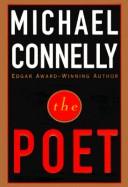
The Poet
A crime reporter investigates his twin brother's apparent suicide and uncovers a killer who leaves Edgar Allan Poe quotes behind, in the novel that took…
2,020-word summary · 9 min read

The Boy from the Woods
Wilde, found feral in a New Jersey forest in 1986, hunts for a missing teenager while a senator's secrets tear a wealthy town apart.
2,270-word summary · 10 min read