
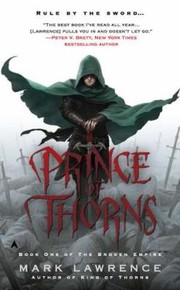
Prince of Thorns
2,488-word summary 11 min read 384 pages in the book
- First published
- 2011
- Publisher
- HarperCollins
- Pages
- 384
- ISBN
- 9780007423309
- Series
- The Broken Empire (#1)
Reading options
What's inside (8 sections)
A warning up front, because this book needs one. Prince of Thorns is brutal. It opens with murder and keeps going through torture, assault, burned villages, and a teenage narrator who does terrible things and tells you about them with a smile. I read it with breaks, not because it is long, it runs 384 pages in the 2011 HarperCollins edition, the first book in The Broken Empire series, but because the cruelty can pile up fast. If you want grimdark fantasy that holds back, this is not it. If you want to understand why this series split readers so sharply, keep reading.
I picked it up after a friend called Jorg Ancrath the most unlikeable narrator he ever finished a book for. That pulled me in. I have read plenty of antiheroes who steal and lie. Jorg is different. He is thirteen for most of this book, leading a band of killers, chasing a throne, hearing voices, dreaming of fire, and remembering the day when he was nine and watched his mother and little brother die. Mark Lawrence published the book in the UK in August 2011 with Harper Voyager, part of HarperCollins, with the US edition from Ace the same era. It was his debut, and you can feel a new writer swinging hard on every page.
The setting looks like medieval Europe at first. Castles, swords, monks, marriages arranged for land. Then wrong details appear. Old words for plastics and circuits. Ruined cities with glass towers. Weapons from the Builders, the vanished people who had machines that could burn the sky. Slowly you understand this is our far future after collapse, with kingdoms built on top of buried tech that still half works. That mix gives the book its charge. Horses one page, poison gas and old world science the next.
Thorns and the carriage in the woods
Jorg tells his story in two threads. One follows him at thirteen, riding with his brothers. The other slips back to when he was nine, a prince of Ancrath, soft in the way sheltered kids are, hiding in a thorn bush while men kill his escort.
The murder scene is the wound the whole book presses. Jorg travels with his mother and his small brother William in a carriage. Count Renar's men stop them in the woods. What follows is drawn plainly and without mercy. His mother is assaulted and killed. William is killed. Jorg is left hung in thorns, cut and bleeding, forced to watch. He frees himself by tearing his own flesh on the barbs, which leaves scars across his chest that he carries like writing.
He rides home expecting comfort and war. His father, King Olidan Ancrath, cold and calculating, does little. For reasons of politics and peace, Olidan leaves Renar unpunished and even keeps ties that benefit Ancrath. To nine year old Jorg, that delay feels like betrayal larger than the killing itself. His father chose calm over blood. Jorg chooses blood and never looks back.
I found these early chapters hard but well controlled. Lawrence does not linger for shock alone. He shows how a child turns pain into rules. Never be helpless again. Never trust a promise of safety. Never wait for a father to act. Jorg runs from the castle, not to hide, but to find people who will let him hurt back.
The road brothers at thirteen
Four years later Jorg rides with the Brotherhood, a gang of outlaws in their teens and twenties who rob, burn, and kill across the Renar heights and the lands around Ancrath. They are not friends in any warm sense. They are tools Jorg uses and discards and, strangely, protects when it suits him.
Key faces come clear fast. Sir Makin, once an outlaw who sacked towns and burned chapels, now rides as Jorg's closest guard, good with a sword and quick with dry humor. Rike, huge and simple, driven by loot and food, loyal so long as there is profit. The Nuban, dark skinned and quiet, deadly with a crossbow, one of the few Jorg seems to respect without mocking. Red Kent, marked by past blood, religious in his own rough way, skilled and steady. There are others who drift in and out, Gorgoth with his bulk, younger boys who want to prove themselves, priests and deserters who fall in with the band for a season.
Life on the road is a string of raids. They take a village storehouse. They ambush tax men. They sleep in ditches and barns. Jorg leads by brains and nerve. He reads maps, sets traps, uses fear as a weapon, and takes risks older captains would refuse. He also uses people without pause. He sends a boy to die to test a defense. He burns a farm to draw out soldiers. He laughs after, and the brothers laugh with him because fear of Jorg binds tighter than love.
What kept me reading here was not the gore, which gets repetitive, but the voice. Jorg narrates in first person, clever, well read, quoting old philosophers, noticing plants and weather, then describing a killing in flat tones. He knows he is damaged. He talks about the thorns in his chest, the dreams where his mother calls, the headaches that feel like something built by the Builders humming behind his eyes. He wants you to hate him and admire his mind at once. I did both, which left me uneasy in a way the book clearly intends.
Katherine and the uncle's court
Between raids, Jorg circles the court of his uncle, where Katherine lives. Katherine is his uncle's young wife, kind, sharp, religious, and off limits in every way that matters. Jorg fixates on her. He writes her letters he should not write. He watches her in chapel. He tells himself it is love, and tells the reader it is need, and both sound true and both sound like excuses.
These court scenes slow the pace and show a different Jorg. He bathes. He dresses like a prince. He argues theology with priests. He plays chess with words. Katherine sees through him better than anyone. She names his cruelty. She pities the boy under it without forgiving the acts. Their talks are some of the best written passages, because Lawrence lets two smart people speak plainly about guilt and power while everyone around them performs manners.
But the thread has problems I will come back to. Katherine exists mostly to reflect Jorg. We learn little about what she wants when he is not in the room. Other women in the book get even less. Mothers die to motivate. Village girls suffer to prove the world is hard. A witch or healer appears to deliver plot and warnings. For a book so interested in minds, it is thin on women's inner lives, and that thinness feels like a choice, not an accident.
Politically, the court shows the larger game. The Broken Empire is a hundred squabbling pieces that were once one. To claim the high throne a man needs votes from many kings, or enough force to make votes irrelevant. Olidan wants that throne. Renar blocks him. The church blesses and curses by turn. Jorg, with no army and a gang of thirty, starts moving pieces anyway, through murder, blackmail, and theft of old tech.
Builders, ghosts, and old fire
The fantasy engine under the politics is the Builders. Long ago they built towers, roads, machines that spoke across distance, lights without flame, weapons that could unmake cities. Their ruins leak poison and power. Monks copy their texts without grasping them. Scholars dig for their glass and wire. Jorg, who has a scholar's memory and a thief's patience, hunts their sites for an edge.
He finds fragments. A door that opens to a voice. A box that warms. Maps of a world with changed seas. And hints of a greater weapon, a sun in a box, fire from the sky that the Builders used in their last wars. Priests call it sin. Soldiers call it rumor. Jorg calls it a tool.
There are also things that may not be tools at all. Jorg sees a wraith of his mother. He hears a voice that urges worse acts. He dreams of a dead king rising beyond the mountains, gathering corpse troops, promising a different kind of empire. Are these ghosts real in the world, or fever from trauma and poisoned Builder sites. Lawrence keeps it blurry on purpose. The dead feel close in this book. Necromancers trade in villages. Corpses walk in the third act. Whether you read that as magic or as sickness in Jorg's head, it pushes him forward. He believes something huge is moving, and he means to strike first.
I liked this layer more than the raids. When Jorg puzzles over a Builder door or argues with a monk about what the old world was, the book feels curious and strange. Europe as post ruin, with peasants farming around fallen towers, is a strong image. It also explains Jorg's arrogance. He thinks everyone else is playing for castles while he has seen the manual for the world underneath.
Renar, the wedding, and the climb
The main plot drive is simple. Jorg wants Count Renar dead, his lands taken, and his own path to the empire throne opened. Renar is older, richer, safer behind walls, and protected by ties to Olidan. Jorg cannot beat him head on, so he cheats.
He gathers men by fear and promise. He steals Builder fire. He makes deals with churchmen who hate Renar. He uses Katherine as both reason and excuse, telling himself he fights for her honor while using her marriage as cover to enter courts. He sets a wedding gathering as the stage, a feast meant to seal alliances, and turns it into slaughter. The sequence is fast and ugly. Doors barred. Oil lit. Crossbows from the loft. The Nuban's bolts find throats. Makin cuts a path to Renar's guard. Rike breaks bodies at the door. Jorg walks through smoke to face the man who ordered his mother's death.
I will not detail every cut. Enough to say Lawrence does not look away, and Jorg does not feel clean after. Revenge does not heal the thorn scars. It adds new ones. Renar dies, but the cost spreads. Allies turn cold. The church whispers. Olidan watches his son with new calculation, proud and afraid at once. Katherine looks at Jorg with horror that he pretends not to need.
From there the climb steepens. With Renar's lands in play, Jorg moves toward Ancrath itself. He challenges his father in manner if not yet in open war. He seeks the votes and swords needed for the high seat. He tests the Builder weapon in small ways, learning what it can burn and what it asks in return. The final chapters put him on the throne path with blood on his boots, brothers at his back, ghosts crowding his sleep, and a larger war with the dead gathering beyond the edge of the map. The book ends on a cliff edge, not with peace but with a crown in reach and a worse enemy rising.
That close works as a series hook. You finish knowing Jorg has taken much and learned little about mercy. The next books, King of Thorns and Emperor of Thorns, will have to decide if he can rule what he seizes. I wanted to know, even while doubting I liked the man I was following.
What works and what wears thin
Fairness requires saying what Prince of Thorns does well. The voice is strong and specific. Jorg sounds like no one else in fantasy from that era, young, learned, cruel, funny in dark flashes, honest about his lies. The structure, cutting between nine and thirteen, pays off. You see the wound, then the scab, then the knife reopening it. The post ruin Europe is fresh, with Builder tech used sparingly enough to stay eerie. A few set pieces, the thorn bush escape, the night raid on a tax column, the debate in chapel with Katherine, the wedding fire, are staged with real skill. The pace rarely stalls. At 384 pages it moves.
The problems are just as clear, and readers should weigh them before starting.
First, the cruelty can feel performed. Jorg kills, burns, and assaults, and the book often frames it as proof of honesty, as if holding back would be fake. After a while shock replaces tension. A village burns. Another village burns. A prisoner begs. Jorg smiles. The pattern numbs rather than deepens. I kept asking what a given atrocity revealed that the last one had not, and too often the answer was only that Jorg would go further.
Second, women are thinly drawn. Katherine has spark but little life outside Jorg's gaze. His mother exists to die beautifully and haunt him. Other female figures appear to be harmed, to heal, or to warn, then leave. For a book that spends so much time inside one head, the narrowness might be intentional, showing how Jorg sees people as uses. But intention does not fix the reading experience. Half the human world stays flat.
Third, the grimdark excess can crowd out cause and cost. Armies move fast. Wounds heal fast when plot needs. Builder tech works when Jorg needs it and fails when drama needs it. Allies forgive what no one would forgive. If you want tight logistics and moral weight for every death, you will find this loose. If you accept it as a nightmare told by an unstable teen who wants to sound in control, it plays better, but you have to do that work yourself.
I finished the HarperCollins edition thinking about age. Jorg at thirteen does things grown men balk at, and the book rarely lets another character say plainly that he is a child who needs help, not a genius who needs a crown. Makin comes closest, with tired jokes that hide worry. The Nuban's quiet loyalty hints at a better man Jorg could follow. Katherine names the harm but cannot stop it. No one can, because the story is built to let Jorg win ugly. That is the thrill and the limit.
Read it if you want a fast, harsh fantasy with a memorable voice, old world ruins under medieval wars, road brothers with distinct tempers, and a throne quest that does not flinch. Skip it if sexual violence, child murder, torture, or cold narration from a killer will stay with you in a bad way. I am glad I read it for what it taught me about why some readers love ruthless narrators and others put them down. I will continue the series to see if power changes Jorg or only sharpens him, but I will do so knowing exactly how sharp he already is.
FAQ
Who is Jorg Ancrath?
He is the thirteen-year-old prince of Ancrath who saw his mother and brother killed at nine. Scarred and furious, he runs with outlaws to seize power.
Who are the Builders?
The Builders are the vanished makers of towers, roads, and sky fire. Their ruins still work in places, and Jorg hunts their weapons for war.
Similar books
More from The Broken Empire first, then related titles.
Best Served Cold
Left for dead by the duke she served, mercenary general Monza Murcatto recruits a broken crew and works through a list of seven men who owe her a debt of blood.
2,108-word summary · 9 min read
Nevernight
Mia Corvere trains with a cult of assassins to avenge her murdered family, in a world where true night falls only once every few years.
2,093-word summary · 9 min read
Homeland
Drizzt Do'Urden is born into the cruel drow city of Menzoberranzan, where his father teaches him to fight and to doubt everything his family believes.
2,303-word summary · 10 min read
Beyond the Shadows
Kylar Stern bargains with the Wolf, hunts a legendary sword, and faces a goddess wearing the face of the woman he loves in the Night Angel finale.
2,467-word summary · 11 min read
Vengeful
Victor and Eli return deadlier as new EOs rise and old debts burn.
2,488-word summary · 11 min read
The Burning God
Rin burns south and bargains with the Phoenix as the Republic splits.
2,381-word summary · 11 min read
Last Argument of Kings
Jezal takes the crown, Glokta serves two masters, and Logen faces Bethod as the Gurkish close on Adua.
2,479-word summary · 11 min read
Before They Are Hanged
Glokta holds Dagoska, West fights Bethod in the North, and Bayaz chases the Seed with Logen and Jezal.
2,090-word summary · 9 min read
The Blade Itself
A torturer, a barbarian, and a spoiled officer circle a wizard quest that serves banks more than heroes.
1,998-word summary · 9 min read

The Blinding Knife
Kip trains to join the Blackguard while the Prism hides his true identity, loses his colors, and fights a war against a rogue drafter who wants to birth a god.
2,049-word summary · 9 min read
Ship of Magic
A sentient ship wakes when her captain dies, and the family that owns her starts to come apart over who gets to sail her.
2,026-word summary · 9 min read

Iron Widow
Wu Zetian enlists to avenge her sister, kills her pilot, and becomes an Iron Widow in a mecha Huaxia where the machines are built to kill women.
2,444-word summary · 11 min read
Magician's Gambit
Garion and his companions cross haunted Maragor and the caves beneath Rak Cthol to recover the Orb of Aldur.
2,391-word summary · 11 min read
Enchanters' End Game
Garion marches toward Torak while Ce'Nedra leads the West's army in the final Belgariad volume, where prophecy and war meet.
2,557-word summary · 11 min read
Nettle & Bone
Marra, a princess in a convent, leaves to save her abused sister, but first she must finish three impossible tasks: a bone dog, a nettle cloak, moonlight in a…
2,061-word summary · 9 min read

The Queen of the Tearling
Nineteen-year-old Kelsea leaves the woods to take her throne, ends a shipment of human captives, and draws the Red Queen's revenge.
2,357-word summary · 10 min read
Fool's Errand
FitzChivalry Farseer has lived in exile for fifteen years. When Prince Dutiful vanishes before his betrothal, Fitz returns to Buckkeep to find him, with a wolf…
2,606-word summary · 12 min read
The Sword of Shannara
A young half-Elf and a company of companions set out to recover a magic sword before the Warlock Lord destroys the Four Lands.
2,474-word summary · 11 min read
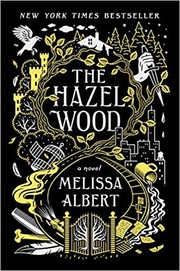
The Hazel Wood
Alice Proserpine has spent her life running from bad luck. When her mother vanishes, she follows a trail of fairy-tale clues to her grandmother's estate and…
2,064-word summary · 9 min read
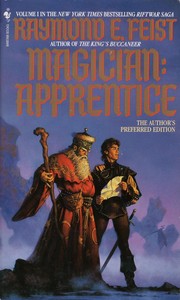
Magician: Apprentice
An orphan kitchen boy and a smith's son grow up in a frontier castle just as invaders from another world open a rift and begin a war that will change both of…
2,114-word summary · 9 min read
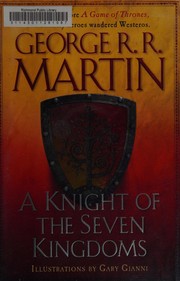
A Knight of the Seven Kingdoms
Three novellas follow Ser Duncan the Tall and his squire, Egg, through tourneys, feuds, and conspiracies in Westeros ninety years before A Game of Thrones.
2,059-word summary · 9 min read
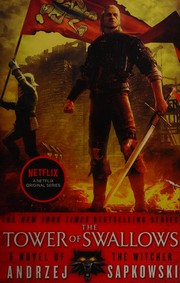
The Tower of the Swallow
Ciri flees as a bandit while Geralt gathers allies to find her.
2,580-word summary · 11 min read
The Sandman, Vol. 2: The Doll's House
Rose Walker dreams open as Dream hunts his missing creations and the Corinthian.
2,338-word summary · 10 min read
The Emperor's Soul
Forger Shai must stamp a new soul for the dying emperor in 100 days.
2,313-word summary · 10 min read
Shadow's Edge
Kylar fakes death as a king killer while Vi hunts him for the Godking.
2,245-word summary · 10 min read
Pawn of Prophecy
Farm boy Garion learns sorcerers watch him as an old Orb wakes.
2,331-word summary · 10 min read
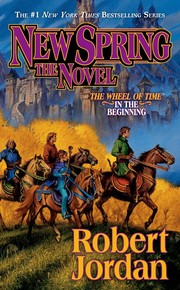
New Spring
Moiraine and Lan hunt the newborn Dragon before the Black Ajah finds him.
2,475-word summary · 11 min read
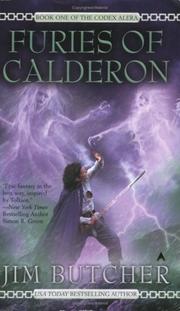
Furies of Calderon
Furyless Tavi defends Calderon Valley when the Marat return and lords scheme.
2,587-word summary · 11 min read
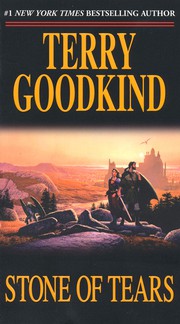
Stone of Tears
After the veil tears, Richard seeks training from the Sisters while Kahlan holds a fracturing Midlands and Zedd hunts the missing Stone.
2,483-word summary · 11 min read
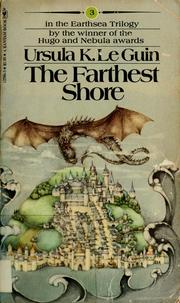
The Farthest Shore
Archmage Ged and Prince Arren sail to the far west to stop Cob, whose bid for endless life drains magic across Earthsea in Le Guin's sad 1972 third volume.
2,800-word summary · 12 min read