
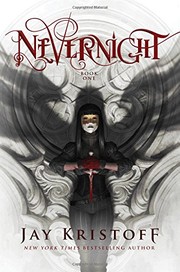
Nevernight
2,093-word summary 9 min read 448 pages in the book
- First published
- 2016
- Publisher
- Thomas Dunne Books
- Pages
- 448
- ISBN
- 9781250073020
- Series
- The Nevernight Chronicle (#1)
Reading options
What's inside (9 sections)
Nevernight is a revenge story with a syllabus. Mia Corvere, sixteen years old and the last surviving child of a fallen noble house, does not simply want the men who destroyed her family dead. She enrolls somewhere to learn how to do it properly. The somewhere is an assassin cult called the Red Church, and the curriculum is blades, poisons, theft, and one exercise that makes the rest look like a warm-up.
Jay Kristoff published it in 2016 with Thomas Dunne Books. The US hardcover runs 448 pages. It is the first of the Nevernight Chronicle, and it is the kind of fantasy that refuses to be tasteful. People say the book is horny and violent, and the book rescinds no objections.
The world
The story unfolds in the Republic of Itreya, on a world lit by three suns. Most of the time there is no true night here, just an endless uneven day, and the actual darkness, Truedark, comes only once every two and a half years or so. That astronomical quirk is not decoration. Mia is a darkin, a person who can command shadows, and shadows are in short supply under triple sunlight. Her power flickers at noon and flowers in the dark, which means the whole cosmology is also a power meter. Every chapter of the book is quietly tracking where the suns are.
The three suns also give the world its texture. Cities run on schedules arranged around light. The nights that do come are treated like festivals and warnings at once. And the shadow creatures that flourish in the dark are not metaphors. Mia has one of them, a familiar called Mister Kindly, who takes the shape of a cat, speaks in a dry whisper, and eats her fear. Because it eats her fear, she has almost none left, which is both the reason she can function and the reason she is gently broken.
Mia
The Corvere family was destroyed when Mia was a small child. Her father, Darius, was hanged for treason against the Republic. The hanging was attended by the great and the smug, one of whom, Augustus Scipio, the Republic's former high executioner, becomes Mia's first major kill six years later. Mia takes his teeth as a trophy, a piece of the Red Church economy called a tithe for the Maw. Her mother, Alinne, was driven mad in the Philosopher's Stone, the Republic's prison. Mia herself was taken to a canal as a child and drowned, and came back. The man who ordered the drowning, the Luminatii commander Justicus Remus, spends the rest of the book not knowing that his loose end has been busy.
Six years of training under Mercurio, a retired Red Church assassin who became her guardian, brings her to the opening pages, where she executes Scipio and then sets out for the Quiet Mountain, where the Church hides. Getting in is its own ordeal: a sea voyage to the port of Last Hope and a crossing of the Whisperwastes desert alongside another would-be student, a Dweymeri bastard swordsman named Tric. They survive the crossing, endure a blood baptism, and join twenty-eight acolytes competing for four places in the Church's ranks.
The Red Church
The training sections are where the book is most alive. The Ministry, the Church's leaders, are a gallery of specific cruelties. Mother Drusilla runs the place with an administrator's calm. Solis, the blind swordmaster, teaches blades by injuring students in ways they will remember. Mouser teaches thievery. SpiderKiller teaches venomcraft. Aelea teaches seduction, and her class is not a euphemism.
The acolytes orbit Mia: Tric, steady and loyal and doomed; Ashlinn Järnheim, quick, funny, and hiding a whole second life; Hush, the mute thief nobody can read; and Carlotta Valdi, who dies because the competition has no rules. A staged capture-and-torture exercise winnows the class from twenty-eight to seventeen. When Carlotta is murdered, suspicion lands on Mia, and only Tric's alibi keeps her from being killed as a lesson. They are lashed instead, and the book does not flinch from what lashes do.
Kristoff's style here is dense and propulsive and very pleased with itself, and I mean that as a compliment about seventy percent of the time. The story is narrated by an omniscient chronicler who drops footnotes to tease and digress, and the footnotes are the most divisive thing in the book. Some readers find them delightful, a second voice heckling the first. Others want the plot and get a lecture on the mating habits of a fictional sea creature. I landed on the delighted side, but I understand the frustration.
The Church as an institution
One of the smarter things the novel does is make the Red Church feel like an organization rather than a vibe. It has a hierarchy, a payroll of favors, rules about tithes, and a founding mythology it teaches to children it is simultaneously trying to kill. Initiates are called acolytes. Success is measured in contracts and in the tithe, a trophy from each kill, offered to something called the Maw. There are internal politics. The Ministry competes for influence. Lord Cassius rules more than he leads, and his shadow-wolf, Eclipse, sits in rooms the way other leaders' lawyers do.
That institutional texture is why the betrayal lands. Ashlinn and Osrik do not merely attack a group of assassins. They expose the Church's central vanity, which is that its secrecy and its brutal training have made it safe. It is not safe. It has been infiltrated for years, and its obsession with testing loyalty made it blind, because the test itself was a recruitment channel for the people who wanted it dead. If you have ever worked somewhere that confused its own resilience rituals with actual security, the subtext is not subtle, and it is not wrong.
The flashbacks
The present-tense training is interrupted by the history that made Mia, and these sections carry the moral weight. The hanging of her father, narrated from a child's sightline. Her failed rescue of her mother. The young Mia's attempt on Consul Julius Scaeva, the man who passed her father's sentence, when she was fourteen, and the way she failed, and what happened to the people who helped her fail. The book is careful to show that Mia's rage is not abstract. She has had real losses, and the rage has kept her alive, and it has also made her a person who plans to spend her adulthood as a weapon.
Midway through training, Solis severs Mia's arm in a lesson. Sorcery restores it. The scene is grotesque and fast and tells you what the Church thinks a body is: replaceable equipment, maintained for the mission.
The graduation that isn't
The final contests are venomcraft for Mia, thievery for Hush, seduction for Ashlinn, and blades for whoever is left. Mia wins venomcraft, then deliberately loses the blades final to Tric, a small act of mercy and love that costs her standing she does not care about. The four winners are then taken to a bound and gagged child and told to kill him, as initiation, as proof. Mia refuses. And her refusal does not just break her own graduation. It springs a trap.
Ashlinn and her brother Osrik were never acolytes. They were infiltrators, raised to destroy the Red Church for reasons that the book, to its credit, does not fully explain yet. They drug the initiation feast, force open the Blood Walk, and let in two hundred Luminatii soldiers. Ashlinn stabs Tric and hurls him off the Sky Altar. In a single night the Church stops being a school and becomes a massacre.
The last act is Mia running. She frees the captive Ministry, crosses the Whisperwastes again, and reaches Last Hope for the final confrontation. The Trinity medallion, the Republic's holy symbol, burns her because she is darkin. Lord Cassius, the Church's head and the most dangerous person in the novel, is run through with a sunsteel sword. Mia, using a lesson from Mercurio about how bright light casts a deeper shadow, steps through the shadow of Remus and kills him with her mother's stiletto. Cassius, dying, anoints her with his blood, and that is the ceremony that finally makes her a Blade of the Red Church, which is to say a graduate by catastrophe rather than by exam.
Ashlinn escapes. Tric is dead. And in the epilogue Mia keeps the promises she made. She poisons Tric's grandfather, Swordbreaker, the man who carved his own grandson's name into a tombstone while the boy was alive. She finds Tric's unmarked grave and cuts his name into it herself. Then Chronicler Aelius, the Church's ancient librarian, gives her The Hungry Dark, a book that suggests the history of the darkin is much older and stranger than the version she grew up hating by.
Should you read it
The Aurealis Award jury gave it Best Fantasy Novel in 2016, and it was shortlisted for a Gemmell. The praise is earned where it counts: the set pieces, the shadow magic used tactically rather than decoratively, and Mia herself, who is allowed to be petty, hungry, affectionate, and brutal in the same chapter. The world's rules get used, not just explained, and the climax turns on a rule of light established hundreds of pages earlier. That is good engineering.
The criticism the book has collected is also fair. The chronicler's voice is arch, the footnotes are either the point or an obstacle depending on your patience, and the shock-value moments (the seduction class, the lashings, the child) walk right up to the line between earned and edgy for its own sake. A few of the revelations near the end arrive so quickly that the book has to explain them at speed, and the epilogue works better as a promise of sequels than as a closing chapter.
What holds it together is simpler: Mia wants something, and the book never pretends the wanting is clean. She is a girl from a murdered family who has decided the acceptable number of other people's deaths between her and revenge is very high. Nevernight is the story of her education proceeding exactly as planned, and that being its own horror. I picked it up for the assassin school and stayed for the moment the school burns down and takes her childhood with it.
The title is a promise the book keeps. In a world with three suns, the never-night is the ordinary condition, the blinding abundance that hides what moves in the dark. For Mia, who is herself a creature of shadow, the long day is the enemy, and the rare true dark is when she can finally breathe and act. The final chapter catches her in exactly that condition, armed, anointed, and thoroughly murderous, and the book ends before the revenge it was built for. That is either a confident first installment or a very long fuse. In the sequels, it turns out to be both.
Mister Kindly deserves his own paragraph, because he is both the book's mascot and its clearest piece of characterization by proxy. He speaks in italics, trades insults with Mia, and eats her fear, which means his presence is proof of the trauma he is consuming. Every time the cat is well fed, you know why. The relationship is funny on the surface and quietly awful underneath, and it tells you more about Mia's childhood than the flashbacks do, because the flashbacks show you what happened and the cat shows you what it left behind. Sequels and readers both love him for the obvious reasons. I love him because he is the only character in the book who never lies to Mia, and he is made of shadow.
One more thing worth saying for readers who bounce off the first fifty pages: the book front-loads its world and its voice, and the plot only starts paying rent when Mia reaches the Quiet Mountain. If the chronicler's footnotes and the three-sun lectures are wearing you down early, my honest advice is to give it until the training begins. The story knows what it is doing, and it is better at being fun than it is at being subtle. But it is also better than most of its imitators at the one thing that matters most here: making you believe that a sixteen-year-old with a knife and a grudge could actually be the most dangerous person in the room.
FAQ
What is Nevernight about?
It follows Mia Corvere, a sixteen-year-old darkin, through her assassin training in the Red Church as she prepares to avenge the destruction of her family.
Is Nevernight appropriate for young readers?
No. It is adult fantasy with graphic violence, profanity, and sexual content despite its teenage protagonist.
Does Nevernight end on a cliffhanger?
Its central arc closes with Mia's initiation complete, while opening the larger revenge story and the fate of the Red Church for the sequels.
Similar books
More from The Nevernight Chronicle first, then related titles.

Best Served Cold
Left for dead by the duke she served, mercenary general Monza Murcatto recruits a broken crew and works through a list of seven men who owe her a debt of blood.
2,108-word summary · 9 min read
Prince of Thorns
At thirteen Jorg Ancrath rides with killers across a broken Europe, hunting Count Renar for family murder while chasing lost Builder fire and the empire throne.
2,488-word summary · 11 min read
Homeland
Drizzt Do'Urden is born into the cruel drow city of Menzoberranzan, where his father teaches him to fight and to doubt everything his family believes.
2,303-word summary · 10 min read
Fool's Errand
FitzChivalry Farseer has lived in exile for fifteen years. When Prince Dutiful vanishes before his betrothal, Fitz returns to Buckkeep to find him, with a wolf…
2,606-word summary · 12 min read
Beyond the Shadows
Kylar Stern bargains with the Wolf, hunts a legendary sword, and faces a goddess wearing the face of the woman he loves in the Night Angel finale.
2,467-word summary · 11 min read
Vengeful
Victor and Eli return deadlier as new EOs rise and old debts burn.
2,488-word summary · 11 min read
The Burning God
Rin burns south and bargains with the Phoenix as the Republic splits.
2,381-word summary · 11 min read
Shadow's Edge
Kylar fakes death as a king killer while Vi hunts him for the Godking.
2,245-word summary · 10 min read
The Blinding Knife
Kip trains to join the Blackguard while the Prism hides his true identity, loses his colors, and fights a war against a rogue drafter who wants to birth a god.
2,049-word summary · 9 min read
Ship of Magic
A sentient ship wakes when her captain dies, and the family that owns her starts to come apart over who gets to sail her.
2,026-word summary · 9 min read

Iron Widow
Wu Zetian enlists to avenge her sister, kills her pilot, and becomes an Iron Widow in a mecha Huaxia where the machines are built to kill women.
2,444-word summary · 11 min read

Magician's Gambit
Garion and his companions cross haunted Maragor and the caves beneath Rak Cthol to recover the Orb of Aldur.
2,391-word summary · 11 min read
Enchanters' End Game
Garion marches toward Torak while Ce'Nedra leads the West's army in the final Belgariad volume, where prophecy and war meet.
2,557-word summary · 11 min read
Nettle & Bone
Marra, a princess in a convent, leaves to save her abused sister, but first she must finish three impossible tasks: a bone dog, a nettle cloak, moonlight in a…
2,061-word summary · 9 min read
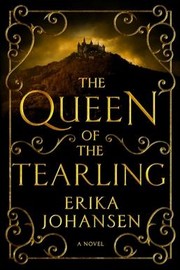
The Queen of the Tearling
Nineteen-year-old Kelsea leaves the woods to take her throne, ends a shipment of human captives, and draws the Red Queen's revenge.
2,357-word summary · 10 min read
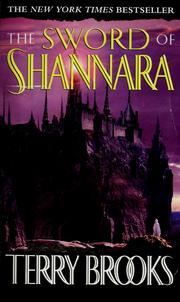
The Sword of Shannara
A young half-Elf and a company of companions set out to recover a magic sword before the Warlock Lord destroys the Four Lands.
2,474-word summary · 11 min read

The Hazel Wood
Alice Proserpine has spent her life running from bad luck. When her mother vanishes, she follows a trail of fairy-tale clues to her grandmother's estate and…
2,064-word summary · 9 min read
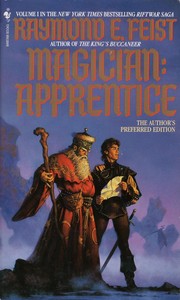
Magician: Apprentice
An orphan kitchen boy and a smith's son grow up in a frontier castle just as invaders from another world open a rift and begin a war that will change both of…
2,114-word summary · 9 min read
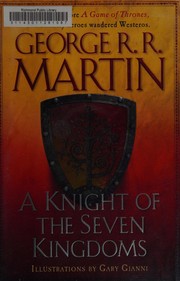
A Knight of the Seven Kingdoms
Three novellas follow Ser Duncan the Tall and his squire, Egg, through tourneys, feuds, and conspiracies in Westeros ninety years before A Game of Thrones.
2,059-word summary · 9 min read
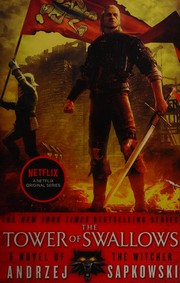
The Tower of the Swallow
Ciri flees as a bandit while Geralt gathers allies to find her.
2,580-word summary · 11 min read

The Sandman, Vol. 2: The Doll's House
Rose Walker dreams open as Dream hunts his missing creations and the Corinthian.
2,338-word summary · 10 min read

The Emperor's Soul
Forger Shai must stamp a new soul for the dying emperor in 100 days.
2,313-word summary · 10 min read
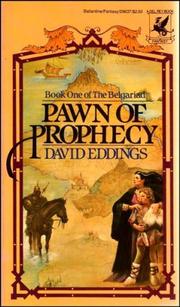
Pawn of Prophecy
Farm boy Garion learns sorcerers watch him as an old Orb wakes.
2,331-word summary · 10 min read

New Spring
Moiraine and Lan hunt the newborn Dragon before the Black Ajah finds him.
2,475-word summary · 11 min read
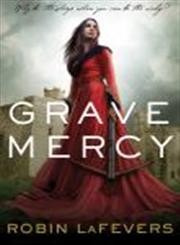
Grave Mercy
Convent assassin Ismae spares Gavriel and hunts traitors in Brittany.
2,357-word summary · 10 min read
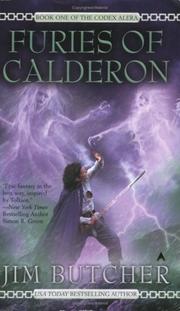
Furies of Calderon
Furyless Tavi defends Calderon Valley when the Marat return and lords scheme.
2,587-word summary · 11 min read

Stone of Tears
After the veil tears, Richard seeks training from the Sisters while Kahlan holds a fracturing Midlands and Zedd hunts the missing Stone.
2,483-word summary · 11 min read
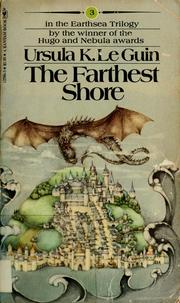
The Farthest Shore
Archmage Ged and Prince Arren sail to the far west to stop Cob, whose bid for endless life drains magic across Earthsea in Le Guin's sad 1972 third volume.
2,800-word summary · 12 min read
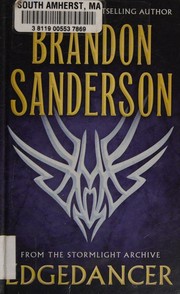
Edgedancer
Hungry street thief Lift and her vine-like friend Wyndle cross the Herald Nale in Tashikk when a child emperor shows Radiant signs and she refuses to step…
2,328-word summary · 10 min read
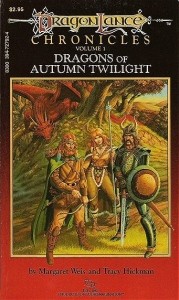
Dragons of Autumn Twilight
Old friends reunite at the Inn of the Last Home, guard a glowing Blue Crystal Staff, face black dragon Khisanth, and free slaves at Pax Tharkas in this 1984…
2,803-word summary · 12 min read