
Reading options
What's inside (10 sections)
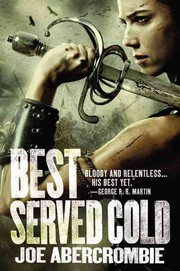
I read Best Served Cold after finishing the First Law trilogy, expecting a side story. What I got was a revenge novel that keeps asking whether revenge is worth the person it turns you into. It has the same dry, nasty humor as the trilogy, the same affection for damaged people, and the same interest in what violence does to a body after the fighting stops. It is also longer than it needs to be. Both things are true.
The fall
Monzcarro Murcatto, called Monza, is the captain general of the Thousand Swords, a mercenary company that has spent years winning battles for Grand Duke Orso of Talins. She is famous, and the people cheer her in the streets. That is the problem. Orso has decided that a popular general is a future rival, so he invites Monza and her brother Benna to the fortress of Fontezarmo and has them killed.
It does not go cleanly. Orso's bodyguard Gobba garrotes Monza. Orso's son, Prince Ario, stabs Benna. General Ganmark runs Benna through. Faithful Carpi, a man Monza trusted, attacks her with her own dagger. Gobba crushes her right hand, and the men throw her from the fortress wall. She survives because Benna's body is caught on a tree below and breaks her fall. It is the first of the novel's many jokes about luck, and it is not funny.
A healer finds her and spends weeks putting her back together. Her skull is repaired with gold coins. Her right hand is a twisted claw. She is addicted to husk, a narcotic that controls the pain. When she can walk again, she goes to her father's abandoned farm, digs up a cache of gold and weapons, and decides that seven men have to die. The list includes Gobba, the banker Mauthis, Prince Ario, General Ganmark, Faithful Carpi, Prince Foscar, and Orso himself.
The crew
Monza cannot do this alone. She recruits a crew that is less a team than a collection of people with incompatible damage.
Friendly is a huge ex-convict who thinks in numbers. He counts everything, including the people he kills, and he finds comfort in arithmetic because numbers do not lie. Caul Shivers is a Northman who came to Styria hoping to leave violence behind. He wants to be a better man, and he is not sure what that means. Nicomo Cosca is Monza's old mentor, a legendary general who is now a drunk and a liability. Castor Morveer is a poisoner with a high opinion of himself and a habit of talking too much. Day is his apprentice, quiet and watchful. Shylo Vitari is a former torturer who sells information and knows how to find people.
They are not a family. They are a business arrangement held together by money, fear, and the fact that Monza is the only one with a plan. Abercrombie gives each of them a distinct voice, which is one of the book's pleasures. Friendly's counting, Morveer's vanity, Cosca's theatrical self-pity, and Shivers's slow disappointment all sound different on the page.
The list
The structure is simple: one target at a time, one city at a time. Gobba is first. Monza and her crew ambush him in the street, and she kills him with a hammer. It is a deliberate echo of what Gobba did to her hand. The scene is brutal and intimate, and it sets the tone for the rest of the book.
Mauthis is a banker for Valint and Balk, and he witnessed the attack at Fontezarmo. Morveer poisons the ledgers in the bank's office. Mauthis dies when he touches the pages, and so do several clerks. Monza is furious about the collateral damage. Morveer thinks she is being sentimental. Shivers threatens to leave, and Monza has to pay him more to stay. The argument is not about morality in the abstract. It is about whether Monza is allowed to pretend that her revenge is clean.
The next target is Prince Ario, who is celebrating at Cardotti's House of Leisure in Sipani. The plan is complicated by the arrival of King Jezal dan Luthar of the Union, who happens to be there with his guards. Monza drugs Jezal with husk and kills Ario, but the operation turns into a fire, a panic, and a running battle. Carlot dan Eider, Ario's mistress and a Union spy, survives and sends word to Orso that Monza is still alive. The set piece is one of the best in the book: funny, chaotic, and mean.
Visserine and the cost
Orso's army moves on Visserine under Ganmark. Monza's crew is betrayed by a farmer they had helped, and Monza and Shivers are captured. They are tortured. An interrogator burns out Shivers's left eye with a hot iron. Shivers came to Styria hoping to become less violent, and the torture takes that hope away from him in a few minutes. The novel is careful about this. It does not say that violence is inevitable. It says that a man can be broken in ways that make his old intentions irrelevant.
Cosca talks his way into the confidence of Grand Duke Salier, and the crew arranges a trap in Salier's art gallery. Monza fights Ganmark in a long, ugly duel. Cosca is stabbed through the stomach and appears to die. A marble statue topples and impales Ganmark on its bronze sword. It is a ridiculous way to kill a man, and Abercrombie knows it. The absurdity is part of the point. Revenge does not produce clean, meaningful deaths. It produces accidents, mess, and jokes that nobody is in the mood to laugh at.
Orso hires Shenkt, an assassin with unnatural speed and strength, to hunt Monza. Shenkt is one of the book's most memorable figures. He is calm, almost gentle, and completely unstoppable. He follows Monza's trail and kills everyone at Sajaam's smoke-house before continuing the pursuit.
The politics get in the way
Monza's revenge becomes entangled with the wider war. She allies with Grand Duke Rogont of Ospria and Ishri, an agent of the Gurkish Empire. Faithful Carpi is lured into an ambush, and Monza chases him to a millstream where his cloak catches in a waterwheel and he drowns. It is not the death she wanted. It is the death she gets.
Morveer discovers that Day has tried to poison him, so he tricks her into drinking a fatal dose. Day dies. Morveer leaves the crew and offers his services to Orso. This subplot is one of the book's weaker threads. Day is given just enough personality to make her death sad, but not enough to make the betrayal feel earned. It reads like a complication added to keep the middle moving.
Cosca reappears, having survived his wound, and takes command of the Thousand Swords under Prince Foscar. He has secretly stopped drinking, which makes him more competent and no more trustworthy. Rogont's plan is to draw Orso's army into battle at Ospria while a Sipanese force attacks from behind. Cosca accepts Gurkish gold and keeps the Thousand Swords out of the fight. The Sipanese strike Foscar's forces, and Monza leads a cavalry charge that saves Rogont's flank. Foscar is captured. Monza hesitates to kill him, and Shivers smashes his skull.
That moment matters. Shivers tells Monza that she is not as evil as she pretends to be, and it is not a compliment. It is an accusation. He has become the violence she needed, and he has lost something in the process. Monza has spent the whole book telling herself that she is doing what has to be done. Shivers is the evidence that someone always pays for that story.
The coronation
Rogont rewards Monza by making her Grand Duchess of Talins, and he plans to be crowned King of Styria. At the coronation, Morveer, now working for Orso, has poisoned the crown. Rogont and several other leaders die when they touch it. Monza survives because the glove on her ruined right hand keeps the poison off her skin. The injury that was meant to humiliate her saves her life. It is the kind of irony Abercrombie loves, and he does not underline it.
The alliance collapses. Monza turns to Cosca and the Thousand Swords and besieges Fontezarmo. Cosca kills captains who turn against him. Morveer sneaks into Cosca's quarters and pricks himself with his own poisoned needle. It is a fitting death for a man who thought he was the smartest person in the room. Eider manipulates Shivers into believing that Monza is going to discard him, and Shivers attacks Monza inside the palace. Friendly intervenes, and the fight becomes a brutal, exhausting brawl. Shenkt arrives and throws Shivers aside.
Shenkt is then revealed to be the healer who saved Monza after her fall. He has been involved in her revenge from the beginning, and his motives are not fully explained. In Orso's study, Monza learns that Benna had been secretly plotting to overthrow Orso and make her Grand Duchess. She did not know about the plot, but Orso's fear of her was not entirely imaginary. Shenkt destroys Orso's guards, and Monza runs Orso through with Benna's sword.
What remains
Orso is dead. Monza releases Shivers and gives him back the ruby ring. He heads north, a harder and more dangerous man than the one who arrived. Monza stays in Talins to rule. She is pregnant, and the father may be Rogont or Shivers. Orso's crown sits in her desk. She has won, and the win looks like a job.
The novel's title comes from the proverb that revenge is a dish best served cold. Abercrombie spends the whole book testing that idea. Monza's revenge is cold, calculated, and successful, and it still leaves her with a ruined hand, a dead brother, a drug habit, and a throne she did not really want. The book is not against revenge as a story engine. It is against the fantasy that revenge will make you whole.
Monza is also a harder character to like than the book seems to think. She is competent, funny, and relentless, but she keeps her interior life at a distance. We understand her grief for Benna, and we understand her rage, but we do not spend much time inside her beyond those two feelings. Some of that is deliberate. She has trained herself to be a general, and a general cannot afford to be soft. Some of it is a limitation. The novel gives Shivers a richer arc than it gives its protagonist, and by the end I was more interested in what had happened to him than in what Monza would do with her crown.
The political ending is also more interesting than the emotional one. Monza becomes a ruler, which means she inherits the same problems that made Orso want to kill her. The book does not pretend that she has escaped the cycle. It just puts her on the other side of the desk. That is a smart ending, and a less satisfying one than a clean act of vengeance would have been.
Where it sags and where it sings
The biggest problem is length. The middle section, with its repeated pattern of arrival, planning, betrayal, and kill, starts to feel like a schedule. Some targets are more interesting than others, and the novel does not always justify the time it spends on the less interesting ones. The Day and Morveer subplot is the clearest example. It is not bad, but it does not add enough to the main story to earn its space.
The best parts are the character scenes. Monza and Shivers on the road, Cosca lying to everyone including himself, Friendly counting his way through a massacre, Morveer explaining his own genius to a room that has stopped listening. Abercrombie writes violence with a clear eye and a dirty sense of humor, and he writes the aftermath even better. The bruises, the missing eye, the tremoring hand, the way a person changes after doing something unforgivable: that is where the book is strongest.
I would recommend it to readers who liked the First Law trilogy and want more of that world, and to anyone who likes revenge stories that are honest about the cost. It can be read on its own. You do not need to know the trilogy to follow it, though you will get more from the cameos if you do. It is not a cheerful book. It is a book about people who have confused survival with winning, and it is very good at showing why that confusion is dangerous.
FAQ
Do I need to read the First Law trilogy first?
No, but it helps. Best Served Cold is a standalone set after the trilogy, and several characters recur.
Who is Monza Murcatto?
A mercenary general known as the Butcher of Caprile, betrayed and left for dead by Duke Orso.
How violent is Best Served Cold?
Very. It is grimdark fantasy with graphic violence, torture, and betrayal.
Similar books
More from First Law first, then related titles.

The Blade Itself
A torturer, a barbarian, and a spoiled officer circle a wizard quest that serves banks more than heroes.
1,998-word summary · 9 min read
Before They Are Hanged
Glokta holds Dagoska, West fights Bethod in the North, and Bayaz chases the Seed with Logen and Jezal.
2,090-word summary · 9 min read
Last Argument of Kings
Jezal takes the crown, Glokta serves two masters, and Logen faces Bethod as the Gurkish close on Adua.
2,479-word summary · 11 min read
Beyond the Shadows
Kylar Stern bargains with the Wolf, hunts a legendary sword, and faces a goddess wearing the face of the woman he loves in the Night Angel finale.
2,467-word summary · 11 min read
Nevernight
Mia Corvere trains with a cult of assassins to avenge her murdered family, in a world where true night falls only once every few years.
2,093-word summary · 9 min read
Prince of Thorns
At thirteen Jorg Ancrath rides with killers across a broken Europe, hunting Count Renar for family murder while chasing lost Builder fire and the empire throne.
2,488-word summary · 11 min read

The Blinding Knife
Kip trains to join the Blackguard while the Prism hides his true identity, loses his colors, and fights a war against a rogue drafter who wants to birth a god.
2,049-word summary · 9 min read
Fool's Errand
FitzChivalry Farseer has lived in exile for fifteen years. When Prince Dutiful vanishes before his betrothal, Fitz returns to Buckkeep to find him, with a wolf…
2,606-word summary · 12 min read
The Tower of the Swallow
Ciri flees as a bandit while Geralt gathers allies to find her.
2,580-word summary · 11 min read
The Burning God
Rin burns south and bargains with the Phoenix as the Republic splits.
2,381-word summary · 11 min read
Shadow's Edge
Kylar fakes death as a king killer while Vi hunts him for the Godking.
2,245-word summary · 10 min read
The Black Prism
Dying Prism Gavin Guile hides a secret son while war brews over color magic in the Seven Satrapies.
2,169-word summary · 10 min read
Gardens of the Moon
Empire, gods, and mages collide over Darujhistan as Bridgeburners bleed for Empress Laseen.
2,188-word summary · 10 min read
Winter's Heart
Trapped in Far Madding without the Power, Rand baits his betrayers while Mat plots escape from Ebou Dar and Elayne fights for Caemlyn.
2,906-word summary · 13 min read
The Path of Daggers
Rand wields Callandor against Seanchan while Elayne and Egwene maneuver.
2,492-word summary · 11 min read
Knife of Dreams
Rand sets a Seanchan trap while Mat weds Tuon, Perrin storms Malden, Elayne takes Caemlyn, and Egwene defies Elaida.
2,988-word summary · 13 min read
A Memory of Light
Rand faces the Dark One at Shayol Ghul as all armies join the Last Battle.
2,165-word summary · 10 min read
Tower of Dawn
Chaol and Nesryn sail to Antica for armies and healing, finding Yrene Towers and Valg darkness instead.
2,054-word summary · 9 min read
Kingdom of Ash
Aelin is chained in a glass coffin while her court fights Erawan's darkness across every front of the war.
2,078-word summary · 9 min read
A Feast for Crows
After the War of the Five Kings, Cersei seizes power while Brienne searches and the Ironborn rise.
2,085-word summary · 9 min read
A Dance with Dragons
Tyrion flees east, Dany chains her dragons in Meereen, and Jon holds the Wall as winter comes.
2,115-word summary · 9 min read
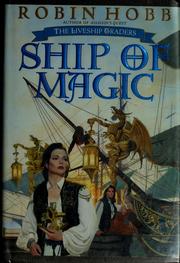
Ship of Magic
A sentient ship wakes when her captain dies, and the family that owns her starts to come apart over who gets to sail her.
2,026-word summary · 9 min read
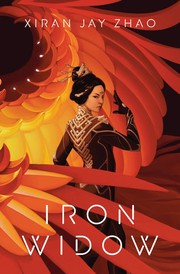
Iron Widow
Wu Zetian enlists to avenge her sister, kills her pilot, and becomes an Iron Widow in a mecha Huaxia where the machines are built to kill women.
2,444-word summary · 11 min read

Magician's Gambit
Garion and his companions cross haunted Maragor and the caves beneath Rak Cthol to recover the Orb of Aldur.
2,391-word summary · 11 min read

Homeland
Drizzt Do'Urden is born into the cruel drow city of Menzoberranzan, where his father teaches him to fight and to doubt everything his family believes.
2,303-word summary · 10 min read
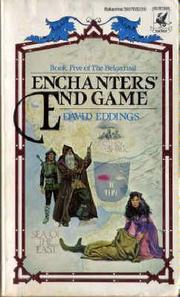
Enchanters' End Game
Garion marches toward Torak while Ce'Nedra leads the West's army in the final Belgariad volume, where prophecy and war meet.
2,557-word summary · 11 min read

The Queen of the Tearling
Nineteen-year-old Kelsea leaves the woods to take her throne, ends a shipment of human captives, and draws the Red Queen's revenge.
2,357-word summary · 10 min read
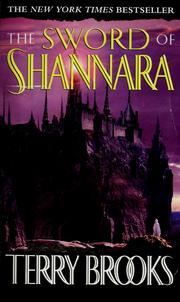
The Sword of Shannara
A young half-Elf and a company of companions set out to recover a magic sword before the Warlock Lord destroys the Four Lands.
2,474-word summary · 11 min read
Magician: Apprentice
An orphan kitchen boy and a smith's son grow up in a frontier castle just as invaders from another world open a rift and begin a war that will change both of…
2,114-word summary · 9 min read
A Knight of the Seven Kingdoms
Three novellas follow Ser Duncan the Tall and his squire, Egg, through tourneys, feuds, and conspiracies in Westeros ninety years before A Game of Thrones.
2,059-word summary · 9 min read