
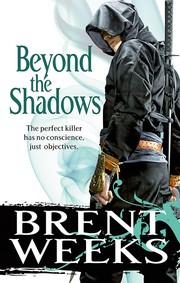
Beyond the Shadows
2,467-word summary 11 min read 689 pages in the book
- First published
- 2008
- Publisher
- Orbit
- Pages
- 689
- ISBN
- 9780316033664
- Series
- Night Angel (#3)
Reading options
What's inside (10 sections)
I finished Shadow's Edge at two in the morning and started this one before I had properly slept. That is the honest reason I read Beyond the Shadows. The second book ends with Kylar Stern walking away from the life he wanted, and I needed to know whether Brent Weeks could make the bill come due in a way that felt earned. The Night Angel trilogy had already given me a gutter, a training montage, a magic system with teeth, and a war. What it had not yet given me was a satisfying answer to the question the first book asked: what does it cost to become the person who survives?
This is the 2008 Orbit edition, cited at 689 pages. It is book three of the Night Angel series, and it carries the weight of a finale. There are sieges, assassinations, a floating school for mages, a goddess, and a very large number of people with knives. There are also long stretches where the book sits still and explains the politics of a continent, and those stretches are where I started to feel the length. I will retell the whole thing, including the ending, and I will say plainly where it worked for me and where it did not.
After the battle
The book opens in the wreckage of the previous volume. Cenaria has survived the Khalidoran invasion, but surviving is not the same as being whole. The armies are thin. Food is short. The nobility is humiliated. Queen Terah Graesin sits on the throne, and she is not a good ruler. She is proud, short-sighted, and more interested in being queen than in doing what a queen is supposed to do. Logan Gyre, the man the soldiers actually want, has the good sense and the bad luck to bend the knee to her. He does it to prevent a civil war while the country is still bleeding. It is a responsible choice, and it makes him miserable, which is about right for Logan.
Kylar is somewhere else. He has taken Elene and Uly into hiding, hoping to leave the Night Angel behind. It does not work. Kylar is not a man who can put down a debt. The black ka'kari is part of him now, and his reputation follows him even when he is not wearing black. The old life finds him the way it always does: someone needs a killing done, or someone needs a sword found, and Kylar is the only person who can do it.
The first major thread is Kylar's bargain with the Wolf. The Wolf is one of those strange creatures that shows up between life and death, less a god than a predator with a sense of humor. Kylar owes him. The price this time is a job: Kylar has to take Curoch, a legendary sword of immense power, away from Lantano Garuwashi, the undefeated war leader of Ceura. The sword is not just a weapon. It is a symbol of authority, a magical object, and a political problem all at once. Kylar's lost arm from the previous book is on the table too, which tells you how Weeks likes to structure a bargain. Every magical solution has a physical cost.
I liked the Wolf scenes more than I expected. They are creepy without being grand. The Wolf does not explain the rules of the world. He just wants what he wants, and Kylar has to decide how much of himself he is willing to trade.
The war leader and the sword
Lantano Garuwashi is one of the best additions to this book. He is a sa'ceurai, a Ceuran warrior who has tied his soul to his blade, and he is genuinely frightening in a fight. He is also a man with a country to protect and a reputation to maintain. Kylar cannot simply stab him and take the sword. He has to deal with a warrior culture, an army, and a war that is being engineered by people neither of them can see clearly.
There is a fake Khalidoran force marching around to draw Cenarian troops away from the real threat. There is a lot of marching in this book. Weeks is good at the texture of an army on the move: the food, the gossip, the cold, the way rumors travel faster than orders. He is less good at making every strategic meeting feel necessary. I skimmed a few of the council scenes, and I do not think I missed anything that mattered later.
The best part of this thread is the duel between Kylar and Garuwashi. Weeks writes action with a clear sense of geography. You know where the fighters are, what they are standing on, and how tired they are. Kylar wins, but not in a way that makes Garuwashi look foolish. The sword changes hands, and the political consequences ripple outward. That is the pattern of the whole trilogy: a personal fight becomes a national problem, and a national problem becomes a personal wound.
Dorian in the north
While Kylar is chasing the sword, Dorian Ursuul is trying to save Jenine. Jenine is Logan's wife, and she was taken during the Khalidoran occupation. Dorian enters Khaliras in disguise, expecting to find his father, the Godking Garoth Ursuul, still in control. Instead he finds a power vacuum. Garoth is dead. His sons and the Vürdmeisters are circling the throne, and the goddess Khali is still hungry.
Dorian is the most interesting character in the book, and I am not sure Weeks always knows what to do with him. He is a prophet, a manipulator, and a man who genuinely loves Jenine. He takes the throne as Godking Wanhope, which sounds like a joke until you realize what the throne does to the person sitting on it. Khalidoran power runs on vir, a magic that feeds on suffering. Dorian tells himself he can use the office to reform the empire from inside. The book lets him try, and then shows how quickly a good intention gets stained by the machinery around it.
The Dorian chapters have a different flavor from the Kylar chapters. They are quieter, more political, and more interested in what power does to a person's self-image. Dorian is not a hero. He is a man who has done terrible things and is trying to find a version of himself that can live with them. When he finally abandons the throne to save Jenine from his brother Moburu, it lands as a real choice rather than a plot convenience.
Vi at the Chantry
Vi Sovari goes to the Chantry, the floating island where the Sisters of the Chantry train mages. She is not there to make friends. She is there because she is broken, and because the magical bond she shares with Kylar is a constant reminder of the worst thing she has done. The Chantry sequences are some of the strangest in the book. The initiation is brutal, the politics are petty, and the sisters are not the wise mentors Vi needs. They are an institution, with all the fear and self-interest that institutions carry.
The bond between Vi and Kylar is the emotional engine of the middle section. They are married by magic, not by choice, and the rings let them feel each other's emotions. Kylar loves Elene. Vi loves Kylar. Elene knows all of it. Weeks does not resolve this in a tidy way, and I respect that. Elene forgives Vi, not because the situation is fine, but because Elene is the kind of person who can see another woman's pain even when that woman has hurt her. The three of them end up in a strange arrangement that is honest about its own awkwardness.
This is also where the book starts to feel crowded. There are too many characters with too many claims on the ending. Vi's training, Elene's pregnancy, Kylar's secret marriage, the Chantry's internal politics, and the approaching war all compete for space. Some of these threads get the time they need. Others get a scene and a summary.
Terah and the wheel
The Cenarian political plot comes to a head when Kylar decides that Terah has to die. This is not a decision he makes lightly, although he makes it with the same matter-of-factness he brings to most killings. Logan cannot challenge Terah openly without tearing the country apart. Kylar can remove her in the dark and let Logan take the throne as the man who was not responsible. It is a classic assassin's logic, and it is exactly the kind of plan that sounds clean until you see the cost.
Kylar poisons Terah's crown with bottled fire and then kills her in a confrontation that is staged to make Logan look like the man who executed a traitor. The plan works. It also requires Kylar to be publicly tortured and killed on the wheel, which is one of the hardest scenes in the trilogy to read. Logan has to break Kylar's limbs to keep up the performance. Kylar heals, because the ka'kari will not let him stay dead, but the scene makes clear that immortality is not the same as escape. He feels everything. He comes back, and the people who love him have to watch.
I found this section more effective than the battle scenes. Weeks is better at the psychology of a sacrifice than at the mechanics of a siege. Kylar's willingness to be hated by the people he is saving is the closest the book comes to a thesis. He is not a hero in the way Logan is a hero. He is a weapon that has learned to aim itself.
Black Barrow
The final movement brings everyone to Black Barrow, where Neph Dada is trying to give Khali a body. The plan involves a Titan, the Staff of Law, and a great deal of suffering. Neph Dada is a villain in the old-fashioned sense: patient, cruel, and convinced of his own righteousness. He does not get a redemption arc, and he does not need one. He is the kind of man who has confused his hunger with destiny.
The Titan fight is enormous. Weeks writes it like a disaster movie, with armies, magic, and a creature large enough to change the weather. It is impressive, but it is also exhausting. By the time Kylar kills the Titan, I was more interested in the smaller confrontations around it. Logan versus Moburu. Dorian choosing Jenine over his throne. Vi trying to reach Kylar through the bond while the world comes apart.
Then Khali takes Elene.
This is the hinge of the book. Khali is a goddess who feeds on suffering, and Elene is the one person Kylar cannot bring himself to kill. The book makes the trap literal: Khali uses Elene's body, and Kylar's love for Elene becomes the compulsion that keeps him from striking. He can save the world or he can save the woman he loves, and for a while he cannot do either.
The resolution is ugly and memorable. Vi uses the marriage bond to compel Kylar to act. Kylar stabs Elene with Curoch, killing the host and the goddess together. Elene's love is what traps Khali inside her, so the sacrifice is not just Kylar's choice. It is Elene's choice too, made before he arrives and held to the end. The book does not let Kylar off the hook. He lives. The world is saved. The woman he wanted to build a life with is dead, and he is the one who killed her.
The cleanup
The aftermath is a long denouement. Kylar, Durzo, Vi, Dorian, and their allies use Curoch and the other great artifacts to destroy the remaining krul and heal the land. Dorian, who has been sliding toward madness for most of the book, leads the working and then retreats into his own broken mind. Logan is crowned High King. The ancient city of Trayethell is restored and renamed Elenea. Elene is buried with honor.
There is a final twist involving Elene's unborn child. Dorian transfers the baby into Jenine's womb, so Elene's son survives in the body of Logan's wife. It is a strange, generous, deeply uncomfortable solution, and it fits the book's willingness to make magic do things that feel like violations even when the intention is kind. I did not expect a happy ending, and I did not get one. I got a survivors' ending, which is different.
Kylar remains the Night Angel. He does not get to retire. He does not get to be normal. He gets to keep going, which is what the ka'kari has been offering him all along.
What works and what does not
The best thing about Beyond the Shadows is its willingness to make the hero pay. Kylar's immortality is not a power fantasy. It is a trap that keeps him alive for other people's purposes, and the book never lets him forget it. Elene's death is not a fridging, or at least it is not only that. She has agency in her own sacrifice, and the book gives her the last word on what her love means.
The worst thing is the middle. There are too many armies, too many councils, and too many names that start with the same three letters. Weeks can write a fight, but he cannot always write a meeting. Some of the political maneuvering that should feel tense reads like a summary of itself. The Chantry sections in particular feel like they belong to a different, more patient novel.
I also think the book is less interested in Vi than it should be. Her arc is compelling, but it keeps getting interrupted by Kylar's problems. She deserves a fuller ending than the one she gets, and the love triangle resolves in a way that feels more magical than emotional.
Still, I closed the book satisfied. The Night Angel trilogy is not a clean fantasy. It is a story about people who are used by systems and then asked to save them. Kylar is not a good man. Logan is a good man in a job that punishes goodness. Dorian is a brilliant man who cannot outrun his family. The book understands that the end of a war is not the same as the end of the damage.
If you have read the first two, this is a necessary ending. If you have not, start at the beginning. Beyond the Shadows assumes you care about these people already, and it spends most of its length cashing in that care rather than earning it. That is not a criticism of the ending. It is a description of what a finale is for.
FAQ
Is Beyond the Shadows the last book in the Night Angel trilogy?
Yes. It concludes the original Night Angel trilogy that began with The Way of Shadows and continued in Shadow's Edge.
Does Kylar die in Beyond the Shadows?
Kylar dies more than once, but the black ka'kari and his bargain with the Wolf bring him back. The deaths still carry a price that falls on the people around him.
Does Elene die in Beyond the Shadows?
Yes. Khali possesses Elene, and Kylar kills her with Curoch to destroy the goddess. The aftermath honors her sacrifice and names the restored city Elenea.
Similar books
More from Night Angel first, then related titles.
The Way of Shadows
Street rat Azoth trades his old life to train as Kylar under killer Durzo Blint, learning wetboy skills and costly Talent as war threatens Cenaria.
2,965-word summary · 13 min read
Shadow's Edge
Kylar fakes death as a king killer while Vi hunts him for the Godking.
2,245-word summary · 10 min read
Fool's Errand
FitzChivalry Farseer has lived in exile for fifteen years. When Prince Dutiful vanishes before his betrothal, Fitz returns to Buckkeep to find him, with a wolf…
2,606-word summary · 12 min read

Best Served Cold
Left for dead by the duke she served, mercenary general Monza Murcatto recruits a broken crew and works through a list of seven men who owe her a debt of blood.
2,108-word summary · 9 min read
The Blinding Knife
Kip trains to join the Blackguard while the Prism hides his true identity, loses his colors, and fights a war against a rogue drafter who wants to birth a god.
2,049-word summary · 9 min read
The Black Prism
Dying Prism Gavin Guile hides a secret son while war brews over color magic in the Seven Satrapies.
2,169-word summary · 10 min read
Magician's Gambit
Garion and his companions cross haunted Maragor and the caves beneath Rak Cthol to recover the Orb of Aldur.
2,391-word summary · 11 min read
Homeland
Drizzt Do'Urden is born into the cruel drow city of Menzoberranzan, where his father teaches him to fight and to doubt everything his family believes.
2,303-word summary · 10 min read
Enchanters' End Game
Garion marches toward Torak while Ce'Nedra leads the West's army in the final Belgariad volume, where prophecy and war meet.
2,557-word summary · 11 min read
The Queen of the Tearling
Nineteen-year-old Kelsea leaves the woods to take her throne, ends a shipment of human captives, and draws the Red Queen's revenge.
2,357-word summary · 10 min read
The Sword of Shannara
A young half-Elf and a company of companions set out to recover a magic sword before the Warlock Lord destroys the Four Lands.
2,474-word summary · 11 min read
Magician: Apprentice
An orphan kitchen boy and a smith's son grow up in a frontier castle just as invaders from another world open a rift and begin a war that will change both of…
2,114-word summary · 9 min read
Nevernight
Mia Corvere trains with a cult of assassins to avenge her murdered family, in a world where true night falls only once every few years.
2,093-word summary · 9 min read
The Tower of the Swallow
Ciri flees as a bandit while Geralt gathers allies to find her.
2,580-word summary · 11 min read

The Emperor's Soul
Forger Shai must stamp a new soul for the dying emperor in 100 days.
2,313-word summary · 10 min read
Pawn of Prophecy
Farm boy Garion learns sorcerers watch him as an old Orb wakes.
2,331-word summary · 10 min read
New Spring
Moiraine and Lan hunt the newborn Dragon before the Black Ajah finds him.
2,475-word summary · 11 min read
Furies of Calderon
Furyless Tavi defends Calderon Valley when the Marat return and lords scheme.
2,587-word summary · 11 min read
Stone of Tears
After the veil tears, Richard seeks training from the Sisters while Kahlan holds a fracturing Midlands and Zedd hunts the missing Stone.
2,483-word summary · 11 min read
The Farthest Shore
Archmage Ged and Prince Arren sail to the far west to stop Cob, whose bid for endless life drains magic across Earthsea in Le Guin's sad 1972 third volume.
2,800-word summary · 12 min read
Prince of Thorns
At thirteen Jorg Ancrath rides with killers across a broken Europe, hunting Count Renar for family murder while chasing lost Builder fire and the empire throne.
2,488-word summary · 11 min read
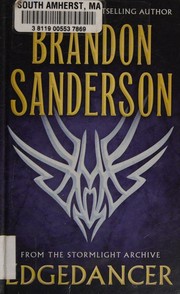
Edgedancer
Hungry street thief Lift and her vine-like friend Wyndle cross the Herald Nale in Tashikk when a child emperor shows Radiant signs and she refuses to step…
2,328-word summary · 10 min read
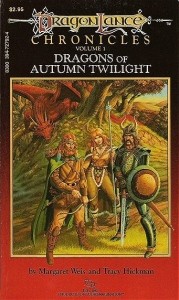
Dragons of Autumn Twilight
Old friends reunite at the Inn of the Last Home, guard a glowing Blue Crystal Staff, face black dragon Khisanth, and free slaves at Pax Tharkas in this 1984…
2,803-word summary · 12 min read
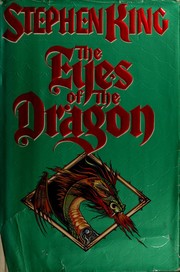
The Eyes of the Dragon
In the kingdom of Delain, a jailed prince and his younger brother face a magician whose long plot for the throne turns on a napkin clue.
2,018-word summary · 9 min read
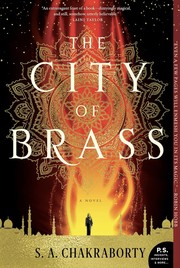
The City of Brass
Cairo con artist Nahri summons djinn Dara and is drawn to Daevabad where Ali questions pureblood rule.
1,993-word summary · 9 min read
Gardens of the Moon
Empire, gods, and mages collide over Darujhistan as Bridgeburners bleed for Empress Laseen.
2,188-word summary · 10 min read
Crossroads of Twilight
Rand cleansed saidin and the whole world felt it. Book ten follows each faction as they react, stall, and choose sides.
2,264-word summary · 10 min read
Winter's Heart
Trapped in Far Madding without the Power, Rand baits his betrayers while Mat plots escape from Ebou Dar and Elayne fights for Caemlyn.
2,906-word summary · 13 min read
The Path of Daggers
Rand wields Callandor against Seanchan while Elayne and Egwene maneuver.
2,492-word summary · 11 min read
Knife of Dreams
Rand sets a Seanchan trap while Mat weds Tuon, Perrin storms Malden, Elayne takes Caemlyn, and Egwene defies Elaida.
2,988-word summary · 13 min read