
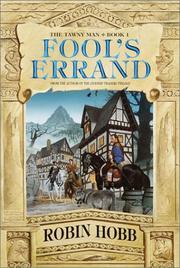
Fool's Errand
2,606-word summary 12 min read 486 pages in the book
- First published
- 2001
- Publisher
- Bantam Books
- Pages
- 486
- ISBN
- 9780553801484
- Series
- The Tawny Man (#1)
Reading options
What's inside (9 sections)
I read Fool's Errand expecting a plot and got a mood instead. The book opens with a man of thirty-five sitting in a cottage between the forest and the sea, and for a long stretch not much happens to him except that he remembers. I spent the first hundred pages waiting for something to happen, and then I was glad I had stopped waiting. Hobb has said she found returning to Fitz's voice like putting on a comfortable old pair of jeans, and that is roughly what this book feels like. It is the least eventful fantasy novel I have enjoyed this year.
Fool's Errand appeared in 2001, published in the UK by Voyager and in the US the following January by Bantam Books. The edition I worked from is the Bantam Books hardcover, which runs 486 pages and carries the ISBN 9780553801484. The title page calls it Book One of The Tawny Man, and it is followed by The Golden Fool and Fool's Fate. It continues the story of FitzChivalry Farseer from the Farseer trilogy, picking him up fifteen years after the events of Assassin's Quest.
Fifteen years of quiet
Fitz is thirty-five, bearded, with a white streak in his hair that he claims he was born with and that is actually a scar. He lives under the name Tom Badgerlock in a cottage near the coast with his wolf Nighteyes and his adopted son Hap. He keeps chickens, tends a garden, and tries not to think about the Skill, the royal magic that lets a person reach across distance into other minds. He reaches for it anyway. The wolf hates it, and the two of them share a long, grumbling argument about it in the opening pages that tells you most of what you need to know about their marriage.
Hobb names her chapters for people, so the first is called Chade Fallstar, and it is Chade who knocks on the door one wet spring and brings the wide world back to it.
Chade is the old assassin who taught Fitz his craft, now the Queen's counsellor and much frailer than he was. He brings brandy, ginger cakes, good paper, a ginger root to pot, and a small chest containing things Fitz thought he had lost forever, including the arrowhead that pierced Prince Verity's chest. He also brings a proposal: Fitz is to return to Buckkeep and teach the Skill to Prince Dutiful, Kettricken's son and heir. He hints too that Fitz's own daughter, Nettle, whom he has never met, might be trained as well.
Fitz says no immediately. Then he spends a long time thinking about it, because the truth is that he wants both things. He wants the Skill again and he wants someone to reach back to, and he wants his children to know him. Chade does not argue. He waits. It is one of the more accurate portraits of self-deception I have read in fantasy, and it sets the pattern for the whole book: Fitz says no to the life he actually wants, because admitting he wants it would mean admitting what he gave up to get here.
Starling, Jinna, and a boy who needs a trade
The chapter after Chade is called Starling. Starling Birdsong is minstrel to Queen Kettricken and she is the thread that connects Fitz to the world he left. She finds him wherever he has hidden, visits three or four times a year, brings gossip and fine paper and good wine, and eventually brings Hap, an abandoned boy with mismatched eyes, whom Fitz takes in. She also shares his bed when she is there, which Hobb mentions without making a fuss of it and which tells you more about their arrangement than either of them would say out loud.
Then there is Jinna, a hedge-witch Hap meets at a market and brings home. Jinna is practical, sharp, and a great deal better at seeing than Fitz would like. She works out that he is Witted, tells him so, and gives him a charm for the road. What she makes of him afterwards, and what it costs him to be read that easily, is the part of the story he would rather not have told.
Hap is fifteen and wants an apprenticeship, and Fitz has not saved a penny for the fee. The scenes of them together over a summer, the boy leaving to earn money he does not have and coming back disappointed, are the quietest and the best of the opening. Hobb is very good at the particular grief of a parent whose child has outgrown the arrangement.
A prince missing before his wedding
The summons that cannot be ignored arrives from Buckkeep. Prince Dutiful has vanished more than a fortnight before his betrothal to an Outislander princess, a marriage arranged to shore up the fragile peace after the Red Ship war. Either he has been taken or he has run. Worse, there are rumours he is Witted.
That rumor is the real emergency. The Wit is the beast magic, the bond between a person and an animal, and in the Six Duchies it is treated as a shameful disease. The Witted are being hunted, mobbed, hanged. The Old Blood, the families that once kept the magic, are scattered and hiding. The Farseer throne survives on a bargain with them, a court that has stayed alive for a generation by knowing too much about too many people.
Fitz feels this in his own skin. He has the Skill and he has the Wit, and he has spent his whole life treating the second as a defect to be hidden. The book turns that shame inside out, because the people rising up against the throne in this story are Witted revolutionaries who call themselves Piebalds, and Hobb is careful to give them dignity and good reasons. Scholars have read the Witted as Hobb's stand-in for a persecuted minority, and the Piebalds' slogans have been compared to the rhetoric of 1990s queer activism. Whatever the intention, the effect lands: the reader arrives at the throne's assumption that the Witted are a problem and finds out that the court is the problem.
Before the plot moves, Hobb gives us the wanderings. Fitz has been everywhere. Bingtown, the Rain Wilds, slavery in Chalced. And a Skill-dream that carries him to a hillside above the farm where Molly and Burrich now live, where he watches from a distance and cannot make himself go down. Molly is the life he gave up when he took the crown's work, and the novel spends a great deal of its attention on the shape of that absence without ever putting the two of them in the same room.
Lord Golden and Tom Badgerlock
The Fool arrives late that summer, and Fitz does not recognize him at first. The Fool has changed more than anyone: he is tawny now, gold and tawny, flamboyant and elegant, and he has reinvented himself as Lord Golden, a wealthy and eccentric Jamaillian nobleman. He has spent fifteen years being other people. The name of the series comes from him.
What they have is the oldest friendship in the book and the only thing Fitz has never had to work for. They talk for days, and the Fool digs out the old stories the way Chade did with the arrowhead. He also warns Fitz that all life is a battle against Farseer Fate, which is the sort of line that is either prophecy or nonsense depending on how the week goes.
Pain. That's what being a Farseer means to me. Pain and being used.
Fitz says it to the Fool, and it is also the book's verdict on him.
They go to Buckkeep together, Fitz disguised as Tom Badgerlock, Lord Golden's servant, since the public still remembers the story of the Witted Bastard who rose from the dead. The Queen's hunstwoman Laurel joins them. What follows is a hunt: the Bresinga family, whose estate is full of hunting cats, the Old Blood in hiding, the Piebalds' camp, and the growing certainty that the Prince has been taken by people who want him.
The hardest scene in the book is not a fight. It is the night after Fitz and the Fool capture a Piebald scout, and the archer tells him that the Prince is being taken to his own kind, not imprisoned but coming home, and asks whether Fitz will drag him back to be hanged and quartered and burned like so many of the Witted have been. The Old Blood who are not rebels make it plain that they want the Prince for their own purposes and will use him as ruthlessly as the rebels do. Fitz is sworn to the Farseers and Witted at the same time, and there is no version of the oath that does not cost somebody.
He comes out of it by admitting to Laurel that he is Witted, in front of the Fool, who already knew and who says nothing. Then he starts calculating again, this time about what it would cost him with the Fool to kill the archer and keep the secret that way. The scene is all about the ease with which an oath becomes a reason to murder.
The cat that remembers
Dutiful was bribed into joining the Piebalds with a gift, a bond animal, a beautiful hunting cat, and he bonded with it fast because he had never been given anything of his own. The trouble is that the cat already had a partner. When Peladine died, her consciousness lodged in the animal, and she has been waiting in it for a body worth wearing. She wants the Prince's body, and then she wants the court.
The prince is at first entranced by her and suspicious of Fitz, who is a stranger with a wolf and a great deal of talk about duty. Nighteyes is wounded in the fighting. The escape goes through a series of Skill pillars, the stone markers that open a path across the Six Duchies, and ends on a treasure beach where Fitz pockets some carved feathers he has no explanation for.
Then Fitz makes the worst bargain of his life. He offers to hand Dutiful over to the Piebalds and to help Peladine settle into Buckkeep in exchange for the Fool and Nighteyes, planning to kill the Prince as Peladine takes him over. Peladine takes him, further than anyone expects. Dutiful holds her off longer than he should be able to. And the cat, finally acting on its own rather than on either of them, attacks Fitz, and Fitz kills it. Peladine dies with the animal, and the Prince lives.
It is an ugly, brilliant, improbable sequence, and Hobb writes it with the flat certainty of a woman who has thought about every consequence. The rescue is not triumphant. The Prince mourns the cat he loved. Fitz has betrayed the boy he came to save. And somewhere in that bargain is the whole book: a man who has spent his life being used, using himself.
The last hunt
Afterwards there is a morning of mist. Nighteyes goes out to hunt, and in a Wit-dream he runs off alone across the snow, and Fitz wakes to heavy rain and finds that the wolf is dead. He was old, and the fight had finished what the years had started. Hobb gives the death to the wolf rather than to the hero, which is the right choice and no easier to read.
Fitz brings Dutiful back to Buckkeep as the betrothal delegation is arriving, and he slips the prince into the castle ahead of it. Then Chade and the Prince ask him to stay at court to teach Dutiful the Skill, because there is nobody else alive who was properly trained in it. He would be the last of the Skill coterie and the first in a new one. He says no out of habit and agrees out of loyalty, and the reader knows that in the next book he will be teaching a boy he is also, in a way nobody can say out loud, father to.
That is where the book stops. No great battle, no new prophecy, no dragons. A missing prince found, a wolf dead, a man agreeing to go home.
What works and what does not
What works is Fitz himself, and the debt he owes to the reader for putting him back in the world after fifteen years of silence. Hobb writes him as defensive, proud, lonely and capable of being moved by an animal's opinion of him, which is a harder and more interesting thing than writing him as heroic. The bond with Nighteyes is the load-bearing structure of the book, and when the wolf dies, a reader who came for the plot is suddenly in trouble for reasons the plot did not prepare them for.
The Fool is the other great pleasure. Lord Golden is funny and outrageous and, underneath, running on a grief Fitz is too self-absorbed to ask about. The banter between them is the best writing in the book, and it carries a subtext that neither of them will name: the Fool is in love with Fitz, Fitz adores him and has no idea, and the whole trilogy has a romantic thread running through it that will not be settled for a long time.
The theme works too. Hobb flips the series around so that the magic the hero was raised to despise is the magic the state is persecuting, and the rebels have the better argument. That is a genuinely brave thing to do with a series about a loyal servant of the crown.
What does not work is the pace. Fitz does not leave the cottage until well past the two hundredth page, and readers who come for forward motion will not forgive it. There is also a great deal of Fitz's own whining, self-pity and repetition of his own situation, and in the opening stretch it is a lot to sit through. Hobb has been telling this story for three books and it shows in the volume of backstory she assumes you already own.
The novel also assumes you have read the Farseer books. A reader arriving cold will meet a Skill, a Wit, a Prince Verity, a King Shrewd, a Fool and a Buckkeep that are all referred to as if you were there. Some readers found the density the point and others found it a wall, and there is no way to fix that other than reading the trilogy first.
Who it is for: readers who stay for the character rather than the quest, who like a first-person narrator who is unreliable mainly about himself, and who are willing to be patient for four hundred pages. If you want a plot that moves and a hero who gets things done, start with the Farseer books and know that this one gets quieter before it gets louder.
I finished it and went back to the first chapter to see what Fitz had sounded like at thirty-five, before he had learned to talk about any of this. The last line of the book is not a prophecy or a farewell. It is a man agreeing to a piece of work he does not want, because somebody needs doing and he is the one who knows how. That is the whole of FitzChivalry Farseer, and it took Hobb three trilogies to say it this plainly.
FAQ
Do I need to read the Farseer books before Fool's Errand?
Yes. The novel picks up Fitz's story fifteen years after Assassin's Quest and assumes you know who he is, what the Skill and the Wit are, and what happened at Buckkeep.
Is Fool's Errand the first book in a series?
Yes. It is Book One of The Tawny Man, followed by The Golden Fool and Fool's Fate, all of them narrated by Fitz in the first person.
Is the story slow?
The first third is. Fitz does not leave his cottage until well into the book, and some readers found his self-pity tiring. The pace picks up once the hunt for Prince Dutiful begins.
Similar books
More from The Tawny Man first, then related titles.
Lioness Rampant
Alanna searches for the Dominion Jewel with the Shang Dragon, then returns to Tortall to face Duke Roger at Jonathan's coronation.
2,478-word summary · 11 min read
Magician's Gambit
Garion and his companions cross haunted Maragor and the caves beneath Rak Cthol to recover the Orb of Aldur.
2,391-word summary · 11 min read
Enchanters' End Game
Garion marches toward Torak while Ce'Nedra leads the West's army in the final Belgariad volume, where prophecy and war meet.
2,557-word summary · 11 min read
The Queen of the Tearling
Nineteen-year-old Kelsea leaves the woods to take her throne, ends a shipment of human captives, and draws the Red Queen's revenge.
2,357-word summary · 10 min read
The Sword of Shannara
A young half-Elf and a company of companions set out to recover a magic sword before the Warlock Lord destroys the Four Lands.
2,474-word summary · 11 min read
Shadow's Edge
Kylar fakes death as a king killer while Vi hunts him for the Godking.
2,245-word summary · 10 min read
Pawn of Prophecy
Farm boy Garion learns sorcerers watch him as an old Orb wakes.
2,331-word summary · 10 min read

The Blinding Knife
Kip trains to join the Blackguard while the Prism hides his true identity, loses his colors, and fights a war against a rogue drafter who wants to birth a god.
2,049-word summary · 9 min read
Secrets of the Dragon Sanctuary
Kendra is replaced by a plant copy and held by the Society, while Seth steals a unicorn horn so the family can enter a dragon sanctuary.
2,590-word summary · 12 min read
Homeland
Drizzt Do'Urden is born into the cruel drow city of Menzoberranzan, where his father teaches him to fight and to doubt everything his family believes.
2,303-word summary · 10 min read

The Rose & the Dagger
Shahrzad is pulled from her Caliph husband and left in a desert camp of rebels, needing to break his curse and end a war before it ends her.
2,520-word summary · 11 min read
Magician: Apprentice
An orphan kitchen boy and a smith's son grow up in a frontier castle just as invaders from another world open a rift and begin a war that will change both of…
2,114-word summary · 9 min read
Beyond the Shadows
Kylar Stern bargains with the Wolf, hunts a legendary sword, and faces a goddess wearing the face of the woman he loves in the Night Angel finale.
2,467-word summary · 11 min read
The Tower of the Swallow
Ciri flees as a bandit while Geralt gathers allies to find her.
2,580-word summary · 11 min read
The Emperor's Soul
Forger Shai must stamp a new soul for the dying emperor in 100 days.
2,313-word summary · 10 min read
New Spring
Moiraine and Lan hunt the newborn Dragon before the Black Ajah finds him.
2,475-word summary · 11 min read
Furies of Calderon
Furyless Tavi defends Calderon Valley when the Marat return and lords scheme.
2,587-word summary · 11 min read
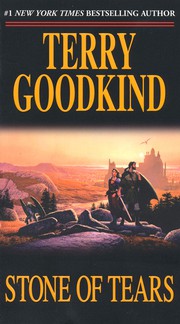
Stone of Tears
After the veil tears, Richard seeks training from the Sisters while Kahlan holds a fracturing Midlands and Zedd hunts the missing Stone.
2,483-word summary · 11 min read
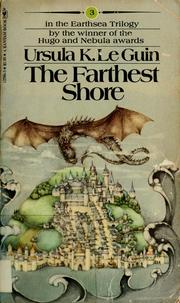
The Farthest Shore
Archmage Ged and Prince Arren sail to the far west to stop Cob, whose bid for endless life drains magic across Earthsea in Le Guin's sad 1972 third volume.
2,800-word summary · 12 min read
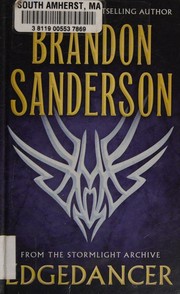
Edgedancer
Hungry street thief Lift and her vine-like friend Wyndle cross the Herald Nale in Tashikk when a child emperor shows Radiant signs and she refuses to step…
2,328-word summary · 10 min read
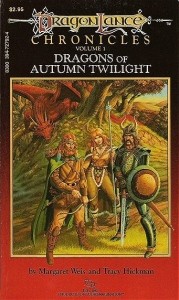
Dragons of Autumn Twilight
Old friends reunite at the Inn of the Last Home, guard a glowing Blue Crystal Staff, face black dragon Khisanth, and free slaves at Pax Tharkas in this 1984…
2,803-word summary · 12 min read
Bitterblue
Eighteen-year-old Queen Bitterblue sneaks out to learn why Monsea still suffers after Leck, facing court lies, ciphers, and trials in Cashore's rich third…
2,686-word summary · 12 min read
The Eyes of the Dragon
In the kingdom of Delain, a jailed prince and his younger brother face a magician whose long plot for the throne turns on a napkin clue.
2,018-word summary · 9 min read
The City of Brass
Cairo con artist Nahri summons djinn Dara and is drawn to Daevabad where Ali questions pureblood rule.
1,993-word summary · 9 min read
The Black Prism
Dying Prism Gavin Guile hides a secret son while war brews over color magic in the Seven Satrapies.
2,169-word summary · 10 min read
Gardens of the Moon
Empire, gods, and mages collide over Darujhistan as Bridgeburners bleed for Empress Laseen.
2,188-word summary · 10 min read
Crossroads of Twilight
Rand cleansed saidin and the whole world felt it. Book ten follows each faction as they react, stall, and choose sides.
2,264-word summary · 10 min read
Lord of Chaos
Rand offers amnesty to men who can channel while Egwene is raised Amyrlin in exile. Book six of The Wheel of Time builds toward rescue and reckoning at Dumai's…
2,255-word summary · 10 min read
A Crown of Swords
After Dumai's Wells, Rand holds Cairhien while Egwene besieges Tar Valon and Elayne and Nynaeve hunt relief in Ebou Dar. Book seven crowns kings and queens at…
2,828-word summary · 13 min read
Wizard's First Rule
Woods guide Richard joins Kahlan and wizard Zedd to find the Boxes of Orden before Darken Rahl, learning why people believe lies.
2,220-word summary · 10 min read