
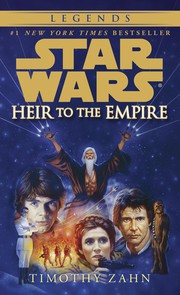
Heir to the Empire
2,323-word summary 10 min read 404 pages in the book
- First published
- 1991
- Publisher
- Bantam Spectra
- Pages
- 404
- ISBN
- 9780553296129
- Series
- Star Wars: The Thrawn Trilogy (#1)
Reading options
What's inside (9 sections)
I read Heir to the Empire because a friend who will not watch the Star Wars movies told me the best one was a book. I took that as a challenge rather than a dare, and it turned out to be the better recommendation. The Bantam Spectra paperback is 404 pages, ISBN 9780553296129, and it was the first of the Thrawn trilogy, which came out of Bantam in May 1991, May 1992 and April 1993. The trilogy has sold something in the range of fifteen million books, and the first volume reached number one on the New York Times list. Zahn wrote it during a strange window in franchise history, when George Lucas had parked Star Wars and nobody knew whether the books would survive.
A franchise on pause
The situation in 1991 is worth understanding, because the book is a bet as much as a story. After Return of the Jedi the franchise went quiet. Lucas Licensing president Howard Roffman and publishing director Lucy Autrey Wilson started asking whether adult fiction should return, and most publishers said no, the market had burned out. Bantam said yes. Bantam's Lou Aronica had separately proposed a three book trilogy set after the films, and when Bantam hired Timothy Zahn to write it, he did not get a plot outline. He got two rules from Lucasfilm. The books must happen between three and five years after Return of the Jedi, and nobody who died in the films can come back. Everything else was his.
Zahn's working titles are a small illustration of the tone. The first was Wild Card, which Bantam killed because a book series with a similar name was already on its list. The Emperor's Hand was rejected next. Warlord's Gambit sat in the folder. The final title came from Aronica, and it is a good one, though the empire in question is in pieces when the story opens.
Five years after the Emperor dies, the New Republic is trying to run a galaxy it does not have the ships to patrol. The government sits in Coruscant with Leia Organa as Minister of State and Mon Mothma as Chief of State, and the military leans on Admiral Gial Ackbar and his Mon Calamari crews. The Empire is not an army anymore. It is a scattering of stations, a few tired fleets and a lot of paperwork describing what used to be. The New Republic thinks it knows where all the Grand Admirals are. It is about to find out it does not.
The only alien in the chain of command
Grand Admiral Thrawn arrives on the bridge of the Star Destroyer Chimaera with Captain Gilad Pellaeon beside him and a Noghri bodyguard behind him, and the effect is immediate. He is a Chiss, blue skinned with red eyes and white markings, and the only non human ever to hold the rank of Grand Admiral in the Imperial Navy. He has been far away for years, hunting threats that the Republic never knew existed, and he comes back to find his side reduced to a remnant.
What makes him work is not the coloring. It is the method. Thrawn studies art, obsessively and with purpose, because painting shows how a mind arranges itself. He wants to learn the pattern of whoever is standing against him, and then he moves first, every time, in a way that leaves the other side reacting instead of planning. His signature move is the hit and fade, a simultaneous strike on several targets that pulls the New Republic's attention in three directions and then vanishes before reinforcements arrive.
Pellaeon is the reader's way in. He is a loyal, decent Imperial officer who asks reasonable questions, and Thrawn answers them with instructions that sound insane until they work. The novel is very good at showing the two of them at a planning table, Thrawn three moves ahead, Pellaeon catching up. It is also very good at showing what that does to a reader who likes military fiction. You can smell the deck plans.
And the campaign is aimed at something specific. Deep inside a mountain on the world Wayland, the Emperor stored hardware the Republic has no idea exists, including a working cloaking shield generator and banks of cloning cylinders capable of producing soldiers on an industrial scale. Thrawn does not need a fleet of his own if he can take what Palpatine saved. Everything else in the book is logistics in service of that theft.
Karrde, Mara Jade and the boy from the swamp
The book needs a second set of hands, and it gets them from the smuggler Talon Karrde, the biggest criminal in the galaxy after Jabba's death. Karrde's ship, the Night Moon, is his command, and his second in command is Mara Jade, who used to be the Emperor's Hand. That is the reveal I still remember: the woman who was once the Emperor's personal killer is now working for a smuggler, and she has spent years telling herself that Luke Skywalker killed Palpatine at Endor.
Thrawn's first stop is Myrkr, a world where the ysalamiri live, salamander like creatures whose presence blunts the Force. He wants them because the guardian of Palpatine's vault is a Jedi, or something that thinks like one, and a Chiss who cannot be sensed cannot be fought by a Jedi. Karrde sells the ysalamiri to him and takes payment in observation.
Meanwhile Luke Skywalker has been off in the Outer Rim chasing the old question of what really happened to his father, and he stumbles into Karrde's operation. Karrde's crew take him prisoner. Mara Jade comes after him, and the two of them end up crashing in a forest with the intention of killing each other. She is a superb character for about two hundred pages. Then the plot needs her to be something else, and she becomes a piece on Thrawn's board.
The double cross that follows is the point where the book earns its reputation for being smarter than the material. Thrawn needs access to Wayland, and the way to get it is to take over Karrde's operation and use Mara Jade as his impersonator, because the vault's guardian knows Karrde's face and voice. So Thrawn engineers Karrde's arrest on a drug charge and lets Mara Jade believe she is the one arranging it. Karrde survives, Luke and Mara survive, and by the end of the book the reader understands that most of what happened to them was Thrawn letting them believe they were choosing.
The Luke material is where the book is weakest. He is often a passenger, a prize being moved between factions, and the martial competence in the story belongs to Han, to Lando and to Chewbacca. The two exceptions are good: Luke's trick with a tractor beam and his artificial hand on a ship he has no business flying, and the night his uncle would not recognize him.
The New Republic runs on paperwork and nerve
The other half of the book is the New Republic, and it is denser. Leia, pregnant with twins that everyone expects to be Jedi, is out doing the political work of holding the new government together. Han has given up his general's rank and is trying to recruit smugglers to build an economy, which is the sort of unglamorous problem that makes a government real. Lando is on a backwater planet running mole miners and doing legal work, which is also very Lando.
The Noghri come for the Skywalkers twice, first at Bimmisaari and then at Bpfaash, and both attacks are nasty because the Noghri do not want to kill their targets. They want them alive. Han works out why: Thrawn's new ally wants Jedi, and Luke and Leia's unborn children are the prize. So Han sends Leia into hiding on Kashyyyk with Chewbacca while the Falcon flies on as a decoy, and Lando reprograms C-3PO to reproduce Leia's voice convincingly enough to sell the illusion. That scene, a protocol droid learning to imitate a senator's voice because it matters, is more Star Wars than most of the set pieces.
Then the plot turns to the mystery of the Delta Source, the spy who is leaking Republic intelligence, which turns out to be the work of Fey'lya, a council member who wants power and picks the perfect target to frame. Thrawn's gift for manipulation is shown again by the fact that the New Republic does the damage to itself. Admiral Ackbar is arrested for treason while the Republic is bleeding from the Noghri raids and a spy hunt that eats weeks.
And then the Sluis Van shipyards, which is where the campaign nearly breaks. Thrawn has stolen fifty of Lando's mole miners and uses them to bore into hulls of docked Republic ships so stormtroopers can board and take them. Han and Lando arrive with a Falcon full of Rogue Squadron at the worst possible moment and just barely hold the yard. Lando wins it with his radio codes, telling his miners to drill the wrong way. Thrawn's first major offensive ends in failure, and he answers by telling Pellaeon that with what he has found on Wayland he will win anyway.
Leia and the Noghri
The Noghri thread is the part of the book I would hand to someone who thinks Star Wars is only lightsabers. Leia is captured by them on Kashyyyk and expects death, because the Noghri are famous servants of Darth Vader. Instead one of them, Khabarakh, recognizes her by scent as a child of the Dark Lord and treats her like royalty, because in Noghri legend Vader saved their homeworld from a catastrophe and the Empire has been exploiting that gratitude ever since.
Leia is a politician before she is a soldier, and she does the smart thing: she asks questions instead of running. She talks her way into understanding who the Noghri are and what they have been told, and she gets a version of the truth that is uglier than the legend. What the Empire did to the Noghri and their world, and what it told them Vader did, is a thread that runs through the rest of the trilogy and ends in open revolt by the third book.
The shape of Thrawn's real plan
Everything above is preparation, and the book is clear-eyed about it. The goal is the vault on Wayland, and the obstacle is the guardian. The Guardian is not a Jedi. He is a clone of one: Jorus C'baoth, a Jedi Master killed years ago, grown in a tank and kept alive in the Emperor's private shrine, and he is mad. When Thrawn arrives with ysalamiri that shield him from the Force, C'baoth cannot attack him, and the bargaining starts.
What C'baoth wants is apprentices. He has heard that Jedi still exist, and he wants Luke and Leia and the twins, and he will help Thrawn in exchange for them. The deal is the whole book in miniature. An Imperial admiral needs a Force user he cannot control, so he negotiates with a cloned Force user he cannot trust either, and the price is somebody's children.
It is worth saying that the first book does not resolve that bargain. It ends with Thrawn still holding the resources he needs and the New Republic arresting its own admiral. The rest of the trilogy carries the campaign to Coruscant and to the Emperor's private moon, and the last of it is decided by a bodyguard with old orders and a knife. Zahn gives Thrawn a death line that has been quoted at every convention for thirty years, something about the victory being artistically done.
Why it still matters
Heir to the Empire arrived when Star Wars books were a joke, and it is the reason the joke stopped. The success of the trilogy is usually credited with creating the Expanded Universe, that long shelf of licensed fiction that ran until 2014, when Disney rebranded all of it as Legends and started over. The books themselves are better than their reputation. Thrawn is still one of the most interesting villains in the franchise, and when the character came back to the official timeline he turned up in the animated series Rebels and then in Ahsoka in 2023, played by Lars Mikkelsen, with the artist himself writing new Thrawn novels from 2017 onward.
The complaints are real, and they are about texture rather than story. The middle of this book runs like a staff briefing. There are long stretches of fleet dispositions, cargo manifests, ship names and station numbers, and a reader who came for the movies will lose the thread and start skimming. The Republic side is thinner than the Imperial side, with Fey'lya and Mothma serving more as political weather than people. Thrawn's obsession with art is stated and restated more often than it is dramatized, and for all the talk of his interiority he stays deliberately opaque. Mara Jade is the most interesting woman in the story and the plot treats her as a device.
What holds it up is the campaign itself. Every skirmish, every kidnapping and every ambush is a move in a game you can actually follow, and Thrawn's willingness to lose a battle in order to win a month later is genuinely fun. The book also has the rare quality of a licensed tie-in that does not read like a movie novelization. It is dry, it is full of capital letters, and it takes its genre seriously.
Read it if you want to see why Thrawn survived thirty years as a villain. Skip it if what you love about Star Wars is the droids and the friends. And do not start at random: the trilogy is one long campaign, and Heir to the Empire is the part where the pieces get put on the board.
FAQ
When was Heir to the Empire published?
The first edition appeared in May 1991 from Bantam Spectra. The paperback edition cited here runs 404 pages and carries ISBN 9780553296129.
Who is Grand Admiral Thrawn?
He is a Chiss and the only non-human ever to hold the rank of Grand Admiral in the Imperial Navy. He studies art to work out how an opponent thinks, then strikes before that opponent can plan.
Does Heir to the Empire stand alone or is it part of a series?
It is the first of the Thrawn trilogy, followed by Dark Force Rising from 1992 and The Last Command from 1993. All three were published by Bantam Spectra.
Similar books
More from Star Wars: The Thrawn Trilogy first, then related titles.
Cibola Burn
Settlers and a company fight over a new world while Holden tries to stop a war.
2,011-word summary · 9 min read

Carve the Mark
On a planet divided between conquered and conqueror, the tyrant's sister and a kidnapped oracle's son discover that their gifts make them useful to everyone…
2,340-word summary · 10 min read
Consider Phlebas
The first Culture novel follows a spy for the opposing side, a man hired to hunt a fugitive through a war between an anarchist post-scarcity utopia and a…
2,350-word summary · 10 min read

Starsight
Spensa Nightshade goes undercover aboard the Superiority space station Starsight to steal a hyperdrive, and finds a frightened bureaucracy where she expected…
2,568-word summary · 11 min read
Saving the World and Other Extreme Sports
Max and the flock split in two to take down the lab behind their lives, one half in California and the other in Europe.
2,175-word summary · 10 min read
Network Effect
Murderbot's contract job turns into a rescue mission when a hijacked research ship and a colony of corrupted colonists appear.
2,256-word summary · 10 min read
Saga, Volume 3
Marko, Alana, and Hazel hide on the planet Quietus with the reclusive author who inspired their romance, while assassins and a prince close in.
1,989-word summary · 9 min read
We Are Legion (We Are Bob)
A dead software engineer wakes up as a self-replicating space probe, clones himself into a squabbling fleet of Bobs, and tries to keep a ruined Earth alive.
2,357-word summary · 10 min read
Nemesis Games
The Rocinante crew scatters across the solar system just as Marco Inaros and the Free Navy bombard Earth. The Expanse reaches its turning point.
2,506-word summary · 11 min read
Ancillary Justice
A ship mind trapped in one human body hunts the emperor who betrayed her across frozen worlds.
2,595-word summary · 12 min read
School's Out - Forever
The bird kids try normal school under FBI guard until hunters crash class and chase them to Itex in Florida.
2,584-word summary · 11 min read
The Fall of Hyperion
Keats persona Severn dreams pilgrims to the Time Tombs as Hegemony falls and TechnoCore war breaks the farcasters.
2,115-word summary · 9 min read
Abaddon's Gate
A dead detective guides Holden, an assassin hunts him, and a pastor walks unarmed into a mutiny as the Ring opens new worlds.
2,672-word summary · 12 min read
Second Foundation
The Mule hunts the hidden Second Foundation, then a girl carries the secret that shapes the Plan.
2,060-word summary · 9 min read
Foundation and Empire
The Foundation faces a dying Empire and a mutant conqueror called the Mule who can bend minds.
2,026-word summary · 9 min read
Morning Star
Broken in a box by the Jackal, Darrow rises with Howlers to open Mars mines to sky.
2,009-word summary · 9 min read
Leviathan Wakes
A destroyed ice hauler, a missing heiress, and an alien growth pull a crew and a tired detective toward war across the solar system.
3,653-word summary · 16 min read
Foundation
Seldon predicts the Empire will fall and seeds Terminus to cut the dark age to a thousand years.
2,706-word summary · 12 min read
Heretics of Dune
Fifteen centuries after Leto II, the Bene Gesserit raise a new Duncan Idaho while the Honored Matres return and Rakis burns.
2,673-word summary · 12 min read
Prelude to Foundation
A young Hari Seldon arrives on Trantor with a theory he cannot yet prove, and a hunt through the planet-city forces him to turn psychohistory into a real…
2,013-word summary · 9 min read

Archenemies
Nova steals for the Anarchists while Adrian hides his Sentinel identity, and a serum that erases prodigy powers puts them both at risk.
2,485-word summary · 11 min read
Foundation's Edge
Exiled councilman Golan Trevize hunts for the Second Foundation and the lost world of Earth, and finds a planet with one mind waiting to change the galaxy.
2,335-word summary · 10 min read
Leviathan
In an alternate 1914, a prince on the run and a girl disguised as a soldier meet aboard a living airship.
2,406-word summary · 11 min read
American Assassin
Before he became the CIA's most feared counterterrorist, Mitch Rapp was a Syracuse student mourning his girlfriend, killed on Pan Am Flight 103. Then came…
2,114-word summary · 9 min read

Bad Luck and Trouble
A deposit of $1,030 summons Jack Reacher back to his old army unit, which is being picked off one name at a time.
2,366-word summary · 11 min read

Out of the Silent Planet
A Cambridge philologist is kidnapped and taken to Mars, where the natives are civilized and the humans are the dangerous invaders.
2,612-word summary · 12 min read
Never Fade
Ruby, now a leader in the Children's League, must track down the boy whose memories she erased, because he holds the only proof of what caused the disease that…
2,188-word summary · 10 min read
The Affair
In 1997, Reacher goes undercover in a Mississippi town where a murder near an army base collides with a senator's power. The case that ends his military career.
2,039-word summary · 9 min read
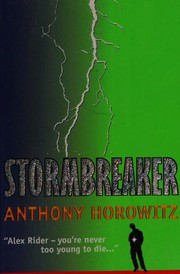
Stormbreaker
A fourteen-year-old boy loses his uncle, then his ordinary life, when MI6 sends him undercover to a Cornish computer plant where the giveaway machines hide a…
2,822-word summary · 13 min read
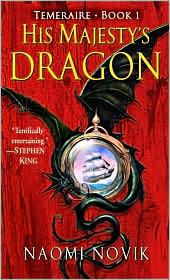
His Majesty's Dragon
When Captain Will Laurence's crew captures a French frigate carrying a dragon egg, the hatchling chooses him, and he trades the Navy for Britain's Aerial Corps.
2,405-word summary · 11 min read