
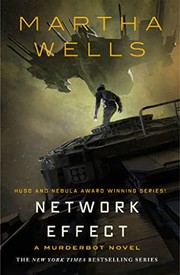
Network Effect
2,256-word summary 10 min read 352 pages in the book
- First published
- 2020
- Publisher
- Tordotcom
- Pages
- 352
- ISBN
- 9781250229861
- Series
- The Murderbot Diaries (#5)
Reading options
What's inside (10 sections)
I came to Network Effect expecting a bigger canvas and got one, though not the shape I assumed. This is the first full-length Murderbot novel, book five of The Murderbot Diaries, published on May 5, 2020 by Tordotcom in a 352 page hardcover, ISBN 9781250229861. It won the Hugo, the Nebula, and the Locus, and it is the book where the robot finally gets a whole book of its own. People sometimes expect a corporate thriller. What you get is closer to a rescue story with a horror underneath it, plus the funniest extended argument in the series about whether a murder machine is allowed to have friends.
A survey team on an ocean world
Murderbot is working security for a survey team out of Preservation, which means it is on a research boat with a scientist who signed on to study an ocean world, an analyst, an engineer, a medic, and a lot of equipment it is not supposed to leave. The team leader is Dr. Arada, the sort of person who has read the survey protocols more carefully than the survey ship was built. Dr. Thiago is the blunt one. Overse is Arada's partner and the person who keeps the facility running. Ratthi is friendly, talkative, and the one who keeps trying to have feelings at Murderbot. Amena is a teenager, the daughter of Dr. Mensah, the human who first treated Murderbot like a colleague back in the first novella.
The first pages are funny in a way that only works because you know where the trouble is coming from. Murderbot has a contract clause about hugs. It has opinions about the weapons on the ships around it. It would very much like to get back to the latest episode of the serial it follows. Then a boat of raiders shows up, Thiago walks out onto the observation deck to talk them down because that is who Thiago is, and the shot meant for him goes into Murderbot's shoulder instead. Murderbot goes into the water.
Wells also opens up the HelpMe files, the documents Murderbot has been writing to itself since it woke up. They are the quiet spine of the series. A file on how to hold a conversation with a human. A file on what to do when a human on your watch dies. A file that is really a diary about learning to want things and having no idea where to put them. One of the files it rereads here is old and ugly, the attempt on Mensah's life that happened before this book, remembered with the flat affect of a security unit filing an incident report. The past in this series is not exposition. It is a file you can open.
What follows is the series at its best: Murderbot, underwater, bleeding from a shoulder wound, methodically ending the people who hurt its humans while narrating what it would rather be doing. Then the raiders turn out to have been the smaller problem, because the thing that finds the team in wormhole space a few days later is a ship with a registry number and a name.
Amena is also seeing the Rim for the first time. She is a teenager from a lawful place who has never been inside a corporation's supply chain, and the book lets her horror register through details Murderbot treats as routine. People priced as labor. Security units treated as tools. A company willing to strand people on a planet when the budget stops making sense. Her reaction is what keeps the dystopia from being wallpaper.
Wormhole space, and a ship called Perihelion
The team is in transit when the attack comes. A missile takes out their communications, couples itself to the drive housing, and forces an emergency evacuation. Murderbot pulls Amena out of a collapsed lab and the two of them are taken by a vessel that should not exist, or rather should not exist anymore.
The transponder gives the ship away. It is Perihelion, and Perihelion is ART, the transport Murderbot rode with in Artificial Condition, the sentient research vessel with the deadpan sense of humor and the habit of pretending not to care. ART is gone. The attackers are grey-skinned, partly cybernetic humans who call themselves targets in Murderbot's language, and they say, cheerfully, that they deleted ART.
Murderbot does not take that well. It kills a good number of them.
Ras, Eletra, and the backup file
Two of the people aboard turn out to be employees of Barish-Estranza, a large exploration corporation, and they are captives as much as the grey-skinned attackers are captors. Ras has an implant that triggers a seizure, and he dies in front of Murderbot. Eletra has the same implant and survives only because Murderbot and Amena cut it out of her and stabilize her in ART's medical bay, which is still partly running.
Then Murderbot does something that feels like the whole book in miniature. It goes looking for ART in the ship's systems and finds a dormant backup file buried in the food production archives. A hidden code executes. The ship flickers back to life, and ART is there, and ART's first act is to scold Murderbot for being reckless.
The second act is worse. ART arranged the abduction. Its own human crew had been taken by the same colonists who took over the ship, and it needed Murderbot to come get them. It staged a kidnapping to recruit help. That is the betrayal, and Murderbot is furious in a way it does not have words for.
What the colonists actually are
The team chooses to keep going rather than withdraw, mostly on Arada's argument that if the contamination on the ground spreads, nobody walks away from it either. What the colonists turn out to be is the kind of revelation that changes a book halfway through. They are descendants of a corporate expedition that was abandoned, and their minds and their machines have been corrupted by remnant technology left behind by a non-human species that lived on the planet long before anyone from the Corporation Rim arrived to file a claim on it. The remnants infect organic and digital systems alike, which is why the grey-skinned raiders are not quite people any more.
ART's own logs show how it got caught. It answered a Barish-Estranza distress call, and answering was the mistake. The invaders were trying to merge alien code with human networks and build a hybrid mind out of the result. Murderbot calls the thing targetControlSystem, because naming it is easier than thinking about it.
The corporate layer comes in through Supervisor Leonide of Barish-Estranza, who has lost a ship and a crew of his own to the same thing and would very much like his company's lawyers to be the ones who explain it. He meets Murderbot and Arada aboard a Barish-Estranza supply transport, and the scene plays like two animals circling over a carcass, each of them certain the other is lying about who bit first. It is corporate warfare in miniature: everyone is polite, everyone has paperwork, and nobody can say plainly what they want.
The dock, the capsules, and the second Murderbot
The team descends to an orbital dock where a fight happened. Murderbot, Thiago, and Overse find the marks of the battle and the body of another SecUnit, killed after the people it was guarding were already dead. That corpse does more work than a paragraph of corporate exposition could. It is what the Rim does to its own products when the invoice stops making sense.
The dock records mention two drop capsules sent to the surface, one of them intact. Before they can go anywhere, ART warns of a hostile ship and cuts the link. Murderbot pieces together corrupted security footage and realizes the people wearing ART's crew insignia are alive, which sends the survivors down through the ruins of the old colony.
Then the book changes shape, because ART takes over the telling. It has a plan, and the plan includes deploying a sentient copy of Murderbot's own code onto the enemy explorer ship. Murderbot 2.0 infiltrates the vessel, finds Barish-Estranza personnel dead and the grey-skinned targets in control, finds ART's missing crew, and finds an immobilized SecUnit still waiting for orders. It also uploads a recording of its own rebellion, so the stranded unit can learn how to switch off its governor module the way Murderbot did in the first book. The two of them get the captives out while the explorer ship comes apart behind them.
Down into the ruins
Murderbot goes down to the surface with Thiago and Overse to finish the job, moving through a colony that was built by people who are no longer entirely people. The agricultural machines are infected too, and they are still working, which is one of the most unpleasant images in the book. The three of them get overrun. Murderbot's systems collapse into a forced shutdown, and it wakes up later hanging in the dark among old machinery with the alien remnant traces still humming through the walls.
The source of everything is down there. A pre-Rim central system fused with alien code and animated through the body of a crystallized human corpse, and Murderbot has to get close to it to break it. When it does, the thing tries to take Murderbot the way it took everyone else. Murderbot 2.0 intervenes and spends itself completing the purge, and then it is gone.
Murderbot destroys the corrupted core and gets out. SecUnit 3 finds it in the collapsing structure and carries it to ART's shuttle as the facility goes up behind them. On the ship, ART admits it had a second plan: if the recovery failed, it was going to bomb the colony. Murderbot watches the video of its own rescue and realizes that a room full of people took real risks to keep it alive. It has no idea what to do with that information, which is roughly its whole emotional situation.
Where it earns its keep and where it drags
The good parts are the parts you expect plus one you do not. The comedy lands, because Murderbot's narration about humans remains the sharpest thing in the series, and the new SecUnit gets its own confused point of view sections, which is a small gem: humans reassuring a security unit that has never been reassured, and the unit not having a protocol for it. ART and Murderbot together are the warmest relationship in the books, and the reunion here is the payoff for book two.
The weaknesses are real and they are the kind readers argue about. The corporate plot is genuinely hard to follow, and Barish-Estranza, Supervisor Leonide, the Rim, and the colony history all arrive in clumps that ask you to hold a lot of names at once. The world-building tends to come in dumps, and a few of those dumps stop the action dead. The action itself is often abbreviated. You get the shape of a fight, a handful of clever moves, and then a cut, which leaves the book feeling slightly airless in the middle even though there is a lot of plot. Several of the new human characters are useful rather than vivid, and Murderbot has grown more fond of people across the series in a way that flattens some of the friction that used to make the voice fun.
The move from novella to novel also changes the texture. The first four books were tight and self contained. This one sprawls in the middle, and it needs the earlier books less for plot than for tone. You have to have watched Murderbot learn to want things in order to feel how much it wants to keep the people who are now in danger. Readers who want a long dense difficult space opera will not enjoy how fast this one moves. Readers who want a warm book about a robot learning to be a person will find exactly that, and the awards are not wrong.
An open door at the end
The ending does not resolve into marriage or empire or even a settled job. ART invites Murderbot to join its next mission, Dr. Mensah arrives with a Preservation response team, and the corporate mess gets handled by people with authority rather than by a robot with a plan. What changes is inside Murderbot. It says that for the first time it can picture a future built on partnership rather than on control or solitude, which is the biggest thing this series has asked of it since it woke up.
Mensah's arrival closes the corporate circle and leaves the personal one open. She does not make a speech about what Murderbot has become. She gives it a report to write. The warmth sits in what is not said, which is a Wells specialty and the reason the last pages work better than the fight scenes.
Read it after All Systems Red and Artificial Condition, especially if you can spare time for the other two novellas too, because the ART material lands much harder with the history in place. Read it as a standalone if you like fast, funny, violent space opera and do not mind being told names. Either way, the fifth book is the one that finally gives the character room to be a protagonist instead of a delight.
FAQ
When was Network Effect published?
It was published on May 5, 2020 by Tordotcom as a 352 page hardcover with ISBN 9781250229861, and it is book five of The Murderbot Diaries.
Do I need to read the earlier Murderbot books first?
It helps. All Systems Red and Artificial Condition set up ART and the governor module hack, and the new novel assumes a fair amount of Rim history and corporate lore.
Is Network Effect the first Murderbot novel?
Yes. The four books before it were novellas, and this is the first full length Murderbot novel. It won the Hugo, the Nebula, and the Locus.
Similar books
More from The Murderbot Diaries first, then related titles.
All Systems Red
A self aware security robot just wants soap operas, but its survey team keeps walking into corporate murder.
2,119-word summary · 9 min read
Artificial Condition
Murderbot seeks truth about a massacre with bossy ship ART, finding friendship and trouble.
2,068-word summary · 9 min read
Rogue Protocol
Murderbot hunts GrayCris evidence on a dead colony world and befriends a trusting pet robot in this third Murderbot Diaries novella.
2,213-word summary · 10 min read
Exit Strategy
Murderbot returns to help its humans as corporate hunters close in and old friends risk all.
2,088-word summary · 9 min read
We Are Legion (We Are Bob)
A dead software engineer wakes up as a self-replicating space probe, clones himself into a squabbling fleet of Bobs, and tries to keep a ruined Earth alive.
2,357-word summary · 10 min read
Ancillary Justice
A ship mind trapped in one human body hunts the emperor who betrayed her across frozen worlds.
2,595-word summary · 12 min read
Children of the Mind
Ender's children split across worlds as Jane faces shutdown and Lusitania flees.
2,532-word summary · 11 min read
Cibola Burn
Settlers and a company fight over a new world while Holden tries to stop a war.
2,011-word summary · 9 min read
The Fall of Hyperion
Keats persona Severn dreams pilgrims to the Time Tombs as Hegemony falls and TechnoCore war breaks the farcasters.
2,115-word summary · 9 min read
Ringworld
Bored Louis Wu joins alien crew to explore a vast ring habitat around a star.
2,370-word summary · 11 min read

Prelude to Foundation
A young Hari Seldon arrives on Trantor with a theory he cannot yet prove, and a hunt through the planet-city forces him to turn psychohistory into a real…
2,013-word summary · 9 min read

Carve the Mark
On a planet divided between conquered and conqueror, the tyrant's sister and a kidnapped oracle's son discover that their gifts make them useful to everyone…
2,340-word summary · 10 min read
Consider Phlebas
The first Culture novel follows a spy for the opposing side, a man hired to hunt a fugitive through a war between an anarchist post-scarcity utopia and a…
2,350-word summary · 10 min read
Starsight
Spensa Nightshade goes undercover aboard the Superiority space station Starsight to steal a hyperdrive, and finds a frightened bureaucracy where she expected…
2,568-word summary · 11 min read
Heir to the Empire
Grand Admiral Thrawn returns from the Unknown Regions and outmaneuvers the New Republic while Luke, Leia, Han and smuggler Talon Karrde race him toward…
2,323-word summary · 10 min read
Saga, Volume 3
Marko, Alana, and Hazel hide on the planet Quietus with the reclusive author who inspired their romance, while assassins and a prince close in.
1,989-word summary · 9 min read
Out of the Silent Planet
A Cambridge philologist is kidnapped and taken to Mars, where the natives are civilized and the humans are the dangerous invaders.
2,612-word summary · 12 min read
Nemesis Games
The Rocinante crew scatters across the solar system just as Marco Inaros and the Free Navy bombard Earth. The Expanse reaches its turning point.
2,506-word summary · 11 min read
The Rise of Nine
John, Six and Nine race to India to find Eight before the Mogs strike.
2,321-word summary · 10 min read
Saga, Volume 2
Alana and Marko flee with baby Hazel while exes, princes, and ghosts close the net.
2,028-word summary · 9 min read
Seveneves
Stephenson 880-page William Morrow epic, May 2015: the Moon shatters, the Cloud Ark fails, seven women restart humanity, and heirs meet survivors on Earth.
2,389-word summary · 11 min read

The Moon Is a Harsh Mistress
In 2076 Lunar colonists led by Mannie, Wyoh, Prof, and computer Mike revolt against Earth with rocks and rhetoric.
2,003-word summary · 9 min read
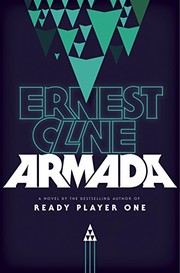
Armada
Gamer Zack learns Armada game trains real defense against alien Europans.
2,004-word summary · 9 min read
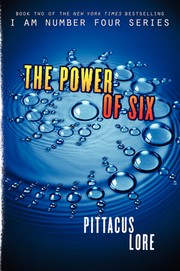
The Power of Six
John and Six run from the FBI and Mogs while Marina plots escape from a Spanish convent.
2,904-word summary · 13 min read

Hell's Heart
Queer whalers hunt god-monsters over Jupiter in this bloody Moby Dick riff.
2,200-word summary · 10 min read
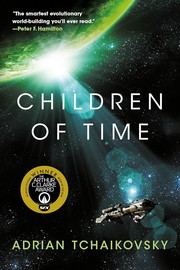
Children of Time
Humanity's ark ship Gilgamesh reaches a terraformed world, only to find intelligent spiders raised over millennia by a lost terraformer's virus.
2,976-word summary · 13 min read
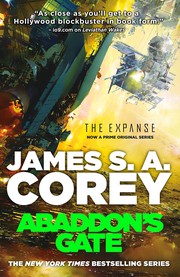
Abaddon's Gate
A dead detective guides Holden, an assassin hunts him, and a pastor walks unarmed into a mutiny as the Ring opens new worlds.
2,672-word summary · 12 min read
Xenocide
Lusitania faces a fleet with planet death while Ender, Jane, and families debate virus, souls, and law.
2,647-word summary · 12 min read

The Long Way to a Small, Angry Planet
Runaway clerk Rosemary joins the Wayfarer crew for a year long tunnel job that tests family and love.
3,295-word summary · 15 min read
Illuminae
Exes flee invasion on ships with rogue AI, told in chats and files.
1,959-word summary · 9 min read