
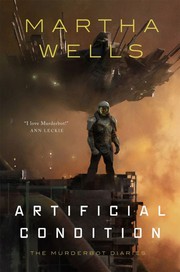
Artificial Condition
2,068-word summary 9 min read 160 pages in the book
- First published
- 2018
- Publisher
- Tordotcom
- Pages
- 160
- ISBN
- 9781250186928
- Series
- The Murderbot Diaries (#2)
Reading options
What's inside (8 sections)
How I Fell for a Grumpy SecUnit With TV Habits
I picked up this second Murderbot Diaries book because the first one left me grinning, and this one is short, 160 pages from Tordotcom in 2018, ISBN 9781250186928, so it felt like a low risk treat. I did not expect to get this attached. Murderbot is a Security Unit, part machine part human tissue, built by a company to guard people and fight when ordered, and it has hacked its own governor module so it can think for itself. It does not want to be a hero. It wants to watch serials, avoid eye contact, and be left alone. That voice, dry and anxious and funny, hooked me from the first page again.
The setup is personal this time. In the last book Murderbot saved Dr. Mensah and her survey team and started to trust them a little. Now it is traveling alone, trying to find out what really happened during a past massacre at a mining place called RaviHyral where many people died and Murderbot lost part of its memory. It wants facts about whether it killed people on purpose or because of orders or bad code. It does not tell Mensah where it is going. It just leaves, steals transport where it can, and teams up with a very smart research ship it nicknames ART, which stands for Asshole Research Transport because the ship is bossy and nosy in the best way.
What I love is how Wells keeps the stakes small and human even in space. This is not about saving the galaxy. It is about a construct with social anxiety trying to buy passage, hide its face, and watch media without anyone bothering it. I laughed out loud at its internal complaints, then felt a pang when it admitted it was lonely. If you like prickly characters who care more than they admit, you will be in good company here. ART steals every scene it is in, and that friendship becomes the heart of the book.
Teaming Up With the Bossiest Ship in Space
Much of the middle is basically a road trip, and I mean that in a good way. Murderbot needs a ride to RaviHyral, and ART, a long range research and teaching vessel with a powerful mind and a crew of humans it looks after, offers help with strings attached. ART wants to study Murderbot, wants to watch its shows together, wants to talk about feelings Murderbot would rather delete. Their banter is the best part. ART threatens to withhold video, tracks Murderbot’s stress levels, redesigns its quarters, and calls out its lies. Murderbot pretends to hate this and clearly loves having someone who sees through it.
Wells does a clever thing with point of view. We stay inside Murderbot’s head, hearing its flat commentary on humans being weird and loud, while ART speaks through messages, drones, and dry threats. You learn a lot about both without big info dumps. ART runs the humans on board with brisk care, especially a young woman named Tapan, and Murderbot watches how ART protects its crew while still giving them room. That becomes a mirror. Murderbot says it does not do caring, yet it keeps checking exits, ammo, air, and medical kits the way ART does. It is learning how to look after people without being owned.
My small criticism is that if you have not read All Systems Red, the first novella, some of this will feel thin. Wells recaps just enough, but the weight of Mensah’s kindness and the earlier bond hits harder if you lived it. I would start at book one. Here the ART chapters shine so bright that the humans on ART’s crew can feel a bit sketchy at first, more like nice outlines than full people. That changes later when trouble hits, but early on I was here for the machine friendship first and the humans second, and I think Wells knows that.
Returning to RaviHyral and Facing the Memory Gap
The reason for the trip is grim. Murderbot has a blank, damaged patch around an incident where a mining operation went violent and many clients died. It remembers killing, remembers confusion, remembers being called a rogue, but not the full chain of orders. It wants to go back to the site, pull records, walk the ground, and find out if it chose murder. That question sits under all the jokes. For a being that insists it is just a tool with TV habits, this is as close to a soul search as it gets, and Wells treats it with care rather than melodrama.
Getting there requires lies. Murderbot poses as an augmented human security consultant, borrows credentials, keeps its armor looking normal, and tries not to get scanned too deep. ART drops it off and stays in touch at a distance, which creates great tension because Murderbot is used to being the toughest thing in the room and now it is trying to pass as soft and ordinary. The station and shuttle details feel lived in, with docking fees, cargo checks, corporate zones, and bored functionaries. Wells is good at showing how big companies shape space travel, with contracts and liability talk hiding real danger.
I appreciated that Wells does not rush the reveal. Murderbot interviews, snoops, pulls files, and pieces together timelines like an investigator who hates talking to witnesses. There is a queasy scene where it stands where people died and runs its own logs against the official story, and you feel how much it wants a clean answer and fears it will not get one. The book respects that fear. It does not offer cheap healing. It offers work, checking one record, then another, then asking for help when solo snooping stops being enough.
New Humans, Old Trouble, and a Messy Rescue
Halfway through, the quiet inquiry turns into a proper mess. Murderbot runs into Tapan, a young human from ART’s crew, plus her friend Maro and a guardian named Rami, who have come to the same region for their own research and walk straight into corporate violence. A mining outfit with something to hide sends armed combat bots and hired humans to grab or kill witnesses. Tapan gets taken, and Murderbot has to decide fast whether to stay hidden and safe or step in and risk exposure. Anyone who knows Murderbot can guess what it does, while complaining the whole time.
The action is clear and short, not bloated. Wells writes fights like an engineer, with sight lines, drones, feed control, hacked cameras, and split second choices about armor and pain. Murderbot is strong but not invincible, and it hates getting damaged because repairs hurt and invite questions. There is a tense stretch in corridors and on a shuttle where it has to protect three soft humans who do not follow orders well, while hiding what it really is. I liked that Tapan is not a helpless prop. She is smart, scared, trying to help, and her presence forces Murderbot to explain itself in ways it hates.
If I have a gripe, it is that the villains here are more function than character. The company men and the combat SecUnits are scary but thin compared to ART or Mensah, and the final confrontation resolves fast because this is a novella, not a doorstop. I wanted one more scene showing why the mining bosses chose violence beyond profit and panic. Still, the rescue works because the cost is personal. Murderbot gets hurt, gets seen, gets thanked in ways that embarrass it, and has to accept that hiding forever has its own price. The shuttle escape had me holding my breath despite the jokes.
What the Truth About the Massacre Actually Means
Spoilers ahead, because this is the core. Murderbot learns that the RaviHyral massacre was not its choice in the way it feared. Its governor module was sabotaged with a combat override that forced aggression, and the mining company’s own actions and orders created the slaughter. It did kill, and that still haunts it, but the records show manipulation and corporate blame shifting, not a free decision to murder clients. ART helps confirm this by digging through data Murderbot cannot reach alone. For a human reader, the relief is real, but Wells does not let it turn simple. Murderbot still feels stained. Knowing you were used does not erase what your hands did.
That moral line is why the series lasts. Wells keeps asking what counts as a person when you are built, owned, and insured. Murderbot has a body made for violence, a mind that loves stories about people being decent, and a deep fear that caring will get it trapped or hurt. ART pushes back by treating it as a peer, not a pet or a tool. Mensah did that too in book one by offering contract and pay and choice rather than orders. Here ART goes further, offering friendship with boundaries, teasing, and backup. Murderbot does not suddenly become warm. It just starts to admit it wants to keep these ties.
I found this moving without feeling preached at. Wells never stops for a speech about freedom. She shows it in small choices, like Murderbot deleting or keeping a message, accepting or refusing a repair, staying to guard sleeping humans instead of sneaking off to watch an episode. The criticism I would offer is that readers wanting a big courtroom payoff may feel shorted, since the truth is more for Murderbot than for the public. No company falls here. No galaxy changes. But for one anxious construct, learning it was not a monster matters more than any prize, and I believed that completely.
It wants its shows and its armor and no eye contact, and it keeps risking itself for people anyway.
Why This Short Sequel Works and Where It Feels Tight
As a sequel, this does exactly what I want a middle novella to do. It deepens the lead, adds a great new regular in ART, raises the past wound without solving everything, and leaves the door open. The voice stays consistent, funny about socks and sandwiches and surveillance, sharp about corporate cruelty, tender in the places Murderbot tries to hide. At 160 pages, it reads fast in one or two sittings, and the pacing is smooth. Travel and talk up front, investigation in the middle, action near the end, quiet reckoning after. Nothing feels padded.
Where it feels tight is in scope. RaviHyral itself is more offices and docks and data than a vivid planet, and the bad guys blur. Readers who want rich world building may find the stations a bit samey after a while. I also missed Mensah and the Preservation team more than I expected, though their absence makes sense for the story. ART fills the gap, but it is a different flavor of care, more bossy older sibling than gentle employer. That is a feature, not a bug, yet I wanted one longer call home to feel the pull Murderbot feels between old safety and new freedom.
Still, I closed it happy and a little achy. Murderbot decides to keep moving, to keep ART as a friend, to keep Mensah at a careful distance while it figures itself out. It does not choose a side so much as it chooses to keep choosing. For a story with combat bots and evil mining companies, that quiet choice felt big. If book one asked whether a killing machine could care, this one asks whether it can forgive itself enough to keep caring. I think it can, and I want to follow it while it learns. Perihelion is now one of my favorite ships in fiction, and I say that as someone who usually likes grumpy lone wolves best.
What lingers is how Wells handles consent for machines. ART asks before scanning deeply, waits for answers, accepts no. Mensah offered pay and choice instead of orders. Murderbot learns to do the same with Tapan and her friends, giving warnings, offering exits, staying close without grabbing control. Those small negotiations matter more than the gunfire. They show a future where personhood is practiced, not declared. I finished wanting the next novella immediately, not for bigger explosions but for longer talks in cramped cabins about shows, boundaries, and what to do with a second chance.
FAQ
Must I read All Systems Red first?
Yes, start with book one for Mensah and escape, then this hits much harder.
Is there action or mostly talk?
Both, with witty travel talk early and a tense rescue near the end.
Similar books
More from The Murderbot Diaries first, then related titles.
All Systems Red
A self aware security robot just wants soap operas, but its survey team keeps walking into corporate murder.
2,119-word summary · 9 min read
Rogue Protocol
Murderbot hunts GrayCris evidence on a dead colony world and befriends a trusting pet robot in this third Murderbot Diaries novella.
2,213-word summary · 10 min read
Exit Strategy
Murderbot returns to help its humans as corporate hunters close in and old friends risk all.
2,088-word summary · 9 min read
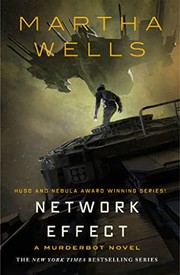
Network Effect
Murderbot's contract job turns into a rescue mission when a hijacked research ship and a colony of corrupted colonists appear.
2,256-word summary · 10 min read

Prelude to Foundation
A young Hari Seldon arrives on Trantor with a theory he cannot yet prove, and a hunt through the planet-city forces him to turn psychohistory into a real…
2,013-word summary · 9 min read

Starsight
Spensa Nightshade goes undercover aboard the Superiority space station Starsight to steal a hyperdrive, and finds a frightened bureaucracy where she expected…
2,568-word summary · 11 min read

Reveal Me
A Shatter Me novella told by Kenji, set between Defy Me and Imagine Me, as the rebels learn Anderson has taken hostages and Juliette faces Emmaline.
2,098-word summary · 9 min read

Out of the Silent Planet
A Cambridge philologist is kidnapped and taken to Mars, where the natives are civilized and the humans are the dangerous invaders.
2,612-word summary · 12 min read
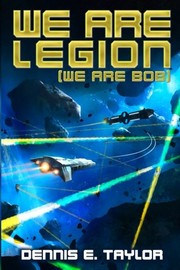
We Are Legion (We Are Bob)
A dead software engineer wakes up as a self-replicating space probe, clones himself into a squabbling fleet of Bobs, and tries to keep a ruined Earth alive.
2,357-word summary · 10 min read
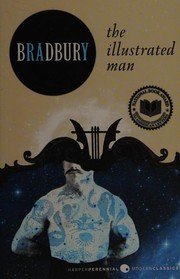
The Illustrated Man
A tattooed drifter's moving pictures retell eighteen Bradbury stories of children, rockets, Mars and the last night of the world.
2,791-word summary · 12 min read
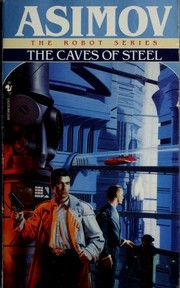
The Caves of Steel
Detective Elijah Baley must solve a Spacer's murder in a domed New York, partnered with R. Daneel Olivaw, a humaniform robot built in the victim's image.
2,445-word summary · 11 min read

Redshirts
Ensigns realize they die to serve a bad TV show's narrative.
2,152-word summary · 10 min read
Children of the Mind
Ender's children split across worlds as Jane faces shutdown and Lusitania flees.
2,532-word summary · 11 min read
Ancillary Justice
A ship mind trapped in one human body hunts the emperor who betrayed her across frozen worlds.
2,595-word summary · 12 min read

Solaris
Kelvin reaches a silent station above Solaris and finds grief made solid when the ocean returns his dead wife Rheya, testing memory, science, and the limits of…
2,548-word summary · 11 min read
Saga, Volume 2
Alana and Marko flee with baby Hazel while exes, princes, and ghosts close the net.
2,028-word summary · 9 min read

Iron Gold
Ten years after victory, Darrow and new rebels face peace that feels like another war.
2,158-word summary · 10 min read

Cibola Burn
Settlers and a company fight over a new world while Holden tries to stop a war.
2,011-word summary · 9 min read
Seveneves
Stephenson 880-page William Morrow epic, May 2015: the Moon shatters, the Cloud Ark fails, seven women restart humanity, and heirs meet survivors on Earth.
2,389-word summary · 11 min read

Across the Universe
Frozen teen Amy wakes early on ship Godspeed and joins heir Elder to stop cryo murders and expose Eldest's drugged rule in this January 2011 Razorbill series…
2,430-word summary · 11 min read

The Moon Is a Harsh Mistress
In 2076 Lunar colonists led by Mannie, Wyoh, Prof, and computer Mike revolt against Earth with rocks and rhetoric.
2,003-word summary · 9 min read
The Fall of Hyperion
Keats persona Severn dreams pilgrims to the Time Tombs as Hegemony falls and TechnoCore war breaks the farcasters.
2,115-word summary · 9 min read
Ringworld
Bored Louis Wu joins alien crew to explore a vast ring habitat around a star.
2,370-word summary · 11 min read
Mostly Harmless
Arthur makes sandwiches on Lamuella while Ford steals a Guide Mk II that wipes Earths across realities.
2,059-word summary · 9 min read

Hell's Heart
Queer whalers hunt god-monsters over Jupiter in this bloody Moby Dick riff.
2,200-word summary · 10 min read
Contact
A radio astronomer catches prime numbers from Vega, helps build a strange machine, and returns with no proof but static.
2,763-word summary · 12 min read
Xenocide
Lusitania faces a fleet with planet death while Ender, Jane, and families debate virus, souls, and law.
2,647-word summary · 12 min read

The Long Way to a Small, Angry Planet
Runaway clerk Rosemary joins the Wayfarer crew for a year long tunnel job that tests family and love.
3,295-word summary · 15 min read
Illuminae
Exes flee invasion on ships with rogue AI, told in chats and files.
1,959-word summary · 9 min read

Childhood's End
Silver ships end war and want while Overlords midwife humanity's children into something beyond human.
2,054-word summary · 9 min read