
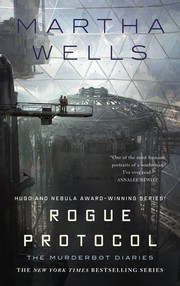
Rogue Protocol
2,213-word summary 10 min read 160 pages in the book
- First published
- 2018
- Publisher
- Tor.com
- Pages
- 160
- ISBN
- 9781250191786
- Series
- The Murderbot Diaries (#3)
Reading options
What's inside (7 sections)
I read Rogue Protocol the week I finished Artificial Condition, because ending book two on that note and not starting book three would have required discipline I do not have. It is the third novella in The Murderbot Diaries, after All Systems Red and Artificial Condition, and it first appeared in 2018 from Tor.com. The hardcover runs 160 pages, though the first edition pagination is sometimes listed as 158, and the story picks up directly after Murderbot parts ways with ART. If you have not read the first two, this still moves, but the emotional setup lands much harder with them behind you.
The premise is simple for this series. Murderbot wants GrayCris punished, wants Dr. Mensah safe, and wants everyone to stop asking where Dr. Mensah's missing SecUnit went. Its plan is to find proof that GrayCris committed worse crimes than the ones already in the news, hand that proof to Mensah, and vanish. The proof, it hopes, sits on Milu, an abandoned terraforming station outside the Corporation Rim where GrayCris once ran a project and then walked away without explaining why. Murderbot has no ship, no ticket, and no legal identity. It has sarcasm, hacking skills, and a borrowed name. Off it goes.
Consultant Rin and the worst transport
The book opens on a bot driven transport full of miserable contract laborers, and it is one of the funniest stretches Wells has written. Murderbot boards with no crew, only passengers, and the transport lists it on the manifest under the name Rin, with the occupation of security consultant, a title it chose in a moment of weakness and instantly regrets. The transport decides this means Murderbot is onboard security. Passengers start bringing it their disputes. It breaks up fights, arbitrates grievances about stolen food and bunk assignments, and lectures itself about why it keeps responding instead of hiding in its bunk with its shows. One early scene has it disarming a passenger with a food utensil and then getting shouted at by the entire mess hall anyway. The line between protector and babysitter dissolves fast.
The passengers are heading to a labor installation on a grim contract world, twenty years of bonded work with charges for food, energy, and medical care stacked on top. Ayres, one of the more talkative ones, explains the deal without understanding how bad it is, and Murderbot, which was built as property itself, does the math on planetary versus corporate calendars and decides not to get attached. It notes the way the passengers share blankets and medicine despite having almost nothing, small kindnesses traded quietly in the corridors. These chapters work because Wells lets Murderbot be competent and kind while it insists it feels neither. It copies its media collection into the ship's system to keep the passengers calm. It pins a bully to a wall with one hand and sets clear rules. It listens to grievances it claims not to care about. By the time the ship docks at HaveRatton Station, the reader knows these people are doomed by economics and Murderbot knows it cannot save them. It walks away, and the walking away costs it something it will not name.
HaveRatton is a busy hub on the edge of corporate space, and Murderbot needs a ride to Milu, which has no scheduled transports. It finds a small bot piloted supply ship running quiet routes and talks its way aboard, then rides out to a station with a floating population under a hundred. Few residents means few witnesses, which is good. Few residents also means a stranger gets noticed, which is bad. Murderbot adjusts its walk, randomizes its breathing, and tries to pass as human, all while knowing GrayCris may have left SecUnits behind that could spot it on sight.
What I liked here is how much story Wells gets from logistics. Schedules, manifests, cargo histories, station feeds. Murderbot reads them the way a detective reads a crime scene, and the reader learns the shape of the Corporation Rim through what is missing. No cargo route to Milu except one obscure run. A transit station still listed active though the facility below went silent. An independent company filing to claim the abandoned site. An automated array holding wreckage in orbit so evidence does not burn up. Every bland entry hides a decision someone made to bury something.
The station and the little bot
Milu station is half empty and fully tense. A small assessment team has arrived to survey the derelict terraform facility before salvage claims get messy. The team is civilian, soft in the way Murderbot finds alarming, led by a supervisor named Don Abene. And Don Abene has Miki.
Miki is a pet robot, a companion bot built to be liked, with a round friendly body and none of Murderbot's weapons or armor. It bonds fast, trusts everyone, calls humans its friends, and treats Murderbot like a new friend the moment they meet. Murderbot, which has spent three books insisting friendship is a trap, has no defense against something that has never learned to be afraid. Miki shows Murderbot its favorite shows. Miki asks innocent questions about why Consultant Rin stands so still and watches doors. Miki vouches for Rin to the humans, who accept the strange quiet consultant because the sweet little bot likes it. I found these scenes genuinely moving, partly because Wells writes Miki without mockery. It is not stupid. It is built for love in a universe that treats love as a bug, and it keeps working as designed.
The rest of the team fills out fast. There is a mix of techs and specialists, decent people doing a job, the kind of crew Murderbot has learned to dread because decent people get hurt when corporations play games. They are mapping the facility, checking the abandoned systems, and preparing reports for the claim dispute. Murderbot poses as their extra security, watches their backs for real while pretending to be bored, and digs through station systems at night looking for whatever GrayCris left behind. What it finds is ugly. The terraform project looks like cover. The real work underneath involved things GrayCris was never licensed to touch, and the shutdown was staged to let the evidence decay in orbit. If Murderbot can pull intact records from the facility systems, Mensah's case against the company goes from stalled to lethal.
Then the other ship arrives, and the book turns cold.
Wilken and Gerth
The newcomers are Wilken and Gerth, a pair of operatives with corporate security backing and heavy combat bots at their disposal. They claim authority over the site. They question the assessment team's right to be there. They separate people, ask pointed questions about what has been found, and make it clear that the survey ends when they say it ends. Don Abene pushes back with contracts and claim law. The techs look to Consultant Rin, who is suddenly very still in the way that means Murderbot is running combat scenarios behind a neutral face.
Wells is good at this kind of threat, the kind delivered in polite language with guns parked just out of frame. Wilken is the talker, reasonable, smiling, offering deals that are actually orders. Gerth is the hammer, watching sight lines, counting exits. Their bots are military grade, the sort of units that treat pet robots as clutter and humans as variables. Murderbot recognizes the setup from its own working life. It has been the thing standing behind the smiling humans. It knows what happens when the variable stops cooperating.
The middle chapters balance two jobs. By day Murderbot plays the hired guard, walking perimeters, checking seals, keeping Miki from wandering into danger, and biting back corrections when the humans discuss security like people who have never been shot. By night it cracks deeper into the facility, pulling deleted logs, reconstructing shredded files, and copying everything to storage it can smuggle out. It also starts caring about the team despite explicit plans not to, which follows the series pattern and still works because each attachment is specific. It learns who sleeps badly. It learns whose suit seals need checking. It learns that Miki waits up for it, which is the worst thing, because now there is someone who will notice if Rin does not come back.
There is a strong scene where Murderbot has to explain to Miki, in terms a companion bot can process, why some humans lie about safety. Miki, which believes friends tell each other the truth, struggles with the idea that Wilken smiles while planning harm. Murderbot, which has lied about its own nature to every human it ever met, finds itself teaching honesty it does not practice. The conversation is short, funny in places, and sad underneath, and it sets up everything that follows.
The fight and the data
Violence, when it comes, is fast and costly. Wilken and Gerth move to seize the facility systems and silence the assessment team, and their combat bots go active. Murderbot drops the Rin act in the only way it can, by being faster and more ruthless than anything on the station. It takes hits meant for the humans. It tears through one combat unit at close range while its own armor cracks and fluid loss warnings stack up. It uses the station layout the way it once used survey maps, doors, ducts, blind corners, camera gaps, turning a place it studied quietly for days into a weapon.
Miki dies in the middle of it. The little bot steps in where it should never have been, trying to protect its humans the only way it knows, and the operatives destroy it without a second thought. Wells does not soften this. Miki, which trusted everyone, is gone, and Murderbot, which trusted no one, has to keep fighting through the loss with a hole in its chest and corrupted data in its head. I had to put the book down for a minute. Killing the sweetest character in the series to prove the villains are serious is an old move, but Wells earns it because Miki's death changes the story rather than decorating it. Murderbot stops calculating odds and starts finishing things.
The aftermath chapters are the best in the novella. Murderbot recovers the facility data, the real records showing what GrayCris did on Milu and how the abandonment was staged. It packages the evidence so it can reach Mensah and the journalists without tracing back to a rogue SecUnit. It makes sure Don Abene and the surviving team members get out with their claims and their lives. It grieves Miki in its own way, which means downloading and keeping the little bot's favorite show, a gesture that would sound small from anyone else and wrecks me coming from Murderbot. Then it leaves, because staying would mean questions, and questions would mean chains.
The closing movement points straight at the next book. The evidence is away. Mensah will get her ammunition. GrayCris will bleed. But Murderbot is still property in the eyes of the law, still hunted in the margins, and still unwilling to let anyone else decide what it is. It heads toward the confrontation it has been circling since book one, done running from the people who claim to own it.
Whether to pick it up
Rogue Protocol is my favorite of the first three, and the reason is Miki. All Systems Red had Mensah's kindness. Artificial Condition had ART's bossy friendship. This one gives Murderbot a mirror that reflects what it could be without the armor, and then breaks the mirror. The action is sharp, the station setting is claustrophobic in a good way, and the data heist structure keeps the middle tight. The transport chapters at the start are pure comedy, the Milu chapters are slow dread, and the ending lands both.
The fair criticism is familiarity. If you have read the first two, the beats rhyme. Murderbot insists it does not care, cares visibly, gets hurt protecting people, and leaves before gratitude can stick. Wells varies the key each time, and Miki makes this variation distinct, but a reader coming straight through all three in a week may feel the pattern. The villains are also thinner than the heroes. Wilken and Gerth menace well but have little interior life, which is fine for their function yet noticeable next to Don Abene's warmth.
Read it if you love the series, obviously, and read it if you like stories where a gruff guard adopts a sunny sidekick against its will. New readers should start with All Systems Red, then Artificial Condition, then this. The arc from Mensah to ART to Miki is the making of a person, told in the order it happened. If you want hard science about terraforming, this stays light on mechanics and heavy on motive. If you want a security robot learning grief one downloaded episode at a time, come aboard.
Content notes. There is gun and combat bot violence, death of a beloved nonhuman character, injuries with fluid loss and body horror around armor damage, and threats against civilians. Language is mild with some profanity. No romance. The Miki scenes may hit young or sensitive readers hard despite the lack of gore.
FAQ
Do I need to read the earlier Murderbot books first?
It helps a lot. Start with All Systems Red, then Artificial Condition, so Mensah, ART, and the escape carry weight here. This book finishes that arc's setup and points at Exit Strategy.
When was Rogue Protocol published and how long is it?
It was first published in 2018 by Tor.com. The hardcover runs 160 pages with ISBN 9781250191786, and it is book 3 of The Murderbot Diaries.
Who is Miki?
Miki is Don Abene's companion pet robot on the Milu survey team. It trusts everyone, befriends Murderbot at once, and dies protecting its humans, which hits Murderbot hard.
Similar books
More from The Murderbot Diaries first, then related titles.
All Systems Red
A self aware security robot just wants soap operas, but its survey team keeps walking into corporate murder.
2,119-word summary · 9 min read
Artificial Condition
Murderbot seeks truth about a massacre with bossy ship ART, finding friendship and trouble.
2,068-word summary · 9 min read

Exit Strategy
Murderbot returns to help its humans as corporate hunters close in and old friends risk all.
2,088-word summary · 9 min read
Network Effect
Murderbot's contract job turns into a rescue mission when a hijacked research ship and a colony of corrupted colonists appear.
2,256-word summary · 10 min read
We Are Legion (We Are Bob)
A dead software engineer wakes up as a self-replicating space probe, clones himself into a squabbling fleet of Bobs, and tries to keep a ruined Earth alive.
2,357-word summary · 10 min read
Ancillary Justice
A ship mind trapped in one human body hunts the emperor who betrayed her across frozen worlds.
2,595-word summary · 12 min read

Prelude to Foundation
A young Hari Seldon arrives on Trantor with a theory he cannot yet prove, and a hunt through the planet-city forces him to turn psychohistory into a real…
2,013-word summary · 9 min read

Starsight
Spensa Nightshade goes undercover aboard the Superiority space station Starsight to steal a hyperdrive, and finds a frightened bureaucracy where she expected…
2,568-word summary · 11 min read

Out of the Silent Planet
A Cambridge philologist is kidnapped and taken to Mars, where the natives are civilized and the humans are the dangerous invaders.
2,612-word summary · 12 min read
Children of the Mind
Ender's children split across worlds as Jane faces shutdown and Lusitania flees.
2,532-word summary · 11 min read
Saga, Volume 2
Alana and Marko flee with baby Hazel while exes, princes, and ghosts close the net.
2,028-word summary · 9 min read

Cibola Burn
Settlers and a company fight over a new world while Holden tries to stop a war.
2,011-word summary · 9 min read
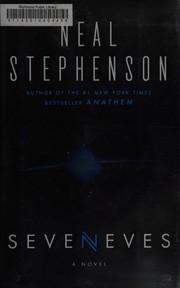
Seveneves
Stephenson 880-page William Morrow epic, May 2015: the Moon shatters, the Cloud Ark fails, seven women restart humanity, and heirs meet survivors on Earth.
2,389-word summary · 11 min read

The Moon Is a Harsh Mistress
In 2076 Lunar colonists led by Mannie, Wyoh, Prof, and computer Mike revolt against Earth with rocks and rhetoric.
2,003-word summary · 9 min read
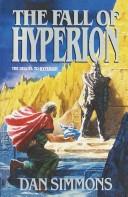
The Fall of Hyperion
Keats persona Severn dreams pilgrims to the Time Tombs as Hegemony falls and TechnoCore war breaks the farcasters.
2,115-word summary · 9 min read
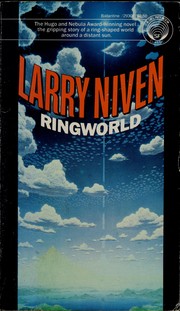
Ringworld
Bored Louis Wu joins alien crew to explore a vast ring habitat around a star.
2,370-word summary · 11 min read

Hell's Heart
Queer whalers hunt god-monsters over Jupiter in this bloody Moby Dick riff.
2,200-word summary · 10 min read
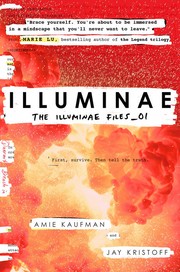
Illuminae
Exes flee invasion on ships with rogue AI, told in chats and files.
1,959-word summary · 9 min read
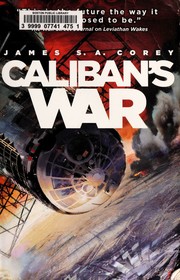
Caliban's War
Ganymede burns, Bobbie survives it, Avasarala curses through politics, and Prax hunts daughter Mei.
2,080-word summary · 9 min read

2001: A Space Odyssey
A black slab nudges apes to tools, calls Floyd to the Moon, and pulls Bowman past HAL toward Saturn and a strange rebirth.
2,982-word summary · 13 min read

Archenemies
Nova steals for the Anarchists while Adrian hides his Sentinel identity, and a serum that erases prodigy powers puts them both at risk.
2,485-word summary · 11 min read

Carve the Mark
On a planet divided between conquered and conqueror, the tyrant's sister and a kidnapped oracle's son discover that their gifts make them useful to everyone…
2,340-word summary · 10 min read
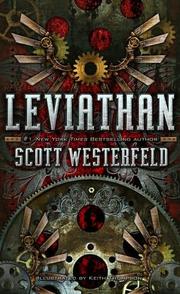
Leviathan
In an alternate 1914, a prince on the run and a girl disguised as a soldier meet aboard a living airship.
2,406-word summary · 11 min read
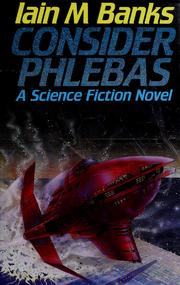
Consider Phlebas
The first Culture novel follows a spy for the opposing side, a man hired to hunt a fugitive through a war between an anarchist post-scarcity utopia and a…
2,350-word summary · 10 min read

Saving the World and Other Extreme Sports
Max and the flock split in two to take down the lab behind their lives, one half in California and the other in Europe.
2,175-word summary · 10 min read

Heir to the Empire
Grand Admiral Thrawn returns from the Unknown Regions and outmaneuvers the New Republic while Luke, Leia, Han and smuggler Talon Karrde race him toward…
2,323-word summary · 10 min read
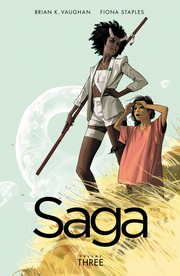
Saga, Volume 3
Marko, Alana, and Hazel hide on the planet Quietus with the reclusive author who inspired their romance, while assassins and a prince close in.
1,989-word summary · 9 min read

Exhalation
Ted Chiang's second collection contains nine stories about time, memory, free will, and artificial minds, told with clarity and moral seriousness.
2,075-word summary · 9 min read

The Illustrated Man
A tattooed drifter's moving pictures retell eighteen Bradbury stories of children, rockets, Mars and the last night of the world.
2,791-word summary · 12 min read

Never Fade
Ruby, now a leader in the Children's League, must track down the boy whose memories she erased, because he holds the only proof of what caused the disease that…
2,188-word summary · 10 min read