
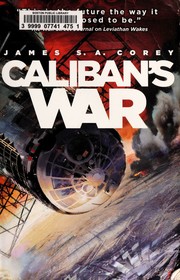
Caliban's War
2,080-word summary 9 min read 611 pages in the book
- First published
- 2012
- Publisher
- Orbit
- Pages
- 611
- ISBN
- 9780316129060
- Series
- The Expanse (#2)
Reading options
What's inside (12 sections)
I read Caliban's War because Leviathan Wakes left me needing the next protomolecule turn. James S.A. Corey, pen name of Daniel Abraham and Ty Franck, published it in 2012 with Orbit. My reading follows the 611 page hardcover. Ganymede erupts, a Martian marine survives what no one survives, a UN fixer curses her way toward truth, and Holden's crew chases a missing girl. It is bigger than book one and better about people inside war machines.
Ganymede starts it. Breadbasket of the outer planets, agricultural domes under fragile peace. Then marines die, mirrors fall, and a monster with Venusian links walks through gunfire. Bobbie Draper, Martian gunnery sergeant, survives the massacre that kills her squad. Hauled to Earth as witness and pawn, she tells truth that embarrasses both fleets. Her testimony chapters crackle with soldier's clarity against political fog. I saw what I saw. Say otherwise and you lie. That stubbornness carries her whole arc from pawn to player.
Four points of view
Corey expands from two narrators to four, and the structure sings. Holden captains the Rocinante with his old moralizing intact and newly costly. Naomi engineers and questions. Amos breaks things and people with cheerful menace. Alex flies. Their found family frays under fame and guilt after Eros. Holden broadcasts truth compulsively. Crew pays for his honesty in docking denials and bounties. Those domestic strains ground space opera in dishes and docking fees. Who cleans the drive. Who forgives the captain. Home first. War second.
Prax Meng, Ganymede botanist searching for his missing daughter Mei, supplies the book's heart. Not soldier or fixer, just a father with plant knowledge and desperate politeness. He bargains, begs, and persists through stations that eat the gentle. His chapters hurt because helplessness is written without condescension. He learns to shoot badly. He learns to ask worse. Holden's crew adopts his search as mission, which redeems their aimlessness after Eros. Saving one girl matters more than indicting systems. That focus keeps 611 pages human scaled.
Chrisjen Avasarala, UN deputy with profane mouth and perfect suits, steals every scene she enters. Tasked with steering Earth through war fever, she curses, bribes, and out thinks admirals half her age. Her chapters show politics as maintenance work. Calls. Leaks. Threats over tea. She recruits Bobbie as bodyguard and conscience, an alliance across uniform and silk that anchors the book. Foul language as honesty policy delights, but her grief for a dead son and her fear of failure give weight beneath wit. Power wielded by someone who knows its price.
Bobbie completes the quartet as warrior learning politics without surrendering honor. Martian patriotism raised her. Earth manipulation tests her. Her arc from squad leader to defector to protector tracks what service means when flags lie. Action scenes with her in powered armor read with visceral clarity. Weight. Recoil. Blood in helmet. Yet her best moments are quiet. Refusing to lie at hearings. Choosing Prax's search over orders. Those choices cost career and earn self. Soldiers who think terrify commands. Bobbie thinks constantly.
Mao, Strickland, and Venus
The conspiracy threads from book one tighten around Jules Pierre Mao and his protomolecule research. Where Leviathan Wakes hinted at corporate horror, Caliban's War shows the nursery. A pediatrician named Strickland runs immunity experiments on kidnapped children including Mei, seeking controlled hybrids from Venusian goo. Those chapters are the book's hardest to read and most necessary. Horror with small shoes. Corey never lingers exploitatively. A drawing. A name called. Absence where laughter was. Restraint makes it worse in the right way.
Errinwright, UN undersecretary smooth as airlocks, sells war to manage stocks and pride. His collusion with Mao, exposed through Avasarala's patient traps, supplies the political payoff. Wiretaps. Leaked speeches. Votes counted like rounds. The takedown satisfies because it comes through procedure rather than gunfire. Paper beats armor when aimed well. That procedural patience distinguishes Expanse politics from opera where speeches solve. Here solutions need evidence chains and brave leakers. Unsexy and thrilling at once.
Venus looms throughout as transformation no one understands. The protomolecule builds structures that defy probes. Scientists babble. Cults worship. Holden dreams Miller's ghost with a bullet hole nostalgia. Those eerie interludes keep cosmic horror present while human war dominates foreground. The book's wisdom is proportion. People fight over breadbasket moons while god stuff cooks next door. Both matter. Neither waits for the other. That simultaneity feels like real history with added aliens.
The Io climax converges all threads at Mao's lab with firefights in corridors and moral choices under PDC roar. Prax finds Mei. Bobbie holds doors. Avasarala talks fleets down from blanket vengeance. Holden chooses rescue over revenge when both cost. Those beats land because 500 pages earned them. No shortcuts. The aftermath, with Mao exposed and Errinwright fallen, offers justice of a kind while Venus keeps building beyond human frames. Wars end. Wonder continues. That open door pulls toward book three.
What expands and what strains
What expands is scope with intimacy intact. Four narrators stay distinct in voice. Holden preaches. Prax pleads. Bobbie reports. Avasarala curses. The 611 pages move fast because chapters cut on tension. Ganymede horror. UN farce. Rocinante domesticity. That variety prevents battle fatigue. New readers can start here with brief recap, though Eros losses hit harder with book one fresh. The series rewards order. This volume rewards returning most.
What strains is middle sprawl and Holden fatigue. His truth compulsion, noble in book one, reads as self harm here when broadcasts endanger crew. Naomi's patience wears thin for readers too. A few station chases blur. Protomechanics stay vague by design, which frustrates hard SF readers wanting rules. The book chooses people over physics. Right choice for most, wrong for some. Know your crew preference. Rocinante drama versus protomolecule diagrams. This one serves the galley.
The prose is workmanlike and propulsive. Short chapters. Functional descriptions. Dialogue that differentiates class and planet through profanity and jargon. Avasarala's curses deserve their own award for diplomatic precision. Action blocks read clearly in three dimensions, rare skill. Emotional beats land through understatement. A hand held. A plant watered. Those small gravities hold epic together.
Prax and the small stakes that hold epics
Prax Meng's botanical eye gives the book its most original texture and deserves final emphasis. He reads people like plants. Stressed. Leggy. In need of light. Those metaphors never feel forced because his profession shaped his perception before plot did. When he finally holds Mei, his first act is checking her like a seedling. Breathing. Warmth. Response. That professional tenderness contrasts with soldiers who check pulses for threat. Different training. Different touch. The book suggests expertise matters less than attention direction. Look to nurture and you find ways. Look to dominate and you find targets.
His friendship with Amos provides the book's oddest warmth. Amos, cheerful killer with moral blindness, attaches to Prax as someone definitively good to follow. That dynamic could feel exploitative and instead reads as grace. The lost find compasses in the gentle. Amos carries Prax's bags, learns plant names, and kills without hesitation to protect him. Those juxtapositions disturb deliberately. Can a monster serve a gardener well. The book answers yes with reservations that linger past action. Usefulness is not redemption. But it is something. Hold both while cheering their scenes.
Mei herself appears briefly and haunts fully. A small girl with an immune condition parents could not afford to treat, taken for experiments promising cures. Her drawings on lab walls outlast her captivity as testimony. Crayon families. Suns with faces. Those images indict more than speeches about corporate evil. Children should draw suns, not document them from cages. Prax's search succeeds because the book refuses to trade her for theme. She is not symbol. She is daughter. Rescue first. Meaning later. That priority orders the whole sprawling plot correctly.
Avasarala's profane statecraft
Avasarala deserves final study as the book's great creation and moral compass with muddy boots. Her profanity is not decoration but diagnostic tool. Cursing strips pretense from admirals and aides who hide behind acronyms. When she calls a plan shit, staff stop briefing and start thinking. That linguistic function justifies every f bomb on craft grounds, though readers averse to swearing should know the book swims in it. Her mouth embarrasses grammarians and rescues situations. Both effects are intended. Language as weapon and window.
Her grief for a dead son humanizes power without softening it. She lost Arjun to skiing, not war, which teaches her that control is illusion even for Earth's rulers. That private knowledge informs her public patience with Bobbie's trauma and Prax's desperation. She recognizes fellow mourners across rank and planet. Those recognitions drive her best decisions. Spare the marine. Fund the father. Hear the tape fully before judging. Power that remembers loss spends differently. The book suggests democracies need grieving grandmothers in rooms where young men vote war. Send more like her.
Holden's honesty problem
Holden's compulsive broadcasting deserves critical attention as the book's central character flaw dressed as virtue. After Eros he tells everything to everyone, believing sunlight disinfects. Instead his feeds paint targets on allies and start panics that kill. Naomi calls him on it repeatedly with engineer's bluntness. Truth without timing is just noise with casualties. His slow learning curve frustrates readers who want heroes to adapt faster. That frustration is intentional. Good intentions scale badly. The book makes him pay in docking denials, bounty postings, and crew glares before he adjusts. Growth through invoices.
His choice at the climax to prioritize Mei over indictment shows the lesson landing. Presented with evidence that could damn Mao instantly versus a girl needing immediate rescue, he chooses girl without speechifying. Action corrects philosophy. Those priorities reorder the crew's faith in him more than any apology could. Amos nods. Naomi exhales. Prax weeps. Leadership relearned through triage rather than testimony. The series needs Holden humbled to function as ensemble rather than pulpit. This volume does the humbling with care that preserves likability. Wrong loudly. Right quietly. Continue.
Venus watching back
The protomolecule's Venus project hums beneath human plots as reminder that all these wars are footnotes to something larger. Structures rising. Probes failing. Cults forming around math. Corey doles out glimpses sparingly, a signal here, a Miller dream there, to keep cosmic dread present without derailing political thriller. That restraint serves book two's function as bridge. Eros ended. The ring gates wait. Between them people must live, grieve, and govern. Venus builds while Ganymede buries. Both matter on different clocks. Human chapters handle rent. Alien chapters handle eons. The braid holds because neither mocks the other.
Crew as family under fire
The Rocinante's domesticity under wartime pressure deserves closing love because it grounds everything spectacular. Shared meals with ration jokes. Naomi fixing what Holden breaks, diplomatically and mechanically. Amos cleaning guns while humming. Alex's drawl easing tension before burns. Those rhythms persist through protomolecule horror and fleet actions, proving family is maintenance rather than sentiment. Tighten bolts. Wash dishes. Forgive broadcasts. The book's best quiet scene has Prax learning to eat with the crew without apologizing for appetite. Belonging served family style. War outside. Stew inside. Continue.
Doors opening toward Abaddon
The finale's real function is opening gates literal and narrative toward the next volume. Venus completes whatever it was building. Mao falls. Errinwright faces cameras. And far out, rings await that reframe every border dispute into irrelevance. Corey seeds that cosmic pivot through Miller's ghost nudging Holden to look outward while everyone else counts local dead. The pivot lands because human stakes resolved first. Mei safe. Bobbie free. Avasarala ascendant. With housekeeping done, wonder can flood without drowning character. Expect the next book to trade stations for strangeness. This one earned the exchange.
Who should ship out
Give Caliban's War to space opera readers who want politics with physics, to Expanse show fans needing book depth, to anyone who likes crews as families under fire. It suits long flights and longer weekends. Do not give it to readers needing hard physics rigor or standalone closure. Pair it with Leviathan Wakes before and Abaddon's Gate after for the full arc.
At 611 pages I read it across a week, marking Avasarala lines. Holden starts broadcasting truth regardless of cost and ends choosing one girl over grand indictment, learning proportion without surrendering honesty. That growth, from bullhorn to triage, is why the sequel surpasses its predecessor. Wars rage. Gardens need tending. Save Mei first. Then Venus.
FAQ
When was Caliban's War published?
Orbit published it in 2012. The hardcover runs 611 pages and the ISBN is 9780316129060.
Is it part of a series?
Yes. It is book two of The Expanse, between Leviathan Wakes and Abaddon's Gate.
Who is Prax?
Prax Meng, Ganymede botanist searching stations for his taken daughter Mei.
Similar books
More from The Expanse first, then related titles.

Leviathan Wakes
A destroyed ice hauler, a missing heiress, and an alien growth pull a crew and a tired detective toward war across the solar system.
3,653-word summary · 16 min read
Abaddon's Gate
A dead detective guides Holden, an assassin hunts him, and a pastor walks unarmed into a mutiny as the Ring opens new worlds.
2,672-word summary · 12 min read

Cibola Burn
Settlers and a company fight over a new world while Holden tries to stop a war.
2,011-word summary · 9 min read
Nemesis Games
The Rocinante crew scatters across the solar system just as Marco Inaros and the Free Navy bombard Earth. The Expanse reaches its turning point.
2,506-word summary · 11 min read

Prelude to Foundation
A young Hari Seldon arrives on Trantor with a theory he cannot yet prove, and a hunt through the planet-city forces him to turn psychohistory into a real…
2,013-word summary · 9 min read

The Moon Is a Harsh Mistress
In 2076 Lunar colonists led by Mannie, Wyoh, Prof, and computer Mike revolt against Earth with rocks and rhetoric.
2,003-word summary · 9 min read
Leviathan
In an alternate 1914, a prince on the run and a girl disguised as a soldier meet aboard a living airship.
2,406-word summary · 11 min read
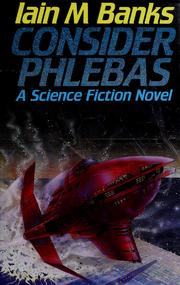
Consider Phlebas
The first Culture novel follows a spy for the opposing side, a man hired to hunt a fugitive through a war between an anarchist post-scarcity utopia and a…
2,350-word summary · 10 min read

Starsight
Spensa Nightshade goes undercover aboard the Superiority space station Starsight to steal a hyperdrive, and finds a frightened bureaucracy where she expected…
2,568-word summary · 11 min read
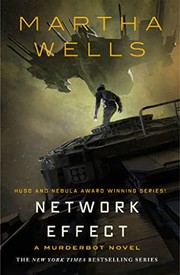
Network Effect
Murderbot's contract job turns into a rescue mission when a hijacked research ship and a colony of corrupted colonists appear.
2,256-word summary · 10 min read
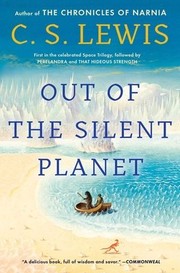
Out of the Silent Planet
A Cambridge philologist is kidnapped and taken to Mars, where the natives are civilized and the humans are the dangerous invaders.
2,612-word summary · 12 min read
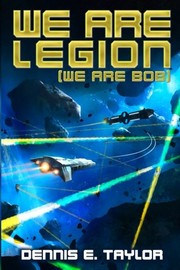
We Are Legion (We Are Bob)
A dead software engineer wakes up as a self-replicating space probe, clones himself into a squabbling fleet of Bobs, and tries to keep a ruined Earth alive.
2,357-word summary · 10 min read
Children of the Mind
Ender's children split across worlds as Jane faces shutdown and Lusitania flees.
2,532-word summary · 11 min read
Ancillary Justice
A ship mind trapped in one human body hunts the emperor who betrayed her across frozen worlds.
2,595-word summary · 12 min read
Saga, Volume 2
Alana and Marko flee with baby Hazel while exes, princes, and ghosts close the net.
2,028-word summary · 9 min read
Iron Gold
Ten years after victory, Darrow and new rebels face peace that feels like another war.
2,158-word summary · 10 min read
Exit Strategy
Murderbot returns to help its humans as corporate hunters close in and old friends risk all.
2,088-word summary · 9 min read

Cryptonomicon
Codebreakers in World War II and hackers in the 1990s chase gold, ciphers, and a secret data haven.
2,280-word summary · 10 min read
Seveneves
Stephenson 880-page William Morrow epic, May 2015: the Moon shatters, the Cloud Ark fails, seven women restart humanity, and heirs meet survivors on Earth.
2,389-word summary · 11 min read
The Fall of Hyperion
Keats persona Severn dreams pilgrims to the Time Tombs as Hegemony falls and TechnoCore war breaks the farcasters.
2,115-word summary · 9 min read
Rogue Protocol
Murderbot hunts GrayCris evidence on a dead colony world and befriends a trusting pet robot in this third Murderbot Diaries novella.
2,213-word summary · 10 min read
Ringworld
Bored Louis Wu joins alien crew to explore a vast ring habitat around a star.
2,370-word summary · 11 min read

Hell's Heart
Queer whalers hunt god-monsters over Jupiter in this bloody Moby Dick riff.
2,200-word summary · 10 min read
Ender's Shadow
Bean, a starving Rotterdam runaway, fights his way into Battle School and watches Ender's war from the side. A parallel retelling about survival, loyalty, and…
2,742-word summary · 12 min read
Shogun
An English pilot wrecked in 1600 Japan becomes a pawn in Lord Toranaga's patient bid for power, and slowly becomes Japanese himself.
2,251-word summary · 10 min read
All Systems Red
A self aware security robot just wants soap operas, but its survey team keeps walking into corporate murder.
2,119-word summary · 9 min read

2001: A Space Odyssey
A black slab nudges apes to tools, calls Floyd to the Moon, and pulls Bowman past HAL toward Saturn and a strange rebirth.
2,982-word summary · 13 min read
Ender's Game
Ender Wiggin trains at Battle School to fight the Formics, winning games that turn out to be real.
2,039-word summary · 9 min read

The Blinding Knife
Kip trains to join the Blackguard while the Prism hides his true identity, loses his colors, and fights a war against a rogue drafter who wants to birth a god.
2,049-word summary · 9 min read

Heretics of Dune
Fifteen centuries after Leto II, the Bene Gesserit raise a new Duncan Idaho while the Honored Matres return and Rakis burns.
2,673-word summary · 12 min read