
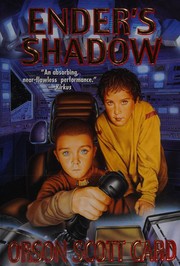
Ender's Shadow
2,742-word summary 12 min read 480 pages in the book
- First published
- 1999
- Publisher
- Starscape
- Pages
- 480
- ISBN
- 9780765342409
- Series
- The Shadow Series (#1)
Reading options
What's inside (8 sections)
I picked up Ender's Shadow because Ender's Game had stayed with me for years, and I kept wondering about the smallest kid in the room. You know that feeling when a side character walks through one scene and you cannot let them go. That was Bean for me. He shows up in Battle School as this tiny, watchful presence, and Card clearly felt the same pull, because this book from 1999 gives Bean the whole stage. The copy I am retelling here is the Starscape 2002 edition, the 480 page one, and it follows Bean from a street in Rotterdam all the way through the war with the Formics and into the messy politics after.
What surprised me right away is how much of this book runs beside the first one instead of after it. If you read Ender's Game, you already know the big beats. Earth fears another attack. Children are taken to an orbiting school. Ender Wiggin rises, leads Dragon Army, and ends the war without knowing his last fight is real. Bean is there for most of that, off to the side, seeing it from a lower bunk and a different angle. Then, once the war ends, the story keeps going into territory Ender's Game mostly skipped, with Peter and Valentine writing as Locke and Demosthenes and with Bean trying to find a place on an Earth that wants to use child heroes for its own fights.
A street kid in Rotterdam
Bean starts with almost nothing. He is maybe three or four years old when we meet him, living on the streets of Rotterdam, and he is so small that other kids barely see him as a person. He does not know his parents. He does not know his exact age. He knows hunger and cold and which doorways are safe. Card writes him as someone whose memory works like a trap. Bean remembers everything he sees, and he thinks in clear steps because thinking clearly is how he stays alive.
The early pages move through soup lines and shelters and the small groups of homeless children who band together for safety. There is a girl who keeps a crew alive by getting them into a charity kitchen, and Bean understands before anyone else does that food is power. If you control who eats, you control the group. He cannot fight, so he trades ideas for bread. He tells the older kids how to stay together, how to present themselves so the charity workers keep feeding them. It works for a while.
Then a boy with a limp arrives, older and clever in a cold way, and the mood shifts. He talks well. He promises order. He slowly pushes the girl aside and takes the crew for himself. I will keep his story general here because the details get dark fast, but the shape matters. He uses kindness as a tool and drops it when it stops helping him. Bean sees through him early, and that fear sits in Bean from then on. He learns that smart people can be kind and smart people can be cruel, and you have to watch what they do, not what they say.
What saves Bean is a nun named Sister Carlotta. She works with an international program that tests street children for unusual ability, and she is looking for the kind of mind the Fleet needs. Most of the tests assume a child who had food and sleep and school. Bean had none of that, yet his scores break the scale. Carlotta argues for him. She sees a starving child and also a mind that might matter in a war for survival. She gets him cleaned up, fed, and moved toward the same pipeline that took Ender Wiggin.
I liked this opening more than I expected. It is sad without pressing too hard, and Bean feels distinct from Ender right away. Ender comes from a family, with a mother and father and a sister who loves him and a brother who frightens him. Bean comes from concrete. He has no soft memories to protect. That difference colors everything after.
Taken off the streets
Bean does not glide into Battle School. He fights for every step, and the adults are not sure what to do with him. Colonel Graff and the other officers want soldiers, but Bean is so young and so small that he looks like a mistake on the roster. Carlotta keeps pushing. She believes his mind makes up for his size, and she also feels responsible for him in a way the military men do not. Her faith gives Bean his chance, and he knows it.
The trip up to the station is hard on him. He has never been clean and warm for long, never had regular meals, never been around adults who study him like a puzzle. He watches everything. On the shuttle and in the early tests, Bean solves problems by refusing to accept the frame. Where other children try to win the game as given, Bean asks why the game is shaped that way and what the adults hope to learn from it. Graff notices. The teachers notice. Some of them worry that Bean sees too much.
Battle School itself is a shock. It is all rules and scores and older boys who smell weakness fast. Bean is assigned to a group, given a bunk, given a uniform that swims on him. He learns the routines of the Battle Room, the weightless games where armies face off in a big open space with obstacles to hide behind. He is too small to shoot well at first and too new to be trusted, so he studies. He memorizes who leads well, who freezes, who shows off. He keeps his head down when he needs to and speaks up when silence would cost more.
One thread I appreciated here is how Bean handles friends. He wants them and does not trust the want. On the street, closeness got people hurt. In Battle School, closeness can also get you hurt, because friendships affect scores and assignments. Bean slowly lets a few people in, other small or odd kids, and those ties feel earned. He helps them with drills. He shares tricks for moving in null gravity. He learns that loyalty has a price and pays it anyway, which sets up his later bond with Ender.
Battle School from the side
This middle stretch will feel familiar if you read Ender's Game, and that is both the fun and the risk. We watch the same school, the same commanders, the same pressure, but from Bean's cot instead of Ender's. Ender Wiggin is a few years older, already marked as special, already lonely. Bean watches him the way a younger brother might watch an older one he admires and fears for. He sees Ender win fights he should lose. He sees teachers isolate Ender to sharpen him, piling on unfair odds so Ender learns to break the pattern instead of playing inside it.
Bean gets moved around, tested, pushed ahead too fast and then held back. The officers argue about him. One side says he is too young for the pressure. The other says his mind is wasted in the lower classes. Bean hears pieces of this and pretends he hears less than he does. He has practice being invisible. On the street that kept him alive. Here it lets him gather facts the adults would rather keep hidden, like how closely they track Ender and how much they fear losing the war.
There are classroom scenes, meals, night whispers after lights out. There are practice sessions where Bean shows a gift for seeing the whole field at once. He can hold many moving parts in his head and find the weak point. The teachers give him extra work, old battles to study, supply problems, timing puzzles. He solves them fast, sometimes too fast, and then has to sit with the boredom of waiting for everyone else to catch up. Card captures that boredom well. Being the smartest person in the room sounds fun until the room slows you down every day.
I found myself comparing Bean and Ender constantly, which is clearly the point. Ender leads by pulling people toward him. He suffers openly, and soldiers follow because they love him and want to ease that weight. Bean leads by thinking ahead of everyone. He does not inspire the same warmth at first, but soldiers trust him because he is usually right about the next three moves. The book keeps asking which kind of leader you would follow, and it never pretends the answer is simple.
Dragon Army and the long war
When Ender gets his own army, Dragon Army, Bean ends up inside it, and this is where the retelling pays off best. If you remember Dragon Army from the first book, you remember a group of misfits and young kids who win every fight despite the rules being bent against them. Here we see the same wins from Bean's angle. He is not the commander. He is the kid Ender trusts to handle the strange assignment, the odd flank, the plan that looks wrong until it works.
Card does a good job showing how Ender commands. He gives Bean room. He listens. He takes blame upward and pushes credit down. Bean, who grew up expecting every adult and every leader to exploit him, does not know what to do with a leader who actually protects his people. That trust changes Bean. He starts to fight for Ender, not only for survival. When Ender is tired and thin and angry at the teachers who keep raising the stakes, Bean covers for him in small ways, handling details so Ender can rest, watching rivals so Ender does not have to.
The battles come fast in this stretch. Dragon Army beats older armies. The teachers cheat, scheduling two fights in one day, changing the rules mid game, letting rivals gang up. Ender answers by changing the game itself, using the room in ways no one planned. Bean is often part of those tricks, sometimes as the scout who finds the gap, sometimes as the reserve who hits at the exact moment. The prose stays clear about movement and timing. You can picture the stars, the cubes, the frozen bodies drifting after a hit.
Then comes the shift to Command School, and the tone turns heavier. The children are told they are training on simulators, guiding fleets at a distance. Bean joins the small team around Ender, the best of the best, and they run fight after fight against the Formics. The strain shows. Ender thins out. He sleeps badly. He hates what the game asks of him. Bean sees the cost up close and starts to suspect the adults are lying about what the controls actually do. When the truth lands, that the last fight was real and the enemy home world is gone, Bean feels it as both relief and horror. They lived. They won. They did something that cannot be undone.
The strength of this section is how it reframes heroism. Ender carries the moral weight in the first book. Here Bean carries the witness weight, the friend who watched and understood and could not stop it.
After the war
The war ends and Earth does not become peaceful. That turn feels true, and it is where Ender's Shadow stops mirroring the first book and starts its own story. The children of Battle School are heroes, which makes them assets. Nations and blocs want them as future commanders, as symbols, as tools. The kids are sent home, but home is not safe. Some are watched. Some are taken. Old rivalries on Earth wake up fast once the common enemy is gone.
This is where Locke and Demosthenes matter. On the nets, two voices have been shaping opinion for years. One sounds calm and reasonable, calling for order. The other sounds sharp and angry, warning about power grabs. Readers of the first book know these are really Ender's siblings, Peter and Valentine Wiggin, writing under false names while Ender is in space. In this book we see their work from the outside, as Bean and the adults read them and try to guess who is who. Peter wants influence. Valentine wants to protect Ender and steer Peter toward something less cruel. Their essays ripple through the politics around the returning children.
Bean has his own problem. He wants to find where he came from, and Carlotta helps him look. That search leads back toward Rotterdam and toward the boy who once took over the street crew. I will stay general about the details because they spiral into threats and chases that are better read fresh, but the heart is simple. The past is not done with Bean. The bully from the street has grown into something worse, someone who remembers Bean and resents him. Bean has to face the idea that being smart is not enough when someone else is smart and willing to hurt people you care about.
There is a lot of movement in these chapters. Safe houses. Messages passed in secret. Adults who claim to help while planning two moves ahead. Bean leans on his Battle School friends and on Ender's siblings in ways that test his new trust. He also starts to understand his own body, that his brilliance came with a price built into the way he was made. Card handles that reveal gently. It lands as grief more than science, a child learning his life may be shorter and stranger than he hoped.
What worked and what dragged
I tore through the Battle School chapters and slowed down in the politics chapters, and I think that split will hit many readers the same way. When the book stays close to Bean and Ender and the daily pressure of the school, it hums. The street opening is vivid. The Dragon Army run is exciting even the second time around, because Bean notices things Ender missed. The bond between the two boys feels real, built from shared exhaustion more than speeches.
The retread issue is fair to name. A big part of this book walks ground Ender's Game already covered. If you read the first book recently, you will know who wins each battle before it starts. Card tries to fix that by giving Bean separate puzzles and side missions, and those help, but they cannot fully erase the sense that you are watching a replay from a new camera. Readers who come to this book first may actually enjoy it more, since every win will land fresh.
Bean being so capable also wears thin in spots. He is tiny and starved and young, yet he outthinks almost everyone, predicts adult schemes, and stays calm under threats that break older kids. I believe in prodigies, and the book gives reasons for his mind, but there are scenes where I wanted him to fail harder and sit with it. Ender fails and bleeds for it. Bean fails less often, and when he does, he recovers fast. That makes him slightly harder to love, even as I admired him.
The philosophy lectures are the other drag. Card loves to pause the chase and debate power, war, family, and leadership through long talks and net essays. Some of those passages are sharp. Peter and Valentine sparring on the nets has real bite. But there are stretches where characters explain ideas the plot already showed, and the pace sags. I skimmed a little in the last third, then got pulled back by a short scene between Bean and Carlotta that reminded me what the book does best, which is care for overlooked children.
Still, I closed the book glad I read it. Bean earns his place beside Ender. The final move, with Bean leaving Earth and choosing his own crew and his own purpose, felt right. He starts as a kid who trades ideas for bread and ends as a young person who chooses loyalty on purpose, for more than survival. If Ender's Game is about the cost of winning, this one is about the cost of watching and then deciding what to do next. I am curious where Bean goes from here, and that is more than a parallel story usually manages.
FAQ
Is Ender's Shadow a sequel to Ender's Game?
It runs beside it, retelling Battle School from Bean's view before moving past the war into the Locke and Demosthenes aftermath.
Who is Bean?
A tiny homeless boy from Rotterdam with sharp memory and fast thinking, taken into Battle School after Sister Carlotta notices him.
Which edition is summarized here?
The story first appeared in 1999, and this summary cites the Starscape 2002 edition with 480 pages.
Similar books
More from The Shadow Series first, then related titles.
Ender's Game
Ender Wiggin trains at Battle School to fight the Formics, winning games that turn out to be real.
2,039-word summary · 9 min read
Iron Gold
Ten years after victory, Darrow and new rebels face peace that feels like another war.
2,158-word summary · 10 min read
Caliban's War
Ganymede burns, Bobbie survives it, Avasarala curses through politics, and Prax hunts daughter Mei.
2,080-word summary · 9 min read
Children of the Mind
Ender's children split across worlds as Jane faces shutdown and Lusitania flees.
2,532-word summary · 11 min read
Xenocide
Lusitania faces a fleet with planet death while Ender, Jane, and families debate virus, souls, and law.
2,647-word summary · 12 min read
Speaker for the Dead
Ender speaks whole truths for alien deaths on a fenced colony where biology confuses murder.
1,992-word summary · 9 min read

Prelude to Foundation
A young Hari Seldon arrives on Trantor with a theory he cannot yet prove, and a hunt through the planet-city forces him to turn psychohistory into a real…
2,013-word summary · 9 min read
Leviathan
In an alternate 1914, a prince on the run and a girl disguised as a soldier meet aboard a living airship.
2,406-word summary · 11 min read
Consider Phlebas
The first Culture novel follows a spy for the opposing side, a man hired to hunt a fugitive through a war between an anarchist post-scarcity utopia and a…
2,350-word summary · 10 min read
Starsight
Spensa Nightshade goes undercover aboard the Superiority space station Starsight to steal a hyperdrive, and finds a frightened bureaucracy where she expected…
2,568-word summary · 11 min read
Network Effect
Murderbot's contract job turns into a rescue mission when a hijacked research ship and a colony of corrupted colonists appear.
2,256-word summary · 10 min read
The Ask and the Answer
Todd and Viola are separated in occupied Haven, where the Mayor's Ask tortures suspects and the Answer plants bombs in the name of freedom.
2,265-word summary · 10 min read

Out of the Silent Planet
A Cambridge philologist is kidnapped and taken to Mars, where the natives are civilized and the humans are the dangerous invaders.
2,612-word summary · 12 min read
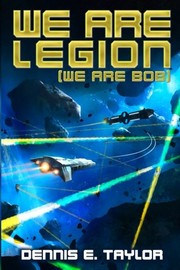
We Are Legion (We Are Bob)
A dead software engineer wakes up as a self-replicating space probe, clones himself into a squabbling fleet of Bobs, and tries to keep a ruined Earth alive.
2,357-word summary · 10 min read
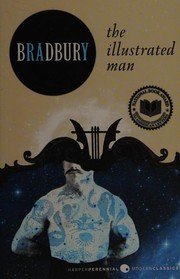
The Illustrated Man
A tattooed drifter's moving pictures retell eighteen Bradbury stories of children, rockets, Mars and the last night of the world.
2,791-word summary · 12 min read

Redshirts
Ensigns realize they die to serve a bad TV show's narrative.
2,152-word summary · 10 min read
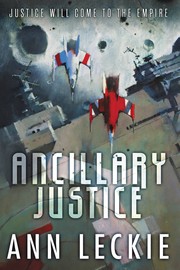
Ancillary Justice
A ship mind trapped in one human body hunts the emperor who betrayed her across frozen worlds.
2,595-word summary · 12 min read

Solaris
Kelvin reaches a silent station above Solaris and finds grief made solid when the ocean returns his dead wife Rheya, testing memory, science, and the limits of…
2,548-word summary · 11 min read
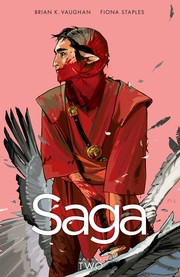
Saga, Volume 2
Alana and Marko flee with baby Hazel while exes, princes, and ghosts close the net.
2,028-word summary · 9 min read
Exit Strategy
Murderbot returns to help its humans as corporate hunters close in and old friends risk all.
2,088-word summary · 9 min read

Cryptonomicon
Codebreakers in World War II and hackers in the 1990s chase gold, ciphers, and a secret data haven.
2,280-word summary · 10 min read

Cibola Burn
Settlers and a company fight over a new world while Holden tries to stop a war.
2,011-word summary · 9 min read
Seveneves
Stephenson 880-page William Morrow epic, May 2015: the Moon shatters, the Cloud Ark fails, seven women restart humanity, and heirs meet survivors on Earth.
2,389-word summary · 11 min read

Across the Universe
Frozen teen Amy wakes early on ship Godspeed and joins heir Elder to stop cryo murders and expose Eldest's drugged rule in this January 2011 Razorbill series…
2,430-word summary · 11 min read

The Moon Is a Harsh Mistress
In 2076 Lunar colonists led by Mannie, Wyoh, Prof, and computer Mike revolt against Earth with rocks and rhetoric.
2,003-word summary · 9 min read
The Fall of Hyperion
Keats persona Severn dreams pilgrims to the Time Tombs as Hegemony falls and TechnoCore war breaks the farcasters.
2,115-word summary · 9 min read
Rogue Protocol
Murderbot hunts GrayCris evidence on a dead colony world and befriends a trusting pet robot in this third Murderbot Diaries novella.
2,213-word summary · 10 min read
Ringworld
Bored Louis Wu joins alien crew to explore a vast ring habitat around a star.
2,370-word summary · 11 min read
Mostly Harmless
Arthur makes sandwiches on Lamuella while Ford steals a Guide Mk II that wipes Earths across realities.
2,059-word summary · 9 min read

Hell's Heart
Queer whalers hunt god-monsters over Jupiter in this bloody Moby Dick riff.
2,200-word summary · 10 min read