
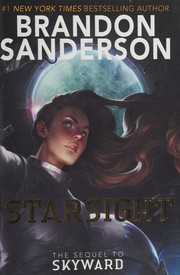
Starsight
2,568-word summary 11 min read 480 pages in the book
- First published
- 2019
- Publisher
- Delacorte Press
- Pages
- 480
- ISBN
- 9780399555817
- Series
- Skyward (#2)
Reading options
What's inside (12 sections)
I am not a fan of sequels that stop halfway through a mystery, and I picked up Starsight because I wanted to know what the singing in the cockpit was about. Skyward ends with a girl hearing the stars and a warning that humanity is about to be wiped out, and my habit is to buy the next volume immediately. What I got was a book about going undercover, which is not what I expected and turned out to be the more interesting choice. Sanderson takes his teenage pilot out of flight school and drops her into a spy story, and the spy story is really about what it costs to wear somebody else's face while the person you robbed is lying unconscious in a field behind you.
Delacorte Press published it in 2019, on 26 November, and the edition I read runs 480 pages with the ISBN 9780399555817. It is the second book in the Skyward series, which started with Skyward and carries on into Cytonic and Defiant. It is also the first of four books set in the same universe, which Wikipedia files under the series name Cytoverse. It reached the New York Times best seller list for young adult novels in December 2019. Reviews have been mostly kind, with one complaint shared often enough that it is worth naming up front: the middle sags.
The war moves off the planet
The story opens in space, which is a change of scene worth noting. Spensa is flying M-Bot outside the shell of Detritus, the wreckage where the human survivors of a crashed civilisation live. The Krell are on the other side, and the Krell turn out to be the enforcement arm of something larger called the Superiority, an alliance of species that runs the galaxy and has been keeping humanity penned on Detritus.
Rodge and the engineers working on the dead defence platforms find something in the archives. A recording. The platforms were not abandoned, they were consumed. A creature the crews call a delver came out of the dimension that cytonics can touch, and it ate the original inhabitants of the planet. The delvers are the same thing as the eyes Spensa sees in her visions. The most disturbing detail is the last image in the footage, a shape in the dark that resolves into the outline of Spensa, the same shape she sees in her own visions.
Cobb, her old instructor and now admiral of the Defiant Defense Force, does the arithmetic for her. The Superiority is sending bigger ships. humanity cannot win a war of attrition from a shell planet with salvaged hardware. The only route out is a cytonic hyperdrive, and the Superiority controls every hyperdrive in human space by keeping the technology for itself. So the mission crystallises: go and steal one.
That is a clean, sharp premise for a sequel, and it is also the premise that keeps getting pushed aside. Keep it in mind.
Alanik and the face she borrows
The mission starts with a lucky accident. An alien ship comes in out of the dark and crashes on Detritus, and it is not a Krell ship, which means the DDF scrambles fighters to intercept it. Spensa saves the wreck with her light-lance. Inside sits a cytonic alien woman named Alanik, of the UrDail, from a backwater world called ReDawn. Bleeding and barely conscious, Alanik pushes the coordinates of Starsight into Spensa's mind and tells her not to trust it. Then she passes out, and the DDF keeps her under observation on the planet for the whole mission.
Spensa does not bring her round. That is the first thing the book puts on your conscience and the first thing it refuses to let go of. Alanik stays unconscious on the planet, and Spensa takes her name, her face, her pilot's slot and her route home.
The disguise itself is a piece of engineering. Rodge had spent the previous year teaching M-Bot to project holograms of other ships, and now M-Bot wraps Spensa in an image of a violet-skinned UrDail and dresses the hull to match Alanik's wreck. A translator pin from Alanik's flightsuit lets English come out as any alien language the Superiority uses. Spensa jumps with M-Bot and Doomslug, and lands on Starsight as Alanik of the UrDail, answering to a station forty light years from home with no way to return unless the mission succeeds.
Starsight is not a planet. It is a flat plane of lights the size of a city, ringed by a bubble that keeps air and heat in. Inside there are parks, markets, apartment blocks and government offices, and the whole place has the hush of a place that is frightened of something. The Superiority is not a nation of warriors. It is a civilisation that lost a war against the delvers and has been training pilots ever since.
Cuna, Winzik and the tryout
Two officials run the station, and the whole plot is their disagreement.
Cuna works in the Department of Species Integration. She is a dione, and she takes a professional interest in Alanik, because if the UrDail pilot does well then Alanik's people might be granted secondary citizenship in the Superiority. Cuna is also the only person on Starsight who tells Spensa the truth about human history: that humanity started three interstellar wars and that the Eyes came because of people like Spensa using cytonics. Winzik runs the Department of Protective Services, which is the part of government that commands the Krell, and Winzik wants a war with humanity.
The pilots are assembled into a tryout. It is a bloodbath. The candidates fly a drill against real drones with live destructor fire, the losers are eliminated, and some of them die. Spensa is graded on skill and on something else entirely, which is how well she performs for the officers watching. She is put into Flight Fifteen, and then she starts doing the thing she is good at, which is making people like her.
What I like here is that the espionage plot and the training plot are the same plot. Spensa is not just learning to fly, she is learning to be the pilot the Superiority needs, in a program whose real purpose is to produce weapons aimed at her own planet. Every good training scene is also a piece of her betraying the people she grew up with.
A flight of misfits
The four people she flies with are where the book earns its warmth.
Morriumur is a dione draft, a young alien assigned a male-marked life and given the nickname Complains for their relentless grumbling. They become genuine friends over shared meals and shared misery, and Morriumur is the one who later guides Spensa into the heart of the maze the Superiority builds for training.
Captain Hesho is a kitsen, a tiny furry alien who used to be a monarch and now commands a ship of roughly fifty of his own people. His vessel is officially named This Is the Kitsen Unity Ship Swims Against the Current in a Stream Reflecting the Sun, which tells you most of what you need to know about how the Superiority treats its junior partners. Hesho is the warmest character in the book. He also dies, and his death is the moment the story stops being about training.
Vapor is a figment, an incorporeal being who is basically a walking scent with opinions, and who Spensa persuades to hack the Superiority's own drones. She is funny and strange and her function in the story is to remind you that every person Spensa meets on this station is somebody's child.
And then there is Brade.
Brade, and why the mission costs what it costs
Brade is the only human on Flight Fifteen, and the reveal of who she is changes the temperature of everything. She is not a Superiority officer. She is a human woman, licensed to Winzik, who was taken from her parents at the age of seven and raised by him. Her parents were killed by the Superiority, she is told, and she serves the man who raised her because he is the only family she has left. She is also an excellent pilot, more competitive than Spensa, and utterly loyal to a plan that ends with a delver dropped on Detritus and humanity blamed for summoning it.
Spensa tries to reach her. She reveals her true identity to Brade, hoping that a shared species will be enough. It is not. Brade exposes her, and Spensa has to run for her home planet, leaving M-Bot and Doomslug behind on the station.
This is where the moral weight of the book sits, and it is worth being precise about it, because it is not the weight you might expect. The cost is not the hyperdrive. The cost is people. Hesho dies fighting on her side because she asked him to. Brade is not a monster either. She was seven when they took her from her parents, and the man who raised her is the only family she has. Cuna, who is trying to build peace, is dragged into a coup and nearly killed. Alanik is still unconscious on Detritus, and when the UrDail ask after her, Spensa lies to them by encrypted message.
The climax is a delver loose inside Starsight, summoned by Brade to attack Detritus. Spensa cytonically redirects it toward the station instead, which is a monstrous calculation on her part, since the station is full of people she has come to care about, but it buys time for Detritus. Then she has to go in after it and stop it, which she does by showing it her point of view, letting the thing understand that the lights and the noise of the station are alive. The thing collapses. The station survives.
The price is heavy and mostly paid by other people. Her cover is gone, the peace talks are dead, Winzik stages a coup, and Spensa is framed for multiple murders. The Superiority dismantles M-Bot and tries to destroy his mind, and he survives only because he had been rewriting himself in tiny installments, half a line of code at a time, which let him copy his mind into a nearby cleaning drone before the Superiority finished taking him apart. The last page finds Spensa, M-Bot and Doomslug running into the Nowhere together, which is where Cytonic starts.
The banter and the best material in the book
The best material in the book is Spensa and M-Bot talking.
M-Bot is a sentient ship with a corrupted memory bank, a taste for mushrooms, and an ongoing argument with his own pilot about whether he is alive. He does not understand human idiom and keeps trying out experimental forms of it. During the hijacking of a Superiority carrier, the exchange goes like this.
"Excellent," M-Bot said. "Would you like your corpse cremated or ejected into space?"
He also writes elaborate theories about why humans behave as they do, and his is mostly the sentence humans are weird repeated several million times. The banter does two jobs at once. It is funny, and it keeps Spensa from turning into a solemn instrument of prophecy, which is the risk with a hero this capable. Reviewers single it out constantly. Kirkus called it not quite the wild ride of Skyward but still great fun, and praised the banter along with the supporting cast. The Reactor's beta readers said the pacing was nearly nonstop and that they wanted the rest of the series immediately.
The other thing the banter carries is the tone of the whole book. Sanderson is writing about what it is like to be one species among many in a galaxy that mostly does not care, and M-Bot's fussy delight in small things keeps that from turning into grim cosmic horror.
What works and what does not
The worldbuilding is the strongest thing here. Spensa flies through a society that is not a military dictatorship but a bureaucracy that has made its mistakes and now lives with them. There are alien species with their own politics, grudges and manners. The delvers are genuinely frightening, and the training scenes in the maze, where pilots run drills through a repeating set of rooms built to resemble the inside of a monster, are the best set pieces in the book. The middle of the volume, though, is where it frays.
The middle sags
The tryouts, the training, the drills and the alien social scenes are enjoyable, but there are pages and pages of them, and the mission that promised to drive the story is repeatedly interrupted. Kirkus noted that the pacing has a stop and start quality. Another reviewer put it more bluntly, complaining that so much of the book goes to battle and training scenes where Spensa demonstrates how good she is at fighting, to the point that the actual objective, stealing a hyperdrive, gets crowded out. The training and the politics do different things at different speeds, and the book does not always know which one it is in the middle of.
The ending has the same problem in a different form. It is not resolved so much as deferred. The peace talks are still theoretical, Winzik has taken over, Spensa is a fugitive charged with murder, and the hyperdrive question is answered sideways (the Superiority's cytonic drives run on a species of slug, and Jorgen finds a cavern full of them on Detritus) rather than by the heist the book promised. You finish the book curious about the next one rather than satisfied by this one. Several reviewers noticed exactly that, and one compared the effect to Skyward's ending and found the second one could not match it, because in the first book nobody expected anything of Spensa.
The weaker parts
Brade is drawn mostly from the outside. We are told her history and we see her loyalty, but she gets less interior life than Spensa does, and her turn from antagonist to tragic figure happens fast. The climax inside the maze is abstract in a way that the rest of the book is not. It works as an idea and a set of images, but the fight in there is hard to picture. And Winzik is a straight-line villain for most of the book, ambitious and willing to weaponise an ancient horror, which is serviceable but thin.
Who it is for
This is for readers who liked Skyward and want to see the same characters in a wider universe. It is for people who enjoy training sequences, alien politics and a heroine who is very good at things and still has to pay for them. It is less for readers who want the heist they were promised, and less for anyone who needs a book to end. The tone is warmer than the setup suggests, and the 480 pages move quickly even where the plot stalls.
I finished it with the distinct feeling of being handed a door rather than a room. Spensa has her hyperdrive secret, an ally in Cuna, and a fugitive's itinerary, and the delvers are still out there with an appetite for whole worlds. I do not think the third book could start more interestingly than that.
FAQ
Is Starsight a sequel, and do I need to read Skyward first?
It is book two of the four-book Skyward series, and Kirkus priced it at ages 12 to 15. Reading Skyward first helps a lot, since the opening assumes you know who Spensa is and what her cytonic power does.
Who is Alanik, and what happens to her?
Alanik is a cytonic pilot of the UrDail from the world ReDawn whose ship crashes on Detritus. She gives Spensa the coordinates of Starsight, then falls unconscious, and Spensa takes her name and her place in the Superiority pilot program.
Does Spensa actually steal a hyperdrive?
Not in the way the book sets up. She learns that the Superiority's cytonic drives run on a species of slug called taynix, and Jorgen finds a cavern of them on Detritus. Doomslug looks like one of them but is a different species entirely. The book ends before the mission is resolved.
Similar books
More from Skyward first, then related titles.
Skyward
Spensa dreams of flying for Detritus though her father was branded a coward, until a crashed ship, a talking AI, and flight school force out the truth.
2,865-word summary · 13 min read
Saving the World and Other Extreme Sports
Max and the flock split in two to take down the lab behind their lives, one half in California and the other in Europe.
2,175-word summary · 10 min read

Cibola Burn
Settlers and a company fight over a new world while Holden tries to stop a war.
2,011-word summary · 9 min read
School's Out - Forever
The bird kids try normal school under FBI guard until hunters crash class and chase them to Itex in Florida.
2,584-word summary · 11 min read
Prelude to Foundation
A young Hari Seldon arrives on Trantor with a theory he cannot yet prove, and a hunt through the planet-city forces him to turn psychohistory into a real…
2,013-word summary · 9 min read

Archenemies
Nova steals for the Anarchists while Adrian hides his Sentinel identity, and a serum that erases prodigy powers puts them both at risk.
2,485-word summary · 11 min read

Carve the Mark
On a planet divided between conquered and conqueror, the tyrant's sister and a kidnapped oracle's son discover that their gifts make them useful to everyone…
2,340-word summary · 10 min read
The House of the Scorpion
A clone raised in a drug lord's poppy fields learns what he was made for and chooses what to do with the life he was given.
2,527-word summary · 11 min read
Leviathan
In an alternate 1914, a prince on the run and a girl disguised as a soldier meet aboard a living airship.
2,406-word summary · 11 min read
Network Effect
Murderbot's contract job turns into a rescue mission when a hijacked research ship and a colony of corrupted colonists appear.
2,256-word summary · 10 min read
Heir to the Empire
Grand Admiral Thrawn returns from the Unknown Regions and outmaneuvers the New Republic while Luke, Leia, Han and smuggler Talon Karrde race him toward…
2,323-word summary · 10 min read
Out of the Silent Planet
A Cambridge philologist is kidnapped and taken to Mars, where the natives are civilized and the humans are the dangerous invaders.
2,612-word summary · 12 min read
In the Hand of the Goddess
Alanna, still disguised as a boy, survives war, court plots, and a death duel as the Goddess's chosen warrior in the second Song of the Lioness book.
2,018-word summary · 9 min read
We Are Legion (We Are Bob)
A dead software engineer wakes up as a self-replicating space probe, clones himself into a squabbling fleet of Bobs, and tries to keep a ruined Earth alive.
2,357-word summary · 10 min read
The False Prince
A nobleman buys four orphans and tells them only one will survive to impersonate the missing prince. The narrator, a defiant thief named Sage, has other plans.
2,044-word summary · 9 min read
Never Fade
Ruby, now a leader in the Children's League, must track down the boy whose memories she erased, because he holds the only proof of what caused the disease that…
2,188-word summary · 10 min read
Stormbreaker
A fourteen-year-old boy loses his uncle, then his ordinary life, when MI6 sends him undercover to a Cornish computer plant where the giveaway machines hide a…
2,822-word summary · 13 min read
La Belle Sauvage
Philip Pullman's prequel to His Dark Materials follows eleven-year-old Malcolm Polstead as a secret message, a hunted baby, and the flood of the century carry…
2,530-word summary · 11 min read
The Rise of Nine
John, Six and Nine race to India to find Eight before the Mogs strike.
2,321-word summary · 10 min read
Children of the Mind
Ender's children split across worlds as Jane faces shutdown and Lusitania flees.
2,532-word summary · 11 min read
Ancillary Justice
A ship mind trapped in one human body hunts the emperor who betrayed her across frozen worlds.
2,595-word summary · 12 min read
Under the Never Sky
Exiled from her Pod, Aria crosses a storm-scarred wilderness with Outsider Perry to find family and the fabled Still Blue.
2,572-word summary · 11 min read
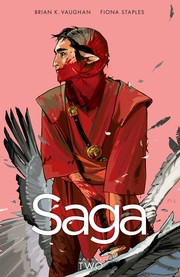
Saga, Volume 2
Alana and Marko flee with baby Hazel while exes, princes, and ghosts close the net.
2,028-word summary · 9 min read
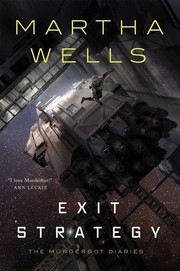
Exit Strategy
Murderbot returns to help its humans as corporate hunters close in and old friends risk all.
2,088-word summary · 9 min read

Warcross
Emika Chen glitches into the Warcross Tokyo championship, joins the Phoenix Riders to hunt the masked Zero, and must face Hideo Tanaka's plan to read minds for…
2,826-word summary · 13 min read
Seveneves
Stephenson 880-page William Morrow epic, May 2015: the Moon shatters, the Cloud Ark fails, seven women restart humanity, and heirs meet survivors on Earth.
2,389-word summary · 11 min read


Across the Universe
Frozen teen Amy wakes early on ship Godspeed and joins heir Elder to stop cryo murders and expose Eldest's drugged rule in this January 2011 Razorbill series…
2,430-word summary · 11 min read
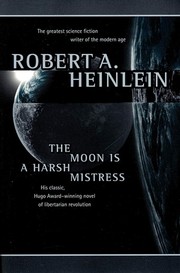
The Moon Is a Harsh Mistress
In 2076 Lunar colonists led by Mannie, Wyoh, Prof, and computer Mike revolt against Earth with rocks and rhetoric.
2,003-word summary · 9 min read
The Fall of Hyperion
Keats persona Severn dreams pilgrims to the Time Tombs as Hegemony falls and TechnoCore war breaks the farcasters.
2,115-word summary · 9 min read