
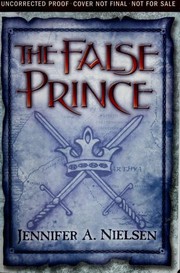
The False Prince
2,044-word summary 9 min read 342 pages in the book
- First published
- 2012
- Publisher
- Scholastic Press
- Pages
- 342
- ISBN
- 9780545284134
- Series
- Ascendance (#1)
Reading options
What's inside (7 sections)
The pitch for The False Prince is a masterclass in premise writing: a nobleman buys four orphan boys and announces that one of them will be trained to impersonate the lost prince and the rest will be killed. Jennifer A. Nielsen published the novel in 2012, launched a series with it, and built the whole book around a magic trick the reader does not notice until the final act. It is one of the most reliable page-turning fantasies in middle-grade fiction, and it works because its narrator, a thief with a smart mouth and a short temper, is the kind of boy readers follow anywhere.
The Boy Who Steals Roasts
Sage is about fifteen years old and lives in a rundown orphanage in Carthya, a kingdom that is falling apart quietly. He steals roasts and other small treasures from a local butcher and sells or eats them, and when he is finally caught, the butcher is ready to make an example of him. That is when Bevin Conner steps in. Conner is a nobleman of the court, well dressed, well spoken, and entirely wrong about why he is there. He buys Sage from the orphanage and takes him away, along with a handful of other boys he has collected from other orphanages: Roden, who is broad and blunt and thinks with his fists; Tobias, who is thin, clever and always taking notes; and Latamer, who is sickly and frightened. What the boys have in common is the shape of their faces. All of them could grow into a convincing prince.
Carthya's royal family is dead, or at least officially so. The king, the queen and the crown prince were killed in a pirate attack, and the younger son, Prince Jaron, was lost with the ship. The throne sits on a knife's edge. Conner's solution is audacious and traitorous: if the country needs a prince, he will supply one, raised by hand, from an orphanage, under his control. The boy who proves best at being Jaron will become the puppet king of Carthya. The other boys will be a problem, and Conner solves problems.
Latamer does not survive long. His death comes early, and its function is to teach the reader what the stakes actually are. Conner is not bluffing about anything, ever. Sage, Roden and Tobias arrive at Conner's estate with a deadline hanging over them: two weeks to learn everything a prince must know, because Conner plans to present his candidate to the ruling regents before the court's patience runs out and Carthya's neighbors start choosing sides.
The Contest
The training sequences are the heart of the book's first half, and Nielsen gets a lot of mileage out of them. The boys are drilled in history, geography, the nobility's family trees, swordplay, horseback riding and manners. Roden is a natural soldier and the best blade in the group. Tobias is the scholar, and he approaches the impersonation as a research project, filling notebooks with facts about the royal family and practicing the walk of a boy raised in a castle. Sage is good at everything and refuses to show it, because Sage has spent his life learning that the fastest way to get hurt in an orphanage is to look like a target. He antagonizes Conner, mocks the lessons, and keeps his real capabilities folded away like a knife.
Imogen, the girl who works in Conner's kitchens, becomes the closest thing Sage has to a friend. Everyone believes she is mute, and she lets them believe it, because a serving girl who can hear everything and say nothing is the safest employee in the house. She and Sage develop a private understanding built on jokes, stolen food and the mutual recognition of two people who are paying attention. Sage also draws the attention of Mott, one of Conner's men, a quiet professional who begins to suspect that the boy he is guarding is not what he appears to be.
The book's tension does not come from the identity puzzle, exactly. Nielsen builds it from the daily arithmetic of survival. Sage must be good enough to stay in the contest and bad enough to avoid being seen as a threat to Conner's control. He must protect Imogen from Conner's cruelty without revealing what she means to him. He must decide how much of the prince's education he is willing to absorb, knowing that every lesson brings him closer to a role he despises or a death he has already watched happen to someone smaller.
Two more threads deserve naming. The first is money, which Nielsen treats as the villain's native language. Conner's power comes from his estate, his purchases and his ability to buy a boy the way he buys horses. The regents' indecision comes from their fear of losing revenues, and the pirates who attacked the royal ship did their work because someone paid them. Carthya's politics are the politics of debts and inheritances, and Jaron's first education as a prince is learning how many of his countrymen can be bought. The second thread is friendship. Roden and Tobias are not villains, and the novel treats their ambitions with real sympathy: they were bought, the same as Sage, and they are trying to survive the same impossible bargain. The duel that resolves their conflict is not a triumph over enemies. It is a fight between boys who were handed the same poisoned apple, and Nielsen keeps the grief in it.
The Capital
Conner picks a candidate and it is not Sage, at first. Roden is chosen, partly because he is pliable and partly because he looks the part, and Sage becomes the spare. Then Sage does something careless or deliberate, depending on how you read him: he performs a coin trick in front of Conner, an old trick that belonged to the young prince, and Conner, who has studied the royal family the way an accountant studies books, understands immediately what he is seeing. The selection flips in an instant. Roden, who has pinned every hope in his life on being chosen, is discarded, and Sage becomes the false prince of the title.
The boys travel toward the capital for the presentation, and the stakes sharpen. A treaty princess, Amarinda of Bultain, had been promised to Prince Darius, and her visit to Farthenwood had already reminded everyone how fragile the succession was. Cregan, one of Conner's more violent men, throws in with Roden, who has been humiliated by losing the contest. On the road to Drylliad, with the castle gates closed to a crowd of false Jarons, Roden announces that he still believes he should be the prince. He and Sage fight a duel at the river entrance to the castle, and Sage tricks Roden into defeat. Cregan tries to kill Sage during the fight, and Mott kills Cregan.
Sage does not walk through the front gate. He knows another way in: a kitchen garbage chute that empties into the river. While Conner rushes inside, Sage reaches the throne room first. He seizes the throne, convinces Lord Kerwyn, the one regent he trusts, that he is the true Prince Jaron, and is named king. The boy who spent the novel being underestimated as a street orphan has been telling the reader the truth the whole time, while letting Conner believe he was a tool.
The Reveal
The twist lands because Nielsen cheats fair. Sage's narration has been honest the whole time. He never claims to be an ordinary orphan; the reader simply assembles the evidence into a false pattern, because the orphan-imitates-prince story is so familiar that it never occurs to anyone that the prince is imitating an orphan. Everything that did not quite fit, the coin trick, Sage's instinctive knowledge of court etiquette, his refusal to fear Conner the way Roden and Tobias fear him, snaps into place at once, and the book's title doubles over on itself. Sage is a false prince the way a mask is a false face.
The fallout is brutal and satisfying in equal measure. Jaron's first acts as king are to strip a rival regent of his office and to have Conner arrested for the murders of King Eckbert, Queen Erin, Prince Darius, and Latamer, the orphan boy Cregan shot at the start. Conner has been managing Carthya's future like a business for years, and the charge strips away the last of his cover. He is not apologetic and not broken. Even in defeat he is, as always, playing a longer game.
Jaron takes the throne and begins the practical work of being king: protecting Imogen, keeping Tobias and Mott close, dealing with the regents who spent years treating Carthya as a bargaining chip, and figuring out how to rule a country that has already crowned and buried him once. The book ends with a boy on a throne who knows exactly how dangerous it is to sit there. Nielsen does not pretend the coronation solved anything. It moved the board.
What makes the performance scenes worth rereading is how precisely Nielsen loads them. Sage is pretending to be a prince, but he is also pretending to be a boy pretending to be a prince, and the layers matter. Every test he passes for Conner is also a test he is secretly failing on purpose, and every skill he hides is evidence for the reader that the orphan story does not hold. The novel's real subject is identity as a series of negotiations: Sage has spent years being whoever the room requires, and the contest finally forces him to decide which version of himself gets to win. Teenagers tend to understand this immediately, which is a large part of why the book has such a durable readership.
Why It Endures
The False Prince became a New York Times bestseller after its paperback release in 2013, and Jennifer Nielsen won the Whitney Award for best middle-grade novel for it, repeating the following year with the sequel. Scholastic has kept the series in print through five books: The False Prince, The Runaway King, The Shadow Throne, The Captive Kingdom and The Shattered Castle. The first book remains the cleanest of them, because its trick is executed perfectly and its protagonist earns his win on the page.
It is worth saying something about the sequels, since readers who finish this one will want to know what happens next. The Runaway King sends Jaron into pirate territory to prevent a war, with Roden on the other side of the fight, and The Shadow Throne concludes the original trilogy with the country at war and every alliance tested. Years later, Nielsen returned with The Captive Kingdom, which reopens the question of Jaron's older brother, Darius, when his crown and sword resurface in enemy hands, and The Shattered Castle, which closes the larger story. The series grew from a trilogy into five books because readers refused to let Carthya go, and Nielsen's other novels, including the World War II story A Night Divided, kept the same interest in young people surviving systems larger than themselves.
Hollywood has circled the series since 2012, when Paramount optioned the first book, and the rights have changed hands and lapsed since then without a film reaching production. This has been the fate of several beloved middle-grade series of the era, and it means the books remain the definitive version, which seems fitting for a story whose hero is only ever as good as the story he tells about himself.
The series does what good adventure fiction does best. It gives readers a hero who is allowed to be angry, funny and clever all at once. It respects the intelligence of its audience enough to hide the answer in plain sight. And it keeps the stakes concrete: every chapter, someone's life depends on a performance. Nielsen, who was born in Utah in 1971, went on to write historical fiction like A Night Divided and Resistance, but Jaron remains her signature creation. If you hand this book to a reader who says they do not like fantasy, they will finish it in two days and ask for the second volume. That is the whole review.
FAQ
What is the twist in The False Prince?
Sage, the orphan recruited to play a lost prince, turns out to be the real Prince Jaron, who survived the attack that the kingdom believes killed him. The story the nobility wants to stage is his actual life.
Is The False Prince appropriate for younger readers?
It is a middle-grade adventure with real danger: children are threatened and killed off page, and one boy dies early. Publisher guidance is ages eight to twelve, and the tension runs high for that range.
How many books are in the Ascendance series?
Five. The original trilogy is The False Prince, The Runaway King and The Shadow Throne, followed by The Captive Kingdom and The Shattered Castle.
Similar books
More from Ascendance first, then related titles.

Vow of Thieves
Kazi and Jase return to Tor's Watch to find it occupied, and their marriage is tested by captivity, betrayal, and a war for the town of Hell's Mouth.
2,059-word summary · 9 min read

Lioness Rampant
Alanna searches for the Dominion Jewel with the Shang Dragon, then returns to Tortall to face Duke Roger at Jonathan's coronation.
2,478-word summary · 11 min read

The Rose & the Dagger
Shahrzad is pulled from her Caliph husband and left in a desert camp of rebels, needing to break his curse and end a war before it ends her.
2,520-word summary · 11 min read
The Queen of the Tearling
Nineteen-year-old Kelsea leaves the woods to take her throne, ends a shipment of human captives, and draws the Red Queen's revenge.
2,357-word summary · 10 min read
In the Hand of the Goddess
Alanna, still disguised as a boy, survives war, court plots, and a death duel as the Goddess's chosen warrior in the second Song of the Lioness book.
2,018-word summary · 9 min read
La Belle Sauvage
Philip Pullman's prequel to His Dark Materials follows eleven-year-old Malcolm Polstead as a secret message, a hunted baby, and the flood of the century carry…
2,530-word summary · 11 min read
Bitterblue
Eighteen-year-old Queen Bitterblue sneaks out to learn why Monsea still suffers after Leck, facing court lies, ciphers, and trials in Cashore's rich third…
2,686-word summary · 12 min read
Alanna: The First Adventure
Twins swap roles so Alanna trains as boy page Alan for knighthood while Thom studies sorcery.
2,107-word summary · 9 min read

The Kiss of Deception
Princess Lia flees an arranged marriage and hides in a village, unaware one stranger is a prince and the other an assassin.
2,196-word summary · 10 min read
The Goose Girl
A shy princess loses her name on the road to her wedding and must earn it back as a palace goose girl in this Grimm retelling.
2,357-word summary · 10 min read
The Thief
A boastful young thief is pulled from a prison to steal a legendary stone for the king's magus, and the story he tells about himself is not the whole story.
2,514-word summary · 11 min read

Inkdeath
The final Inkworld novel sends Mo into the land of the dead, leaves Meggie choosing between two boys, and ends the Adderhead's immortality with three written…
2,062-word summary · 9 min read
The Icebound Land
Captured and enslaved in Skandia, Will fights a drug that erases him while Halt and Horace cut a bloody road through Gallica to bring him home.
2,088-word summary · 9 min read

Archenemies
Nova steals for the Anarchists while Adrian hides his Sentinel identity, and a serum that erases prodigy powers puts them both at risk.
2,485-word summary · 11 min read

Ms. Marvel, Vol. 1: No Normal
Kamala Khan, a Jersey City teenager and Carol Danvers fan, gains shapeshifting powers and has to decide what kind of hero she wants to be.
2,579-word summary · 11 min read
Dealing with Dragons
A princess who hates embroidery runs away to become the cook and librarian for a dragon, then has to outthink wizards, knights, and a plot against the dragon…
2,563-word summary · 11 min read
The House of the Scorpion
A clone raised in a drug lord's poppy fields learns what he was made for and chooses what to do with the life he was given.
2,527-word summary · 11 min read

The Golem's Eye
Two years after The Amulet of Samarkand, Nathaniel is a rising bureaucrat, Bartimaeus is his unwilling servant again, and something made of clay is tearing…
2,299-word summary · 10 min read
The Chalice of the Gods
Percy needs three recommendation letters from three gods to apply to college, so his first quest is recovering a stolen chalice from the god of old age.
2,106-word summary · 9 min read
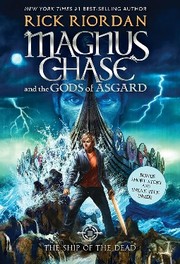
The Ship of the Dead
Magnus and his crew sail to the edges of the Norse worlds to stop Loki from launching Naglfar, the ship of the dead.
2,426-word summary · 11 min read

Starsight
Spensa Nightshade goes undercover aboard the Superiority space station Starsight to steal a hyperdrive, and finds a frightened bureaucracy where she expected…
2,568-word summary · 11 min read
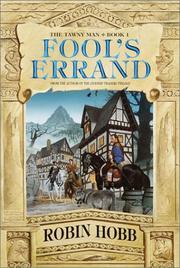
Fool's Errand
FitzChivalry Farseer has lived in exile for fifteen years. When Prince Dutiful vanishes before his betrothal, Fitz returns to Buckkeep to find him, with a wolf…
2,606-word summary · 12 min read

We Hunt the Flame
In a fractured Arabia-inspired world, a disguised huntress and a prince-assassin race to find a magic-restoring book and confront an ancient evil.
2,195-word summary · 10 min read
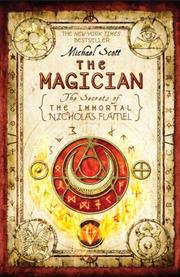
The Magician
Sophie and Josh flee to Paris with Nicholas Flamel, where John Dee, Machiavelli, and an awakened god close in on the missing pages of the Codex.
2,162-word summary · 10 min read
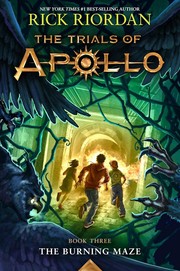
The Burning Maze
Apollo, still trapped in a mortal teenager's body, follows a dangerous prophecy through the Labyrinth with Meg and Grover as the Triumvirate's grip tightens.
2,248-word summary · 10 min read
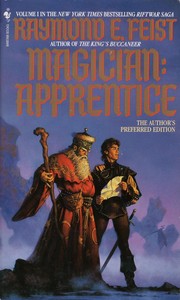
Magician: Apprentice
An orphan kitchen boy and a smith's son grow up in a frontier castle just as invaders from another world open a rift and begin a war that will change both of…
2,114-word summary · 9 min read
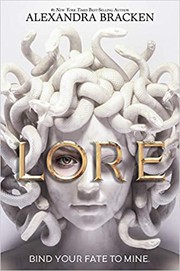
Lore
Lore Perseous, the last of a hunted bloodline, is pulled back into the Agon when a wounded Athena offers her revenge against the god who killed her family.
2,188-word summary · 10 min read
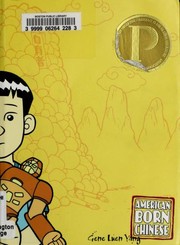
American Born Chinese
Three stories, a monkey king, a Chinese-American boy and a sitcom cousin, converge in a graphic novel about shame, assimilation and learning to accept yourself.
2,107-word summary · 9 min read
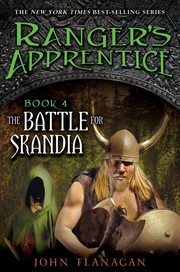
The Battle for Skandia
Will and Evanlyn are still hiding in the Skandian mountains when Halt and Horace arrive with word of a Temujai invasion that could roll on to Araluen next.
2,248-word summary · 10 min read
Switched
A Minnesota teenager who can make people obey her discovers she is a changeling troll princess, and the hidden kingdom she came from wants her back.
2,131-word summary · 9 min read