
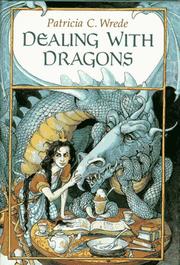
Dealing with Dragons
2,563-word summary 11 min read 212 pages in the book
- First published
- 1990
- Publisher
- Jane Yolen Books
- Pages
- 212
- ISBN
- 9780152229009
- Series
- Enchanted Forest Chronicles (#1)
Reading options
What's inside (10 sections)
A Very Proper Kingdom
The first thing Patricia C. Wrede tells you about Linderwall is that it is a large, prosperous, pleasant kingdom just east of the Mountains of Morning, where the climate is unremarkable and the knights keep their armor polished mainly for show. The second thing is that Cimorene hates it.
Cimorene is the youngest of seven daughters, sixteen years old, with black hair and a stubborn streak her family treats as a medical condition. Her sisters are beautiful and accomplished in the usual ways. Cimorene can fence, argue in Latin, has talked the court magician into teaching her magic, and makes a cherries jubilee that people remember. Each of these gets shut down as unladylike, from fencing to magic to Latin to cooking. "Nothing interesting seems to be proper," she says, which is the thesis of the book in one line.
Her parents' solution is an arranged marriage to Prince Therandil of Sathem-by-the-Mountains, who is golden-haired, blue-eyed, exceedingly handsome, and not much else. He can talk about tourneys and very little else. Cimorene protests. Her mother tells her she will marry him three weeks from Thursday and sends the wardrobe mistress to start on the bride clothes.
So Cimorene consults the frog in the garden pond. He is not an enchanted prince, though he has met a couple and picked up a few things. When Cimorene admits she has only tried talking, the frog tells her to run away. His directions are wonderfully specific: follow the road away from the mountains, pass the gold pavilion with the silver trees and emerald leaves, do not answer the kind voice calling from inside it, keep going until you reach a hovel, knock three times, snap your fingers, and go in.
Cimorene packs five clean handkerchiefs and her best crown, casts the one spell she remembers, and leaves. The pavilion nearly gets her. The hovel turns out to be the entrance to a cave full of dragons.
The Help Wanted Sign
Five dragons are waiting inside. Three are male with two stubby horns; one is female with three, one on each side and one in the middle; the last is too young to have decided. Woraug, a bright green dragon, suggests eating her and complains that no proper princess would come looking for dragons. Then Roxim, gray-green and given to sneezes that produce balls of fire, arrives late, goes through several of Cimorene's handkerchiefs, and decides she has sense. Kazul asks questions.
Cimorene offers herself as a dragon's princess. She can cook, she can organize, and she can conjugate Latin verbs. Kazul hires her on the spot, mostly because she likes cherries jubilee and has a library of Latin scrolls that needs cataloguing. Woraug is disgusted.
The job is bigger than Cimorene expected. Kazul's caves are an underground city of tunnels and caverns, smelling of smoke, dust, and cinnamon, with treasure rooms, a kitchen near the exit, a library, and three small rooms for Cimorene. She airs the place out, inventories the treasure, learns which rings are probably cursed, and starts on the library. She is happier than she has ever been. The work is real, the results are visible, and nobody tells her to stop.
Other princesses live in the same mountain. Keredwel of Raxwel is a stickler for procedure. Hallanna of Poranbuth is given to swooning. Alianora of Toure-on-Marsh is the youngest and the only one curious about how anything works. Cimorene feeds them tea and suggests, gently, that they could simply leave. They are horrified. Leaving without being rescued is not done. Alianora hangs back after the others go and asks to help with the library.
Then the knights start arriving. Therandil turns up at the end of the third week, limping, with a dusty helmet and a speech about how everyone expects him to rescue her. Cimorene sends him away. He comes back the next day, and the day after that. Morwen, the witch from the Enchanted Forest, suggests a sign at the turnoff: Road washed out, use alternate route. It will not stop anyone determined, but it will slow them down.
In the meantime, Cimorene learns how the mountain works. The dragons' ruler is called the King of the Dragons, and the title has nothing to do with sex. Kazul explains this patiently. Queen of the Dragons is a different, duller job. When the King dies, every adult dragon gathers at the Ford of Whispering Snakes and tries to carry Colin's Stone to the Vanishing Mountain. The stone is not especially heavy. It hums, and the hum grows stronger the farther you carry it, until most dragons have to drop it or shake apart. One dragon finds the hum pleasant. That dragon becomes King.
The wizards want the Caves of Fire and Night, which the dragons control. Zemenar, the Head Wizard of the Society of Wizards, comes to call with his son Antorell. They are smooth, polite, and obviously after something. Zemenar is reading Kazul's copy of the Historia Dracorum when Cimorene walks in, and he closes it a little too casually. Cimorene notices, because noticing is what she does.
Zemenar also tries to arrange a rescue. He makes a section of the mountain path vanish, then appears and offers to help Cimorene across. She works out that he is responsible, refuses to be grateful, and edges past him. He vanishes without smoke or noise.
The dragons and the wizards have an old agreement that lets the wizards use some caves. Cimorene does not trust them. Neither does Kazul, but Kazul is busy, and the King is old.
The Witch in the Enchanted Forest
Morwen is the best character in the book, and she is not the protagonist. She is a witch with ginger hair, rectangular glasses, a twiggy broom, and a cottage in the Enchanted Forest that is cleaner than any house has a right to be. Cats are everywhere, opinionated and numerous.
Morwen is practical in a way that makes magic look like household management. She lends dishes, recommends signs, and has no patience for dramatics. She is also the one who explains why wizards melt and why she does not.
Therandil, meanwhile, keeps turning up. One afternoon he opens a copper jar and lets out a jinn who announces that he must kill Cimorene and her paramour. Cimorene refuses to be killed with Therandil, whom she calls a nuisance. The jinn swore an oath that whoever freed him after three hundred years could choose the manner of his death. He has been in the jar for two hundred and seventeen, so he owes them three wishes, but he is pretending the death clause applies. Cimorene suggests he go back in for eighty-three years. Then they will die of old age and his oath will be fulfilled. He is delighted. Therandil wastes his wish on a promise to defeat a dragon and win a princess. Cimorene asks for powdered hens' teeth.
That is the book's method in miniature. Magic has rules. Rules have loopholes. The person who reads carefully and keeps her head wins.
A Spell with a Catch
Cimorene finds a fireproofing spell in Kazul's library, in an impossible book by a wizard named DeMontmorency. The ingredients are ridiculous: unicorn water, wolfsbane, hippopotamus oil, powdered hens' teeth, blue rose leaves, ebony, white eagle feathers. Cimorene and Alianora gather what they can and cast the spell in a star drawn on the cave floor. It works. They test it with candle flames.
The ingredients are also a lesson in how the book treats magic. It is a recipe, and recipes fail if you skip steps. Cimorene is good at recipes.
Cimorene and Alianora find Antorell in a hidden valley, stuffing purple leaves into a linen bag. The leaves are dragonsbane, which is poison to dragons. They gather some of the plant themselves, but Cimorene burns a few leaves while testing the spell, and Kazul gets a lungful of the smoke. She spends three days unconscious. Cimorene learns that dragons recover from almost anything if they survive the first five minutes.
The Stone Prince
Cimorene also finds a stone prince in the Caves of Fire and Night, a gray young man in gray clothes, lost and embarrassed. A soothsayer predicted he would do a great service for a king. He spent years preparing and watched his classmates pull swords from stones while he dithered. He ran away, tried to fetch the Water of Healing for a sick king, and grabbed the gold dipper instead of the tin one. Now he is stone, though still able to walk around, which is better than being a slab.
She parks him in a serving room and tells him to pretend to be a rock. At Roxim's cave, she learns that King Tokoz is dead. Someone put dragonsbane in his Turkish coffee, which is strong enough to hide the taste. Woraug is in charge of finding the poisoner. The trials are tomorrow.
The stone prince overhears Woraug and the wizards talking about the trials. That is how Cimorene learns the shape of the plot: Woraug wants to be King, the wizards want him to be King, and they have a way to make Colin's Stone easy for him to carry.
Antorell comes back. He corners Cimorene and Alianora in the cave and tries to blast the stone prince. Alianora throws a scrub bucket at him. He falls, the bucket empties over him, and he melts, protesting that he is a wizard and this is not fair.
The bucket held water, soap, and a little lemon juice to make it smell nicer. That is the whole trick. Wizards are undone by domestic cleanliness. It is a joke and a plot point, and the book keeps it consistent: the wizards' magic is impressive, and their weakness is ordinary. Zemenar later melts with the complaint that it is demeaning. He is right. That is the point.
The Trials
Kazul can barely fly, but every adult dragon is required to attend the trials. Cimorene, Alianora, and the stone prince use three black feathers: drop one, wish to be somewhere, and you are there. They first try to warn the dragons at the Ford of Whispering Snakes, but no one will listen to a princess and a stone prince. Morwen uses a mirror to find Zemenar and five wizards at a blackberry thicket, holding a spell over a black rock.
The final fight is six buckets of soapy water against five wizards. Cimorene throws, Alianora throws, the stone prince throws with more enthusiasm than aim. The wizards melt one by one, indignant to the end. Then Zemenar steps out, holds Morwen as a shield, and explains that the spell is nearly complete. Woraug is already flying toward the mountain with Colin's Stone.
The stone prince throws a bucket over both Morwen and Zemenar. Zemenar melts. Morwen does not. "Clean living," she says, and the stone prince explains: nobody who keeps a house that clean could melt in a bucket of soapsuds. Morwen then drops Cimorene's black pebble onto the wizards' enchanted rock. The spell breaks with a sound like popcorn. Woraug drops Colin's Stone, and the escort dragons catch it.
Woraug lands and attacks. He breathes fire, which the spell absorbs, though it scorches Cimorene's hem and Alianora's sleeves. He bites down on the stone prince and spits him out with four teeth. The escort dragon arrests everyone and marches them back to the ford.
The New King
Kazul has won. She picked up Colin's Stone and felt fine immediately; the stone heals the dragon it chooses. She is lying by the river when Cimorene arrives with the prisoners. Woraug blusters and calls the story nonsense. Cimorene tells it in order, with witnesses. The stone prince reports what he heard. Alianora mentions the tea-bag-like packet she saw Woraug carrying the night before Tokoz died. Morwen explains the spell and the black rock.
Woraug shrinks. It is not a spell anyone casts on him. It is what happens when a dragon stops acting like a dragon. He collapses into a warty toad with angry red eyes and hops away into the stones.
Kazul is crowned with a circlet of iron with six spikes. The dragons line up with coronation gifts. Alianora and the stone prince work out that he has already done his great service, to the King of the Dragons, and defeated Woraug, which entitles him to Woraug's princess. They are delighted. Morwen can change him back from stone, so they leave through the Caves of Fire and Night.
Cimorene assumes she is out of a job. The King does not need a princess. She waits up. Kazul comes home late, throws the crown across the cave, and tells Cimorene to stop calling her Your Majesty. Then she explains that she still needs cherries jubilee, the library catalogued, and the King's treasure vaults organized. If the title bothers Cimorene, they can call her the King's Cook and Librarian.
Cimorene picks the crown up off the floor. That is the ending: not a wedding, not a throne, but a job with a ridiculous title and a great deal of work attached. She thinks life with the dragons will be interesting and busy, and that goes a long way toward making her happy.
What Holds Up
The book is short, 212 pages in the 1990 Jane Yolen Books edition, and it moves. Wrede's comic set pieces are also plot hinges: the frog's directions, the jinn's oath, the fireproofing recipe, the bucket of soap. The jokes come from character and rules, which is why they work. Cimorene is not a chosen one. She is competent in a world that keeps telling her competence is unattractive, and the book lets her be right without making her a saint. Morwen is better still, because she stopped caring what anyone thinks.
Kirkus called it "Smoothly written and ingenious fantasy." It won the 1991 Minnesota Book Award for Fantasy and Science Fiction, appeared on ALA and School Library Journal best-of lists, and the series later reached NPR's 100 Best-Ever Teen Novels. None of that makes it deep. It is a caper, and it knows it.
The weaknesses are real. Zemenar is a sneering wizard in a robe, and Woraug is a sore loser with scales. The dragons' society is sketched just enough to support the jokes, not enough to bear much weight. The other princesses are caricatures, and the "not like other girls" beat has aged less gracefully than the soap. The romance is a joke about rescue conventions, and the ending ties off several threads in a hurry. Readers who want complicated politics or a proper love story will find it thin; readers who dislike whimsy will find it tiresome.
What remains is a very good comfort read about work. Cimorene does not run away to find herself. She runs away to find a job where her skills matter, and the job is mostly cooking, cleaning, cataloging, and managing other people's messes. The magic is a way of talking about competence, and the comedy is a way of talking about who gets taken seriously. That is a small idea, but it is handled with enough specificity and affection to earn its place.
FAQ
What age is Dealing with Dragons for?
It is a middle-grade novel, usually recommended for readers around eight to twelve. The humor and the practical heroine also make it a comfortable read for older readers.
Is Dealing with Dragons the first book in a series?
Yes. It is the first of four Enchanted Forest Chronicles books, followed by Searching for Dragons, Calling on Dragons, and Talking to Dragons.
Does Cimorene marry the prince?
No. She refuses the arranged marriage and chooses to stay with the dragons as the king's cook and librarian.
Similar books
More from Enchanted Forest Chronicles first, then related titles.
Nettle & Bone
Marra, a princess in a convent, leaves to save her abused sister, but first she must finish three impossible tasks: a bone dog, a nettle cloak, moonlight in a…
2,061-word summary · 9 min read
The Ship of the Dead
Magnus and his crew sail to the edges of the Norse worlds to stop Loki from launching Naglfar, the ship of the dead.
2,426-word summary · 11 min read
The Hammer of Thor
Magnus and Sam chase Thor's stolen hammer to a giant wedding heist, with Alex Fierro joining Floor Nineteen as Loki bargains and Ragnarok stirs.
3,068-word summary · 14 min read

The Dark Prophecy
Mortal Apollo and Leo cross America to free the Oracle as Commodus hunts them.
2,368-word summary · 11 min read

The Hidden Oracle
Apollo lands as a teen in New York with no powers and must earn his way back with Meg and demigods.
1,933-word summary · 9 min read
Eldest
Eragon trains with Oromis in Ellesmera while Roran defends Carvahall and Nasuada leads the Varden toward war.
2,652-word summary · 12 min read
Eragon
Paolini's Eragon retold: a farm boy, a blue stone, Saphira the dragon, and the road to the Varden.
1,996-word summary · 9 min read
The Thief
A boastful young thief is pulled from a prison to steal a legendary stone for the king's magus, and the story he tells about himself is not the whole story.
2,514-word summary · 11 min read

Inkdeath
The final Inkworld novel sends Mo into the land of the dead, leaves Meggie choosing between two boys, and ends the Adderhead's immortality with three written…
2,062-word summary · 9 min read

Bone, Vol. 1: Out from Boneville
Three cartoon cousins are run out of Boneville, separated by locusts, and dropped into a valley where rat creatures and an old grudge are waiting.
2,155-word summary · 10 min read

Vow of Thieves
Kazi and Jase return to Tor's Watch to find it occupied, and their marriage is tested by captivity, betrayal, and a war for the town of Hell's Mouth.
2,059-word summary · 9 min read

The Icebound Land
Captured and enslaved in Skandia, Will fights a drug that erases him while Halt and Horace cut a bloody road through Gallica to bring him home.
2,088-word summary · 9 min read
Secrets of the Dragon Sanctuary
Kendra is replaced by a plant copy and held by the Society, while Seth steals a unicorn horn so the family can enter a dragon sanctuary.
2,590-word summary · 12 min read

Lioness Rampant
Alanna searches for the Dominion Jewel with the Shang Dragon, then returns to Tortall to face Duke Roger at Jonathan's coronation.
2,478-word summary · 11 min read

Archenemies
Nova steals for the Anarchists while Adrian hides his Sentinel identity, and a serum that erases prodigy powers puts them both at risk.
2,485-word summary · 11 min read
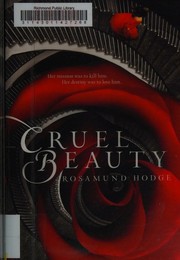
Cruel Beauty
A girl raised to kill the demon prince who rules her cursed land instead falls in love with him, in a retelling that mixes Beauty and the Beast with Bluebeard…
2,669-word summary · 12 min read

The Golem's Eye
Two years after The Amulet of Samarkand, Nathaniel is a rising bureaucrat, Bartimaeus is his unwilling servant again, and something made of clay is tearing…
2,299-word summary · 10 min read

Heist Society
A teenage art thief gets expelled from boarding school, then has two weeks to steal five paintings back from a London museum and clear her father.
2,781-word summary · 12 min read
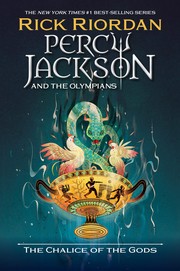
The Chalice of the Gods
Percy needs three recommendation letters from three gods to apply to college, so his first quest is recovering a stolen chalice from the god of old age.
2,106-word summary · 9 min read
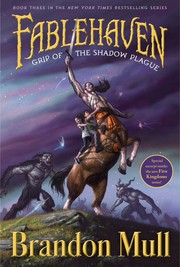
Grip of the Shadow Plague
A plague turns Fablehaven's creatures of light into shadows while Kendra hunts an artifact in Arizona and Seth races to find the cause.
2,131-word summary · 9 min read

The Rose & the Dagger
Shahrzad is pulled from her Caliph husband and left in a desert camp of rebels, needing to break his curse and end a war before it ends her.
2,520-word summary · 11 min read

The Queen of the Tearling
Nineteen-year-old Kelsea leaves the woods to take her throne, ends a shipment of human captives, and draws the Red Queen's revenge.
2,357-word summary · 10 min read

We Hunt the Flame
In a fractured Arabia-inspired world, a disguised huntress and a prince-assassin race to find a magic-restoring book and confront an ancient evil.
2,195-word summary · 10 min read
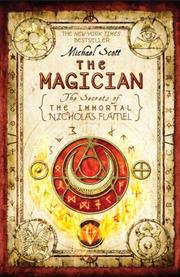
The Magician
Sophie and Josh flee to Paris with Nicholas Flamel, where John Dee, Machiavelli, and an awakened god close in on the missing pages of the Codex.
2,162-word summary · 10 min read

The Burning Maze
Apollo, still trapped in a mortal teenager's body, follows a dangerous prophecy through the Labyrinth with Meg and Grover as the Triumvirate's grip tightens.
2,248-word summary · 10 min read

Lore
Lore Perseous, the last of a hunted bloodline, is pulled back into the Agon when a wounded Athena offers her revenge against the god who killed her family.
2,188-word summary · 10 min read
In the Hand of the Goddess
Alanna, still disguised as a boy, survives war, court plots, and a death duel as the Goddess's chosen warrior in the second Song of the Lioness book.
2,018-word summary · 9 min read
The False Prince
A nobleman buys four orphans and tells them only one will survive to impersonate the missing prince. The narrator, a defiant thief named Sage, has other plans.
2,044-word summary · 9 min read

The Battle for Skandia
Will and Evanlyn are still hiding in the Skandian mountains when Halt and Horace arrive with word of a Temujai invasion that could roll on to Araluen next.
2,248-word summary · 10 min read

The Bane Chronicles
Eleven stories across five centuries follow Magnus Bane from a ban in Peru to his first date with Alec in this illustrated Shadowhunter companion.
2,470-word summary · 11 min read