

Dance Dance Dance
2,407-word summary 11 min read 400 pages in the book
- First published
- 1988
- Publisher
- Vintage
- Pages
- 400
- ISBN
- 9780099448761
- Series
- The Rat (#4)
Reading options
What's inside (10 sections)
I started this one on a Sunday afternoon in a laundromat, which turned out to be the right place for it. The machines thumped, the fluorescent lights buzzed, and a man in a folding chair stared at the wall. Nobody was going anywhere for forty minutes. That is roughly the condition of the narrator in Dance Dance Dance for four hundred pages.
I had read A Wild Sheep Chase years earlier and remembered almost nothing except a sheep with a star on its back and a woman with beautiful ears. This novel picks up the same unnamed man four and a half years later, but you do not need the earlier book to follow it. It helps to know that he once stayed at a rundown hotel in Sapporo with a woman named Kiki, and that she left him without explanation. Everything else you can pick up as you go.
The hotel has been replaced
The narrator is thirty-four, divorced, and scratching out a living as a freelance writer in Tokyo. It is 1983. He is not unhappy in any dramatic way. He drinks, he listens to old records, he takes assignments he does not care about, and he dreams about the Dolphin Hotel. In the dream the hotel is narrow, like a covered bridge stretching through time, and someone is crying.
So he goes back to Sapporo in March. The old Dolphin is gone. In its place is a twenty-six-story tower of glass and steel called l'Hôtel Dauphin, with flags, doormen, a lounge on the top floor, and rates that have nothing to do with the old place. He checks in anyway. He asks the staff what happened to the old owner and gets the runaround. Then he finds an old magazine article about the deal, and a former colleague confirms the rest. The owner was pushed out by a redevelopment scheme involving paper companies, a conglomerate, politicians, and yakuza. He took a payoff and disappeared. Nobody knows where he went. The hotel was bought, torn down, and rebuilt as the flagship of a new chain.
This is the first thing the book does well. It makes redevelopment feel like a personal loss. The old Dolphin was a sad place, a hotel "conceptually sorry," as the narrator puts it, with a fat maid and a wheezing elevator and an owner missing two fingers. It was also the last place where Kiki was with him. The new hotel is clean and efficient and has no memory. Going back is not possible, even when you can afford the room.
The sixteenth floor
Yumiyoshi has her own story. One night, on the staff elevator, she pressed sixteen and the doors opened onto the wrong place. The corridor was dark, the air smelled of mold, and the carpet was worn through. Something approached her in the dark, something she will not describe. She ran. The manager told her to keep quiet. When she and two coworkers went back up, the floor was normal: lights, music, the usual staff lounge.
The narrator goes up to sixteen. It is normal. He goes again. Still normal. Then one night he steps out of the elevator and the corridor is the old one. He walks down it, finds a door, and inside is a room full of books about sheep in Hokkaido, lit by candles. The Sheep Man is there, wearing his fleece and mask, and his speech comes out in Birnbaum's translation as one unbroken word: "Yougottadance."
I should say something about that. The Sheep Man is not a wise old mentor. He is tired and shrunken. His answers are vague. He says this place is a knot tied to everything, that he does not know much beyond his room, that the place is big and dark. But he gives the narrator the only instruction the novel has: dance. Keep moving. Do not stop to ask why. "Dance so it all keeps spinning."
It is easy to make fun of this. It sounds like a bumper sticker. In context it is more like advice from someone who is running out of time. The Sheep Man is not promising that dancing will fix anything. He is saying that standing still is worse.
Yuki and the snow
Yumiyoshi asks the narrator to escort a thirteen-year-old girl to Tokyo. Her name is Yuki, which means snow. Her mother is Ame, a famous photographer who is in Kathmandu and has forgotten about her daughter. Her father is Hiraku Makimura, a novelist whose name is an anagram of Haruki Murakami, which is the kind of joke the book allows itself. Yuki smokes, stays up late, and talks like someone who has been left alone too often. She also has a kind of second sight. She knows things she should not know.
Their flight is delayed by a blizzard. They rent a car and drive around Sapporo in the snow, play her cassettes, and talk. It is one of the best sections in the book because nothing supernatural happens. A thirty-four-year-old man and a thirteen-year-old girl are stuck together, and neither one knows how to be a parent or a child. He is careful with her. She is rude to him. By the end they trust each other, which is not the same as understanding each other.
Yuki is the character who keeps the novel from floating away. She is funny and harsh. Sometimes she is cruel. She is also the one who later says she saw Gotanda strangle Kiki and bury her in the mountains. The book never explains how she knows. It does not have to. She is the witness who makes the reader uneasy.
Gotanda and Kiki
Before he leaves Sapporo, the narrator ducks into a movie theater and sees Kiki in a film. She appears in one scene, in bed with a film star named Gotanda, and then vanishes from the picture. Back in Tokyo, Gotanda turns out to be the narrator's old classmate from junior high, now a famous film star who seems to have everything. He drives a Maserati, lives in a condo in Azabu, and owes more money than he can explain. He and the narrator have three things in common: science lab, divorce, and Kiki.
Gotanda tells him that he met Kiki at a club, slept with her, and then she disappeared. He does not know where she went. Later, in a bar, the narrator asks him if he killed her. Gotanda does not say no. He says he does not remember. He says he has gaps, that he can stand outside himself and watch himself do things. He says he may have buried her in the mountains. He says he cannot check because there is no body, no shovel, no dirt on his trousers.
This is the strongest material in the novel and also the most frustrating. Murakami is not interested in solving her disappearance. He is interested in the way a person can become a stranger to himself. Gotanda is a man who has everything he was supposed to want and cannot feel any of it. His fame is a costume. His car is a costume. Even his confession sounds like a script he is trying out.
Kiki, meanwhile, refuses to stay dead. The narrator sees her in Honolulu, and she leads him into a building that does not make sense. The book leaves the truth hanging: a murder, a disappearance, a ghost, or a story two people need to tell themselves. I do not think the ambiguity is a dodge. It is the point. Kiki was always someone who came and went. She had always been good at leaving.
Mei and the police
There is a second woman, Mei, who works at the same club as Kiki. The narrator sleeps with her. She is funny and direct and seems to like him. Then she is found strangled with a stocking in a hotel room in Akasaka. The police pick him up and question him for three days. Two detectives do most of the work, and he nicknames them Fisherman and Bookish because he cannot be bothered to learn their real names.
This section is the novel's noir engine, and it is also where the book is weakest. Mei exists to be a corpse. She has a little personality, enough to make her death feel like a waste, but not enough to make her a person the reader mourns. The police procedural is not very procedural. The narrator's alibi is that he was home reading, which is exactly the kind of alibi a lonely man would have. Yuki gets her father's lawyer to help, and the whole thing blows over. The murder is never solved.
I understand what Murakami is doing. The narrator is a man who drifts into other people's lives and then has to live with the consequences. But the women in this book are often functions: Kiki is the lost love, Mei is the body, Yumiyoshi is the reward. Yuki is the exception, and Ame is interesting mostly because she is absent. It is a fair criticism to say that the novel is more interested in the narrator's sadness than in the women who make it possible.
Hawaii and the room of bones
The narrator takes Yuki to Hawaii to see Ame. They stay at a hotel in Honolulu. Ame is vague and beautiful. She is not especially maternal. Her boyfriend is Dick North, a one-armed American poet who recites Robert Frost, shops for groceries, and runs the house. He is kind to Yuki in a way that Ame is not. He is also the most obviously doomed person in the book, which is saying something.
One evening the narrator sees Kiki on a street downtown. He follows her into an office building, up to the eighth floor, and into an attic room. The room is dark and smells of dust and disuse. There are six skeletons. One is lying in a bed, and its left arm is missing from the shoulder. One sits in front of a television. One is bent over a table still set with dishes. The other three are simply there, in the gloom, and the narrator does not know what he is looking at. Neither do we.
The missing arm points to Dick North. He dies a little later, hit by a car while shopping. The narrator flies to Japan with Dick's suitcase and delivers it to his house in Setagaya, where the wake is already underway. It is a small, sad scene, and it is one of the few places where the book lets a character grieve without explaining the grief.
The six skeletons are the novel's central image. They are not explained. The sixth is never identified. The narrator wonders if it is the Sheep Man, or someone else, or himself. The book does not answer. I have read the ending twice and I still do not know. I like that more than I expected to.
The car in the bay
Gotanda's death is not a surprise, but it is still a shock. After the bar, he drives the Maserati into Tokyo Bay. The car and the body are dredged up the next afternoon. The police call it suicide. The narrator spends a long time afterward feeling as if he killed him, going over the conversation, wondering what he should have said.
The scene is not melodramatic. That is what makes it work. Gotanda has been telling the narrator all along that he is tired, that his life is a performance, that he cannot find the person underneath. The narrator has been listening, but listening is not the same as saving someone. Murakami does not pretend otherwise.
Kiki's last appearance is stranger and gentler. She tells the narrator that Gotanda thinks he killed her, and that she is not dead. She says she disappeared. She says she is in another world. She does not explain how or why. The narrator accepts it, because by this point he has seen too much to argue.
The room in Sapporo
In June the narrator returns to Sapporo. He sleeps with Yumiyoshi at three in the morning. He tells her there is nothing left for him in Tokyo and that he could move up here and look for work. There is no grand romantic gesture in it. He is choosing a place to stay.
That night, the hotel changes. The corridor outside his room becomes the old corridor, the carpet worn, the walls stained. Yumiyoshi is with him. They walk to the Sheep Man's room, and the Sheep Man is gone. The room is empty except for the books and the candles. Then Yumiyoshi passes through the wall. He follows her, because he loves her and because he cannot lose another person. He passes through a pocket of air and then wakes up.
Yumiyoshi is sitting on the sofa, dressed, watching him. She says he was dreaming. He is crying. He holds her and cries for everything he has lost and everything he will lose. The book ends at dawn, with a man holding a woman who is real, or real enough. He knows he will stay.
I do not think Dance Dance Dance is a perfect novel. It is baggy. The redevelopment subplot is set up and then dropped. The police section drags. The women are thin in ways that are hard to defend. The ending explains less than most readers will want.
But the book has a rhythm that stays with me. The narrator keeps returning to the same places: the hotel, the elevator, the corridor, the woman who disappears. Each time the place is a little different. Each time he is a little more willing to follow. The title describes what he does when the music is playing, not what it does for him.
The Sheep Man's advice is easy to mock and hard to follow. Do not think why. Keep the step. Loosen what you bolted down. The narrator spends most of the book trying to bolt things down: the past, the hotel, Kiki, his own idea of himself. The dancing starts when he lets go.
I finished the last page late at night and sat for a while without doing anything. Then I put on a record and washed the dishes.
FAQ
Is Dance Dance Dance a sequel to A Wild Sheep Chase?
Yes. It follows the same unnamed narrator four and a half years after the earlier book, and it is fourth in Murakami's Rat series, though it can be read on its own.
What happens to Kiki in Dance Dance Dance?
Her fate stays ambiguous. Gotanda believes he may have killed her, Yuki claims she saw him do it, and Kiki later tells the narrator that she is not dead, only disappeared.
Is Dance Dance Dance a murder mystery?
Only partly. Mei's murder and Kiki's disappearance drive the plot, but the novel leaves both unresolved and is more concerned with grief, memory, and the narrator's attempts to reconnect.
Similar books
More from The Rat first, then related titles.

A Wild Sheep Chase
An ad man chases a starred sheep to Hokkaido for a dying Boss while Rat hides with the Sheep Man.
2,579-word summary · 11 min read

The Memory Police
On an unnamed island, ordinary things keep vanishing from memory, and a novelist hides her editor from the police who make sure the vanished stay forgotten.
2,440-word summary · 11 min read

South of the Border, West of the Sun
A married Tokyo bar owner reunites with his lost childhood sweetheart and must choose between steady family life and a haunting first love.
2,844-word summary · 13 min read
Hard-Boiled Wonderland and the End of the World
A Tokyo encoder who rents out his subconscious and a newcomer in a walled Town turn out to share one fate about memory.
2,406-word summary · 11 min read

Sputnik Sweetheart
K loves Sumire, Sumire loves Miu, and then Sumire vanishes from a Greek island into Murakami's quiet other side.
2,055-word summary · 9 min read
Colorless Tsukuru Tazaki and His Years of Pilgrimage
At thirty six, Tsukuru revisits four old friends to learn why they cut him off at twenty.
2,765-word summary · 12 min read
The Wind-Up Bird Chronicle
An unemployed Tokyo man hunts a lost cat, then his missing wife, and slips from quiet suburbs into wells and wartime memory.
3,344-word summary · 15 min read

1Q84
Aomame slips into a Tokyo with two moons while Tengo rewrites a strange girl's novel, and their childhood bond pulls tight.
3,056-word summary · 14 min read
Kafka on the Shore
Fifteen year old Kafka Tamura flees Tokyo while old Nakata, who talks to cats, drifts toward the same library town in Shikoku in parallel.
2,496-word summary · 11 min read

Men Without Women
Seven stories about men living after women leave, die, or stay distant.
2,673-word summary · 12 min read

After Dark
On one night in Tokyo, student Mari reads in a diner and talks with Takahashi while her sister Eri sleeps, as a love hotel incident and night workers cross…
2,986-word summary · 13 min read
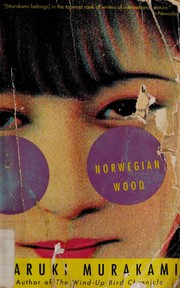
Norwegian Wood
Toru recalls 1969 Tokyo, torn between fragile Naoko and lively Midori after a friend's suicide.
2,051-word summary · 9 min read

The Bone Clocks
A teenage runaway, a Cambridge con artist, a war reporter and a dying novelist circle a hidden war between immortals across sixty years, with Holly Sykes at…
2,125-word summary · 9 min read

I Who Have Never Known Men
Forty women in a cage, one child who remembers nothing, and a nearly empty world above the bunker. Harpman's quiet, unexplained dystopia.
2,025-word summary · 9 min read

And Every Morning the Way Home Gets Longer and Longer
An elderly grandfather, his son, and his grandson share memories and fears as the old man's mind begins to fade, in a short novel about grief and love.
2,078-word summary · 9 min read

The Tiger's Wife
A young doctor in a war-scarred Balkan country chases the stories her grandfather left behind, including a deathless man and a deaf girl who loved an escaped…
2,232-word summary · 10 min read

Kitchen
Orphan Mikage finds home in a kitchen with Yuichi and Eriko after loss.
2,597-word summary · 12 min read
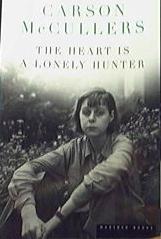
The Heart is a Lonely Hunter
A deaf man becomes the quiet center for lonely souls in a small Georgia mill town.
2,000-word summary · 9 min read

The Island of Missing Trees
A talking fig links 1970s Cyprus lovers Kostas and Defne with their grieving London daughter Ada years later.
3,172-word summary · 14 min read
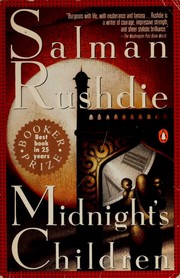
Midnight's Children
Saleem Sinai, born at India's independence midnight, narrates his family's saga as his life mirrors the new nation's history.
2,734-word summary · 12 min read
A Tale for the Time Being
A diary by bullied Tokyo teen Nao washes up in Canada, pulling novelist Ruth into her family past.
2,148-word summary · 10 min read
Departure(s)
Barnes mixes memoir and invention as old writer Julian revisits Stephen and Jean, lost love, a loyal dog, and last goodbyes.
2,133-word summary · 9 min read
The Sense of an Ending
Retired Tony Webster inherits money and a diary from an old girlfriend's mother, forcing him to rethink his youth, a cruel letter, and a friend's death.
2,451-word summary · 11 min read

Everything is Illuminated
Jonathan Safran Foer travels to Ukraine with translator Alex to find Trachimbrod and Augustine, while old shtetl chapters retell Brod and Kolker with humor and…
2,616-word summary · 12 min read

Commonwealth
An uninvited kiss at a christening breaks two marriages, and six stepsiblings share wild summers until loss and a novel pull them apart.
2,348-word summary · 10 min read

The Brief Wondrous Life of Oscar Wao
Oscar loves sci-fi and wants love, while Yunior traces family curses back through Trujillo terror.
2,056-word summary · 9 min read
The Remains of the Day
Stevens, the perfect English butler, drives west in 1956 and looks back on Darlington Hall, Miss Kenton, and a life spent serving.
2,971-word summary · 13 min read

Piranesi
Piranesi lives alone in an endless House of statues and tides until chalk messages hint at another visitor and a buried past.
2,992-word summary · 13 min read

Convenience Store Woman
At 36, Keiko has worked at a Tokyo convenience store for 18 years and loves it. Family pressure to marry pushes her toward a strange fake partnership.
2,989-word summary · 13 min read

Love in the Time of Cholera
Florentino waits fifty years for Fermina: youth letters, a marriage to Urbino, hundreds of affairs, and a river trip where old love gets a last hearing.
2,204-word summary · 10 min read