
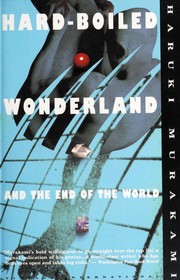
Hard-Boiled Wonderland and the End of the World
2,406-word summary 11 min read 416 pages in the book
- First published
- 1985
- Publisher
- Vintage
- Pages
- 416
- ISBN
- 9780679743460
- Original title
- Sekai no Owari to Hādo-Boirudo Wandārando
Reading options
What's inside (8 sections)
I put off Hard-Boiled Wonderland and the End of the World for years because the title made it sound like two books glued together. A friend who loves Murakami kept pushing it, saying it was the strange one from the eighties that explains all the later ones. I finally read it on a slow week in autumn, a few chapters a night, and the back and forth structure started to feel normal by the third evening.
Haruki Murakami first published this novel in Japan in June 1985 as Sekai no Owari to Hado-Boirudo Wandarando with Shinchosha, and it won the Tanizaki Prize that same year. The English translation by Alfred Birnbaum came out in September 1991 from Kodansha International in a 400 page hardcover. This post cites the standard Vintage paperback, published March 2 1993, which runs 416 pages with ISBN 9780679743460. A new and fuller English version by Jay Rubin arrived in December 2024, so readers now have a choice, but the Birnbaum text is still the one most people in the US have read.
The shape is simple once you see it. Odd chapters follow a 35 year old data worker in near future Tokyo. Even chapters follow a newcomer in a walled Town where unicorns die in winter. The Tokyo chapters use a cooler and more formal voice. The Town chapters are written in the present tense, which gives them a slower and more dreamlike pull. They look separate for a long time. They are not.
Why I kept putting this one off
I thought alternating worlds would feel like homework. With some books that split in two, I rush one half and skim the other. Here the Tokyo half pulled me first because it is funny and physical. Food, whiskey, suits, elevators, sewers, thugs at the door. The Town half felt quiet at first, almost too still after Tokyo noise. Then around page one hundred the quiet chapters started to worry me more than the loud ones.
Murakami wrote this before Norwegian Wood made him famous in Japan, and you can feel him trying big things without smoothing the edges. The Tokyo narrator talks about American movies and jazz and cooking with the ease of a man who lives alone and has built small rituals to cover loneliness. The Town narrator notices light, water, walls, paper, breath. Both men are lonely in a way that felt familiar from other Murakami books I had read, but here the loneliness has a mechanism behind it. That kept me going when the plot turned odd.
If you have only read the later Murakami, the tone here may surprise you. It is broader and more comic in Tokyo, sadder and sparer in the Town. Some jokes about bodies and appetite have aged badly. Some images from the Town have stayed fresh for forty years. I finished it unsure I had solved it, but sure I had been somewhere.
The Calcutec and the old man's lab
The Tokyo narrator is a Calcutec, which means he processes and locks data with his own subconscious. He works for the System, a large official outfit that guards information. Against the System stands the Factory, with its own data thieves called Semiotecs. The narrator tells us many Calcutecs end up working for both sides over time. He is 35, divorced, living in a neat Tokyo apartment. He cooks spaghetti with care. He keeps whiskey he likes. He follows dress codes. He does not think of himself as brave.
A job brings him to an old scientist hidden in the sewers under Tokyo. The lab is reached by elevator and damp tunnels, with a noise cancelling setup and a guard system against the INKlings, short for Infra-Nocturnal Kappa, pale sewer dwellers who catch people and hold them in water before eating them. The old man is brilliant and scattered. He studies sound removal. He shows the narrator a unicorn skull and plays recorded sounds. He asks the narrator to shuffle a set of numbers through his head, which means letting the subconscious scramble data in a way no computer can trace.
The narrator does the job and goes home, but home stops being safe. Two thugs called Junior and Big Boy break in, wreck the apartment, and cut him across the belly in a way meant to scare rather than kill. He gets help from a young woman at the library, always hungry, who helps him look up unicorns. He also deals with the old man's granddaughter, seventeen and sharp tongued, who wears bright clothes and speaks bluntly and knows the sewer paths. She moves into his place for a stretch after the attack, mostly to watch him and to stay near the work.
What I enjoyed here was the texture. Train rides. Canned food. How to clean a cut. How to tip a driver. How to act calm when two large men are sitting in your living room. Murakami gives the tradecraft of ordinary life the same weight as the science fiction idea. The shuffling process itself stays vague on purpose. You do not get diagrams. You get a headache, a thirst, a strange calm, and a password phrase that will matter later. The phrase is the end of the world.
The turn comes when the old man admits what the procedure did. The narrator's brain was altered in a lasting way. A separate inner place has been shaped inside him. He has about a day and a half of normal mind left before his outer awareness fades. To others it will look instant. To him it will feel long. He can spend the last hours as he chooses, but he cannot undo the change.
The Town, the Gatekeeper, and the Library
The Town chapters start with arrival. A young man comes to a high wall with a gate. The Gatekeeper takes his shadow. In this place no one keeps a shadow. Shadows live apart in a yard and weaken as winter comes. If your shadow dies, the last active part of your mind goes with it. The newcomer is given a room, a coat, boots, simple food, and a job.
His job is Dreamreader. Each evening he goes to the Library and reads old dreams from unicorn skulls. The skulls sit on shelves. He touches them, warms them with his hands, and lets images rise. The Librarian helps him. She is quiet, polite, distant. She says she has no mind of her own, though her mother did. She keeps the room in order and walks him through the method. He starts to care for her in a careful way, not with big speeches but with attention to her hands and her habits.
Around them the Town runs on rules. Beasts like large unicorns drift in and out through the gate to pasture. Workers bring them in before cold nights. Many die in winter and are burned or buried by the Gatekeeper with help from shadows. A Colonel who lives next door offers soup and advice. A Caretaker lives out in the Woods near the Power Station, plays a small accordion, and remembers more than Town people should. Music is rare in the Town. Maps show a wall with no break, a river, a gate, woods to the south and east, a library near the center. Days pass with cleaning, walking, meals, reading.
My pace slowed here in a good way. I started to notice small wrongnesses. Why no one argues. Why no one leaves. Why the Librarian cannot recall songs. Why the skulls feel warm. The newcomer remembers almost nothing of his life before, but his shadow does. When they meet in the yard, the shadow talks about paper clips and movies and streets, small concrete things that sound like Tokyo. The shadow begs him to plan an escape before winter ends the chance.
How the two stories lock together
About halfway through, the link stops being a guess. The Town is the inner place built inside the Calcutec. The password he used in Tokyo points straight at it. The unicorn skull in the lab matches the skulls in the Library. The old man's editing work put a story inside the narrator's head and then let that story grow its own weather.
This is where rereading earlier pages pays off. A girl who seems familiar in Tokyo has an echo in the Town. A song that will not leave the Tokyo narrator alone has a missing twin in a place with no songs. The System and the Factory fight over data, but the real fight is over who gets to keep an inner life. The old man wanted to study how minds hold images. The System wanted a lock no thief could pick. The narrator wanted rent money and a quiet apartment. All three got more than they asked for.
The Tokyo plot keeps moving while the Town plot deepens. The narrator and the granddaughter go back down into the sewers to retrieve material and to avoid the thugs. The INKlings press closer when the power fails. The hungry library girl finds references about unicorns that point to old beliefs about reading memory from bone. None of this arrives as a lecture. It comes in pieces between meals and jokes and repairs to a wrecked flat. I had to accept some soft spots in logic. How fast the thugs find people. How easily doors open. How much the old man forgets to mention until late. The book trades tight plotting for pressure. Time runs out in Tokyo while time pools in the Town.
One passage stayed with me. The old man explains that the end will feel long from inside. That line changed how I read the Town chapters. Walks that had felt slow started to feel kind, as if the narrator were being given room to look around before night. Meals, snow, wool, soup, lamps. Murakami writes those small comforts with care, and they land harder once you know the clock.
The choice at the edge
In Tokyo the last day is plain and sad. The narrator settles bills, eats what he wants, listens to what he wants, sees the granddaughter and the library girl, tries to act normal while knowing normal is ending. There is no cure to chase in the final hours, no hidden switch. The old man has left for Finland, or says he will, which removes the one person who might explain more. The thugs fade because the data fight no longer needs this particular head. What is left is a man deciding how to spend an evening.
In the Town the escape plan reaches its point. The shadow has mapped a route, saved strength, watched the river and the gate. The Dreamreader means to go with him. He has gathered what he knows about the Librarian's hidden mind and about the skulls. He believes leaving will save both of them from becoming empty keepers of a quiet place.
Then he changes his mind at the edge.
He lets the shadow go alone back to the world of noise and pain and music. He stays in the Town with the Librarian and the winter beasts and the Library shelves. Readers argue about what this means, and the book lets them. One way to see it is that he chooses peace over self, a calm life without ache. Another way is that he accepts responsibility for the minds left in skulls, even if that duty costs him his past. I read it as both. He pities the Town enough to stay and fears the outer world enough not to return. The shadow carries memory out. The body keeps habit inside. Neither half gets a clean win.
I found the last Town pages moving without quite understanding them, which seems to be the aim. Snow falls. Work continues. A meal is shared. The wall stands. The man who stays does not claim he is happy. He claims he is needed where he is.
What drags and who should try it
This book is long in the middle. The sewer trips repeat. The thug scenes play broad, closer to a comic than a threat after the first break in. Some Tokyo banter about women's bodies reads stale now. The seventeen year old granddaughter is written as both child and tease, and the hungry library girl exists mostly to eat, search, and share a bed for two days. Murakami does this kind of writing often in his early work, and here it weakens people who should feel more central. If that pattern bothers you in his other novels, it will bother you here.
The Town can also test patience. Whole chapters pass with walking, cleaning skulls, eating soup, watching beasts. I came to like that rhythm, but a reader who wants answers may feel the book stalls while Tokyo burns. The translation adds another wrinkle. Birnbaum's English cuts and reshapes in places to keep pace, which helps the jokes and hurts some links. Rubin's 2024 version restores more, so curious readers may want to compare. For this summary I stayed with the Vintage Birnbaum text most US readers know.
Still, the core idea holds. A man who sells his head for a living must live inside what he sold. A quiet town that promises calm asks you to pay with memory and love. Murakami does not preach about which price is right. He shows a man paying in both places at once, cooking dinner in one while reading skulls in the other, until the two dinners become one table.
Try it if you like parallel stories that meet late, if you liked the night streets in After Dark or the wells and hallways in The Wind-Up Bird Chronicle, if you want science fiction that cares more about mood than machines. Skip it for now if you need firm closure, if alternating chapters annoy you, if you want the science to hold like a puzzle box. For me the takeaway was plain. Minds keep what we feed them. Feed them only work and noise, and they build a walled town to rest in. That rest looks like peace from outside. From inside it looks like winter coming on, and someone you half remember waiting in a library to help you read what you lost.
FAQ
When was Hard-Boiled Wonderland and the End of the World published?
It first appeared in Japan in June 1985 with Shinchosha as Sekai no Owari to Hado-Boirudo Wandarando and won the Tanizaki Prize. Alfred Birnbaum translated it into English for Kodansha International in 1991, and the Vintage paperback cited here runs 416 pages with ISBN 9780679743460.
Do the two stories connect?
Yes. The walled Town is the Calcutec inner world shaped by brain editing, with the password end of the world as the key. The book alternates chapters until the Tokyo worker fades and the Dreamreader must decide whether to leave.
Which translation should I read?
The Birnbaum version from 1991 is the standard text in the Vintage edition cited here. Jay Rubin published a new fuller translation in December 2024, which is worth picking if you want restored passages.
Similar books
Kafka on the Shore
Fifteen year old Kafka Tamura flees Tokyo while old Nakata, who talks to cats, drifts toward the same library town in Shikoku in parallel.
2,496-word summary · 11 min read

The Memory Police
On an unnamed island, ordinary things keep vanishing from memory, and a novelist hides her editor from the police who make sure the vanished stay forgotten.
2,440-word summary · 11 min read
Dance Dance Dance
A divorced Tokyo writer returns to a Sapporo hotel that has been rebuilt, then follows a woman who may be a ghost and a teenage girl through a mystery about…
2,407-word summary · 11 min read
A Wild Sheep Chase
An ad man chases a starred sheep to Hokkaido for a dying Boss while Rat hides with the Sheep Man.
2,579-word summary · 11 min read

Sputnik Sweetheart
K loves Sumire, Sumire loves Miu, and then Sumire vanishes from a Greek island into Murakami's quiet other side.
2,055-word summary · 9 min read
The Wind-Up Bird Chronicle
An unemployed Tokyo man hunts a lost cat, then his missing wife, and slips from quiet suburbs into wells and wartime memory.
3,344-word summary · 15 min read
1Q84
Aomame slips into a Tokyo with two moons while Tengo rewrites a strange girl's novel, and their childhood bond pulls tight.
3,056-word summary · 14 min read

The Bone Clocks
A teenage runaway, a Cambridge con artist, a war reporter and a dying novelist circle a hidden war between immortals across sixty years, with Holly Sykes at…
2,125-word summary · 9 min read
Piranesi
Piranesi lives alone in an endless House of statues and tides until chalk messages hint at another visitor and a buried past.
2,992-word summary · 13 min read
Men Without Women
Seven stories about men living after women leave, die, or stay distant.
2,673-word summary · 12 min read
South of the Border, West of the Sun
A married Tokyo bar owner reunites with his lost childhood sweetheart and must choose between steady family life and a haunting first love.
2,844-word summary · 13 min read
After Dark
On one night in Tokyo, student Mari reads in a diner and talks with Takahashi while her sister Eri sleeps, as a love hotel incident and night workers cross…
2,986-word summary · 13 min read
Colorless Tsukuru Tazaki and His Years of Pilgrimage
At thirty six, Tsukuru revisits four old friends to learn why they cut him off at twenty.
2,765-word summary · 12 min read
Norwegian Wood
Toru recalls 1969 Tokyo, torn between fragile Naoko and lively Midori after a friend's suicide.
2,051-word summary · 9 min read

Iron Widow
Wu Zetian enlists to avenge her sister, kills her pilot, and becomes an Iron Widow in a mecha Huaxia where the machines are built to kill women.
2,444-word summary · 11 min read

Archenemies
Nova steals for the Anarchists while Adrian hides his Sentinel identity, and a serum that erases prodigy powers puts them both at risk.
2,485-word summary · 11 min read
The First Fifteen Lives of Harry August
Harry August dies and is born again into the same life, again and again, until a warning from a child tells him the world is ending faster with each pass.
2,189-word summary · 10 min read
The Age of Miracles
A California girl grows up while the Earth's rotation slows, and ordinary adolescence continues alongside slow catastrophe.
2,417-word summary · 11 min read
Tales from the Café
Four more visitors to a Tokyo café travel through time under strict rules, each hoping to say the thing they could not say before.
2,242-word summary · 10 min read
Once Upon a River
A wounded man stumbles into a riverside inn carrying what appears to be a drowned child who is not quite dead, and the story braids the guesses of everyone who…
2,173-word summary · 10 min read
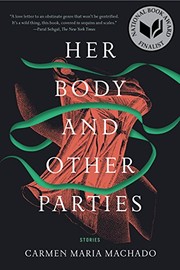
Her Body and Other Parties: Stories
Eight stories where bodies, medicine and old fairy tales get taken apart, with a green ribbon running through the whole book.
2,997-word summary · 13 min read
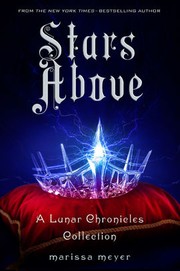
Stars Above: A Lunar Chronicles Collection
Nine Lunar Chronicles stories fill in the histories of Cinder, Wolf, Thorne, Cress, Winter, and Jacin, and end with a wedding after the war.
2,230-word summary · 10 min read
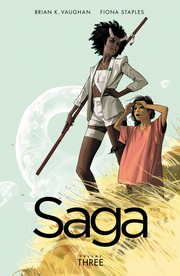
Saga, Volume 3
Marko, Alana, and Hazel hide on the planet Quietus with the reclusive author who inspired their romance, while assassins and a prince close in.
1,989-word summary · 9 min read

Orlando
A young Elizabethan nobleman becomes a woman and lives for centuries, moving through English history while writing a single poem about an oak tree.
2,030-word summary · 9 min read
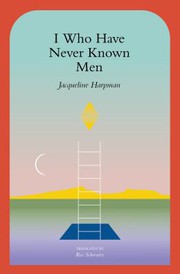
I Who Have Never Known Men
Forty women in a cage, one child who remembers nothing, and a nearly empty world above the bunker. Harpman's quiet, unexplained dystopia.
2,025-word summary · 9 min read
The Tiger's Wife
A young doctor in a war-scarred Balkan country chases the stories her grandfather left behind, including a deathless man and a deaf girl who loved an escaped…
2,232-word summary · 10 min read
The Water Dancer
An enslaved man with a strange power for travel fights to free himself and rescue those he loves.
2,910-word summary · 13 min read
The Buried Giant
An old couple crosses a misty post Arthur Britain searching for a son.
2,593-word summary · 12 min read
Severance
Candace keeps office routine as fever empties New York, then joins survivors.
2,340-word summary · 10 min read

Kitchen
Orphan Mikage finds home in a kitchen with Yuichi and Eriko after loss.
2,597-word summary · 12 min read