

Sputnik Sweetheart
2,055-word summary 9 min read 224 pages in the book
- First published
- 1999
- Publisher
- Vintage
- Pages
- 224
- ISBN
- 9780375726057
- Original title
- Suputoniku no Koibito
Reading options
What's inside (10 sections)
I read Sputnik Sweetheart on a rainy weekend when I wanted Murakami's quieter strangeness. Haruki Murakami published it in Japan in 1999 with Kodansha as Suputoniku no Koibito, translated by Philip Gabriel and published in English in 2001. My reading follows the 224 page Vintage paperback. It is a short novel about unrequited love, disappearance, and other sides of the world. It stayed with me like a song heard from another room.
The narrator, called only K, is a schoolteacher in his twenties. His best friend is Sumire, twenty two, aspiring writer, chaotic, funny, allergic to routine. She wears tweed in summer, smokes, forgets meals, writes in bursts. K loves her completely. She loves him as friend, brother, witness, but not as lover. That asymmetry is the book's ache from page one.
Sumire falls for Miu, seventeen years older, elegant, Korean Japanese businesswoman with a mysterious past. Miu hires Sumire as secretary, takes her to Europe, shares rooms and meals. Sumire, who never cared about clothes or money, starts dressing better, eating on time, wanting to be worthy. K watches from Tokyo through faxes and rare calls, happy for her and gutted.
How Murakami builds longing
Murakami writes longing as weather. K cooks spaghetti, irons shirts, grades papers, listens to jazz, thinks of Sumire while buying milk. Sumire writes drafts about dreams, loses manuscripts, calls K at midnight to read a paragraph. Miu drives a white car, plays piano that stopped after trauma, touches Sumire's hair once with meaning that could be love or kindness.
The prose in Gabriel's translation is spare and clean. Short declarative sentences. Concrete nouns. Rice balls, phone booths, train platforms. Then a strange image slips in. A second moon. A dream of splitting in two on a Ferris wheel. A story about a town where people enter as one and leave as half. You accept it because the ordinary around it is so steady.
What I love is how Murakami respects unrequited love without romanticizing pursuit. K does not stalk or demand. He shows up, carries bags, reads drafts, tells truth when Sumire asks if her writing works. He masturbates thinking of her and feels ashamed, not entitled. He dates other women halfheartedly. His love is constant without being ownership. That distinction matters and many novels miss it.
Sumire's writing ambition gives the book its second spine. She wants to be a novelist the way some want to breathe. She imitates, fails, finds a voice in fragments about family and loneliness. Miu offers a laptop, time, travel. K offers reading and faith. Both help. Neither can write for her. Her breakthrough, when it comes in Europe, is modest and real. A few true pages. That modesty feels truer than genius myths.
Greece and disappearance
Halfway, the novel shifts to a Greek island. Miu and Sumire stay for a work trip that stretches. White houses, sea wind, tavernas. Sumire vanishes one night, leaving no note. Miu calls K in panic. He flies over, jet lagged, out of place, and joins a search with police and locals.
The search chapters are quiet thriller. They check beaches, cliffs, monasteries. They interview a fisherman, a hotel clerk, a teenager who saw a woman walking. Nothing holds. Miu tells K what happened before, a night on a Ferris wheel in Switzerland fourteen years earlier when she saw her other self, split in two, and lost something vital including desire and hair color turning white. She tells it plainly, without asking belief. K believes because he must to help.
Murakami does not give a solution. Sumire may have crossed to another world through a door only she saw. She may have fallen. She may have chosen to leave. The book offers images, not answers. A phone call late where K hears her voice asking to be fetched from a phone box near his apartment. A dream where they meet on a beach. A final paragraph where he drives to meet her, unsure if she is real.
Some readers will feel cheated. I felt held. The mystery mirrors love itself. You search, you find traces, you do not possess. The island's light, described in spare lines about goats and laundry and sea, stays brighter in memory than any twist.
Miu and the split self
Miu is the most enigmatic and sad figure. Successful, composed, kind, she carries a trauma that divided her. On that Ferris wheel she watched herself make love to a man while she watched from the car, split into observer and participant. After, her black hair turned white, her piano playing stopped, her libido vanished. She lives as half.
Critics read this as allegory for assault, repression, cultural split as Zainichi Korean in Japan, or artist block. Murakami lets all sit without choosing. Miu's confession to K, told over wine while search pauses, is the novel's peak. She does not cry. She states. That flatness hurts more than sobs.
Her love for Sumire is tender and limited. She strokes her head, buys her coat, shares bed without sex. Is it maternal, romantic, narcissistic. Probably all. Sumire, young and absolute, wants merge. Miu, halved, can not merge. That mismatch dooms even before disappearance. K sees it and says nothing because saying would be cruel and useless. That silence is love too.
The doppelganger motif recurs in Murakami, doubles, wells, other sides. Here it is gentle rather than horrific. No monsters. Just a second Miu glimpsed, a second Sumire heard on phone, a second world humming beside ours like radio static. The Sputnik image, lonely satellites beeping in dark, names that loneliness. We orbit, signal, rarely dock.
What sings and what thins
What sings is tone, pacing, and ache. At 224 pages it reads in two sittings. The Tokyo chapters with K teaching bored students, cooking simple meals, visiting Sumire's apartment full of books and unwashed cups, feel lived. The Europe chapters with work dinners and hotel rooms feel observed. The island chapters feel dreamed. That progression from kitchen to hotel to myth works.
K as narrator is both strength and limit. His decency steadies, but his passivity can frustrate. He waits, accepts, watches. He has an affair with a colleague's wife that is described frankly and fades. He does not fight for Sumire so much as remain. Some will call that noble. Some will call it avoidance. I leaned noble because his staying never demands payment.
What thins is plot for mystery lovers. If you need resolution, you will resent the ending. If you need likable expansiveness, Miu's coolness may distance. The novel has little humor compared to Murakami's bigger books. No talking cats. One strange old man who tells a story about the other side. The strangeness is soft. That softness is the point, but it can feel slight after Norwegian Wood's gut punch or Wind Up Bird's sprawl.
Translation notes help. Gabriel keeps Japanese names and foods plain, renders Sumire's drafts in slightly clumsier English to show youth, keeps Miu's speech elegant. Original title Suputoniku no Koibito literally Sputnik lover. English Sweetheart adds tenderness the Japanese holds cooler. Both fit.
At 224 pages I finished it Sunday night and sat still. K starts grading papers alone and ends driving through dark to a phone box voice that may be hope or haunting. That drive, uncertain and necessary, is the whole book. We keep signaling. Sometimes, for a moment, someone answers. That moment is enough to keep orbiting, even knowing space is cold.
K's Tokyo life in detail
K teaches elementary school, eats simply, cleans his small apartment on Sundays. He has a girlfriend of sorts, a colleague's wife affair that is more comfort than passion, and friends who invite him to drink. He goes through motions while his mind stays with Sumire's faxes. Murakami renders this suspended life with precise routine. Morning train, chalk dust, children's shouts, evening beer, phone check.
Students give him small joys. A boy who draws rockets. A girl who asks why moon follows cars. He answers carefully, the way he answers Sumire, with honesty scaled to age. Those classroom beats show why he is a good teacher and a stuck man. He can guide others forward while waiting himself.
His affair, described without titillation, shows loneliness management. They meet in love hotels, talk little, part kindly. No one is ruined. No one is saved. When it ends, it ends by drift. That adult grayness fits a novel about love that does not align. Not all desire is destiny. Some is placeholder.
Phone booths recur as motif. K calls Sumire from stations, feeds coins, listens to static. Later he rushes to a booth at her call. The booth is narrow, glass, lit, alone in dark. It is the satellite made human. One person standing, speaking into night, hoping another orbits near. Murakami returns to this image because it holds the theme without explaining.
Sumire's writing life
Sumire wants to write novels but lives in fragments. She starts stories about her grandmother, about a dog, about K, abandons them at page ten. She reads Kerouac and worships energy. She smokes too much, sleeps odd hours, loses pens. K reads everything and tells her when a paragraph breathes. She trusts him because he does not flatter.
Miu gives her structure. Regular meals, a desk, a laptop, a salary to remove money fear. In Europe Sumire writes better, still uneven, but with moments of true voice. A description of Miu's hands on a steering wheel. A memory of mother singing while cooking. Those small trues matter more than plot. K recognizes them on fax paper and feels proud and useless. He helped by waiting. Waiting is not nothing, but it is not co writing.
Her disappearance freezes that growth mid arc. Did she find voice only to vanish. Did vanishing complete voice. K rereads her last pages for clues and finds only weather and longing. That is honest about art and loss. We seek meaning in last works. Sometimes last works are just last, not summary.
I thought about young writers I knew, brilliant and erratic, who needed both Miu order and K faith. Too much order kills spark. Too much faith enables drift. Sumire had both briefly and made something. That brief balance is the book's tender hope inside ache.
The other side in Murakami's world
Longtime Murakami readers will place Sputnik among his gentle portals. Unlike the wells of Wind Up Bird or the woods of Kafka, here the portal is domestic. A Ferris wheel car. A hotel corridor that is too long. A dream of two selves at a crosswalk. No guide explains rules. An old man on the island tells K a story about lovers who meet across worlds for minutes a year. He offers no map.
That softness divides fans. Those who want system will prefer Hard Boiled Wonderland. Those who accept mood will love this. I accept because the novel is about feeling, not travel. The other side is not place. It is state when love can not land. Sumire and Miu orbit, K orbits Sumire, readers orbit K. Distance is the only physics.
Music cues help. Classical piano Miu abandoned. Jazz K plays while cooking. Beatles Sumire hums off key. Each signals inner life. When Miu says she can not bear to hear piano now, you understand loss better than any trauma detail. When K puts on Bill Evans after news of disappearance, you hear his attempt to order grief. Murakami trusts readers to hear.
Who should orbit
Give Sputnik Sweetheart to readers who like quiet literary fiction about love that does not resolve, to Murakami beginners who fear 600 page epics, to anyone who has loved a friend who loved someone else. It suits autumn reading, train rides, late nights. Do not give it to readers who need answers or fast plot. Pair it with Norwegian Wood for grief or Kafka on the Shore for wilder doubles.
At 224 pages I finished it Sunday night and sat still. K starts grading papers alone and ends driving through dark to a phone box voice that may be hope or haunting. That drive, uncertain and necessary, is the whole book. We keep signaling. Sometimes, for a moment, someone answers. That moment is enough to keep orbiting, even knowing space is cold.
FAQ
When was Sputnik Sweetheart published?
Kodansha published Suputoniku no Koibito in Japan in 1999, translated by Philip Gabriel in 2001. The Vintage paperback runs 224 pages and the ISBN is 9780375726057.
What is the original title?
Suputoniku no Koibito. The English edition uses the Vintage paperback translated from Japanese by Philip Gabriel.
Is it part of a series?
No. It stands alone outside his long epics, suited to beginners who want short, gentle strangeness.
Similar books
Dance Dance Dance
A divorced Tokyo writer returns to a Sapporo hotel that has been rebuilt, then follows a woman who may be a ghost and a teenage girl through a mystery about…
2,407-word summary · 11 min read

A Wild Sheep Chase
An ad man chases a starred sheep to Hokkaido for a dying Boss while Rat hides with the Sheep Man.
2,579-word summary · 11 min read

South of the Border, West of the Sun
A married Tokyo bar owner reunites with his lost childhood sweetheart and must choose between steady family life and a haunting first love.
2,844-word summary · 13 min read
Hard-Boiled Wonderland and the End of the World
A Tokyo encoder who rents out his subconscious and a newcomer in a walled Town turn out to share one fate about memory.
2,406-word summary · 11 min read
The Wind-Up Bird Chronicle
An unemployed Tokyo man hunts a lost cat, then his missing wife, and slips from quiet suburbs into wells and wartime memory.
3,344-word summary · 15 min read
1Q84
Aomame slips into a Tokyo with two moons while Tengo rewrites a strange girl's novel, and their childhood bond pulls tight.
3,056-word summary · 14 min read

Kafka on the Shore
Fifteen year old Kafka Tamura flees Tokyo while old Nakata, who talks to cats, drifts toward the same library town in Shikoku in parallel.
2,496-word summary · 11 min read
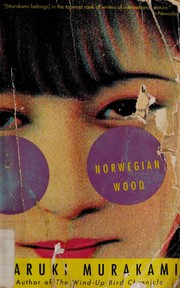
Norwegian Wood
Toru recalls 1969 Tokyo, torn between fragile Naoko and lively Midori after a friend's suicide.
2,051-word summary · 9 min read

The Memory Police
On an unnamed island, ordinary things keep vanishing from memory, and a novelist hides her editor from the police who make sure the vanished stay forgotten.
2,440-word summary · 11 min read

Love in the Time of Cholera
Florentino waits fifty years for Fermina: youth letters, a marriage to Urbino, hundreds of affairs, and a river trip where old love gets a last hearing.
2,204-word summary · 10 min read

Men Without Women
Seven stories about men living after women leave, die, or stay distant.
2,673-word summary · 12 min read

After Dark
On one night in Tokyo, student Mari reads in a diner and talks with Takahashi while her sister Eri sleeps, as a love hotel incident and night workers cross…
2,986-word summary · 13 min read
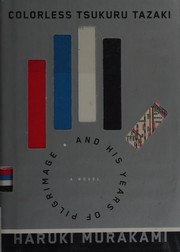
Colorless Tsukuru Tazaki and His Years of Pilgrimage
At thirty six, Tsukuru revisits four old friends to learn why they cut him off at twenty.
2,765-word summary · 12 min read

Alone With You in the Ether
Two people in Chicago agree to six conversations, and the experiment becomes a love affair that is also a study of bipolar disorder, obsession, and the shape…
2,713-word summary · 12 min read
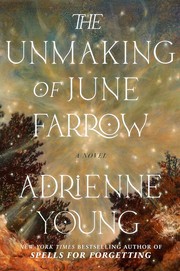
The Unmaking of June Farrow
A woman in a North Carolina flower-farming family walks through a red door into 1951, where she must solve her mother's disappearance and decide whether to…
2,701-word summary · 12 min read

On Chesil Beach
Two newlyweds spend one terrible night on Chesil Beach in 1962, and the rest of their lives is decided by it.
2,456-word summary · 11 min read

Ivanhoe
A disinherited Saxon knight, a great tournament, a besieged castle and a trial by combat. Scott's most famous novel, set in England in 1194.
2,834-word summary · 13 min read
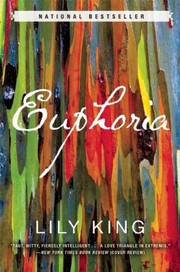
Euphoria
Three anthropologists in 1930s New Guinea turn fieldwork into a love triangle, and a real history breathes behind them.
2,048-word summary · 9 min read

Eligible
Austen's Bennet sisters move to modern Cincinnati, where marriage is a reality show and the house is losing its value.
2,293-word summary · 10 min read

Big Swiss
A transcriptionist for a sex coach falls for one of his clients, the tall Swiss gynecologist she calls Big Swiss, in a funny novel about work and secrets.
2,523-word summary · 11 min read

This Is How You Lose Her
Yunior cycles through love affairs and betrayals in nine linked stories, tracing the damage he does and the family history behind it.
2,195-word summary · 10 min read

The Tiger's Wife
A young doctor in a war-scarred Balkan country chases the stories her grandfather left behind, including a deathless man and a deaf girl who loved an escaped…
2,232-word summary · 10 min read

The Little Paris Bookshop
A Paris bookseller who prescribes novels as medicine finally opens a twenty one year old letter from his lost love and sails south through France to find her.
2,050-word summary · 9 min read

The Keeper of Happy Endings
Barbara Davis's 2021 standalone braids a Paris dressmaker's wartime losses with a grieving Boston artist who unlocks her family's secrets through an old row…
2,437-word summary · 11 min read

Garden Spells
Two sisters reunite in their family home in Bascom, North Carolina, where an apple tree shows anyone who eats from it the biggest event of their life.
2,030-word summary · 9 min read

By the River Piedra I Sat Down and Wept
Pilar, 29, meets her childhood friend again in Madrid and finds a rumored miracle worker. One winter week through the Pyrenees to the river Piedra, and the…
2,845-word summary · 13 min read

The Accidental Tourist
Grieving Macon writes travel guides for haters of travel, then Muriel intrudes.
2,252-word summary · 10 min read

Kitchen
Orphan Mikage finds home in a kitchen with Yuichi and Eriko after loss.
2,597-word summary · 12 min read
I Capture the Castle
Cassandra journals six months of love and money trouble in a castle.
2,402-word summary · 11 min read

The Marriage Plot
At Brown in 1982, Madeleine loves Austen while torn between brilliant Leonard and steady Mitchell.
2,804-word summary · 12 min read