
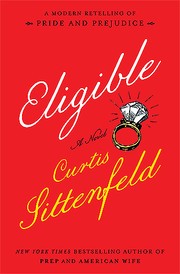
Eligible
2,293-word summary 10 min read 512 pages in the book
- First published
- 2016
- Publisher
- Random House
- Pages
- 512
- ISBN
- 9781400068326
Reading options
What's inside (8 sections)
I picked this up because a friend described it as Pride and Prejudice with a reality show, and I thought she was joking. She was not. The show is in the title, the show is what the mother watches, and the show is where the love interest went to become famous before he came home. Curtis Sittenfeld's Eligible is a modern retelling of Jane Austen's Pride and Prejudice, published in the United States in 2016 by Random House, 512 pages, ISBN 9781400068326. I read it in two sittings, then went back to the first chapter to see how the joke was built.
Austen gave us a village, a militia, and a gentleman who announces his feelings badly. Sittenfeld gives us Cincinnati, a reality show called Eligible, and a brain surgeon with an opinion about everyone. Darcy is still Darcy. Everything around him has been rebuilt, and the rebuilding is the best idea in the book.
The book is also the fourth entry in the Austen Project, a series that pairs modern novelists with Austen's novels. Other writers in the series include Joanna Trollope, Val McDermid and Alexander McCall Smith. Sittenfeld was the first American to take a turn, and any writer in that lineup could expect to be judged twice, once as a novel and once as a dare.
The Bennets of Hyde Park
The five sisters live in an oversized Tudor in the Hyde Park neighborhood of Cincinnati, and the house is falling apart. Their father has just come out of heart surgery. Their mother, Sally, wants them married more than she wants anything else in the world. And the money is gone: the house carries two mortgages, and Mr. Bennet, Fred, has no health insurance, so the hospital bills were settled by mortgaging the family home.
Liz, the second daughter, is thirty-eight and writes for a fashion magazine in New York. Jane is thirty-nine and teaches yoga. Mary is thirty and working on a third master's degree in psychology, and she keeps a weekly bowling league secret from the family. Kitty is twenty-six, a manicurist who signs up for cosmetology school. Lydia is twenty-three and lives for CrossFit.
The sisters come home because someone has to, and the caretaking falls to Liz and Jane, who cook the doctor-approved meals their father needs, run the errands and clean a house that is quietly falling out from under them. Fred and Sally are country club Republicans with an unfurnished understanding of money, and the book is funniest when the family finances are discussed as if they were a foreign policy.
It is also, underneath the jokes, a family in trouble, and Sittenfeld is serious about money in a way Austen never had to be. Marriage in this book is not romance, it is a financial instrument. Two daughters are unmarried at ages that used to be emergencies. Liz's job in New York is a way out she has not taken.
Two relatives sharpen the book. Aunt Margot, who lives in California with her enormously rich stepson, sends him east to check on her sister's family. Cousin Willie is a Silicon Valley millionaire who taught himself to code at thirteen, sold a company for about twenty million dollars, and cannot put on a pair of trousers. He tries to date Liz, she rebuffs him, and he ends up with her friend Charlotte Lucas instead. Later Liz learns that she once worked at the magazine with Kathy de Bourgh, the famous feminist, and that de Bourgh was a friend. In Austen's version of this family, Lady Catherine de Bourgh is a monster. Here she is on Liz's side, which tells you how much the ground has moved.
A show called Eligible
Mrs. Bennet watches Eligible the way other people watch football. It is a dating show with one bachelor who picks women from a roster of contestants, and the most recent man to leave the show without finding love is an emergency room doctor named Chip Bingley who has just moved to Cincinnati. To make contact, Sally calls a family friend who happens to work with Chip at Christ Hospital, and then throws a Fourth of July barbecue.
The joke lands hard, because the show is the point and not a decoration. Eligible is what the Bennet household is tuned to, the way Longbourn in Austen's day is tuned to the militia and the marriage market. Everyone in the family has an opinion about who is eligible and who has stopped being eligible, and the opinions are absurd, which is the joke, and also true.
Chip is charming in a slightly dopey way. His sister Caroline is not charming at all. She is his manager, she is Darcy's ex-girlfriend, and she is the engine of a good half of the book. At the barbecue, Chip is funny and a little drunk, and his friend Fitzwilliam Darcy, a neurosurgeon at the hospital, is rude to everybody. He is contemptuous of provincial Cincinnati, of the barbecue, of the neighbors, of the food. Liz, who has spent her life being the sensible one, repeats his contempt to the whole party because it is too good not to.
Then she goes and confronts him, which is the more interesting choice. The reader expects Liz to be the one who puts Darcy in his place, since he has just been rude and she has just been right. Instead he is fascinating, and the antagonism turns into flirtation without either of them admitting what is happening.
The house crisis runs underneath all of it. Liz discovers the missing insurance and the remortgaged house, and she starts solving the family the way she solves everything, practically. Mary and Kitty get an apartment. Lydia moves in with her boyfriend. Eventually the Tudor has to be sold, and the sale is handled with the same dry competence that runs the rest of the book.
There is also Liz's boyfriend, Jasper Wick, who tells her "I love you in my life," four words that tell you the arrangement and its limits. He is not a villain. He is a man with a job and no imagination, and he is not going anywhere. Sittenfeld splits Austen's scoundrel in two and gives each half to a different kind of man: Jasper is the comfortable half, and Ham Ryan, the CrossFit trainer who owns the gym where Kitty and Lydia train and who starts dating Lydia, is the rest of it.
Running into Darcy
The middle of the book is Liz and Darcy circling each other in a gym and on sidewalks. The scenes are funny because both of them are snobbish and both of them are lonely, and because Sittenfeld writes insults as if they were flirting. He says something condescending about her work, she says something condescending about his, and you can watch them both enjoying it.
The famous part of that stretch is ugly on purpose. They have sex, and it is bad, and Liz spends a good deal of the next pages being honest with herself about why she did it, which has less to do with desire than with the fact that she is thirty-eight and in a bad patch. This is Sittenfeld updating Austen for a reader who has read too many Austen derivatives where courtship is a safe little dance in a drawing room. The scene is brief and mortifying, and it lands harder for that.
When Liz decides to go back to New York, Darcy tells her he loves her, and he tells her in the worst possible way, listing her faults in order like a performance review, and Liz tells him what she thinks of him. That is the turn of the plot. In Austen, the second half of the book is Darcy explaining himself in a long, mortifying letter that makes the reader revise an opinion over many pages. In Eligible the explanation is about two sentences and mostly a wound, and then the book moves to San Francisco.
Pemberley and the wedding
In San Francisco, Liz visits Charlotte and ends up at Pemberley, the Darcy family house, where Darcy is unexpectedly home. He invites them to dinner with his family. His younger sister Georgie is the one Liz likes, a woman whose life looks easier than everyone else's, and Liz spends a stretch of the book assuming Georgie and Darcy are closer than Liz and Darcy are.
Then the phone rings and pulls Liz home. Lydia and Ham have run off and married, after her parents reacted badly to the news that Ham is transgender. Liz is offended on her family's behalf, which is the book's sharpest joke: a woman insulted that her own family has failed a relative. Darcy, it turns out, had already spoken to her parents about Ham and pushed them toward understanding, and Liz only finds this out at the wedding, which means he did something kind for her family without telling her.
Georgie also sends the text that makes Liz think Darcy is dating Caroline. It is a misreading and a very human one, and it puts Liz right back into the same spiral of pride and bad evidence that Austen built her into. The plot is honest with itself about the fact that it is a plot, which is one of the book's pleasures.
Chip and Jane break up, then get back together, and he proposes. His contract with the show means the wedding has to be filmed as an Eligible special or they wait a year. Jane, who is six months pregnant by then, agrees to the filming. The whole family flies out to Los Angeles.
The wedding is the comic set piece and the emotional payoff at once. Caroline accuses Liz of trying to steal Darcy in front of everyone. Liz turns off the microphones, asks Darcy to marry her, and he says yes. Then the episode airs, and the audience is shown a Liz who drinks too much and says too much, because that is what a reality show needs. The last page belongs to Mary, the sister with the degrees and the secret bowling league, privately satisfied that chasing men is a poor use of a life.
What Sittenfeld does with Austen
Her real achievement is tone. She writes about money, work, sex, boredom, and the particular exhaustion of being the competent one in a family, and she does it with a dry, very alert eye. She can spot hypocrisy and self-contradiction in a paragraph and put a joke on it before you have decided how you feel. Where Austen is ironic, Sittenfeld is satirical, which is a different temperature, and a faster one.
Sarah Lyall in the New York Times compared it favorably to Clueless and said the book lightly touches such current topics as the cost of health care, artificial insemination, transgender and interracial relationships, and the unreality of reality television. That list is fair, and it is also the case that the topical material sometimes arrives as a checklist rather than as pressure on the characters. The book is at its best when health care is a bill and worst when health care is a subject.
The reviews split hard, which tells you what kind of book it is. Ursula K. Le Guin called it a pointless trivialisation of Austen's novel in The Guardian, and Michiko Kakutani in the New York Times called it a heavy-handed and deeply unfunny parody, complaining that Austen's irony had been replaced with high-decibel mockery. Slate answered both of them, arguing that her protagonists have to succeed inside the marriage plot and so has the book, which is the right defense. Kirkus was kind and funny but warned against expecting the romantic charge of the original, and readers who want Darcy more than this Darcy will feel shortchanged.
What she gives up is the slow burn, and the slow burn was the thing Austen had that nobody else has. Darcy and Elizabeth in Austen's second half are two people doing arithmetic about their own prejudice over many pages, and the reader changes its mind gradually. In Eligible, Darcy and Liz get maybe four real scenes of mutual recognition, and his change is fast and mostly narrated rather than dramatized. The younger sisters are types, funny types, but types. Caroline is pure malice with no motive, which is useful for the plot and thin as a person. And Caroline being Darcy's ex-girlfriend, a choice that could have carried a whole book about female rivalry, gets a handful of pages.
Who it is for
Read it if you like Austen and can tolerate the joke. Read it if you want a novel about a family losing money. Skip it if you need the lovers to earn each other slowly, or if the reality show framing makes you wince before you start.
The Austen Project is the other argument for reading it, since the series puts Austen's plots through modern writers who each have something different to say about them. Sittenfeld's installment is the funny one, and the rude one, and the one that ends with a wedding filmed for an audience that will misread everybody in it.
I finished it and called my friend, who had recommended it, and said: you were right, it is a joke, and the joke is a mother watching television and hoping it leads to a wedding. She said yes, that was the whole point, and that I was being too hard on the ending. I did not say that the ending is the weakest part of the book, only that I wanted to argue about it. We are still arguing.
FAQ
Is Eligible a retelling of Pride and Prejudice?
Yes. Sittenfeld retells Jane Austen's Pride and Prejudice with Liz Bennet as a magazine writer in New York and Darcy as a neurosurgeon in Cincinnati. It is the fourth book in the Austen Project.
When was Eligible published and how long is it?
The first US edition came from Random House in 2016 and runs 512 pages. Random House Trade Paperbacks brought out a 528 page paperback in 2017.
Do Liz and Darcy end up together?
Yes. At Jane and Chip's wedding, filmed for the show, Liz turns off the microphones and asks Darcy to marry her. Mary gets the last word, and she is glad she never chased a man.
Similar books

Big Swiss
A transcriptionist for a sex coach falls for one of his clients, the tall Swiss gynecologist she calls Big Swiss, in a funny novel about work and secrets.
2,523-word summary · 11 min read

Size 12 Is Not Fat
Former teen pop star Heather Wells investigates two dorm elevator deaths while juggling her ex, her crush, and a size-12 wardrobe.
2,805-word summary · 12 min read
Alone With You in the Ether
Two people in Chicago agree to six conversations, and the experiment becomes a love affair that is also a study of bipolar disorder, obsession, and the shape…
2,713-word summary · 12 min read
Shopaholic and Sister
Becky Brandon returns from a ten-month honeymoon to meet the half-sister she always wanted, then discovers that Jess is thrifty, prickly, and nothing like the…
2,591-word summary · 12 min read
Mr. Maybe
Libby Mason wants a rich husband, but the wealthy man who proposes is dull and the broke writer she cannot forget is not offering forever.
2,322-word summary · 10 min read
Between Sisters
Estranged sisters Meghann and Claire reunite in Washington when Claire announces a rushed wedding, then face their mother's desertion and a medical crisis.
2,467-word summary · 11 min read
Wedding Night
Lottie marries an old flame days after a breakup, then flies to a Greek island while her sister quietly works to sabotage the honeymoon. A farce about memory,…
2,213-word summary · 10 min read
Dash & Lily's Book of Dares
Two lonely New York teenagers trade dares in a red notebook left at the Strand, falling for each other on the page before they meet.
2,228-word summary · 10 min read
Dial A for Aunties
A wedding photographer accidentally kills her blind date, and her mother and three aunties help her hide the body during the biggest wedding of their careers.
2,076-word summary · 9 min read
True Colors
Three Grey sisters split over love and duty after their father judges them.
2,596-word summary · 12 min read
The Identicals
Twin sisters swap Nantucket and Martha Vineyard lives for a summer.
2,556-word summary · 11 min read
The Bookish Life of Nina Hill
Bookstore Nina gains a family and pub-quiz love in Los Angeles.
2,399-word summary · 11 min read
I Capture the Castle
Cassandra journals six months of love and money trouble in a castle.
2,402-word summary · 11 min read
Bridget Jones: The Edge of Reason
Bridget doubts Mark, takes a job with Daniel, and lands in trouble in Thailand.
2,198-word summary · 10 min read
You Deserve Each Other
Engaged and miserable, Naomi and Nicholas wage a prank war to force a breakup, then face money, mothers, and truth in Sarah Hogle's funny romance with a tender…
2,415-word summary · 11 min read
The Marriage Plot
At Brown in 1982, Madeleine loves Austen while torn between brilliant Leonard and steady Mitchell.
2,804-word summary · 12 min read
The Bromance Book Club
A Nashville pitcher joins a secret romance book club to save his marriage after his wife Thea asks for divorce. He trades pride for listening, chores, and…
2,932-word summary · 13 min read
Tangled
Told by a cocky businessman, a bet to win the new associate who rejects him turns into real pursuit, strict rules, a painful reveal and a wedding-level happy…
2,868-word summary · 13 min read
Jemima J
Overweight London journalist Jemima Jones invents a slim online self for a California lover, starves to match the photo, then faces betrayal and learns to…
2,883-word summary · 13 min read
Ghosts
At 32, food writer Nina Dean faces ghosting by Max and her father's dementia in London.
2,677-word summary · 12 min read
The Do-Over
Emilie relives awful Valentine Day with cheating boyfriend until Nick helps fix it.
2,071-word summary · 9 min read
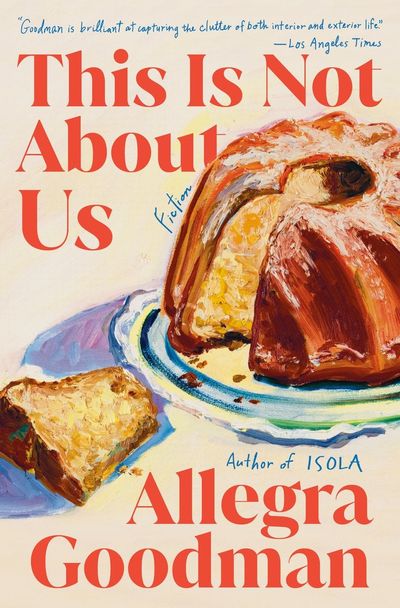
This Is Not About Us
Sisters Sylvia and Helen Rubinstein feud over apple cake in linked stories spanning divorces, bat mitzvahs and three generations of family life.
2,064-word summary · 9 min read
Boyfriend Material
A tabloid-haunted charity worker fakes a romance with a straitlaced barrister in this funny 2020 London rom-com.
2,325-word summary · 10 min read
Twenties Girl
Dumped and flailing, Lara Lington is haunted by her great-aunt Sadie, a 1920s ghost who wants her lost necklace back.
2,938-word summary · 13 min read
Get a Life, Chloe Brown
A chronically ill woman recruits her gruff handyman neighbor to help her finish a bold Get a Life list.
2,147-word summary · 10 min read
The Kiss Quotient
Stella Lane hires escort Michael Phan to practice dating and learns logic fails where touch and family press in.
2,716-word summary · 12 min read
Can You Keep a Secret?
Emma blurts every secret to a stranger on a turbulent flight, then finds him running her company.
3,114-word summary · 14 min read

Better than the Movies
A rom com obsessed senior hires her annoying next door neighbor to win her crush, then finds real love is messier and kinder than any movie plot.
2,438-word summary · 11 min read
Beautiful World, Where Are You
Two friends Alice and Eileen trade letters while navigating love with Felix and Simon.
2,872-word summary · 13 min read
Book Lovers
Sharp literary agent Nora Stephens gets dragged to small-town Sunshine Falls with her sister and keeps colliding with brooding editor Charlie Lastra.
1,952-word summary · 9 min read