
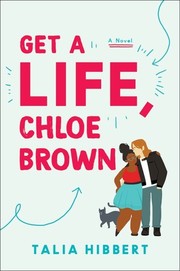
Get a Life, Chloe Brown
2,147-word summary 10 min read 384 pages in the book
- First published
- 2019
- Publisher
- Avon
- Pages
- 384
- ISBN
- 9780062941206
- Series
- The Brown Sisters (#1)
Reading options
What's inside (8 sections)
I picked this one up because the setup made me laugh and then immediately made me curious. A woman writes herself a Get a Life list and recruits the gruff handyman next door to help her finish it. Talia Hibbert published it in 2019 with Avon, and the trade paperback runs 384 pages. It is the first book in the Brown Sisters trilogy, and it reads like the start of something the author had been carrying around for a while.
Chloe Brown is a Black British woman in her late twenties living with fibromyalgia, which means chronic pain and exhaustion shape every plan she makes. She does computer work from home, she is funny in a dry sideways manner, and she has spent years keeping her world small enough to manage. Then a health scare nearly kills her, or comes close enough to rearrange her thinking, and she decides small is no longer the same as safe. It is just small.
A woman with a plan
The list is the engine of the whole book, so here it is the way Chloe writes it: enjoy a drunken night out, ride a motorcycle, go camping, have a casual fling that means nothing and feels great, travel the world with nothing but hand luggage, and do something bad. Six directives. She has already finished the first one before the story opens, which was moving out of her family's glamorous mansion into a flat of her own.
That move matters more than any single item on the list. Chloe loves her family and says so, but their care has a way of shrinking her. Her mother in particular watches her like a pot that might boil over. Getting her own keys is Chloe's declaration that she is a grown woman with a body she manages herself, and Hibbert writes the quiet pride of that first night alone very well. New flat. Her things. Her rules.
What I liked about the list as a device is that it is honest about what it is. Chloe is not trying to become a different person. She is trying to find out whether the person she already is has been missing anything worth having. The book never treats her illness as a problem the plot needs to solve. It treats it as a fact she plans around, the way anyone plans around weather. Some days are good. Some days are not. The list bends to fit.
Her voice carries these early chapters. She narrates with a mix of precision and self-mockery that made me trust her fast. When she describes a bad pain day, she does it plainly, without asking for pity or applause. When she describes her sisters, you can hear years of shared jokes underneath the complaints. It is a warm voice, and it needs to be, because the book is about to ask you to sit inside her skin for a few hundred pages.
The neighbor with the motorbike
Redford Morgan, called Red, is the superintendent of Chloe's building, which means he fixes things and knows everyone's business whether he wants to or not. He has tattoos, a motorbike, and a manner that suggests he would rather be left alone. Chloe decides he is exactly the teacher her list requires, corners him with the proposal, and refuses to take the first no for an answer.
Red says yes for reasons that have little to do with her list and a lot to do with who he is. Under the gruff surface he is one of those people who cannot walk past someone struggling. He also turns out to keep a private life as a painter, a softness he does not advertise. Hibbert handles the reveal gently. It is not a twist so much as a door opening a crack, and Chloe is the kind of person who notices doors.
Their early scenes together run on banter with an edge. Chloe is direct to the point of bossiness, and Red answers in short sentences that somehow still give things away. He thinks she is reckless. She thinks he is condescending. They are both a little right, which keeps the friction interesting. He learns, slowly, to take her at her word about her own limits instead of deciding them for her. She learns, even more slowly, that his roughness is armor with a history behind it.
The dynamic that works best is how competent they both are. These are not two broken people completing each other. They are two capable adults with scars, negotiating. Every step forward in the romance comes with a conversation attached, sometimes awkward, sometimes funny, always specific to them.
Checking boxes
The middle of the book follows the list, and it is episodic by design. The drunken night out goes sideways in ways that are embarrassing and then genuinely sweet. The motorcycle ride is shorter on danger and longer on trust than Chloe expected. The camping trip is the centerpiece, a stretch of chapters where the two of them are stuck together outside their usual routines and have to deal with weather, discomfort, and each other without an audience.
Hibbert uses these episodes to show how Chloe moves through the world. She scopes out chairs before she sits. She rations her energy like money. She carries what she needs and asks for help early instead of late, because late means collapse. None of this is delivered as a lesson. It is just there, in the texture of planning a trip or getting through a long evening. Readers who live with chronic pain will recognize a hundred small true things. Readers who do not will learn something without being lectured, which is harder to pull off than it looks.
The casual fling item complicates everything, of course. Chloe put meaningless on the list, but Red was never going to be meaningless, and she knows it well before she admits it. The love scenes are explicit, so this is worth saying plainly for anyone deciding whether to pick the book up. The heat is high and the detail is frank. For readers who enjoy that, these scenes do real character work. For readers who want their romance low-heat, this is not the book.
What keeps the middle from feeling like a checklist is that each item changes the terms between them. After the night out, Red stops treating her like a tenant with a wild idea. After the camping trip, Chloe stops treating him like a tool for her self-improvement. The list got them into the same room. What happens in the room is something neither of them planned, and the book is at its best when it lets that unplanned thing breathe.
The family Brown
No review of this book is complete without the Browns. Chloe's younger sisters, Dani and Eve, steal every scene they walk into. Dani is the academic, sharp and organized, the sister who answers questions with citations. Eve is the youngest whirlwind, chaotic and bighearted, stumbling into trouble and out of it again on charm. The three of them together are loud, rude, and completely devoted, and their group dynamic feels lived in from the first page.
Their parents hover at the edges with love that sometimes lands wrong. The family has money and glamour, and they have spent years organizing themselves around Chloe's health. That organization curdles easily into control. Her mother means every worried word and still manages to make Chloe feel like a patient instead of a daughter. Hibbert is fair to everyone here. The parents are not villains. They are frightened people whose fear kept working after it stopped helping.
Some of my favorite passages are just the sisters talking. The dialogue snaps without feeling written, and the teasing has that specific cruelty only people who adore each other can afford. Dani and Eve also do important structural work. They show Chloe as sister and daughter first, a whole person inside a family, defined by neither illness nor romance. And their presence sets the table for the rest of the trilogy, since each of them is clearly carrying a story of her own. Dani's book comes next, then Eve's, and by the end of this one you will want both.
If there is a weakness in the family material, it is that Eve occasionally tips from vivid into exhausting. She is written big, and in a few scenes she takes up more air than the moment needs. It is a small complaint. Most readers will forgive her everything, as her sisters mostly do.
The bruises they brought with them
About two thirds in, the book gets serious in a way the banter only partly prepares you for. Both leads are carrying old damage, and Hibbert brings it forward without turning the story into a case study.
Chloe carries the memory of a past relationship with a man who treated her illness as a burden he was generous to bear. The details stay mercifully brief, but the shape of it is clear: someone who made her feel like a problem to be managed, whose care always had a receipt attached. It explains a lot about her, including why independence matters to her more than comfort, and why being believed about her own body is nonnegotiable. When Red gets this wrong, even slightly, she reacts with the full force of someone who has been disbelieved before.
Red carries his own history, the kind that teaches a boy to look after other people early and expect little back. He keeps the particulars close, and the book respects that. What matters is the pattern it left: he steps in, he fixes, he does not ask for anything, and he leaves before anyone can owe him. Letting Chloe matter to him breaks every rule he made for himself. Letting himself matter to her is even harder.
The late conflict between them follows from all of this honestly, which is why it frustrated me anyway. Fear makes them pull apart just when honesty would fix everything, and the book spends real pages on the resulting misunderstanding. Readers who hate the third-act breakup should brace themselves. It is well motivated and true to both characters, and I still sighed at it. Familiar machinery is familiar even when it is oiled well.
Choosing each other on purpose
They find their way back through the only route that would work for these two, which is saying the plain true thing out loud. No grand trick, no rescue, just two people admitting what they want and what it will cost. Red shows up in the way he knows how, with something he made rather than something he says. Chloe meets him with terms of her own, because she has learned that love without terms is how she got hurt before.
What the ending gets right is that nothing is cured. Chloe's fibromyalgia is there on the last page the way it was on the first. Her life is still negotiated day by day, flare by flare. The book refuses the temptation to heal her as a reward for finding love, and that refusal is the bravest thing in it. What changes is not her body but her evidence. She has proof now that a bigger life is possible on her terms, and proof that at least one man can be trusted with the full truth of her days.
The last chapters glow without going soft. There is warmth with the family, a sense of the sisters' stories waiting in the wings, and a final image of Chloe and Red as partners in something ongoing rather than a finished tale. I closed the book fond of both of them, which is exactly the feeling a first-in-trilogy should leave.
Criticism, gathered honestly. The list structure makes the middle episodic, and one or two items feel like connective tissue more than story. The breakup stretch will annoy readers who have seen it too many times, even though the psychology is sound. Red's tough-exterior-hidden-softness will feel familiar to anyone who reads a lot of romance. And the steam level, while well written, will simply be too much for some readers, which is information, not a flaw.
Who should read it? Anyone who likes warm, funny, steamy contemporary romance with leads who talk like adults. Anyone who wants to see chronic illness handled with matter-of-fact respect instead of pity or miracle cures. At 384 pages in the Avon paperback it earns its length, and as the opener of the Brown Sisters books it does the important job: it makes you want to spend two more books with this family. I went in for the premise and stayed for Chloe's voice. I suspect most readers will do the same.
FAQ
Is Get a Life, Chloe Brown part of a series?
Yes. It is the first book in The Brown Sisters trilogy, published by Avon in 2019, followed by books about Dani and then Eve.
How does the book handle Chloe's chronic illness?
Fibromyalgia shapes her days without defining her. She plans around flares, names her limits plainly, and expects the people around her to believe her.
Is this a sweet, low-heat romance?
No. The love scenes are explicit, so readers wanting low-heat romance should skip it, while fans of warm, funny, steamy stories will feel at home.
Similar books
More from The Brown Sisters first, then related titles.
Take a Hint, Dani Brown
A viral rescue video turns a PhD student and a grumpy security guard into internet couple goals, and the fake relationship they build to keep the attention…
2,005-word summary · 9 min read
Act Your Age, Eve Brown
Eve Brown crashes into a Lake District bed and breakfast, breaks the owner's arm, and talks her way into his kitchen. A grumpy-sunshine romance about work,…
2,474-word summary · 11 min read
How to Walk Away
Margaret Jacobsen has the job, the fiance, and the future mapped out, until a small-plane crash on Valentine's Day takes almost all of it in one afternoon.
2,012-word summary · 9 min read
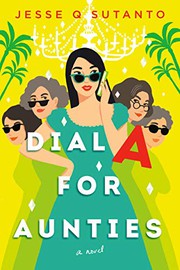
Dial A for Aunties
A wedding photographer accidentally kills her blind date, and her mother and three aunties help her hide the body during the biggest wedding of their careers.
2,076-word summary · 9 min read
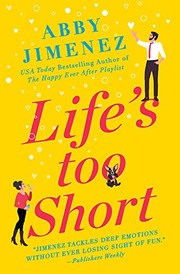
Life's Too Short
A travel YouTuber facing possible ALS takes in baby Grace and falls for Adrian, the lawyer next door.
2,913-word summary · 13 min read
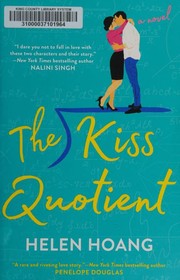
The Kiss Quotient
Stella Lane hires escort Michael Phan to practice dating and learns logic fails where touch and family press in.
2,716-word summary · 12 min read

What Happened to Goodbye
Mclean has reinvented herself in four towns since her parents divorced. In Lakeview she uses her real name, and for the first time staying put becomes a choice.
2,796-word summary · 12 min read
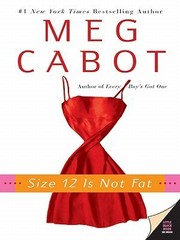
Size 12 Is Not Fat
Former teen pop star Heather Wells investigates two dorm elevator deaths while juggling her ex, her crush, and a size-12 wardrobe.
2,805-word summary · 12 min read

Sam's Letters to Jennifer
A grieving journalist reads her grandmother's letters and finds a decades-long love affair that changes how she sees her family.
2,310-word summary · 10 min read
Mr. Maybe
Libby Mason wants a rich husband, but the wealthy man who proposes is dull and the broke writer she cannot forget is not offering forever.
2,322-word summary · 10 min read
Between Sisters
Estranged sisters Meghann and Claire reunite in Washington when Claire announces a rushed wedding, then face their mother's desertion and a medical crisis.
2,467-word summary · 11 min read
Eligible
Austen's Bennet sisters move to modern Cincinnati, where marriage is a reality show and the house is losing its value.
2,293-word summary · 10 min read

Big Swiss
A transcriptionist for a sex coach falls for one of his clients, the tall Swiss gynecologist she calls Big Swiss, in a funny novel about work and secrets.
2,523-word summary · 11 min read

2 States: The Story of My Marriage
A Punjabi boy from Delhi and a Tamil Brahmin girl from Chennai meet at IIM Ahmedabad, and turn a love marriage into a campaign to convince two families.
2,634-word summary · 12 min read
Wedding Night
Lottie marries an old flame days after a breakup, then flies to a Greek island while her sister quietly works to sabotage the honeymoon. A farce about memory,…
2,213-word summary · 10 min read
Dash & Lily's Book of Dares
Two lonely New York teenagers trade dares in a red notebook left at the Strand, falling for each other on the page before they meet.
2,228-word summary · 10 min read
True Colors
Three Grey sisters split over love and duty after their father judges them.
2,596-word summary · 12 min read
The Identicals
Twin sisters swap Nantucket and Martha Vineyard lives for a summer.
2,556-word summary · 11 min read
The Bookish Life of Nina Hill
Bookstore Nina gains a family and pub-quiz love in Los Angeles.
2,399-word summary · 11 min read
Bridget Jones: The Edge of Reason
Bridget doubts Mark, takes a job with Daniel, and lands in trouble in Thailand.
2,198-word summary · 10 min read
Heart of the Matter
Two Boston mothers collide after a burn injury puts a single mom in the orbit of another woman's surgeon husband.
2,585-word summary · 11 min read
You Deserve Each Other
Engaged and miserable, Naomi and Nicholas wage a prank war to force a breakup, then face money, mothers, and truth in Sarah Hogle's funny romance with a tender…
2,415-word summary · 11 min read
The Bromance Book Club
A Nashville pitcher joins a secret romance book club to save his marriage after his wife Thea asks for divorce. He trades pride for listening, chores, and…
2,932-word summary · 13 min read
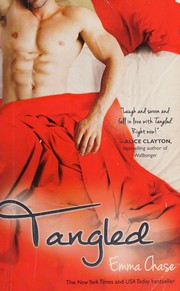
Tangled
Told by a cocky businessman, a bet to win the new associate who rejects him turns into real pursuit, strict rules, a painful reveal and a wedding-level happy…
2,868-word summary · 13 min read
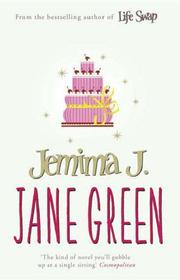
Jemima J
Overweight London journalist Jemima Jones invents a slim online self for a California lover, starves to match the photo, then faces betrayal and learns to…
2,883-word summary · 13 min read
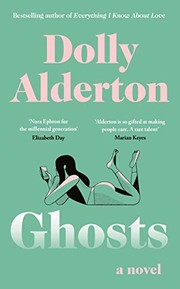
Ghosts
At 32, food writer Nina Dean faces ghosting by Max and her father's dementia in London.
2,677-word summary · 12 min read
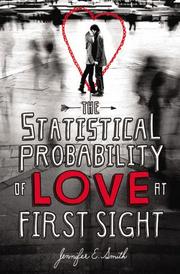
The Statistical Probability of Love at First Sight
Hadley misses a flight, meets Oliver to London, and faces her father wedding in one day.
2,002-word summary · 9 min read
The Do-Over
Emilie relives awful Valentine Day with cheating boyfriend until Nick helps fix it.
2,071-word summary · 9 min read
Mr. Wrong Number
After a fire and a wrong-number text, Olivia falls for a stranger who is closer than she thinks in this funny Omaha rom com.
2,248-word summary · 10 min read
Almond
Yunjae, born with alexithymia, navigates grief and friendship with troubled Gon after losing mother and grandmother.
2,088-word summary · 9 min read