
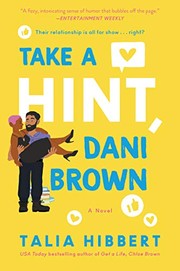
Take a Hint, Dani Brown
2,005-word summary 9 min read 400 pages in the book
- First published
- 2020
- Publisher
- Avon
- Pages
- 400
- ISBN
- 9780062941237
- Series
- The Brown Sisters (#2)
Reading options
What's inside (10 sections)
I picked up Take a Hint, Dani Brown expecting a light fake-dating comedy, and it is that, but it is also a book about panic attacks, grief, and the specific loneliness of a smart woman who has decided she is unlovable. Talia Hibbert sneaks the heavy stuff in behind the banter, and by the time you notice, she has you. This is the middle book of the Brown Sisters trilogy, and it might be the best of the three.
The premise is candy. Danika Brown, a bisexual PhD student in Nottingham, asks the universe for a friend with benefits. Not a boyfriend, not a partner, just someone who knows the score and knows what he is doing. Five months later, a viral video puts her in a fake relationship with the grumpiest security guard on campus. The execution is where the book earns its keep.
A witchy academic with a plan
Dani is not a standard romance heroine, and the novel knows it. She is sharp-tongued and driven, she works too hard, and she has a deep and complicated relationship with romance itself. One night, after a moonlit ritual with her best friend Sorcha, she invokes Oshun, the Yoruba goddess of love, at a gold statue that belonged to her late grandmother, Nana Rose, an obeah woman. The scene is funnier and more sacred than I expected, and it sets up the book's running joke about whether the universe answers prayers or just has a sense of humor.
Dani's history is what makes her interesting. Her first boyfriend, Mateo, cheated on her and told her she was ice cold, and she has spent years treating that verdict as a scientific fact about herself. Partnerships, in her view, are drains on time and attention, and she has the thesis, the teaching load, and the looming symposium to prove it. Her career goal is simple and enormous. She wants to be an academic who matters, and she is one panel appearance away from sharing a stage with Inez Holly, one of the few Black female professors in the country and the person Dani openly idolizes.
The daily ritual that breaks through all this is the least academic thing in her life. Every morning she buys coffee for Zafir Ansari, the security guard in the Echo building, and every morning he hands her a protein bar because she never eats breakfast. They trade insults the way other couples trade affection. Neither of them admits what it means.
The rescue that broke the internet
The plot kicks off with a gas-alarm drill, a broken lift, and a trapped Dani, and yes, the puns write themselves. Zaf notices she has not evacuated, runs back into the building, pries the doors open, and carries her out in his arms. Someone films it. By the end of the day it is everywhere, tagged #DrRugbae, with the internet declaring them a love story.
The detail I liked most is that the video only takes off because Zaf's niece Fatima tags his charity in it on purpose. Zaf runs Tackle It, a nonprofit that uses rugby workshops to teach teenage boys how to handle their emotions, and it has been scraping for funding for years. Suddenly he has followers, media requests, and an opportunity he cannot afford to waste. His late brother Zain's widow, Kiran, and the rest of the Ansari family make the case that the positive attention is worth a small lie. Seven years earlier, a car accident killed Zaf's father and brother, and the press coverage afterward was merciless. A story about a hero rescuing a woman is a better story than the one he has been stuck with.
So Zaf asks Dani to keep playing couple. Dani agrees because she has her own agenda. She wants Zaf in her bed, casually, without strings, and a fake public relationship gives her cover to make her move behind the scenes. What neither of them says out loud, and what the book makes the reader watch in real time, is that they both already have feelings and both have excellent reasons to pretend otherwise.
Two people lying to themselves
The fake dating material is good. The public lunch dates, the kiss that lands too soft and too real, the late-night texts that start as logistics and end as confessions. Hibbert writes banter well, and she writes the specific intimacy of two guarded people texting at midnight even better.
The deeper material arrives through Zaf. He is a former professional rugby player with a frown that everyone misreads, and he has been managing depression and anxiety since the accident. He reads romance novels, a habit he picked up in the worst year of his life, and he talks about them with an earnestness that no one in his life has ever encouraged. There is a scene where Dani wakes up in the library with her face on a book and Zaf brings her lunch, and it is more romantic than most grand gestures because it shows the whole shape of how he loves. Quietly, practically, and without asking for credit.
Dani's side is thornier. She propositions him with terms, and the terms are brutal. Make her come, do not catch feelings, do not spend the night. Zaf, who does not do casual, says yes anyway, which tells you everything about where he is emotionally. The heat in the book works because the emotional stakes under it keep rising. This is not a story about a wall and a wrecking ball. It is a story about two people who are each terrified of needing someone and who keep showing up for each other anyway.
The panic attack and the necklace
The best scene in the novel comes before they sleep together. Zaf has a radio interview about Tackle It, and the venue and the format drag up the memory of the reporter who once ambushed him with the news that his father and brother were dead. He has a panic attack on the pavement outside, and Dani sits down beside him and simply stays. She does not fix it. She does not perform. She sits with him until it passes, and then she tells him that the charity he built means he framed a scar in gold, and she gives him her garnet pendant, the one she wears for her grandmother Gigi, for courage.
It is the moment the book stops being a comedy with feelings and becomes a romance about two people who are actually good for each other. Zaf keeps the pendant. Dani keeps showing up. The couples quiz at the station reveals that Zaf has read Dani's published academic articles, which is the least fake thing anyone does in the entire fake relationship.
Baby steps
From there the arrangement deepens in the way real relationships do, through logistics and food and small kindnesses. Zaf cooks dinner at Dani's flat while she studies. He leaves desserts she wants but would never order for herself. She makes him a sleep charm for his anxiety. They are, in every way that matters, already together, and the only thing missing is the language for it.
Zaf is the one who names it. He tells Dani she already does everything she claims she is incapable of in a relationship, which is true and devastating and exactly the thing she cannot hear. He asks her to cross her own boundaries for him. She asks him to wait. The novel treats this negotiation with real seriousness, and it is to Hibbert's credit that the tension never feels manufactured.
Then comes the symposium. Dani holds her own on the panel beside Inez Holly, and afterward Holly gives her the advice that changes the book. Hold on to whatever brings you joy outside of work. Joy is the word that cracks Dani open. She goes back to Zaf, tells him she wants to keep being together for real, and frames it as baby steps. He is elated. They finally spend the whole night together.
The confession and the panic
The third act does the thing the third act of a romance novel has to do, and it does it well. The next morning, after an exchange of vulnerabilities that would wreck anyone with Dani's history, Zaf tells her he loves her. Dani panics, calls the whole thing a mistake, and leaves.
I have read this beat in a hundred romances, but this one works because the book has spent its entire length building the reasons. Dani has treated every person who ever left her as evidence that she is unworthy of staying. Mateo told her she was cold, Jo developed feelings she could not return, and her parents died. She has built a life around the premise that needing people is a mistake, and Zaf's love is the one data point she cannot explain away.
The repair is the part I did not expect. Sorcha finds her crying outside a chip shop and takes her to her sister Chloe's house, and surrounded by her sisters and her friend, Dani finally says the thing the book has been steering toward. The only reliable authority on her worth is herself. She apologizes to Jo for how she handled the end of their friendship, which is a loose end most novels forget. Then she spends a week reading romance novels, which is both a joke and a thesis statement. She is retraining herself to believe in happy endings before she asks for one.
The gesture at the goalposts
The grand gesture is magnificent and ridiculous, exactly as it should be. Dani enlists Zaf's best friend Jamal and the Tackle It boys, wraps the goalposts at the rugby field in red and white carnations, and stands underneath them waiting for him, her hair dyed red again, the way it was the first day they met. She tells him she loves him. She admits she is insecure about her worth as a partner and commits to working on it. Zaf runs to her, picks her up, and apologizes for sprinting when she had asked for baby steps.
The epilogue, one year later, lands the ending. They live together. Dani has a healthier work-life balance, Zaf runs Tackle It full time after securing a partnership with the Titans, and on their anniversary, a milestone she once dismissed as pointless, she gives him the romance novels she secretly stole over the course of their relationship, signed by their authors. She tells him what they have is a happily ever after, and she means it.
What works and what does not
The strengths are the characters and the humor. Dani and Zaf are distinct and specific, and their banter has the rhythm of people who actually like each other. The mental health material is handled with more care than the genre usually manages, and the sex scenes are warm rather than athletic. The book also does something quietly clever with the fake dating premise, which is that everyone in the supporting cast sees through it immediately, so the only two people the lie fools are the ones telling it.
The weaknesses are structural. The fake relationship occasionally loses the spotlight to subplots, and the third-act breakup lands on schedule in a way that careful readers will see coming. Some of the emotional revelations arrive in conversations that feel slightly too articulate for the state the characters are in. And the books around it in the series are strong enough that this one's middle stretch, which lingers in the arrangement longer than it needs to, suffers a little by comparison.
None of that changes the verdict. Take a Hint, Dani Brown is a smart, funny, genuinely moving romance about two people who believe they are difficult to love and find out otherwise. It stands alone fine, but the whole trilogy is worth your time, and this is the one I would hand to a skeptic first.
FAQ
Do I need to read Get a Life, Chloe Brown first?
No. Take a Hint, Dani Brown stands alone and can be read in any order, though it follows the same friend group and family as the other Brown Sisters novels.
Is Take a Hint, Dani Brown spicy or clean?
It is an adult romance with several explicit sex scenes. The heat is a real part of the story rather than fade to black.
What is the book about besides the fake dating?
Much of it concerns grief, anxiety, and self-worth. Zaf is managing depression after a family tragedy, and Dani is unlearning the idea that she is incapable of being loved.
Similar books
More from The Brown Sisters first, then related titles.
Get a Life, Chloe Brown
A chronically ill woman recruits her gruff handyman neighbor to help her finish a bold Get a Life list.
2,147-word summary · 10 min read

Act Your Age, Eve Brown
Eve Brown crashes into a Lake District bed and breakfast, breaks the owner's arm, and talks her way into his kitchen. A grumpy-sunshine romance about work,…
2,474-word summary · 11 min read
The Ex Talk
Two rival public radio producers pretend to be exes for a dating show, then fall for each other while the lie grows.
2,389-word summary · 11 min read
My Favorite Half-Night Stand
Millie, a criminology professor who has always been one of the guys, invents a secret dating profile and matches with her best friend Reid.
2,362-word summary · 10 min read

Austenland
A New York graphic designer obsessed with Mr. Darcy inherits a trip to a Jane Austen theme park, where the fantasy of Regency romance collides with the men…
2,030-word summary · 9 min read
Bet Me
A sharp actuary agrees to dinner with a charming serial bettor, then spends the next month pretending the wager does not matter.
2,710-word summary · 12 min read

This Time Next Year
Two women give birth minutes apart on New Year's Day 1990, and one takes the other's lucky name. Thirty years on, their children meet again.
2,194-word summary · 10 min read

2 States: The Story of My Marriage
A Punjabi boy from Delhi and a Tamil Brahmin girl from Chennai meet at IIM Ahmedabad, and turn a love marriage into a campaign to convince two families.
2,634-word summary · 12 min read
The Road Trip
Two exes squeeze into one small car for the drive to a Scottish wedding, with four years of history and one photograph between them.
2,418-word summary · 11 min read
The Marriage Bargain
A bookstore owner marries a billionaire friend's brother for a year to save home and company.
2,092-word summary · 9 min read

Lovelight Farms
Stella fakes dating Luka to save her Christmas tree farm.
2,584-word summary · 11 min read

The Roommate
Uptight Clara shares a flat with porn star Josh and teams up to build ethical adult films for women.
2,362-word summary · 10 min read
The Proposal
Nik says no to a stadium proposal and rebounds with Carlos in flirty LA romance.
2,044-word summary · 9 min read
Secretly Yours
A bubbly Napa gardener sends anonymous love letters to her grumpy professor neighbor in this steamy small-town rom-com.
2,504-word summary · 11 min read
My Killer Vacation
A teacher and a bounty hunter share a Cape Cod rental with a corpse and a growing attraction.
2,625-word summary · 12 min read
Mr. Wrong Number
After a fire and a wrong-number text, Olivia falls for a stranger who is closer than she thinks in this funny Omaha rom com.
2,248-word summary · 10 min read
Just for the Cameras
A grumpy football star and a sunny flamingo keeper fake a romance for the cameras, then catch real feelings fast.
2,366-word summary · 11 min read

Boyfriend Material
A tabloid-haunted charity worker fakes a romance with a straitlaced barrister in this funny 2020 London rom-com.
2,325-word summary · 10 min read
Hopeless
Fake engaged to town hero Beau Eaton, outcast bartender Bailey Jansen finds pretend and real blurring in Chestnut Springs.
2,491-word summary · 11 min read
A Not So Meet Cute
A broke woman poses as a billionaire's pregnant fiancee and falls for him.
2,888-word summary · 13 min read

The Wall of Winnipeg and Me
Vanessa Mazur quits assisting football star Aiden Graves, until he returns with a marriage proposal that changes both their plans.
3,049-word summary · 14 min read

The Cheat Sheet
Best friends Bree and NFL star Nathan fake date for three weeks after her drunken confession goes viral.
2,401-word summary · 11 min read

Size 12 Is Not Fat
Former teen pop star Heather Wells investigates two dorm elevator deaths while juggling her ex, her crush, and a size-12 wardrobe.
2,805-word summary · 12 min read

First Grave on the Right
Charley Davidson is a private investigator in Albuquerque and the grim reaper. When three murdered lawyers come back as ghosts, her two jobs collide.
2,770-word summary · 12 min read

Lick
Evelyn wakes up married to the lead guitarist of Stage Dive after a Las Vegas birthday she cannot remember, and the annulment gets complicated.
1,989-word summary · 9 min read
The Bookshop on the Corner
A Birmingham librarian loses her job, buys a van, and moves to the Scottish Highlands to run a mobile bookshop. Warm and bookish, with uneven pacing.
2,557-word summary · 11 min read
Ricochet
Lily Calloway tries to stay celibate for ninety days while Loren is in rehab, leaning on Rose, Connor, and Ryke as therapy forces her to face her childhood.
2,575-word summary · 11 min read

My Dark Romeo
A debutante ball kiss traps Dallas Townsend in a marriage to Romeo Costa, a man who wants her as leverage in a war against his father and her fiance.
2,530-word summary · 11 min read
Under Locke
Iris Taylor moves to Austin broke and wary, takes a front-desk job at a tattoo shop, and spends the book learning that Dex Locke’s blunt cruelty and unexpected…
2,591-word summary · 12 min read