
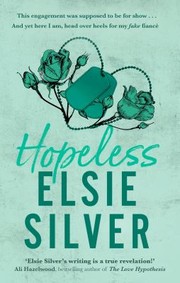
Hopeless
2,491-word summary 11 min read 448 pages in the book
- First published
- 2023
- Publisher
- Bloom Books
- Pages
- 448
- ISBN
- 9781728297040
- Series
- Chestnut Springs (#5)
Reading options
What's inside (8 sections)
A friend handed me this one with a warning that it was the last trip to Chestnut Springs and I should clear an evening. I had read the earlier books out of order, so Beau Eaton was still a blur to me, the quiet older brother in the background of everyone else's love story. I started it expecting a light fake dating story and ended up staying awake because Bailey got under my skin. Hopeless came out in 2023, and the Bloom Books edition most readers buy runs 448 pages. It is the fifth and final book in the Chestnut Springs series, and it belongs to Beau and Bailey from the first chapter to the last.
Bailey Jansen tends bar in Chestnut Springs and tries to stay invisible while doing it. She is twenty two, shy in a way that reads as standoffish if you do not know her, and she carries a last name that the town has already decided about. The Jansens are the wrong side of the tracks family, tied in local memory to trouble and bad choices, and Bailey feels that judgment every time she pours a drink for someone who knew her parents. She lives carefully. She saves money. She plans to leave town for good and start somewhere no one knows the Jansen story. That plan gives her spine even when she will not meet your eye.
Beau Eaton is the opposite kind of known. He is thirty five, ex military, handsome in a way the whole town has agreed on, and the Eaton family treats him like a prince who came home dented. Readers of the earlier books know the shape of it. The Eatons run a ranching operation outside town, loud and loyal and tangled up in each other, and Beau is the older brother who served, saw hard things, and returned with a stillness the younger brothers mistake for peace. He jokes when people expect it. He shows up for family dinners. He also keeps everyone at arm's length, and he has told people plainly that he will not fall in love. It is not a pose. It sounds like a decision he made to protect himself and everyone else.
The setup arrives as a bet that turns into a deal. Beau hears the way people talk about Bailey, or the way Bailey assumes they talk about her, and he does not buy that her name should decide her life. He offers her his name instead. Not for real. For show. They will pretend to be engaged. She wears his ring, stands beside him at family events, plays the part in public, and in return she gets breathing room. His family stops hovering over him and his moods. Her position in town shifts because nobody sneers at Beau Eaton's fiancee to her face. She can keep saving, keep planning, and stop flinching every time a customer looks at her sideways. They set terms. They set an end date. It will be tidy.
Of course it is not tidy. That is the whole book.
The rules look simple from the outside
Fake engagement stories live or die on the rules, and Silver makes these specific enough to create pressure. Bailey has to follow Beau's lead in public. She has to look like she cannot keep her hands off him when people are watching, which is mortifying for a shy woman who blushes when a stranger says her name. Beau has to play the devoted fiance, which means bringing her into Eaton spaces she has avoided for years. Ranch dinners. Town gatherings. Conversations where people ask how they met and she has to lie with a smile.
What I liked here is how much work Silver puts into the performances. Bailey practices being looked at. Beau, who is used to being looked at, practices letting someone stand next to him without pulling away. Early scenes at the bar flip the usual dynamic. Bailey is competent behind the counter and nervous everywhere else. Beau sits in her section on purpose, calm and amused, and draws attention the way he always does. She hates it and relies on it at the same time, because his attention is the shield she agreed to borrow.
The age gap sits inside every one of these scenes and the book does not hide it. He is thirty five with a career and a past behind him. She is twenty two and has barely started. He has money and standing. She counts tips. Silver lets that imbalance sit there instead of smoothing it over, and that choice kept me reading. Beau uses his standing to protect her, which feels good in the moment and uneasy a minute later. Bailey knows it. She keeps one eye on her savings and her exit plan even while wearing his ring, and that practical streak is what makes her more than a shy girl waiting to be claimed.
An Eaton family story as much as a romance
One reason this book works as a finale is that the Eatons crowd every chapter. Rhett, Cade, Jasper, and the rest show up with opinions, teasing, and open concern. They love Beau in a loud way that would exhaust anyone, and they watch Bailey with a curiosity that starts kind and turns genuinely warm. Family dinners are long, funny, and stressful for Bailey, who has never sat at a table where people fight over dessert and then ask about her day like they mean it.
Beau's place in the family gives the story its weight. He is the steady one, the brother who served his country and came home to be the reliable man at the ranch. The book is honest about what that steadiness costs. He sleeps badly. He carries guilt about things he saw and choices he made. He deflects worry with jokes and then disappears when the joking stops. His family sees it and does not know how to fix it, so they hover, which makes him withdraw further. Bailey sees the same pattern from the outside and names it without the family history getting in the way. That is her value in his life, and the book earns it. She is not a therapist and she does not heal him. She is a person who notices when he goes quiet and asks a plain question instead of tiptoeing around him.
There is a nice reversal buried here. Everyone assumes Beau is rescuing Bailey from her name. In practice, Bailey gives Beau a way to be seen without being managed. With his family, every kindness comes with worry attached. With Bailey, the arrangement is clear. They agreed to terms. That clarity lets him relax in a way he cannot with people who love him and fear for him. I thought that was the smartest emotional move in the book, and Silver does not oversell it. It comes through in small choices. He sits longer. He talks more. He lets her see a bad night without turning it into a performance.
What happens in private
Silver writes adult romance, and this is an adult book with open door scenes between consenting adults. I will keep this summary non graphic, because the plot turns do not need the details. What matters is the gap between the public act and the private truth. In public they touch for an audience. In private they start touching because they want to, and then they have to pretend that part is also acting.
Bailey has no real experience, and the book treats that with care rather than making it a joke or a prize. She is nervous, curious, and clear about what she wants once she decides. Beau is older and far more experienced, and to his credit he slows down, checks in, and lets her set the pace. Their private scenes build trust more than heat, though the heat is present. She learns to ask for things. He learns to stay present instead of retreating into his head. The fake engagement gives them an excuse to share space, a bed, long evenings, and that closeness does the real work.
The tension that sustains the middle of the book comes from the end date. Every good day together has a quiet clock under it. Bailey keeps saving money. She still plans to leave Chestnut Springs. Beau still says he does not do love. They both act like the agreement protects them, and they both stop believing it at different speeds. Bailey falls first and fights it, because falling for her fake fiance ruins her plan to start fresh somewhere else. Beau falls just as hard and denies it longer, because admitting it would break a promise he made to himself years ago. Watching two stubborn people negotiate that gap, while still performing happy couple at Sunday dinner, gives the middle chapters their pull.
I will admit some stretches in the middle felt slow to me. There are many scenes of daily life, ranch work, bar shifts, family meals, and they blur together. Silver fans will enjoy living in Chestnut Springs a final time. Readers who want plot machinery may fidget. The relationship moves forward in small steps rather than big turns for a long while, and a couple of arguments circle the same ground. He pulls away. She feels young and out of place. He apologizes. She forgives too fast. Then it repeats with different furniture. The emotional logic holds, but the pacing sags before the last act tightens it.
The Jansen name and the plan to leave
Bailey's family history drives the second half. Without spoiling specifics, the book connects her present caution to her past in ways that explain why leaving town matters so much to her. It is not wanderlust. It is a belief that Chestnut Springs will never let a Jansen be anyone new. Every kindness Beau's world offers her comes with a voice in her head saying it is borrowed. The ring is borrowed. The seat at the table is borrowed. The only thing that feels fully hers is the money she has saved and the bus ticket it could buy.
This is where the book is fairest to Bailey. She is not ungrateful. She is realistic about small towns. Reputations stick. People who watched her grow up poor and awkward do not update their picture just because she is engaged to an Eaton. A few scenes where townspeople treat her differently now that she is attached to Beau sting in the right way. She sees that the respect follows his name, not her, and it hardens her resolve to earn her own standing somewhere else. I respected that Silver lets Bailey want out even when the reader wants her to stay. It keeps her from becoming a project.
Beau, meanwhile, has to face what his protection costs her. He offered his name as a gift, and it takes him most of the book to see that a borrowed name can feel like another cage. His growth is not dramatic. He does not make a grand speech or fix everything. He starts listening when Bailey says she needs her own footing. He stops treating her plan to leave as a problem to solve and starts treating it as information about what she needs. That shift is quiet and convincing, and it matters more than any single romantic gesture.
The guiltiest pleasure of this section is watching the Eatons slowly adopt Bailey despite her efforts to stay temporary. Someone teaches her something. Someone defends her. Someone tells a story about Beau as a kid that reframes everything. These moments land because Bailey resists them. She does not melt into the family. She holds her savings and her skepticism close, and the family has to earn her trust the way she had to earn theirs.
The ending earns the series goodbye
The last act pushes both of them past pretending. An outside pressure forces the question they have avoided. If the engagement has an end date, what happens when the date arrives. Bailey has to decide whether leaving is still what she wants or just what she planned when no one wanted her. Beau has to decide whether his vow against love was wisdom or fear wearing a uniform. Neither decision comes easily, and Silver lets both of them look bad before they look brave. Harsh words get said. Pride does real damage. The repair takes effort rather than a single apology.
I will not lay out the final scenes beat by beat, since this is the series finale and many readers will want it fresh. The shape will satisfy romance readers. Commitments get made in daylight rather than as secrets. Family shows up. Bailey's future is chosen, not handed to her, and that distinction is the point of her whole arc. Beau's promise to never fall in love gets answered by actions instead of arguments. The Chestnut Springs series closes with the sense that this town, for all its gossip and judgment, can hold one more couple if they insist on being held on their own terms.
As a finale, it does the job without straining for grandeur. Earlier couples appear enough to reward loyal readers without hijacking the story. The ranch feels lived in one last time. The final pages give the series a resting place rather than a cliffhanger, and I closed the book feeling that Silver knew exactly which couple to save for last. Beau needed someone who would not flinch, and Bailey needed someone whose name could open a door without closing her out of her own life.
Who should pick this up, and who should skip it
This is an adult romance with explicit scenes, so it is for adult readers comfortable with open door content. Within the series, it pays off best if you have met the Eatons before, though Silver gives enough context that a newcomer could follow Bailey and Beau without homework. Readers who love small town settings, found family dinners, and slow thaw romances will feel at home. Readers who want fast plots or dislike large age gaps should think twice, because both are central here.
My fair criticisms come down to three things. The age and power gap is handled with care but never fully disappears, and some readers will find it hard to relax into the romance because of it. The middle sags with domestic repetition before the conflict sharpens. And as a series closer, the book carries the weight of saying goodbye, which means a few scenes serve the ensemble more than the couple. None of that ruined the book for me. Bailey's voice is distinct, Beau's quiet is drawn with patience, and the fake engagement frame gives their slow trust a clear engine. I finished it sorry to leave Chestnut Springs, which is exactly what a final volume should do.
FAQ
Is Hopeless appropriate for teen readers?
It is an adult romance with explicit open door scenes, written for adult readers. The summary above keeps to plot and character and skips graphic detail.
Is Hopeless part of a series?
Yes, it is book 5 and the final volume of the Chestnut Springs series by Elsie Silver. It centers Beau Eaton and Bailey Jansen and closes the Eaton family story.
When was Hopeless published?
It was first published in 2023. The Bloom Books edition cited runs 448 pages and its ISBN is 9781728297040.
Similar books
More from Chestnut Springs first, then related titles.

Flawless
Pro bull rider Rhett Eaton is benched by scandal, and his agent's daughter Summer must keep him in line in Chestnut Springs.
2,484-word summary · 11 min read
Heartless
Gruff single dad Cade Eaton hires bubbly Willa Grant as summer nanny in Chestnut Springs, and two months together wear down his walls.
2,967-word summary · 13 min read
Powerless
Sloane flees her wedding and hides with best friend Jasper in Chestnut Springs, where eighteen years of friendship turn into something more.
2,195-word summary · 10 min read

Reckless
Guarded Winter and charming Theo fake date through wedding season.
2,051-word summary · 9 min read

Lovelight Farms
Stella fakes dating Luka to save her Christmas tree farm.
2,584-word summary · 11 min read

The Bookshop on the Corner
A Birmingham librarian loses her job, buys a van, and moves to the Scottish Highlands to run a mobile bookshop. Warm and bookish, with uneven pacing.
2,557-word summary · 11 min read
The Ex Talk
Two rival public radio producers pretend to be exes for a dating show, then fall for each other while the lie grows.
2,389-word summary · 11 min read

Act Your Age, Eve Brown
Eve Brown crashes into a Lake District bed and breakfast, breaks the owner's arm, and talks her way into his kitchen. A grumpy-sunshine romance about work,…
2,474-word summary · 11 min read

Indigo Ridge
A new police chief in a Montana town meets the founding family's eldest son in a bar, and one night later a body turns up under their cliff.
2,763-word summary · 12 min read

At First Sight
Jeremy and Lexie are married and expecting a baby when anonymous emails tell him the child may not be his.
2,317-word summary · 10 min read
True Believer
Jeremy Marsh, a science journalist who debunks paranormal claims, comes to a small North Carolina town and falls for a librarian who believes in things he…
2,125-word summary · 9 min read

Juniper Hill
Fleeing New York with her baby, Memphis takes a housekeeping job above Knox Eden's garage, and the grumpy chef becomes the first person she can rely on.
2,021-word summary · 9 min read
Delilah Green Doesn't Care
Delilah returns to Bright Falls to photograph her stepsister's wedding and falls for Claire, a bookstore owner and single mother, while a cruel bet threatens…
2,315-word summary · 10 min read
My Favorite Half-Night Stand
Millie, a criminology professor who has always been one of the guys, invents a secret dating profile and matches with her best friend Reid.
2,362-word summary · 10 min read
Take a Hint, Dani Brown
A viral rescue video turns a PhD student and a grumpy security guard into internet couple goals, and the fake relationship they build to keep the attention…
2,005-word summary · 9 min read
The Finish Line
Tobias King seeks forgiveness from Cecelia as the Ravenhood past closes in.
2,868-word summary · 13 min read

The Simple Wild
City Calla flies to Alaska to face dying father and gruff pilot Jonah, learning bush life and love.
2,284-word summary · 10 min read
Secretly Yours
A bubbly Napa gardener sends anonymous love letters to her grumpy professor neighbor in this steamy small-town rom-com.
2,504-word summary · 11 min read
My Killer Vacation
A teacher and a bounty hunter share a Cape Cod rental with a corpse and a growing attraction.
2,625-word summary · 12 min read
Good Girl Complex
A people-pleasing college girl moves to beach town Avalon Bay and falls for a local boy who distrusts her whole world.
2,225-word summary · 10 min read
All Rhodes Lead Here
Grieving Aurora moves to Colorado to fix a farmhouse, finding slow healing with her gruff older neighbor Tobias Rhodes.
2,249-word summary · 10 min read

Exodus
Cecelia grieves Sean while Dominic pulls her into the Ravenhood reckoning.
2,463-word summary · 11 min read
Fix Her Up
Party clown Georgie fakes a romance with ex ballplayer Travis to earn respect, and their act turns real in Port Jefferson.
2,368-word summary · 11 min read

Flock
Nineteen-year-old Cecelia trades a year in Triple Falls for her mother future and falls for two men hiding the Ravenhood secret.
2,997-word summary · 13 min read
A Not So Meet Cute
A broke woman poses as a billionaire's pregnant fiancee and falls for him.
2,888-word summary · 13 min read

The Cheat Sheet
Best friends Bree and NFL star Nathan fake date for three weeks after her drunken confession goes viral.
2,401-word summary · 11 min read
Funny Story
Dumped Daphne moves in with her ex's new fiancee's ex, Miles, and they fake-date for revenge.
1,937-word summary · 9 min read
Wild Love
A full retelling of Elsie Silver's Wild Love: a heroine's return to Rose Hill, a grumpy billionaire neighbor, forced proximity, and a slow burn first in a new…
3,067-word summary · 14 min read
Austenland
A New York graphic designer obsessed with Mr. Darcy inherits a trip to a Jane Austen theme park, where the fantasy of Regency romance collides with the men…
2,030-word summary · 9 min read

Lick
Evelyn wakes up married to the lead guitarist of Stage Dive after a Las Vegas birthday she cannot remember, and the annulment gets complicated.
1,989-word summary · 9 min read