

Juniper Hill
2,021-word summary 9 min read 324 pages in the book
- First published
- 2022
- Publisher
- Devney Perry LLC
- Pages
- 324
- ISBN
- 9781649376671
- Series
- The Edens (#2)
Reading options
What's inside (8 sections)
The Edens series is built on a simple promise: a large Montana family, a small town with long memory, and one sibling per book falling hard enough to change the shape of their life. Juniper Hill, the second book, came out in 2022 from Devney Perry's own imprint, 324 pages, and it does the thing romance series are best at when they are done with care. It takes two people who have been hurt in specific, unglamorous ways and gives them a problem that cannot be solved by chemistry alone.
The woman is Memphis Ward. She arrives in Quincy, Montana, with an eight-week-old son named Drake, a car that is running on fumes, and no plan beyond getting through the next day. Back in New York she worked in marketing for her father's hotel conglomerate. She was good at it. She was also expected to keep the family's reputation polished, and when she refused to name Drake's father, her parents disowned her. Her mother Beatrice is cold, her sister Raleigh and brother Houston are distant, and the further she gets from that house, the lighter she feels.
The man is Knox Eden, thirty, tattooed, bearded, and the chef-owner of Knuckles, the restaurant attached to his sister Eloise's inn. Knox likes quiet. He likes his kitchen, his routines, and the loft he keeps above the garage on Juniper Hill. Five years earlier in San Francisco he loved a woman named Gianna and helped raise her son, Jadon, believing the boy was his. Two weeks after Jadon was born, Gianna told him she had cheated and the baby was not his. She left with the child. Knox came home to Quincy and decided that love was a door he did not need to open again.
The Job and the Loft
Memphis takes a fourteen-dollar-an-hour housekeeping job at The Eloise Inn, managed by Eloise Eden, and moves into the loft above Knox's garage. The arrangement is practical. It is also a forced proximity engine that Perry runs with patience. Knox is irritated at first, mostly by the baby. Drake has colic. Drake cries at hours that do not respect a chef's schedule. Knox is a man who has built a life out of controlling his environment, and a newborn is the least controllable thing on earth.
Then one night Knox takes the crying baby and soothes him. That is the hinge of the whole book. It is not a grand gesture. He does not declare anything. He just takes the baby so Memphis can sleep, and the ritual begins: Knox cooks for her, walks Drake, becomes the first person in Montana she can rely on. Memphis is proud and determined not to be a charity case, which keeps the romance from becoming a rescue. She works, she saves, she says thank you without meaning please save me. Knox notices both the pride and the exhaustion, and the book is careful about the difference.
Their attraction builds through shared meals and small touches and a first kiss that neither of them treats as a casual thing. Knox eventually asks her to stay, which for him is closer to a proposal than it sounds. Then Memphis tells him the truth about Drake's father.
Oliver MacKay
Drake's father is Oliver MacKay, a married New York entrepreneur whose wife is the daughter of an Italian mafia boss. Memphis met him in Miami without knowing he was married. When she became pregnant, he offered her fifty thousand dollars for silence. She refused the money in exchange for a signed waiver of parental rights, and then she fled to Montana to keep Drake away from Oliver's world. The waiver is the only thing standing between her son and a man who treats people as transactions.
This is where the book's stakes get bigger than the loft. Memphis is not hiding from an ex-boyfriend. She is hiding from a family that could take her child through money and lawyers and, if the rumors about the in-laws are true, worse. Perry handles the threat with restraint for most of the novel, letting it sit in the background while the romance takes center stage, then brings it forward in the last act.
The first wave of conflict arrives around Thanksgiving, when Victor and Beatrice Ward show up at The Eloise demanding that Memphis return to New York. Victor calls her a whore, threatens a noncompete lawsuit, and refuses to acknowledge Drake. Beatrice stands there and lets him. Memphis stands up to them and chooses Quincy. It is a good scene because it is not about winning an argument. It is about a daughter finally seeing the price of her parents' approval and deciding not to pay it.
Averie and the Motel
The second wave is uglier. A woman has been blackmailing Victor over Drake's paternity. She is Averie Flannagan, Oliver's unstable ex-mistress and stalker, who once posed as an FBI agent in New York. Averie manipulates Jill, a daycare worker overly attached to Drake, into taking the baby to a motel near Missoula so she can get a DNA sample to use against the Wards. Knox and Memphis discover Drake missing. An AMBER Alert goes out. Police Chief Winslow Covington, who stars in the first book with Griffin Eden, leads the search.
They find Drake safe at the Mountain Motel. Averie and Jill are arrested. The sequence is tense and short, and it does what a good romance climax should do: it forces the couple to say out loud what they already know. Knox tells Memphis they will marry so he can adopt Drake, and she agrees. They wed in a wildflower meadow on the Eden ranch, hold a reception at The Eloise, and two days later Knox legally adopts Drake.
The epilogue jumps a year. Memphis is six months pregnant with a boy they plan to name Harrison. Knox's restaurant is thriving after a positive feature from critic Lester Novak. Memphis is beginning to plan weddings and events, which is a nice echo of the marketing career she left behind. Talia Eden rushes off after spotting a man from her past, setting up Garnet Flats, the third book.
Quincy and the Edens
Quincy is fictional, but it behaves like a real small town in the ways that matter for the story. Everyone knows the Edens. The family owns the ranch, runs the inn, and has enough history that a newcomer is always being measured against it. Memphis arrives without a name anyone recognizes, which is both a relief and a vulnerability. She is free from her father's reputation and also unprotected by any local one.
The Edens are a well-designed series family because each sibling has a distinct role without being a type. Griffin is the oldest and the responsible one. Knox is the loner with the sharp tongue. Talia is the one who runs. Eloise runs the inn and keeps everyone fed. Lyla and Mateo fill out the younger end. Their parents, Harrison and Anne, are present enough to make the family feel real and absent enough to let the siblings make their own mistakes.
Perry is good at the texture of a town like this: the diner, the inn, the ranch, the way a job at fourteen dollars an hour is both a lifeline and a source of shame for someone who used to run marketing for a hotel chain. Memphis's class anxiety is not treated as a quirk. It shapes how she accepts help, how she parents, and how she decides what kind of life she is willing to build. When she refuses Oliver's money, she is refusing a version of herself as much as a man.
The series structure also means the romance has to share space with setup. Talia's future book is seeded in the epilogue. Griffin and Winslow's story is already in the background. Readers who like a standalone can read this one without the first, but the experience is richer in order, and the ending of Indigo Ridge is spoiled by the first few chapters here.
The Money Problem
Romance novels often wave away money, and this one does not. Memphis is broke in a way that affects what she eats and how she sleeps. Knox is comfortable but not rich, and his restaurant is his life's savings. The fifty thousand dollars from Oliver is not a plot device. It is a sum that would solve several immediate problems, and Memphis's refusal has to be strong enough to outweigh the reader's practical objection. Perry makes it work by showing what accepting the money would cost her in self-respect and in legal ground.
The blackmail plot is the weakest use of money in the book. Averie wants a DNA sample to extort the Wards, but the scheme depends on a daycare worker making an unbelievably bad decision and on several coincidences lining up. It is suspenseful while it lasts, and it gives Knox a chance to be decisive, but it does not feel inevitable the way the family conflict does.
Why It Works
The best thing about Juniper Hill is that it understands the difference between a man who is good with a baby and a man who is ready to be a father. Knox is good with Drake almost immediately, but he spends most of the book afraid of what that means. His history with Jadon left a specific wound: he loved a child who was taken away, and he is not eager to volunteer for that again. The novel lets him choose fatherhood with his eyes open, which makes the adoption feel earned rather than inevitable.
Memphis is the stronger character. She has been raised to believe her value is the family name, and she rebuilds herself in a town where nobody cares about her last name. Her refusal of Oliver's money is the decision that defines her. Perry does not make her a martyr about it. She is tired, she is scared, and she still refuses, which is more interesting than a heroine who never doubts.
The weaknesses are the usual ones for this kind of series romance. The villains are thin. Averie is a stalker with a convenient plan, Victor is a snob with a checkbook, and the mafia connection is background music rather than a real danger. The middle section can feel like a long series of meals and walks while the plot waits for the last act. Readers who want the external plot to carry equal weight with the romance will find the balance tilted.
It is also an open-door romance, so if you prefer your small-town love stories closed-door, know that going in. The intimacy is warm rather than clinical, but it is on the page.
The wedding and adoption arrive quickly, and that speed is both satisfying and a little convenient. A marriage of protection is a classic romance device, and Perry uses it to solve two problems at once: Drake's legal safety and Knox's fear of commitment. In real life it would be reckless. In the book it works because the emotional groundwork is already there, and because the epilogue shows the marriage settling into an ordinary life rather than ending on the ceremony. The baby named Harrison is a nod to Knox's father, which is the kind of small continuity that makes a series feel like a family.
What remains is a book about a woman learning that she is allowed to want a life, and a man learning that safety is not the same as solitude. Quincy is a well-built fictional town, the Eden family is large enough to populate six books without thinning, and the promise of the series is visible in every dinner scene. If you liked Indigo Ridge, this is a solid second step. If you are starting here, you can, though you will spoil a little of the first book's ending. Either way, keep a blanket nearby. Montana in Perry's hands is always a few degrees colder than the cover suggests.
FAQ
Is Juniper Hill part of a series?
Devney Perry self-published it in January 2022. It is the second book in The Edens, after Indigo Ridge and before Garnet Flats.
Who are the main characters?
Knox Eden, the thirty-year-old chef-owner of Knuckles, and Memphis Ward, a former New York marketing executive who arrives in Quincy with her infant son Drake.
Who is Drake's father?
Oliver MacKay, a married New York entrepreneur whose wife's family has mafia connections. Memphis refused his fifty thousand dollars for silence and had him sign away parental rights instead.
Similar books
More from The Edens first, then related titles.

Indigo Ridge
A new police chief in a Montana town meets the founding family's eldest son in a bar, and one night later a body turns up under their cliff.
2,763-word summary · 12 min read

Heartless
Gruff single dad Cade Eaton hires bubbly Willa Grant as summer nanny in Chestnut Springs, and two months together wear down his walls.
2,967-word summary · 13 min read

The Simple Wild
City Calla flies to Alaska to face dying father and gruff pilot Jonah, learning bush life and love.
2,284-word summary · 10 min read

Secretly Yours
A bubbly Napa gardener sends anonymous love letters to her grumpy professor neighbor in this steamy small-town rom-com.
2,504-word summary · 11 min read

The Bookshop on the Corner
A Birmingham librarian loses her job, buys a van, and moves to the Scottish Highlands to run a mobile bookshop. Warm and bookish, with uneven pacing.
2,557-word summary · 11 min read
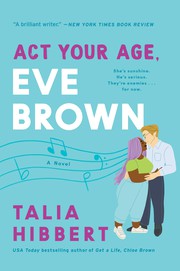
Act Your Age, Eve Brown
Eve Brown crashes into a Lake District bed and breakfast, breaks the owner's arm, and talks her way into his kitchen. A grumpy-sunshine romance about work,…
2,474-word summary · 11 min read

Two by Two
Sparks's twentieth novel turns from first love to a marriage breaking up: Russell Green loses his wife and his job, then rebuilds his life around his…
2,192-word summary · 10 min read

At First Sight
Jeremy and Lexie are married and expecting a baby when anonymous emails tell him the child may not be his.
2,317-word summary · 10 min read
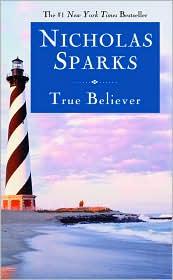
True Believer
Jeremy Marsh, a science journalist who debunks paranormal claims, comes to a small North Carolina town and falls for a librarian who believes in things he…
2,125-word summary · 9 min read

Delilah Green Doesn't Care
Delilah returns to Bright Falls to photograph her stepsister's wedding and falls for Claire, a bookstore owner and single mother, while a cruel bet threatens…
2,315-word summary · 10 min read
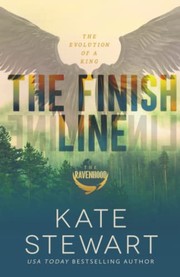
The Finish Line
Tobias King seeks forgiveness from Cecelia as the Ravenhood past closes in.
2,868-word summary · 13 min read

Lovelight Farms
Stella fakes dating Luka to save her Christmas tree farm.
2,584-word summary · 11 min read
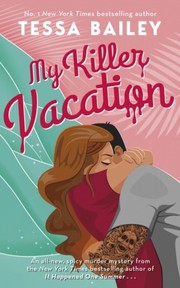
My Killer Vacation
A teacher and a bounty hunter share a Cape Cod rental with a corpse and a growing attraction.
2,625-word summary · 12 min read
King of Sloth
Party heir Xavier chases publicist Sloane who refuses to fall in forced job.
2,017-word summary · 9 min read
Good Girl Complex
A people-pleasing college girl moves to beach town Avalon Bay and falls for a local boy who distrusts her whole world.
2,225-word summary · 10 min read
All Rhodes Lead Here
Grieving Aurora moves to Colorado to fix a farmhouse, finding slow healing with her gruff older neighbor Tobias Rhodes.
2,249-word summary · 10 min read

Exodus
Cecelia grieves Sean while Dominic pulls her into the Ravenhood reckoning.
2,463-word summary · 11 min read

Wild Love
A full retelling of Elsie Silver's Wild Love: a heroine's return to Rose Hill, a grumpy billionaire neighbor, forced proximity, and a slow burn first in a new…
3,067-word summary · 14 min read
Hopeless
Fake engaged to town hero Beau Eaton, outcast bartender Bailey Jansen finds pretend and real blurring in Chestnut Springs.
2,491-word summary · 11 min read
Flock
Nineteen-year-old Cecelia trades a year in Triple Falls for her mother future and falls for two men hiding the Ravenhood secret.
2,997-word summary · 13 min read

Things We Left Behind
Lucian Rollins returns to Knockemout to bury his father's past and collides with librarian Sloane Walton.
2,777-word summary · 12 min read

Flawless
Pro bull rider Rhett Eaton is benched by scandal, and his agent's daughter Summer must keep him in line in Chestnut Springs.
2,484-word summary · 11 min read
It Happened One Summer
LA It girl Piper is cut off and sent to Westport where gruff captain Brendan challenges her glitter.
2,089-word summary · 9 min read

Things We Never Got Over
Naomi runs from her wedding to help her twin in Knockemout and clashes with Knox Morgan.
3,358-word summary · 15 min read
Austenland
A New York graphic designer obsessed with Mr. Darcy inherits a trip to a Jane Austen theme park, where the fantasy of Regency romance collides with the men…
2,030-word summary · 9 min read

Lick
Evelyn wakes up married to the lead guitarist of Stage Dive after a Las Vegas birthday she cannot remember, and the annulment gets complicated.
1,989-word summary · 9 min read
The Unmaking of June Farrow
A woman in a North Carolina flower-farming family walks through a red door into 1951, where she must solve her mother's disappearance and decide whether to…
2,701-word summary · 12 min read

Ricochet
Lily Calloway tries to stay celibate for ninety days while Loren is in rehab, leaning on Rose, Connor, and Ryke as therapy forces her to face her childhood.
2,575-word summary · 11 min read

My Dark Romeo
A debutante ball kiss traps Dallas Townsend in a marriage to Romeo Costa, a man who wants her as leverage in a war against his father and her fiance.
2,530-word summary · 11 min read
Under Locke
Iris Taylor moves to Austin broke and wary, takes a front-desk job at a tattoo shop, and spends the book learning that Dex Locke’s blunt cruelty and unexpected…
2,591-word summary · 12 min read