

Two by Two
2,192-word summary 10 min read 512 pages in the book
- First published
- 2016
- Publisher
- Grand Central Publishing
- Pages
- 512
- ISBN
- 9781455520688
Reading options
What's inside (8 sections)
I went into this one expecting the usual Sparks machinery: two people meeting in a moody location, weather involved, a death engineered to make you cry into a paperback. What I got instead was a book about a man learning to make a six-year-old's lunch and a bed.
Nicholas Sparks wrote it after a long gap and says on his own website that he wanted to examine the bond between a father and a daughter, having three sons and twin girls of his own. That ambition explains both what the novel does well and why readers who arrived expecting another The Notebook sometimes bounce off it. It is the twentieth Sparks novel, published in 2016 by Grand Central Publishing, twenty years after the book that made his name, and it is the rare one by him that is mostly about repairing damage rather than about the first time two people notice each other.
A good life in Charlotte
Russell Green narrates the whole thing himself, and he opens the way he does most things, which is at some length and with an apology attached. His wife Vivian has just told him she is pregnant, roughly three weeks after stopping her birth control, which startles both of them. He is an advertising executive at the Peters Group in Charlotte, North Carolina, and he is thirty-two years old with a big house and a marriage he thinks is working.
Their daughter London is born on October 16, 2009, and Vivian quits her public relations job to stay home with her. Russell becomes the only earner, and the early chapters take his measure as a man who has been trained to be agreeable. He calls himself a people pleaser, traces it to growing up watching romantic films with his older sister Marge, and admits to a former girlfriend named Emily whom he lost years ago after confessing to a one-night stand.
The family around him is the sturdiest thing in the book. His father is a practical blue-collar man who shows love by doing things rather than saying them, and who left his Southern Baptist church when Marge came out as a teenager rather than condemn his daughter. His mother Gladys is a warm worrier. Marge, an accountant with a dry tongue, has been with her partner Liz, a marriage and family therapist, for more than a decade. Liz ends up doing the practical counselling work in this book, which is a nice bit of casting given her job title.
The courtship is described in the warm, film-lit register Sparks usually reaches for: a Manhattan cocktail party in 2006, a proposal on the Empire State Building on Valentine's Day, a wedding the following November. The early marriage is described in the same register, which is precisely why the collapse is so slow to register, since it happens inside a life that looked well designed from the outside.
The one wound from before is Emily. Russell slept with someone else, told her the truth about it, and lost her for it. He carries that without examining it, and Emily's return in the middle of the book reactivates it. Sparks has built the whole story out of a man whose instinct is to be pleasant rather than precise, and who is baffled when precision turns out to have been the thing that mattered.
The cracks show up in the office first. Russell's boss, Jesse Peters, is far too interested in Vivian, and Russell notices that his promotions keep coinciding with evenings when Vivian appears at company events. After the Christmas party of 2014, Peters goes cold and installs a rival to undercut him. Russell reads the signs, quits in May 2015, and starts his own agency, the Phoenix Agency. His father thinks this is a mistake. Vivian objects too. The agency signs nobody in its first month.
When the roles reverse
Meanwhile Vivian has been quietly interviewing with Walter Spannerman, a billionaire developer, and she takes the job. Then she asks Russell to look after London, because she has not arranged daycare.
What follows is the part of the book that works. Russell handles art class, piano, dance and tennis, and he learns the kid's world as a stranger would. The one detail that organizes the whole novel arrives here: London's favourite bedtime story is the story of Noah's ark, and the refrain is that the animals go in two by two. Two by two becomes the phrase that measures every relationship in the book, and by the end it has quietly changed meaning from a religious rhyme into something practical.
He teaches London to ride a bicycle. He plays with the Barbies. He walks her to school and back, and he starts to understand that he has been on the receiving end of affection for a long time without ever doing the receiving.
Much of this stretch is logistics, and the logistics are the good part. Art class, piano, dance and tennis, and the driving and the forms that go with them. London also crashes her bicycle into a mailbox, and the novel is at its most attentive when the crisis is practical before it is medical: a head wound, a possible wrist fracture, a concussion, then the absences that get her barred from the dance recital, and a father deciding to pull her out of the class altogether.
The business side gets him out of the house, which is good for him. At London's tennis camp he meets Joey Taglieri, a loud personal injury lawyer who is bored of his firm's advertising, and Taglieri becomes the agency's first client. The commercials air and generate a flood of calls; five more law firms contact Russell and he signs four of them.
Vivian leaves on a Monday
Emily comes back into the story sideways. She is divorced, she paints, and she has a five-year-old son named Bodhi who is in London's class and has become her best friend. Russell and Emily end up walking a golf course for hours while he tells her everything, and she tells him how she got through her own divorce.
Then Vivian makes her announcement. It is Labor Day, London is asleep, and Vivian says she has fallen in love with Spannerman, that she is moving to Atlanta, and that she is leaving that night on his private jet. London stays with Russell for now. Vivian begins visiting on alternate weekends, which creates a long, tense middle stretch of arrangements and counter-arrangements. At one lunch she says she wants a divorce and refuses to discuss any reconciliation.
Two things in this section are worth knowing before you start. First, the romance Sparks promised is thin. Russell and Emily do not kiss, and there is almost no physical life between them, until a single line in the epilogue. Second, the book's anger is directed almost entirely at Vivian, who is written as cold, self-satisfied and unreasonable, while Russell, who fails to see his own marriage failing for years, is written as merely passive.
The flirtation with Emily builds slowly. She gives him feedback on a campaign, they go to her gallery opening, and on a rooftop bar he tells her he is in love with her and that he is not ready for a relationship; she says she loves him too and that she can wait. They nearly kiss at midnight on New Year's Eve. Then Vivian hears about the gallery visits and accuses him of confusing his daughter, which collapses the whole thing in a sentence. It is the clearest evidence in the book that the marriage is not recoverable.
At the height of the custody fight, Vivian's lawyer sends a letter describing Russell as an unfit father. He drives out to Wrightsville Beach alone to sit with his rage, which is one of the more convincing pages in the novel because the anger is so useless.
Marge
The tumor arrives on the Saturday after Thanksgiving. Liz calls at dawn to say Marge has been admitted to the hospital after coughing up blood. The diagnosis is advanced adenocarcinoma, a form of lung cancer, already spread through her lungs, lymph nodes, bones and brain. The oncologist says it cannot be cured and cannot promise her six months.
Marge is the only one in the family who does not cry. She asks the doctor a blunt question about how long she has, and then she tells Russell to go on living his life, because he is going to be the person everyone leans on. She spends the winter taking London roller skating, going to New York with Liz, watching Pretty Woman with her brother, and taking him up to the neighborhood water tower.
She also runs the family's emotional logistics without ever announcing it. Liz is the one who phones him at dawn and who is with Marge at the end, but Marge is the one who decides what everyone is allowed to feel, and her instructions to her brother about keeping going land more like orders than advice.
Two details from this section stay with me. London gives Marge her first Barbie doll, a small child's gift that Marge keeps. And Russell reads aloud a letter thanking his sister for teaching him what true love looks like, at a moment when she can still follow it; she tells him not to let Emily go, and manages one last joke.
After two final days alone with Liz, Marge dies. At the graveside, London is wearing butterfly wings and dancing on the fresh-turned earth.
The ending, and what the title meant
The day after the funeral Vivian comes to the house. She apologizes for the attorney's letter and says that a private conversation with Marge changed her thinking. She agrees to a fair split and shared custody, on the condition that Russell moves to Atlanta. He accepts, and he understands what Marge has been steering him toward: rather than make London choose between two parents in a courtroom, he should go and be near her.
The epilogue runs from late July in Atlanta. The Phoenix Agency now has two employees. Emily has moved there too, with Bodhi, and Russell and Emily are together with an engagement in prospect. Vivian has quietly become engaged to Spannerman, declined alimony and accepted a fair settlement. Liz is considering having a baby, using money from life insurance policies Marge quietly bought years ago, one for Liz and one for Russell's parents so that his father can retire.
The policies are the last of Marge, and they are a tidy piece of plotting: the woman who refused to discuss her own death spends the end of it arranging everyone else's finances.
He closes by saying he survived the worst year of his life because he never walked it alone, and that London, Marge and Emily each walked beside him, two by two. It is the plainest possible use of the title, and it lands.
Friendship isn't about how long you know someone. It's about who walks into your life, says 'I'm here for you,' and then proves it.
Is it worth the time?
The complaints about this novel are consistent enough to be worth stating plainly. Some reviewers thought the gender-role swap was worth the risk and others thought it was a retreat from what Sparks had been doing, dressed up as a novel about the same marriage seen from the other side. Far more of them simply found it slow. The first half, in which a man who has never cooked a meal learns to cook one, is a long way to the turn, and a fair number of readers say the book should have started in Atlanta after the divorce rather than in a Charlotte bedroom nine years earlier.
I understand those objections more than most of the praise does. The first half is genuinely slow, the plot is visible from a long way off, and the second half depends on the reader accepting that Vivian is a monster and Russell is a nice man who was slow to notice. What the novel does have is the father and daughter material, and the family, which are rendered with more care than the marriage. Sparks is at his best in the small domestic register: the bicycle, the Barbies, the water tower, a woman with a Barbie doll in a hospital.
It is also the twentieth Sparks novel, and it reads more like a career extending itself than a retreat from what came before, and there is an argument that the divorce plot is simply closer to the lives most of his readers are living than the Carolina seaside of The Notebook or the small town of A Walk to Remember. If you want the swoon, go elsewhere. If you want a book about what happens to a marriage and a family when one person walks out of it, this is the Sparks novel that actually goes there, and the last forty pages are worth the patience the first two hundred demand.
FAQ
Who narrates Two by Two and what goes wrong for him?
Russell Green narrates in the first person. He is an advertising executive in Charlotte, North Carolina, whose wife Vivian leaves for a billionaire, leaving him to raise their daughter London and to run his own agency.
Is Two by Two a romance like The Notebook?
Not really. Russell's second chance with Emily, an old girlfriend, stays almost entirely non-physical until the epilogue, so the novel reads closer to a story about divorce and single fatherhood.
What does the title Two by Two refer to?
The title comes from the Noah's ark bedtime story Russell reads London every night, and it returns in the closing image of people walking beside him through his hardest year.
Similar books

At First Sight
Jeremy and Lexie are married and expecting a baby when anonymous emails tell him the child may not be his.
2,317-word summary · 10 min read

2 States: The Story of My Marriage
A Punjabi boy from Delhi and a Tamil Brahmin girl from Chennai meet at IIM Ahmedabad, and turn a love marriage into a campaign to convince two families.
2,634-word summary · 12 min read
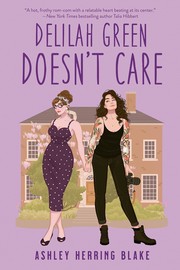
Delilah Green Doesn't Care
Delilah returns to Bright Falls to photograph her stepsister's wedding and falls for Claire, a bookstore owner and single mother, while a cruel bet threatens…
2,315-word summary · 10 min read
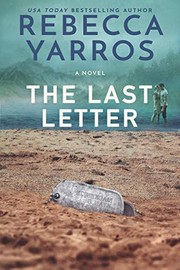
The Last Letter
Ella trades letters with soldier Chaos, then her brother Ryan death brings Beckett to Telluride with a hidden name, sick Maisie, and a love tested by truth.
2,559-word summary · 11 min read
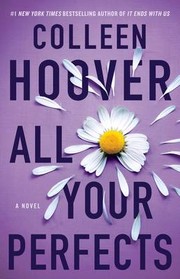
All Your Perfects
Quinn and Graham's perfect love frays under infertility, and they must decide what perfect means now.
2,072-word summary · 9 min read
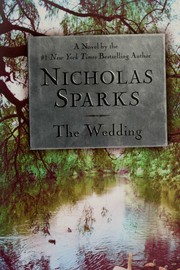
The Wedding
Wilson Lewis courts his own wife again with Noah's help as daughter Anna plans her wedding.
2,076-word summary · 9 min read
The Choice
A settled Beaufort veterinarian falls for his taken neighbor, then faces an impossible hospital decision eleven years later.
2,150-word summary · 10 min read
Ricochet
Lily Calloway tries to stay celibate for ninety days while Loren is in rehab, leaning on Rose, Connor, and Ryke as therapy forces her to face her childhood.
2,575-word summary · 11 min read
Under Locke
Iris Taylor moves to Austin broke and wary, takes a front-desk job at a tattoo shop, and spends the book learning that Dex Locke’s blunt cruelty and unexpected…
2,591-word summary · 12 min read

Sam's Letters to Jennifer
A grieving journalist reads her grandmother's letters and finds a decades-long love affair that changes how she sees her family.
2,310-word summary · 10 min read
Act Your Age, Eve Brown
Eve Brown crashes into a Lake District bed and breakfast, breaks the owner's arm, and talks her way into his kitchen. A grumpy-sunshine romance about work,…
2,474-word summary · 11 min read

A Spool of Blue Thread
Four generations of the Whitshank family in Baltimore, and the silences, resentments and quiet love they hand down without ever saying so.
2,408-word summary · 11 min read
Marriage for One
Rose marries a cold lawyer to save her coffee shop, then discovers the arrangement was never only business.
2,032-word summary · 9 min read

Juniper Hill
Fleeing New York with her baby, Memphis takes a housekeeping job above Knox Eden's garage, and the grumpy chef becomes the first person she can rely on.
2,021-word summary · 9 min read

The Storm Sister
Ally D'Aplièse loses her father and her lover within weeks, then follows a brass frog and a Norwegian biography into Anna Landvik's music and the world of…
2,376-word summary · 11 min read
Rule
A tattoo artist still grieving his twin and the polished girl who has loved him since she was thirteen finally collide one drunken night in Denver.
2,014-word summary · 9 min read

Someone Like You
Halley and her best friend Scarlett face a summer of grief, a surprise pregnancy, and Halley's dangerous first romance in Sarah Dessen's 1998 young adult novel.
2,218-word summary · 10 min read

The Sky Is Everywhere
Lennie grieves Bailey while torn between Toby and Joe.
2,251-word summary · 10 min read
The Marriage Bargain
A bookstore owner marries a billionaire friend's brother for a year to save home and company.
2,092-word summary · 9 min read
The Accidental Tourist
Grieving Macon writes travel guides for haters of travel, then Muriel intrudes.
2,252-word summary · 10 min read
If Only I Had Told Her
Finn, Jack and Autumn speak after the crash that took one of them.
2,543-word summary · 11 min read
Everything We Keep
A widow questions her husband's death when a stranger claims his past.
2,307-word summary · 10 min read

The Deep End of the Ocean
A three year old vanishes at a Chicago hotel reunion, and nine years later the Cappadoras must face his return as a teen raised by someone else while grief…
2,951-word summary · 13 min read
Mr. Wrong Number
After a fire and a wrong-number text, Olivia falls for a stranger who is closer than she thinks in this funny Omaha rom com.
2,248-word summary · 10 min read
All Rhodes Lead Here
Grieving Aurora moves to Colorado to fix a farmhouse, finding slow healing with her gruff older neighbor Tobias Rhodes.
2,249-word summary · 10 min read
Vision in White
Wedding photographer Mac Elliot does not believe in lasting love. Steady teacher Carter Maguire plans to change her mind. First in the Bride Quartet.
2,167-word summary · 10 min read
This is Where I Leave You
A separated husband sits shiva for seven days with his siblings after his father's death.
2,818-word summary · 13 min read
The Switch
A burned-out consultant and her 79-year-old grandmother swap London and Yorkshire homes for two months, facing grief, dating apps, and village politics.
2,782-word summary · 12 min read
This Girl
Honeymoon retelling as Will recalls first love, classroom ban, loss, fights, and vows that stick.
2,526-word summary · 11 min read

Suzanne's Diary for Nicholas
A dumped editor reads a Vineyard mother's diary that reframes everything.
2,087-word summary · 9 min read