
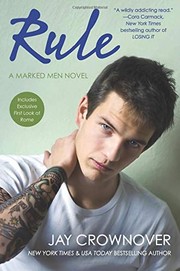
Rule
2,014-word summary 9 min read 432 pages in the book
- First published
- 2012
- Publisher
- William Morrow Paperbacks
- Pages
- 432
- ISBN
- 9780062302403
- Series
- Marked Men (#1)
Reading options
What's inside (9 sections)
There is a specific kind of romance novel that was everywhere in 2012 and 2013, and Rule is one of the books that defined it. It has a tattooed hero with a tragic past, a heroine who has loved him from a careful distance, an explicit love scene on page sixty, and an epilogue that ties the whole world into a bow. It also sold a lot of copies, first as a self-published e-book and then for William Morrow, and reading it now is a bit like opening a time capsule from the peak of the new adult boom. Some of it has aged badly. The parts that still work work because of the grief at the center, which is more honest than the genre usually allows.
A Hungover Morning in Denver
The book opens with Rule Archer waking up next to a girl whose name he barely remembers after a night of Crown Royal, and then Shaw Landon lets herself into his house to drive him to his parents' Sunday brunch. That is the whole relationship in one scene. Shaw has been driving Rule to Brookside every weekend for two years, to a family that tolerates him for her sake and barely for his own. Rule is a tattoo artist with a white mohawk, a body full of ink, and a temper he uses to keep people at a distance. Shaw is pre-med at the University of Denver, tiny, pale, and rich, and Rule calls her Casper because she looks like a ghost.
The Archer family is the wreckage the book is really about. Three years earlier, Rule's identical twin Remy died in a car crash on the way to pick Rule up, and Rule has carried the blame like a stone ever since. His mother Margot has turned her grief outward and made Rule its target. His older brother Rome, a soldier, is home on leave with an injury and a short fuse. The family gathers every Sunday and eats a meal that tastes like an argument, and Shaw is the only person who can get Rule through the door.
Shaw Has Been in Love Since She Was Thirteen
The history between them is the best thing Crownover sets up. Shaw and Remy were best friends, and then they were something more official, the golden couple that Margot approved of. What nobody knew was that Shaw loved Rule the whole time, and that Remy knew, and that Remy was never actually in love with her. She spent years being the girl who belonged to the family, waiting for a boy who would never see her. That is a genuinely sad setup, and the book uses it well.
Their first night together happens on Shaw's twentieth birthday. She and her roommate Ayden Cross go out drinking, end up at Rule's local bar, and Rule walks her home. She is drunk and brave and says the thing she has been holding in for years, and they sleep together. The morning after is one of the better scenes in the book: Shaw strips his bed, makes a joke about how many women have been in it, and Rule tells her the truth, which is that nobody has been in that bed since her. It is a small moment, and it does more work than a hundred pages of miscommunication later on.
Then the plot arrives. Rule goes quiet for a few days, Shaw gives him space, and Ayden spots him at a club with another woman. Shaw throws her phone across the room. It is the kind of scene that the genre demands, and it is genuinely upsetting in the right way, because the reader has watched her wait for a decade and then seen him treat the wait as nothing. Rule's apology is somehow worse than the crime: he shows up at her mother's brunch and charms the entire table, which is supposed to be romantic and lands as him being good at attention, not good at love.
The Ex-Boyfriend Problem
Gabe Davenport is the antagonist, and he is the weakest piece of the book. He is Shaw's ex, a rich prelaw student from a connected family, and his grievance is entirely about image. He cannot stand the idea that Shaw prefers a tattoo artist to him, and he escalates from sulking to grabbing her arm at her workplace to, in the end, breaking into her apartment with a key code that her own mother gave him and attacking her. He is a plot device rather than a person, and the novel treats him as a monster to be defeated instead of a man to be understood.
That said, the escalation is handled with more care than I expected. Rule takes the threat seriously early, contacts a former police officer he knows, sets up a restraining order, and buys Shaw a new phone after her ex smashes hers. The book is clear that Shaw's mother's indulgence of Gabe is part of the problem, and that Shaw's habit of managing everyone else's feelings is what keeps her from reporting him sooner. When the attack comes, it is ugly and specific: he dislocates her shoulder, splits her lip, and leaves her bruised, and the hospital scene is where the book stops being a fantasy about a bad boy and starts being about what it takes to keep someone safe.
Remy Was Gay
The reveal that gives the novel a spine is that Remy was gay. He had a serious boyfriend named Orlando Fredrick, called Lando, whom he met in his last year of school and followed to Denver. Shaw knew, Lando knew, and Remy's mother suspected and treated it as a phase she could manage by pushing Shaw at him. When the truth comes out at a family dinner, Rule and Rome call it a lie, and their father Dale confirms it and then delivers a long, furious indictment of Margot for years of small cruelties. It is the only scene in the book where an adult tells the truth without flinching, and it reframes Rule's entire childhood.
What follows is hard to read. Margot says something unforgivable to Rule, he and Rome walk out, and Rule goes silent for three weeks. That silence is the part of the book I struggle with most, because Shaw has just been hit with the same revelation and left to carry it alone. Crownover wants the reader to understand that Rule is drowning, and she writes his grief with real texture, but the novel asks a lot of sympathy for a man who keeps disappearing on the woman he says he loves. The separation is drawn out well past the point where it is illuminating.
Rome gets his own arc here, and it is thin. He leaves for another deployment angry at Shaw, though the book hints that he will come back, and the epilogue confirms a thaw. Jet, a musician, gives Ayden a ride home one night, seeding the second book, and Nash and Cora, the tattoo shop crew, orbit the couple as a found family that will carry the rest of the series. The Marked, the shop where Rule works, is the most lived-in location in the book, and Crownover's affection for its rhythms, the noise, the after-hours conversations, the clients with stories on their skin, comes through clearly.
The Marked, and the World Around It
The tattoo shop is where the novel is most comfortable. The Marked is Rule's workplace and second home, and the people there, Nash the roommate, Cora the piercer, Rowdy the apprentice with a crush he does not know how to express, function as a family that does not require him to perform grief at the dinner table. Cora is the one who takes Shaw's side when Rule is being an idiot, and Nash is the one who tells Rule the truth in the flat voice of somebody who has shared a house with him for years. They are not deep characters, but they are the kind of characters readers write fan fiction about, and the rest of the series exists because people wanted to stay in this building.
The city does its job too. Denver in 2013 is drawn as a place of neighborhoods and bars and campus, with Brookside standing in for old money and country clubs and mothers who care about appearances. Crownover writes the geography with real affection. The Victorian house on a street where nothing else looks like it, the bar where everyone knows Rule's order, the diner where Shaw studies for the MCAT: these are small choices that make the book feel anchored. Romance novels live and die on setting, and this one builds a city the reader can walk around inside.
The Hospital and the Sacred Heart
The reconciliation happens because Gabe finally does what he has been threatening to do. Shaw maces him, he takes the can away and hurts her badly, and Ayden finds her afterward. Rule hears from Cora and arrives at the hospital to see the damage, and for the first time the book lets him be fully present without a performance. He has a sacred heart tattooed on his chest, from a design he drew years ago, and in the makeup scene he draws a matching one on Shaw's palm and says, "Here's my heart Shaw." It is a grand gesture of exactly the kind this genre runs on, and it works because the book has been setting it up since the first chapter.
The epilogue jumps months ahead and gives everyone an epilogue-sized resolution. Margot is in therapy, and Rule is attending sessions with her, which is a surprisingly mature ending for a book that spent two hundred pages on jealousy. Rome is still angry but coming back. Shaw is practically living at the Victorian house with Rule and Nash, and Rule has her name tattooed on his knuckles while she has a large piece of her own that the book treats as a joke. The last line is about opposites burning down cities, and the book closes on the idea that Remy would be proud.
The Honest Verdict
Rule has real flaws and they are worth naming. The self-published origins show in the editing, and later editions sanded some of it down but not all of it. Gabe is a cartoon. The middle of the book mistakes silence for tension. The class politics are sketched in marker: rich people are cold, tattooed people are real, and the one exception, Shaw, is good because she chose the right side. Readers who dislike possessiveness dressed as devotion will find a lot to argue with, and Rule's jealousy is treated as romantic more often than it should be.
What holds up is the grief. The dead twin who was loved and lied about, the mother whose mourning calcified into cruelty, the brother who left, and the girl who kept showing up at the door every Sunday because she could not stop hoping: that is a real story with real weight, and Crownover tells it with more sincerity than most books in this boom. It is not subtle, and it is not careful, but it is not empty either. If you want to understand what new adult romance was doing in 2012, Rule is a very good place to look.
It also explains the film that followed. Marked Men: Rule + Shaw came out in 2025 with a cast of young actors and a screenplay that keeps the broad shape of the book while flattening the family drama, and watching it made me appreciate the novel's messiness more. The book leaves threads hanging, Rome's anger, Jet and Ayden circling each other, the question of whether Margot can ever come back, and those loose threads are why a series was possible in the first place. Rule does not finish the story. It opens a door onto a hallway, and the hallway is where the rest of the Marked Men books live.
FAQ
Is Rule the first Marked Men book?
Yes. It is book one of six, first self-published in December 2012 and picked up by William Morrow the following year.
Does Rule end with Rule and Shaw together?
Yes. They reconcile after Gabe's attack, and the epilogue shows them living together months later with the Archer family slowly healing.
How steamy is Rule?
It is an explicit new adult romance with several sex scenes and frank language, written for adult readers rather than young adults.
Similar books
More from Marked Men first, then related titles.
Losing It
Bliss plans a one-night stand, then finds her hookup is her professor.
2,195-word summary · 10 min read

The Coincidence of Callie & Kayden
Callie saved Kayden in an alley and meets him again in college, where both must face assault and abuse to learn trust.
2,578-word summary · 11 min read
Good Girl Complex
A people-pleasing college girl moves to beach town Avalon Bay and falls for a local boy who distrusts her whole world.
2,225-word summary · 10 min read

Lick
Evelyn wakes up married to the lead guitarist of Stage Dive after a Las Vegas birthday she cannot remember, and the annulment gets complicated.
1,989-word summary · 9 min read

Ricochet
Lily Calloway tries to stay celibate for ninety days while Loren is in rehab, leaning on Rose, Connor, and Ryke as therapy forces her to face her childhood.
2,575-word summary · 11 min read
Under Locke
Iris Taylor moves to Austin broke and wary, takes a front-desk job at a tattoo shop, and spends the book learning that Dex Locke’s blunt cruelty and unexpected…
2,591-word summary · 12 min read

Beneath This Man
Ava returns to Jesse after five days apart and finds his drinking, jealousy, and a hidden deception that changes what she can forgive.
2,341-word summary · 10 min read

Two by Two
Sparks's twentieth novel turns from first love to a marriage breaking up: Russell Green loses his wife and his job, then rebuilds his life around his…
2,192-word summary · 10 min read
The Casanova
Kate Landon's boss is also the pen pal she falls for online, hiding behind fake names, until family secrets and a trip to Paris get in the way.
2,274-word summary · 10 min read
One to Watch
A plus-size fashion blogger takes the lead role on a reality dating show to prove she belongs on television, and finds she might want what the cameras offer.
2,478-word summary · 11 min read

At First Sight
Jeremy and Lexie are married and expecting a baby when anonymous emails tell him the child may not be his.
2,317-word summary · 10 min read

Delilah Green Doesn't Care
Delilah returns to Bright Falls to photograph her stepsister's wedding and falls for Claire, a bookstore owner and single mother, while a cruel bet threatens…
2,315-word summary · 10 min read

The Sky Is Everywhere
Lennie grieves Bailey while torn between Toby and Joe.
2,251-word summary · 10 min read

The Dare
Dared to seduce Conor, Taylor fakes dating him and feels it turn real.
2,371-word summary · 11 min read
If Only I Had Told Her
Finn, Jack and Autumn speak after the crash that took one of them.
2,543-word summary · 11 min read
Everything We Keep
A widow questions her husband's death when a stranger claims his past.
2,307-word summary · 10 min read

Broken Prince
Reed loses Ella and ruins his name while rivals circle him.
2,356-word summary · 10 min read

The Play
Briar U hockey star Hunter coaches quiet junior Demi in confidence and fake dating until real feelings break the plan.
3,080-word summary · 14 min read
God of Malice
Rina Kent's God of Malice fully retold: Glyndon King, Killian Carson's fixation, secret societies, and the Devlin twist that resets everything.
2,849-word summary · 13 min read
Before We Were Strangers
Matt waits fifteen years to ask Grace why she left after one college night that shaped them both.
2,386-word summary · 11 min read

All Rhodes Lead Here
Grieving Aurora moves to Colorado to fix a farmhouse, finding slow healing with her gruff older neighbor Tobias Rhodes.
2,249-word summary · 10 min read
Thoughtless
Kiera follows her boyfriend to Seattle and falls for her roommate, rock singer Kellan Kyle, in a messy love triangle about loyalty and desire.
2,997-word summary · 13 min read
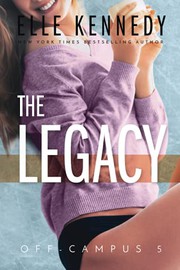
The Legacy
Four Briar hockey couples face weddings, proposals, and parenthood three years after graduation.
2,172-word summary · 10 min read

The Last Letter
Ella trades letters with soldier Chaos, then her brother Ryan death brings Beckett to Telluride with a hidden name, sick Maisie, and a love tested by truth.
2,559-word summary · 11 min read
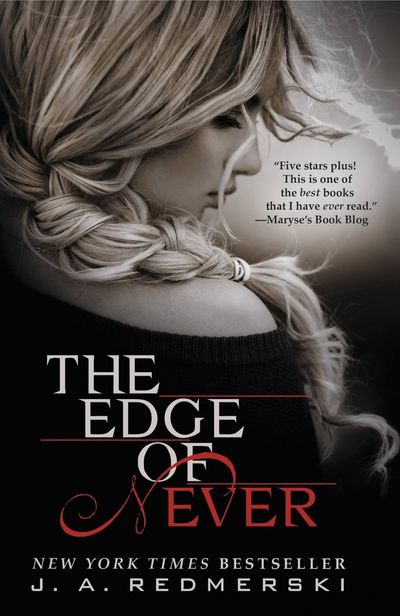
The Edge of Never
Grieving Camryn boards a bus and falls for secret-carrying Andrew.
2,482-word summary · 11 min read

After Ever Happy
Tessa and Hardin face family truths and tragedy before wedding.
2,373-word summary · 11 min read
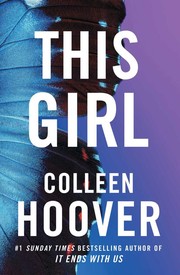
This Girl
Honeymoon retelling as Will recalls first love, classroom ban, loss, fights, and vows that stick.
2,526-word summary · 11 min read
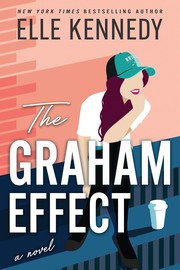
The Graham Effect
A hockey legacy and a sharp newcomer trade lessons, banter, and slow trust at Briar.
2,377-word summary · 11 min read
Wait for You
Avery flees Texas for college to bury her past, but patient Cam Hamilton refuses to stay a stranger.
2,866-word summary · 13 min read