
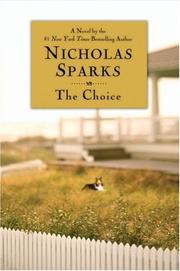
The Choice
2,150-word summary 10 min read 288 pages in the book
- First published
- 2007
- Publisher
- Grand Central Publishing
- Pages
- 288
- ISBN
- 9780446579926
Reading options
What's inside (7 sections)
I picked up The Choice right after rereading one of the earlier Sparks books, expecting the usual small town courtship with a sad last act. What I got instead was a book with a hinge in the middle. It was first published on September 24, 2007 by Grand Central Publishing, and the first hardcover runs 288 pages (ISBN 9780446579926). The first half is a neighbors to lovers story set in Beaufort, North Carolina. The second half jumps eleven years forward and asks what love looks like in a hospital corridor. That split structure is the whole gamble of the novel, and honestly it is why the book stuck with me longer than some of his smoother ones.
Travis Parker is the kind of man Sparks clearly enjoys writing. He has a good job as a veterinarian, a house on the water, a boat he actually uses, and a circle of friends who show up for barbecues and stay late. He waterskis, he grills, he works hard at the clinic, and he holds the quiet belief that a serious relationship would only narrow a life that already feels wide. There is nothing tortured about him at the start. That is the point. He is content, and content people make interesting subjects only when something arrives to disturb them.
What arrives is Gabrielle Holland, moving into the house next door. She is in her mid twenties, quick tongued, a redhead, working as a physician assistant, and new enough in town that everything about her routines is still settling. She also has a longtime boyfriend named Kevin, a steady man she more or less expects to marry. From her first afternoon, Travis registers as a nuisance. He throws a loud backyard cookout with music carrying straight over the fence while she is trying to get her house in order. She marches over to complain, and he answers the door with the relaxed grin of a man who has never once been rattled by a neighbor.
Then comes the accusation that sets the whole book in motion. Gabby keeps a purebred collie, and the dog has come into season. Travis keeps a big friendly boxer with too much freedom and too little supervision. Gabby puts the facts together and concludes the obvious: his dog got her dog pregnant. She says so to his face, furious. Travis, being a vet, finds the situation more funny than offensive, which only makes her angrier. It is a ridiculous first meeting, and Sparks plays it for real comedy. Under the comedy, though, the scene does its job. These two notice each other, and the irritation is already a little bit performative on both sides.
The dog fight next door
The early chapters live on that friction. Gabby has Kevin, and Kevin is the safe plan. He is established, serious, the kind of boyfriend her family approves of without discussion. Travis is everything Kevin is not: outdoorsy, teasing, a man whose idea of a perfect Saturday involves salt water and an engine. Gabby tells herself she dislikes him. She keeps finding reasons to talk to him.
What softens her is not charm so much as competence. When her collie goes into labor, things do not go easily, and Gabby discovers the difference between reading about whelping and watching it happen on her kitchen floor. She calls on the one expert within shouting distance. Travis comes over, takes one look, and moves them all to his clinic where he has equipment and help. He stays up with the dog through the hard parts. At one point his father finds him asleep on the clinic floor beside the whelping box, and the older man understands before Travis does that this stopped being about the dogs some time ago.
I liked this stretch more than I expected to. Sparks is often accused of rushing couples together on the strength of one sunset, but here the pileup of small errands, checkups on the puppies, fence line conversations, and borrowed cups of things gives the attraction somewhere to stand. Gabby keeps her guard up because she is technically taken, and that restraint makes every small kindness land harder. The puppies themselves help. There is something disarming about two adults whispering over a box of newborns at midnight, and Sparks knows it.
Puppies and a boat ride
The courtship, once it starts moving, moves through set pieces that will feel familiar to anyone who has read Sparks before. There is a boat trip with Travis's friends where Gabby sees him at ease among people who love him. There are dinners, first cooked by him, then by her, with the easy escalation that home cooking always signals in these books. There is a visit to the private island Travis treats as his refuge, a scrap of land he usually visits alone and now chooses to share. Each outing peels back a layer. Travis shows her the motherless side of his family story and the way his work steadies him. Gabby shows him the ambition and tenderness tangled together in her, the part of her that chose medicine because she wants to be useful to people who are scared.
The friends and family around them get enough shading to feel like more than props. Travis's father carries the memory of his late wife into every scene without making it a speech. His sister watches the new romance with the amused alertness of a sibling who has seen her brother coast for years. On Gabby's side there are phone calls with her mother and the background presence of Kevin, waiting wherever Kevin lives and works, trusting a relationship that is quietly coming apart. Sparks keeps Kevin mostly offstage, which is smart. Kevin works better as an idea, the good man on paper, than he would as a scene partner getting outshone.
My favorite beat in this section is small. Travis buys a second wooden chair for his yard, so that his solitary evening spot becomes a spot for two. Nobody makes a speech about it. Gabby simply notices it one evening and understands what it cost a confirmed bachelor to place it there. Sparks is better at objects than at declarations, and the book is at its best when it trusts that.
Kevin, and the harder call
Of course Gabby has to decide, and the book gives her decision real weight instead of treating Kevin as a placeholder to be discarded. She cares about Kevin. He has been kind to her. Leaving a good man feels different from leaving a bad one, and Sparks lets that difference sit on the page. There are scenes of her turning the choice over alone, testing each future in her head. With Kevin, life would be stable, respected, predictable in the comforting sense. With Travis, life would be warmer and far less certain. She goes back and forth, and the honest part of the book is that neither option is framed as self destruction. One is simply safer than the other.
She chooses Travis. The scenes around the breakup stay mercifully brief, and then the book lets itself be happy for a while. There is a proposal with her family's blessing and a wedding that Sparks sketches rather than stages in full. Readers who want forty pages of flowers will not get them. The point is the verdict, not the ceremony. Gabby picked the uncertain man, the widowed house next door becomes a shared home, and Part One closes on two people who believe the hardest choice of their relationship is behind them.
It is not, and the book's title starts to look less like a label and more like a warning.
Eleven years later
Part Two opens eleven years on, and the shift in tone is deliberate. Travis and Gabby are married with children now, living the full, tired, happy life of two working parents. The details are ordinary on purpose. There are school runs and clinic emergencies, grocery lists and tired evenings where conversation happens in the gaps between tasks. Travis still works long hours at the practice. Gabby still carries the organizational load that keeps a household upright. They love each other. They also irritate each other in the settled way of people who have been married long enough to know exactly which buttons to avoid pressing, and press them anyway when tired.
Sparks does something clever here. He does not manufacture a villain or an affair or a dramatic betrayal to test the marriage. The test is erosion, the slow drift that comes from two good people being too busy to notice they are becoming roommates. One evening they plan dinner together and Travis gets held up at the clinic by an emergency he cannot walk away from. Gabby waits, then stops waiting, and drives home alone. On that drive, another car hits hers. The accident is sudden and random, the kind of thing no choice could have prevented, and it lands harder because the last thing between them was a small, stupid, forgivable disappointment.
Gabby survives the crash but does not wake up. The head injury puts her in a coma, and the doctors are honest in the way doctors have to be. They tell Travis the odds are poor and the wait may have no end. Machines breathe for her. The children ask questions he cannot answer. Her family gathers. His friends bring food that nobody eats. The house that was full of noise goes quiet in a way that feels permanent, and Travis, who once believed his life was complete, learns what an actually empty house sounds like.
The coma and the last choice
This is where the title's second meaning closes around the story. With Gabby showing no sign of waking, the question of her care becomes unavoidable. The doctors lay out the options as gently as they can. One path is to accept that she is gone in every way that matters and let her go. The other is to move her to a long term care facility and keep waiting, possibly for years, for a waking that the charts say will probably never come. Her family has opinions. His friends have opinions. Grief makes everyone certain, and everyone's certainty points a different way.
Travis refuses to authorize the end. He moves her to long term care and settles into the strangest chapter of his life: a married man living alone, visiting his wife in a place that smells of disinfectant, talking to her about the children and the dogs and the small news of Beaufort as if conversation alone could build a bridge back. He brings the kids on schedules the nurses suggest. He argues with relatives who think he is being cruel to everyone including himself. He keeps the house running and the clinic running and himself running on very little sleep. Sparks writes these months plainly, without reaching for uplift, and the plainness is what makes them hurt.
About three months after the move, Gabby opens her eyes. There is no trumpet swell on the page, just confusion and slow recognition and the long work of recovery beginning. She comes home eventually to a house that rearranged itself around her absence, to children who grew inches while she slept, to a husband who looks older than the man she last saw. The book does not pretend the waking fixes everything. It treats survival as the start of a different hard thing rather than the end of the hard thing.
I should be honest about what does not work. The medicine here is story medicine, and anyone who has sat through a real long term coma will find the timeline generous and the awakening tidy. Gabby herself has less interior life in the second half than the first, for obvious reasons, and the book leans heavily on Travis's suffering in a way that sometimes pushes her to the edge of her own story. The prose stays plain throughout, occasionally to a fault, and readers who want psychological intricacy will find the sentences too simple for the subject. The 2016 film version, released by Lionsgate with Benjamin Walker and Teresa Palmer as the leads, kept the same shape and most of the same weaknesses.
Still, the mirror structure earns its keep. A young woman chooses between two men, and a middle aged man chooses between holding on and letting go, and the book insists both choices are acts of love rather than acts of selfishness. I finished it thinking less about which choice was right and more about how little warning life gives before it asks. Readers who want a romance that stays in the sunshine should skip this one. Readers willing to sit in a quiet hospital room for a hundred pages will find the first half's happiness retroactively sharpened by everything that follows.
FAQ
When was The Choice published?
Grand Central Publishing published it on September 24, 2007. The first hardcover runs 288 pages.
Who are the main characters?
Travis Parker, a Beaufort veterinarian, and Gabrielle Holland, a physician assistant who moves in next door with her collie.
Does the 2016 film follow the book?
Yes. The 2016 Lionsgate film with Benjamin Walker and Teresa Palmer keeps the two part shape, the coma choice, and most of the same weaknesses.
Similar books

At First Sight
Jeremy and Lexie are married and expecting a baby when anonymous emails tell him the child may not be his.
2,317-word summary · 10 min read

Two by Two
Sparks's twentieth novel turns from first love to a marriage breaking up: Russell Green loses his wife and his job, then rebuilds his life around his…
2,192-word summary · 10 min read
The Wish
A dying photographer recalls 1996 Ocracoke first love and an adoption choice.
2,176-word summary · 10 min read
The Longest Ride
A stranded widower relives his marriage while a Wake Forest student and a bull rider test new love in North Carolina.
2,488-word summary · 11 min read
The Wedding
Wilson Lewis courts his own wife again with Noah's help as daughter Anna plans her wedding.
2,076-word summary · 9 min read
Safe Haven
Katie hides in Southport from a violent husband and falls for widower Alex.
2,480-word summary · 11 min read
Act Your Age, Eve Brown
Eve Brown crashes into a Lake District bed and breakfast, breaks the owner's arm, and talks her way into his kitchen. A grumpy-sunshine romance about work,…
2,474-word summary · 11 min read

2 States: The Story of My Marriage
A Punjabi boy from Delhi and a Tamil Brahmin girl from Chennai meet at IIM Ahmedabad, and turn a love marriage into a campaign to convince two families.
2,634-word summary · 12 min read
Delilah Green Doesn't Care
Delilah returns to Bright Falls to photograph her stepsister's wedding and falls for Claire, a bookstore owner and single mother, while a cruel bet threatens…
2,315-word summary · 10 min read
The Bridges of Madison County
A four-day affair between an Iowa farm wife and a photographer asks what a brief happiness is worth against family duty.
2,487-word summary · 11 min read
Garden Spells
Two sisters reunite in their family home in Bascom, North Carolina, where an apple tree shows anyone who eats from it the biggest event of their life.
2,030-word summary · 9 min read
When in Rome
A burnt-out pop star hides out in small-town Kentucky and falls for the grumpy pie-shop owner hiding her.
2,495-word summary · 11 min read
The Switch
A burned-out consultant and her 79-year-old grandmother swap London and Yorkshire homes for two months, facing grief, dating apps, and village politics.
2,782-word summary · 12 min read
Major Pettigrew's Last Stand
A 68-year-old widower and a Pakistani shopkeeper widow fall for each other in a Sussex village that watches their every step.
2,957-word summary · 13 min read
Practice Makes Perfect
A people pleaser takes dating lessons from a bodyguard learning to stay.
1,999-word summary · 9 min read
Final Offer
Cal Kane must spend the summer at Lake Wisteria to inherit, but his childhood ex Lana, now a mother, says the house belongs to her family.
2,379-word summary · 11 min read
To Sir Phillip, With Love
Outspoken Eloise writes a grieving botanist, visits unchaperoned, and stays for twins.
2,013-word summary · 9 min read
Things We Left Behind
Lucian Rollins returns to Knockemout to bury his father's past and collides with librarian Sloane Walton.
2,777-word summary · 12 min read
Terms and Conditions
Declan must marry to inherit, so he offers his assistant a deal with rules.
2,695-word summary · 12 min read
Romancing Mister Bridgerton
Colin Bridgerton returns and discovers Penelope Featherington is Lady Whistledown.
2,388-word summary · 11 min read
The Viscount Who Loved Me
Anthony Bridgerton vows to marry without love until Kate Sheffield challenges him at every turn.
2,666-word summary · 12 min read
Part of Your World
ER doctor Alexis Montgomery falls for carpenter Daniel Grant in Wakan while her surgeon family presses duty.
3,078-word summary · 14 min read
Just for the Summer
Emma and Justin date to break a matching curse, then face sudden guardianship and illness on Lake Minnetonka.
3,090-word summary · 14 min read
The Duke and I
Daphne Bridgerton and Simon Basset fake a courtship that turns real, then face truth about children.
2,107-word summary · 9 min read
All Your Perfects
Quinn and Graham's perfect love frays under infertility, and they must decide what perfect means now.
2,072-word summary · 9 min read
Things We Never Got Over
Naomi runs from her wedding to help her twin in Knockemout and clashes with Knox Morgan.
3,358-word summary · 15 min read
True Believer
Jeremy Marsh, a science journalist who debunks paranormal claims, comes to a small North Carolina town and falls for a librarian who believes in things he…
2,125-word summary · 9 min read
Every Breath
Two strangers share one week at Sunset Beach in 1990, part for duty, and reunite decades later at the mailbox that started it all.
2,357-word summary · 10 min read
A Bend in the Road
Widowed sheriff Miles loves teacher Sarah while her family's secret touches his wife's death.
2,182-word summary · 10 min read
The Best of Me
Teen lovers torn apart in small town Oriental reunite twenty years after a friend's death to settle his estate and face the choices that split them.
2,871-word summary · 13 min read