
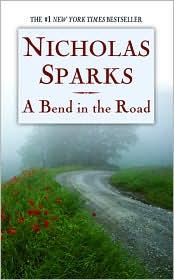
A Bend in the Road
2,182-word summary 10 min read 341 pages in the book
- First published
- 2001
- Publisher
- Warner Books
- Pages
- 341
- ISBN
- 9780446527781
Reading options
What's inside (12 sections)
I read A Bend in the Road because early Sparks curiosity got me after The Notebook. Nicholas Sparks published it in 2001 with Warner Books. My reading follows the 341 page hardcover. Sheriff Miles Ryan hunts his wife's hit and run driver while falling for Sarah Andrews, whose own family hides the truth. It is small town romance with a mystery spine about forgiveness that costs.
Miles Ryan's life ended two years ago when his wife Missy died in a hit and run. Deputy sheriff of New Bern, North Carolina, he parents young Jonah through grief while working a case gone cold. He longs for justice with a steady ache that never quite becomes vengeance. Then he meets Sarah Andrews, Jonah's second grade teacher, divorced and starting over. She sees past his badge to the tired man underneath. He sees someone who laughs for the first time in years. Tentatively they reach out. Soon they fall.
Teacher, sheriff, and secret
Sarah brings her own wounds to New Bern hoping obscurity heals. A difficult divorce. A brother whose troubles follow. New classrooms where second graders love her quickly. Her bond with Jonah forms before romance with Miles deepens, which matters. She mothers the boy first as teacher, then loves the father as woman. That order keeps the story from feeling like replacement courtship. Jonah's trust precedes Miles's kisses. Both feel earned through scenes of homework help and playground duty rather than grand gestures.
What neither realizes is that they are bound by a shocking secret the marketing promises and the book plants fairly. Someone in Sarah's orbit connects to Missy's death. I will keep particulars general here beyond saying the reveal reframes early kindnesses as debts and forces Miles to choose between love and justice. His badge demands one answer. His heart demands another. Jonah's need for stability complicates both. That triangle gives the romance higher stakes than rediscovery alone. Loving Sarah means deciding what to do about Missy. No clean option exists. Sparks lets that stand without rushing past.
Miles's investigation runs parallel to courtship with procedural modesty. He re interviews witnesses. He stares at files. He drives the road where Missy died at anniversaries. Those solitary scenes show grief as cold case that never closes internally. Colleagues advise moving on. He nods and keeps the folder. That stubbornness reads as devotion rather than dysfunction because Sparks shows its costs. Sleeplessness. Distance from Jonah. Joy refused. When love finally offers exit, the case file blocks the door. Justice first. Then happiness, maybe.
Jonah as truth serum
Jonah Ryan, six going on honest, deserves emphasis as the book's moral Geiger counter. He loves his dead mother through fading memories. He likes his teacher with open heart. He asks his father questions that cut through adult evasion like hot knives. Will Sarah stay. Did mama mind. Those lines land harder than any twist because children ask what adults rehearse around. Miles answers at child's level with increasing honesty across the book. That growth models the ethic for grownups too. Tell truth in sizes hearers can carry. Then carry bigger sizes as they grow.
His classroom bond with Sarah predates romance usefully. She earned his trust through teaching before dating his father, which keeps the story from feeling like replacement shopping. Homework help. Playground duty. Notes home praising effort. Those professional foundations support personal feelings that follow. When Jonah later senses tension between beloved adults, his worry manifests in sleep and schoolwork rather than speeches. Children absorb unspoken weather. The book respects that absorption without exploiting it for melodrama. Watch the boy to know the house climate. He registers every degree.
New Bern's watchful kindness
The town setting functions as supporting character with opinions expressed through casseroles and gossip. Neighbors track Miles's mourning with respectful distance that occasionally suffocates. Church ladies invite Sarah to suppers that double as interviews. Shopkeepers report who bought what to whom. Those dynamics create warmth and surveillance in equal measure. Small towns heal through attention that also wounds. Everyone knows your grief. Everyone watches your recovery. That double edge suits romance about private healing in public. Love here requires audience management alongside feelings. Perform normalcy while feeling raw. Neighbors applaud effort.
What New Bern hides, it hides collectively through agreements nobody voices. Missy's case stayed cold partly because residents protected their own version of peace. That complicity emerges gently rather than as conspiracy. People forgot details that implicated friends. Memories softened around edges touching loved ones. Those small mercies obstructed justice without malice aforethought. The book treats that obstruction with understanding that still demands correction. Communities must choose truth over comfort eventually. Miles forces the choice by loving across its fault line. Follow his example carefully.
Miles's badge versus heart
Miles's professional ethics under romantic pressure deserve scrutiny as the book's central tension beyond swoon. Sheriff sworn to cold cases can not shelve one involving his lover's family. Every date with Sarah doubles as investigation he can not disclose. That conflict would poison lesser romances into deception plots. Here it generates honest agony played straight. Tell her and risk flight. Withhold and poison trust. Miles chooses tortured middle course of loving while looking, which satisfies neither duty fully. Readers will argue his choices productively. Professionalism versus passion has no clean protocol. He improvises decently. Forgive stumbles.
What his badge finally requires, once truth surfaces fully, tests love past romance into moral partnership. Arrest whom you hold. Comfort whom you charge. Those simultaneous demands break TV cops weekly and real ones occasionally. Miles meets them with steadiness that defines his character better than grief did. Badge first. Heart held, not abandoned. Sarah's response to his choice determines whether love survives justice. Her answer, given at cost visible on page, elevates her past beloved victim into moral agent. Both choose hard right over easy embrace. That mutual choosing redeems plot mechanics into meaning.
Sarah's brother and buried guilt
Sarah's family orbit carries the secret's weight through dynamics worth unpacking without spoiling specifics. Her brother, troubled and loved, connects to Missy's death in ways Sarah suspects but can not face. Their sibling bond, forged in shared childhood and adult disappointments, frays under unasked questions. Family dinners tense with avoidance. Phone calls screened. Those textures show how secrets corrode even peripheral relationships. Sarah loves Miles honestly while fearing what honesty requires about kin. That divided loyalty defines her arc more than romance does. Lover versus blood. No painless choice exists. Sit with her dilemma before judging speed of confessions.
What Sarah finally does with knowledge, once undeniable, redeems earlier hesitations through costly action. She risks new love to serve old justice, telling truth knowing it may end both. That courage distinguishes her from characters who bury inconvenient facts for happiness. Happiness built on graves collapses eventually anyway. Better to dig in daylight. Her decision models the book's ethic more purely than Miles's badge-bound version. Voluntary truth beats compelled testimony. Choose daylight even when darkness comforts. Few romance heroines get such steel. Sarah earns it.
Forgiveness with teeth
The book's theme, announced plainly and earned slowly, is that forgiveness requires truth first. Miles can not forgive a driver he can not name. Sarah can not confess what she only suspects. Their final confrontation works because both arrive with full knowledge and choose anyway. Choices made blind would comfort less. Sparks stages it through dialogue that stays plain where lesser romances would swell. Short sentences. Names spoken. Hands held or not. Those restraints suit people who mean every word because words already failed them once. Missy's death taught that language ends at graves. Love must speak past them.
Jonah's presence keeps the stakes human scaled throughout. A boy who lost mother at an age where memories blur, now watching father love a teacher. His questions cut cleanly. Do you like her. Will she stay. Did mama mind. Those lines land harder than any plot twist because children ask what adults rehearse around. Miles answers honestly at child's level, which models the book's ethic. Tell truth in sizes the hearer can carry. Sarah learns the same with Jonah's classroom trust. Both adults grow into honesty the boy forces by needing it.
New Bern itself functions as character with porches and gossip that small town readers will recognize. Historic homes. Garden shops. Church suppers where everyone knows whose casserole failed. That closeness comforts and suffocates by turns. Secrets can not hold long where neighbors watch, yet Missy's driver stayed hidden two years. That paradox resolves fairly through who knew what when, revealed in increments that reread cleanly. Communities protect their own until love rearranges loyalties. Then talk flows. Listen for it.
What warms and what strains
What warms is sincerity about second chances without cheap grace. Sparks argues love after loss needs truth plus time, and shows both working slowly across 341 pages. Miles and Sarah's courtship respects grief's timeline. No whirlwind. Hand holding before kissing. Meeting Jonah's teacher conferences before weekends away. That patience distinguishes early Sparks at his best from later formula. The mystery spine keeps pages turning for readers who need more than sighs. Sweet plus suspense in measured doses.
What strains is familiarity for Sparks veterans. Widower, teacher, small town, secret, choice. The template shows here in early form before later variations refined or repeated it. Dialogue occasionally tips into greeting card cadence. The twist, fairly planted, still depends on characters withholding obvious questions for chapters. Generous readers will forgive because emotion covers mechanics. Analytical ones may spot the shape early and wait for arrival. Either way the destination satisfies if you value forgiveness explored rather than assumed.
Length at 341 pages suits the double helix. No bloat. A few investigation loops could trim, but they build Miles's devotion case by case. The final choice lands with quiet force rather than courtroom fireworks. Love examined. Justice weighed. Mercy chosen at cost. That cost keeps the ending from saccharine. Happiness here has scar tissue. Touch gently.
Who should turn
Give A Bend in the Road to Sparks readers who want early style with mystery, to romance fans who like secrets with swoon, to grieving readers seeking gentle hope. It suits weekends with tea and tissues. Do not give it to readers needing gritty crime or fast twists. Pair it with The Notebook for New Bern continuity across years.
At 341 pages I read it in two sittings, marking Jonah pages. Miles starts keeping a cold file and ends choosing love with open eyes after truth, while Sarah starts hiding and ends confessing at cost. That pair, badge and teacher both schooled by loss, is why the fifth novel holds past formula. Roads bend. Walk them honestly. Love may wait around curves.
FAQ
When was A Bend in the Road published?
Warner Books published it in 2001. The hardcover runs 341 pages and the ISBN is 9780446527781.
Is it part of a series?
No. It stands alone in New Bern with Miles, Sarah, and Jonah, though the town returns in other books.
Who are Miles, Sarah, and Jonah?
Miles Ryan, Sarah Andrews, young Jonah, and the late Missy whose hit and run stays unsolved.
Similar books
Message in a Bottle
A divorced mother finds a grieving widower's letter and seeks him in North Carolina.
2,113-word summary · 9 min read
The Switch
A burned-out consultant and her 79-year-old grandmother swap London and Yorkshire homes for two months, facing grief, dating apps, and village politics.
2,782-word summary · 12 min read

Just for the Summer
Emma and Justin date to break a matching curse, then face sudden guardianship and illness on Lake Minnetonka.
3,090-word summary · 14 min read

At First Sight
Jeremy and Lexie are married and expecting a baby when anonymous emails tell him the child may not be his.
2,317-word summary · 10 min read
True Believer
Jeremy Marsh, a science journalist who debunks paranormal claims, comes to a small North Carolina town and falls for a librarian who believes in things he…
2,125-word summary · 9 min read

Every Breath
Two strangers share one week at Sunset Beach in 1990, part for duty, and reunite decades later at the mailbox that started it all.
2,357-word summary · 10 min read

The Longest Ride
A stranded widower relives his marriage while a Wake Forest student and a bull rider test new love in North Carolina.
2,488-word summary · 11 min read

Nights in Rodanthe
Divorced Adrienne and guilt worn surgeon Paul share one stormy weekend at a Rodanthe inn, fall hard, then hold close by letter until loss in South America ends…
3,338-word summary · 15 min read

The Guardian
Widowed at twenty-five, Julie Barenson leans on a Great Dane named Singer, then dates two men and learns one of them is a killer.
2,221-word summary · 10 min read
Size 12 Is Not Fat
Former teen pop star Heather Wells investigates two dorm elevator deaths while juggling her ex, her crush, and a size-12 wardrobe.
2,805-word summary · 12 min read
The Unmaking of June Farrow
A woman in a North Carolina flower-farming family walks through a red door into 1951, where she must solve her mother's disappearance and decide whether to…
2,701-word summary · 12 min read

Sam's Letters to Jennifer
A grieving journalist reads her grandmother's letters and finds a decades-long love affair that changes how she sees her family.
2,310-word summary · 10 min read

I Kissed Shara Wheeler
Shara Wheeler kisses her rival Chloe Green at prom and disappears, leaving a scavenger hunt that forces Chloe to rethink everything she knew about her.
2,083-word summary · 9 min read

Amy & Roger's Epic Detour
Amy Curry has not driven since the crash that killed her father. With Roger at the wheel and a box of maps between them, a cross-country trip becomes a slow…
3,034-word summary · 13 min read

Indigo Ridge
A new police chief in a Montana town meets the founding family's eldest son in a bar, and one night later a body turns up under their cliff.
2,763-word summary · 12 min read

Say You're Sorry
A widowed prosecutor defends the teenager accused of killing her babysitter, uncovering a small town's secrets and a killer hiding in plain sight.
2,116-word summary · 9 min read

Delilah Green Doesn't Care
Delilah returns to Bright Falls to photograph her stepsister's wedding and falls for Claire, a bookstore owner and single mother, while a cruel bet threatens…
2,315-word summary · 10 min read
The Survivors
Kieran Elliott returns to Evelyn Bay twelve years after a storm killed his brother, and a young woman's murder forces the town to face what it has concealed.
2,571-word summary · 11 min read

The No-Show
Three women are stood up on Valentine's Day by the same man, but the timeline is not what it seems. O'Leary's warmest book with a knife in it.
2,127-word summary · 9 min read

Dial A for Aunties
A wedding photographer accidentally kills her blind date, and her mother and three aunties help her hide the body during the biggest wedding of their careers.
2,076-word summary · 9 min read
Everything We Keep
A widow questions her husband's death when a stranger claims his past.
2,307-word summary · 10 min read
The Upside of Falling
Two teens fake-date for a summer dare and end up facing grief, family secrets, and first love.
2,274-word summary · 10 min read

Never Too Far
Blaire flees Rosemary Beach after Rush's lies, then must decide if his pursuit and Nan's exposed schemes earn trust again.
2,626-word summary · 12 min read
My Killer Vacation
A teacher and a bounty hunter share a Cape Cod rental with a corpse and a growing attraction.
2,625-word summary · 12 min read

All Rhodes Lead Here
Grieving Aurora moves to Colorado to fix a farmhouse, finding slow healing with her gruff older neighbor Tobias Rhodes.
2,249-word summary · 10 min read
Evvie Drake Starts Over
A widow hiding a painful secret rents her back apartment to a pitcher who lost his throw, and they slowly learn to start again.
2,584-word summary · 11 min read
The Last Anniversary
A single woman inherits island house and unknots a vanished baby story.
2,158-word summary · 10 min read
The Keeper of Lost Things
An old writer collects lost objects and leaves the quest to his housekeeper.
1,934-word summary · 9 min read

Suzanne's Diary for Nicholas
A dumped editor reads a Vineyard mother's diary that reframes everything.
2,087-word summary · 9 min read
Forever, Interrupted
Elsie elopes in May, loses Ben nine days later, and learns grief beside the mother in law she never met.
2,051-word summary · 9 min read