
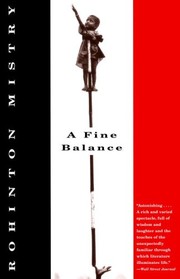
A Fine Balance
2,204-word summary 10 min read 624 pages in the book
- First published
- 1995
- Publisher
- Turtleback Books
- Pages
- 624
- ISBN
- 9780613557092
Reading options
What's inside (5 sections)
I had heard this called one of the best novels of the late twentieth century and put it off because 600 plus pages about the Emergency sounded like homework. It is not, though it is heavy in ways that stay. A Fine Balance, first published in 1995, Turtleback Books school edition running 624 pages, ISBN 9780613557092, follows four strangers in an unnamed Indian city during the 1975 Emergency who end up sharing one flat. Dina Dalal, a widowed seamstress in her forties trying to keep independence. Ishvar and Om Darji, uncle and nephew tailors from the Chamar caste trying to find work. Maneck Kohlah, a young Parsi student from the hills sent to the city for college. Their lives tangle through work, hunger, politics, and rare kindness. It is long, often devastating, occasionally funny about small resilience, and it understands how states crush precisely through paperwork that looks neutral.
Dina grew up Parsi, educated, married for love against family wishes to Rustom, who died young in an accident that was nobody's fault and everybody's sorrow. To avoid returning to her brother Nusswan's house where she would be dependent and pitied, she takes in sewing for a rich company and hires tailors to help with piecework. That decision, economic rather than charitable, brings Ishvar and Om into her flat daily. They sew in her front room, eat separately at first, learn each other's habits. Maneck, son of family friends, needs lodging for college and gets the back room. Four people who would never share meals by birth share a bathroom schedule, tea money, and eventually secrets. Mistry builds this household slowly across hundreds of pages with domestic detail that never feels like filler. Who buys vegetables. How to stretch dal. Where to hang clothes in monsoon. Those routines become the book's moral center. Care as daily practice inside history that dehumanizes.
Caste, city, and the Emergency
Ishvar and Om carry the book's longest memory. Born into the Chamar caste of leather workers in a village, their family was helped toward tailoring by reformers who believed occupation should not follow birth. That breach brings pride and violent reprisal from upper castes who beat and humiliate the family for overreaching, including atrocities against Om's generation that Mistry describes plainly without lingering for shock. They leave the village for the city because the city promises anonymity. No one knows caste from trousers ordered. That promise half holds. Workshop owners exploit, slumlords cheat, police harass, but no one beats them for sewing. Improvement measured in absence of murder is damning and honest. Mistry never lets city read as liberation. Only as differently cruel with slightly more room to breathe between blows.
The Emergency under Indira Gandhi, 1975 to 1977, with press censorship, slum demolitions, forced sterilizations, and beggar roundups, structures everything after the household forms. Mistry shows it not through leaders but through municipal notices. A slum cleared for beautification where Ishvar and Om sleep. A ration card cancelled for missing sterilization certificate. A student protest Maneck joins half heartedly that turns when police charge. Those encounters accumulate into terror that is bureaucratic rather than spectacular. No single villain orders suffering. Clerks follow quotas. Police meet targets. Doctors perform operations to keep jobs. That systemic facelessness makes the book angrier than any dictator portrait could. When Om is forcibly sterilized after protesting, and Ishvar loses legs to brutality around the same campaign, the horror comes from routine. Forms signed. Next. Mistry refuses to look away from bodies the state breaks as policy, describing injuries with clinical care that honors victims without exploiting. Read those chapters slowly. They hurt because they happened to thousands with names like Om, not because Mistry invents worst cases. Millions sterilized. Thousands displaced. Numbers that numb until one tailor's legs make them real.
Maneck's thread gives the book its youthful eyes and its most debated ending. He is Parsi like Dina, sent from hill station comfort to city college, lonely among strangers, befriending the tailors through proximity rather than ideology. He falls for no one dramatically. He drifts, studies little, watches politics with confusion that matures into anger as friends suffer. His chapters include mountain memories, mother making jam, father losing business, that contrast with city squalor without romanticizing hills. Homesickness as physical ache described through food and air. Later, after tragedy scatters the household, Maneck leaves for the Gulf to work, returns years later to find Dina, Ishvar, Om changed beyond repair. Without giving the final pages, his choice on a train platform divides readers. Some call it honest about despair after witnessing. Others call it abandonment of resilience theme. I found it devastating and true to what Emergency did to idealists who learned the world does not balance. Fine balance as ironic title. Nothing balances. People endure until they cannot, and endurance itself deserves witness even when it ends. That witness is the novel's work. Stay with suffering long enough to honor, not to fix.
Work, food, and a flat that holds
Dina's flat as near utopia that cannot hold gives the book its tender center that makes tragedy land. For hundreds of pages, four people eat together, tease about snoring, celebrate small wins like a finished dress order paid on time. Dina, who feared dependence, learns to accept help without surrendering authority. She sets rules kindly. No smoking inside. Pay for tea turns. Knock before entering Maneck's room. Those rules create home from rental. Ishvar, who lost family to caste violence, finds pride in steady piecework and in teaching Maneck to sew a button properly. Om, angry young man with reason, softens around Dina's cooking and Maneck's friendship, joking about films while cutting cloth. Maneck brings youth energy, records? Actually brings college talk and mountain honey. Those domestic months, described meal by meal, are why later scattering hurts more than statistics could. You lived with them through monsoon leaks and festival sweets. Loss becomes personal rather than historical. Mistry risks slowness here deliberately. Skim the sewing details and you miss the point. Work shared builds love that politics cannot fully destroy even when bodies break. What remains after Emergency takes legs and futures is how they cared daily while possible. That caring, recorded in 600 pages, outlasts policy. Remember dal measured, buttons taught, tea poured. Those acts resist erasure better than monuments.
Nusswan, Dina's brother, embodies family love expressed as control. Successful, patronizing, genuinely worried, he offers Dina home that would erase independence. She refuses with politeness that costs. Their phone calls, short and careful, show family love after parental death with rare accuracy. Who hosts holidays. Who pays for what. Those negotiations continue into old age for many. Readers with siblings will recognize the dance. Offer help that controls. Refuse help that frees. Both love. Both wound. Keep dancing because blood binds beyond sense. That bind sustains through book even as household breaks. Blood calls after chosen family scatters. Answer with mixed feelings. Go home for visits. Leave again to breathe. That rhythm is adult siblinghood rarely shown so patiently. Most novels resolve with hug or cut. Mistry lets it ache ongoing.
For craft, Mistry's sentences are long and musical with Indian English rhythms that never exoticize. He names foods, clothes, gods, trains without italics overload. Context teaches. Readers learn what a chawl is by living in one through pages, not definitions. Dialogue mixes Hindi words naturally as people speak. If you like spare prose, this will feel rich to a fault. Descriptions of markets, trains, slums run pages. I skimmed one market list because pattern, colors then smells then crowds, was clear. Then a short chapter where Dina mends Maneck's shirt while he pretends to sleep snaps it back. Care in small stitches after sprawling streets. Those contrasts pace the epic. Wide, then close. Crowd, then hand. Mistry alternates scope masterfully across 600 plus pages without losing thread. Each character gets interiority in turn. Even minor figures like the landlord get histories that explain cruelty without excusing. Everyone acts from need inside system that pits needs against each other. Tailors versus street sleepers for pavement. Dina versus brother for respectability. That competition among poor serves power above, which Mistry shows without lecturing. Watch who fights whom while officials watch from cars. The answer indicts.
What endures and who should try it
The book's reputation for bleakness is deserved and incomplete. Yes, bad things happen to good people without redress. Legs lost. Futures cut. Deaths by train and despair. But pages of shared meals, jokes about noses, pride in finished garments, persist alongside. Mistry insists joy coexists with oppression rather than denying either. A birthday celebrated with sweet rice in a room that leaks teaches more than despair alone. That balance, fine as thread holding, is craft and ethics at once. Do not look away from sterilization camps. Do not forget birthday rice. Hold both in same hands like tailors hold cloth and needle. Prick and mend together. Readers who want uplift should know joy here is momentary by design. No systemic fix arrives. Emergency ends, but damage stays in bodies. That honesty offends those wanting redemption arcs. It comforted me strangely. Witness without false hope respects victims more than rescue fantasies. Stay 600 pages. Remember names. That remembering is the balance Mistry offers against history that forgets. Take it.
Time works as texture rather than timeline throughout. Chapters move forward, but memories interrupt present action the way smells trigger. Ishvar smells rain and remembers village mud before beating. Dina hears wedding music and recalls Rustom laughing. Maneck sees mountains in city smog and aches. Those sense memories slow narrative in ways some readers call baggy. I came to see them as point. Trauma lives in senses, not dates. Objects keep time better than calendars. Sewing machine oiled. Tea cups chipped. Buttons saved in tins. Pay attention to things characters keep touching after loss. They tell chronology feelings follow. Follow things, not years, to understand.
For who this is for. If you like epic humanism like Les Misérables set in modern India, try it with time. This needs weeks, not sittings. Short sessions of 50 pages with breaks to breathe. If you want fast plot, look elsewhere. Sewing and tea fill hundreds of pages deliberately. If Emergency history is new, pair with a short overview article first for context, then let novel teach through lives. I did and understood more than overview alone gave. Numbers need names. Mistry supplies names that stay. Ishvar's patience. Om's laugh. Dina's spine. Maneck's gaze out train windows. Those four ride with you after closing. I thought about them on my own commute, crowded train suddenly full of tailors with bundles. Look around. Fine balances everywhere, held briefly then dropped. Notice who picks up. Help carry if asked. That instruction, simple and hard, is the book's gift beyond story.
The beggar master? Actually the street characters who orbit the household also stayed with me after closing. The beggar who protects pavement spots with pride in system he runs fairly by street rules. The tailor master who exploits apprentices while claiming to keep business alive to employ at all. The policeman who enforces quotas with visible shame. Each gets an interior moment that prevents type. Beggar counts coins with care. Master defends underpaying as survival. Policeman drinks after sterilization duty to forget faces. Those complications do not excuse, but they explain enough to mourn systems that make decent people do indecent quotas. Blame structures while seeing faces inside. That double vision is hard to hold across 600 pages without simplifying into heroes and villains. Mistry holds by giving even minor figures one humane detail before showing complicity. Remember hands before orders. Hands shake while signing sterilization forms. Shake matters alongside signature. Notice both. Judge acts while witnessing tremble. That witnessing is what long novels do best that articles cannot. Stay long enough to see shaking. Short reports record signatures. Stay for tremble. That staying is why length justifies itself. Skim to plot and you miss tremble that changes judgment from condemnation to grief. Grieve systems and people together. Hold both.
For rereading advice, the book rewards a second pass focused on food alone. Track every meal from first tea to last shared rice. Who cooks. Who serves. Who eats first. Those orders map power shifting as household bonds. Early, Dina serves tailors separately from herself and Maneck. Later, all eat together from same pot after crisis bonds. That movement from separate to shared dishes tells integration better than dialogue about caste. Bodies eating together desegregate faster than laws. Later, after scattering, Dina eats alone again with portions measured for one. That return to single pot measures loss more than narration states. Follow pots, not proclamations, to feel Emergency impact on intimate level. Policies demolish slums in headlines. Pots shrink from four to one in kitchens. That shrinkage is history as lived. Teach the book through meals if discussing with others. Ask what each shared dish cost and who paid. Answers reveal economics summaries skip. Dal shared means less tomorrow. Share anyway. That anyway is the book's thesis in one spoon. Give when scarce. Remember givers. That memory outlasts policy. Keep spoon.
FAQ
Who are the four in A Fine Balance?
Dina Dalal widowed seamstress, Ishvar and Om Darji uncle nephew tailors, and Maneck Kohlah student lodger. They share tea money and secrets.
When was A Fine Balance published?
McClelland and Stewart published it in 1995. The Turtleback edition cited runs 624 pages with ISBN 9780613557092.
Similar books

Fathers and Sons
Arkady brings the nihilist Bazarov home to his father's estate, and a generational argument turns into love, a duel, and an early death.
2,192-word summary · 10 min read

Too Much and Never Enough: How My Family Created the World's Most Dangerous Man
Mary L. Trump's 2020 memoir traces how a cold, zero-sum Queens household shaped her uncle, and uses family tax documents to challenge his self-made story.
2,059-word summary · 9 min read

2 States: The Story of My Marriage
A Punjabi boy from Delhi and a Tamil Brahmin girl from Chennai meet at IIM Ahmedabad, and turn a love marriage into a campaign to convince two families.
2,634-word summary · 12 min read

The Tenant of Wildfell Hall
Helen flees a cruel marriage, hides as Helen Graham at Wildfell Hall, and tells her full story through a long diary young Gilbert Markham must read before…
2,838-word summary · 13 min read

Moloka'i
Seven-year-old Rachel Kalama is sent to Kalaupapa leprosy settlement in Hawaii, growing into a full life of love and loss.
2,190-word summary · 10 min read
Midnight's Children
Saleem Sinai, born at India's independence midnight, narrates his family's saga as his life mirrors the new nation's history.
2,734-word summary · 12 min read

Lady Tan's Circle of Women
Ming physician Tan Yunxian treats bound feet and births with midwife Meiling, defying male medicine rules.
2,330-word summary · 10 min read

The Beekeeper of Aleppo
A beekeeper guides his blind wife from Aleppo through camps toward Britain.
1,992-word summary · 9 min read

On the Way to the Wedding
Gregory chases the wrong friend while Lucy fights a forced engagement.
1,938-word summary · 9 min read
Half Broke Horses
Jeannette Walls tells her grandmother Lily Casey Smith's frontier life, from a Texas dugout to teaching at fifteen and ranching in Arizona.
2,580-word summary · 11 min read

The Henna Artist
In 1950s Jaipur, a henna artist to rich women rebuilds her life until the sister she never knew arrives.
2,104-word summary · 9 min read

The God of Small Things
Twins Rahel and Estha grow up in Kerala in 1969, where family rules and caste lines shape a loss that follows them into adulthood.
2,646-word summary · 12 min read

Hillbilly Elegy
Vance traces Mamaw and Papaw from Kentucky to Middletown through addiction, Marines, and Yale Law.
3,390-word summary · 15 min read
The Poisonwood Bible
A missionary drags his wife and four daughters to the Congo in 1959, and Africa remakes each of them.
2,227-word summary · 10 min read

The Four Winds
Elsa Martinelli fights the Dust Bowl to save her Texas farm, then risks everything on the road to California.
2,099-word summary · 9 min read

The Great Alone
The Allbright family moves to Alaska in the 1970s where Ernt's PTSD and winter test Leni.
3,460-word summary · 15 min read

What Happened to Goodbye
Mclean has reinvented herself in four towns since her parents divorced. In Lakeview she uses her real name, and for the first time staying put becomes a choice.
2,796-word summary · 12 min read

Violeta
A woman born in 1920 writes her life story to her grandson, from one pandemic to another, through wealth, ruin, passion, and dictatorship in South America.
2,555-word summary · 11 min read

The Long Winter
Dakota Territory, 1880: seven months of blizzards cut a town off from the railroad, and a family survives on twisted hay, ground wheat, and a dangerous wheat…
2,210-word summary · 10 min read

The Japanese Lover
A Polish refugee and the son of a Japanese gardener fall in love in San Francisco in 1939, then keep the affair secret for nearly seventy years.
2,286-word summary · 10 min read

Ship of Magic
A sentient ship wakes when her captain dies, and the family that owns her starts to come apart over who gets to sail her.
2,026-word summary · 9 min read
Nudge: Improving Decisions About Health, Wealth, and Happiness
Thaler and Sunstein show how defaults, framing, and social cues steer choices, and argue for choice architecture with an opt-out.
3,146-word summary · 14 min read
Make Way for Ducklings
A pair of mallards raise eight ducklings on the Charles River and lead them across Boston to the Public Garden, with a little help from a friendly policeman.
2,044-word summary · 9 min read

Long Walk to Freedom
Mandela's account of a Thembu childhood, a law practice, a banned movement, twenty-seven years in prison, and the negotiation that ended apartheid.
2,454-word summary · 11 min read

Heretics of Dune
Fifteen centuries after Leto II, the Bene Gesserit raise a new Duncan Idaho while the Honored Matres return and Rakis burns.
2,673-word summary · 12 min read

Brown Girl Dreaming
Jacqueline Woodson retells her childhood in verse, moving from Ohio to South Carolina to Brooklyn while the civil rights movement reshapes the world around her.
2,727-word summary · 12 min read

This Winter
On one difficult Christmas Day, Tori, Charlie, and Oliver Spring try to hold their family together while Charlie's eating disorder makes every tradition a test.
2,034-word summary · 9 min read

The Shadow Sister
Star D'Apliese steps out of her sister's shadow and follows a bookshop clue into the Edwardian life of Flora MacNichol, a woman who gave up love for duty.
2,260-word summary · 10 min read

Prelude to Foundation
A young Hari Seldon arrives on Trantor with a theory he cannot yet prove, and a hunt through the planet-city forces him to turn psychohistory into a real…
2,013-word summary · 9 min read
Nothing to Envy
Barbara Demick follows six defectors from Chongjin through the North Korean famine, showing how ordinary people lived, believed, and finally left.
2,068-word summary · 9 min read