
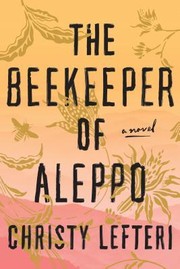
The Beekeeper of Aleppo
1,992-word summary 9 min read 384 pages in the book
- First published
- 2019
- Publisher
- Zaffre
- Pages
- 384
- ISBN
- 9781838770549
Reading options
What's inside (5 sections)
I had avoided this book because I worried it would turn war into inspiration porn, and I am glad I finally tried it because Lefteri, who volunteered in refugee centers, writes with more care than that fear allows. The Beekeeper of Aleppo, first published in 2019, Zaffre paperback edition running 384 pages, ISBN 9781838770549, follows Nuri, a beekeeper from Aleppo, and his wife Afra, an artist, as they flee Syria through Turkey and Greece toward Britain after losing their son. It is quiet, sad, and occasionally luminous about bees and art, and it understands that trauma makes memory unreliable without making the narrator untrustworthy.
Nuri kept bees on the edge of Aleppo with his cousin Mustafa, who taught him hives as family. Afra painted, sold work, loved color. They had a son, Sami, who loved the bees and who dies when war reaches their street. Afra, who saw what happened, goes blind, not from injury but from grief and shock. Nuri, who blames himself for not stopping Sami from playing outside, decides they must leave. The early Aleppo chapters move between before and after. Before, morning routines, hive smoke, honey tastes, neighbors. After, rubble, checkpoints, smugglers' prices. The contrast does the work without speeches. You feel what was lost because you smelled it first.
Leaving with Afra blind
The journey structure is episodic. Aleppo to the border, Turkey with Mustafa's help and then without, a camp, Istanbul, the Aegean crossing to Leros, Athens, then toward Britain where Mustafa already waits and where asylum interviews loom. Nuri narrates in present tense that slips into past when he remembers Sami. Afra barely speaks at first, sits with her hands in her lap, refuses food. Nuri must guide her physically while grieving himself, which strains tenderness into resentment he hates. A scene where he snaps at her for not eating, then immediately apologizes to silence, captures caregiver exhaustion better than any essay.
Mustafa is the practical angel who cannot save everyone. He knows routes, prices, which smuggler cheats, which camp has doctors. He gives Nuri money and advice, then must leave for his own family. Their goodbye at a bus station, with Mustafa pressing honey money into Nuri's palm and telling him to remember bees, made me cry because it is so ordinary. No heroic speech. Just a cousin who kept bees now counting coins for boats. Later phone calls, short and expensive, carry more weight than chapters of travel. Are you alive. Did you eat. Keep Afra warm.
The Turkey chapters show how quickly ordinary life becomes transactional. Rent by night, work without pay promises, police who look away for a fee. Nuri, once a respected keeper with apprentices, washes dishes and is cheated. Afra, once an artist whose paintings hung in homes, sits veiled and unseen. They meet others fleeing, a mother with twins, an old man with pigeons he will not abandon, a teenager who translates for food. Those brief fellow travelers keep the book from becoming only Nuri's head. Each has a reason to leave and a story about who was lost. None feel like props. They appear, help or hurt, vanish as journeys do.
For craft, Lefteri writes sensory detail that never feels touristy. Hive sounds at dawn, thyme honey on bread, diesel and sea salt on boats, camp mud that never dries. Bees return as image without overuse. Nuri thinks in hive terms when stressed. Who is queen here. Who guards. When to smoke and calm versus when to run. Afra's blindness is handled with respect. She listens more, touches faces to remember, starts to paint again in darkness with textures rather than color. A late scene where she shapes a bee from clay while Nuri describes honey light shows recovery as practice, not miracle.
Greece, the sea, and the camp
The sea crossing is the center and Lefteri does not sensationalize. A crowded dinghy at night, life jackets that are fake, a smuggler with a phone flashlight, Afra holding Nuri's belt so they do not separate. No music. Just cold, vomiting, a child crying until quiet. When they reach Leros, volunteers give blankets and soup. Nuri cannot taste. Survivors' guilt starts immediately. Why did we live when Sami did not. Why did our boat not sink like others on news. Those questions do not resolve. They sit alongside gratitude in ways that feel true to survivor accounts I have read.
The camp chapters are bureaucratic hell rather than action. Queues for food, for doctors, for interviews. Tents that flood. Rumors about which island processes faster. Nuri tries to keep Afra safe from men who stare, from theft, from despair. He meets a Moroccan man who teaches him a little English for asylum interviews. Practice saying beekeeper, Aleppo, war, son dead, wife blind. The words sound flat in English and that flatness scares Nuri. How can flat words carry Sami. How can a form hold Afra's blindness. Those fears drive the later London interview scenes where Nuri must tell a coherent story while his memory fragments. Trauma does not narrate linearly. Asylum systems require linearity. That mismatch is the book's quiet indictment.
Afra begins to return in Greece through small acts. She washes another woman's hair. She listens to a volunteer read. She asks Nuri what color the sea is and gets angry when he says gray, insisting it must be blue somewhere. That anger is the first feeling besides grief she shows, and Nuri treasures it. Later, she starts to sculpt with mud and then with clay given by an aid worker. Touch replaces sight. Making replaces seeing. I found these pages more hopeful than any rescue because they show Afra choosing life without forgetting Sami. She makes a small bee and gives it to a child who lost siblings. No words about healing. Just an object passed hand to hand.
For pacing, the middle camp section repeats. Another queue, another rumor, another night of rain. Two distributions in a row blurred for me. I skimmed one food line because the point, waiting as erosion, was clear. Then a short chapter where Nuri finds a stray dog and feeds it honey he saved snaps it back. Kindness to animals when humans suffer shows who Nuri still is. He was a keeper. He keeps, even with nothing. That continuity matters more than plot.
London interviews and what remains
The final third moves toward Britain and asylum interviews that will decide if they stay. Nuri must prove identity, route, danger, with papers lost and memory broken. He confuses dates. He forgets a town name. An interpreter mistranslates beekeeper as farmer, which changes meaning for a caseworker checking boxes. Mustafa coaches by phone. Tell the truth in order. Do not add. Do not hide Sami. Nuri tries and fails to be orderly because grief interrupts. A question about Sami's age triggers a memory of bees on his son's hands and Nuri stops speaking for minutes. The interviewer waits, which is kindness, and notes delay, which is system.
Without spoiling the decision, the book ends not with triumph but with possibility. Nuri and Afra in a small room in Britain, learning to live with loss while tending a rooftop hive Mustafa helps set up. Afra paints again in textured colors she feels more than sees. Nuri teaches a neighbor's child about smoke and calm. Sami is not replaced or explained away. He is carried in routines. Check hives at dawn. Share honey. Tell his story when asked, not as case but as son.
For criticism, Nuri's narration sometimes explains trauma psychology a little too neatly. He names dissociation, flashbacks, survivor guilt in ways a beekeeper in 2016 might not. Lefteri worked with refugees and clearly wants readers to understand, but a few passages sound like training manuals inside a novel. Also, some secondary helpers, volunteers and caseworkers, are uniformly kind, which softens systemic cruelty. Real systems include kind people and cruel rules together. The book shows rules more than unkind individuals, which is fair but can feel abstract.
Still, at 384 pages in this edition it reads gently for its subject. Short chapters, present tense, sensory anchors. I read it slowly across a week, often putting it down to look out the window. That slowness felt right. You should not rush a book about waiting. If you volunteered or donated during the Syria crisis and wondered where stories go after camps, this gives one answer. Not policy, but a hive kept on a London roof by a man who lost everything and still knows how to keep.
For who this is for. If you liked A Man Called Ove for quiet male grief, try it, though this is sadder and less comic. If you want action about war, look elsewhere. This is after the bombs, about boats and forms. If you have lost a child or love someone blind, some pages will be hard. The Sami chapters and the blindness onset are handled without lingering but without hiding. I closed it thinking about honey on bread, which Nuri describes better than any food writer, and about Afra's clay bee in a child's palm. Small objects holding huge loss. That is what Lefteri does best.
Mustafa's later calls from Britain deserve emphasis because they show resettlement without fairy tale. He works night shifts cleaning, sends money back, navigates English classes where the teacher means well but speaks too fast. He tells Nuri which streets are safe, which solicitors help, how to answer the bus driver. Those practical briefings matter more than inspiration. When Nuri finally arrives, Mustafa meets him with coats, not flowers. He takes them to a small flat with a kettle and shows Afra where the bathroom is by touch. No speeches about new starts. Just tea, blankets, and a list of appointments. That ordinariness is mercy after camps. It also sets up the rooftop hive without sentiment. Mustafa finds a landlord who allows bees if honey is shared. Beekeeping resumes not as symbol but as work that pays a little and heals a lot. Nuri tends hives between English lessons. Afra sells clay bees at a market stall. They live, which is enough and everything.
Afra's art returning through touch deserves a closer look because Lefteri resists miracle cures. Afra does not suddenly see. She learns to mix color by memory of weight, to shape faces by feeling cheekbones, to ask Nuri if a blue feels like morning. Her first finished piece after blindness is not a masterpiece. It is lumpy, dark, honest about fear. She hates it and keeps it. Later, she makes small bees for children in the camp school, each slightly different, each given without charge. Those bees travel farther than paintings ever did. A child carries one to Britain in a pocket. Another leaves one on a grave. Nuri watches and understands that Afra never stopped being an artist. She changed mediums when light left. That adaptation, not recovery of sight, is the book's idea of healing. You do not get back what war took. You make something new with what remains, and you give it away before you are ready.
The asylum interviewer's notebook as object also matters. Nuri sees her write while he talks and wonders what shorthand means. Is delay noted as lying. Is crying noted as manipulation. He tries to speak in short sentences to help translation, which makes his story sound rehearsed when it is actually careful. Mustafa warns him not to embellish, to say I do not remember when true. That advice is hard for a man who feels forgetting Sami is betrayal. Nuri would rather invent a clear date than admit memory blurs. Learning to say I do not know in English, with correct pronunciation practiced in a camp classroom, becomes a small victory. It keeps his case honest even as it risks refusal. Truth as limited offer rather than full flood.
FAQ
What happened to Sami?
Their son Sami dies when war reaches their street and Afra, who saw it, goes blind from shock. Nuri blames himself for letting Sami play outside.
When was The Beekeeper of Aleppo published?
It was first published in 2019. The Zaffre paperback cited runs 384 pages with ISBN 9781838770549.
Similar books

The Tiger's Wife
A young doctor in a war-scarred Balkan country chases the stories her grandfather left behind, including a deathless man and a deaf girl who loved an escaped…
2,232-word summary · 10 min read
Home Front
A Guard pilot deploys, comes home wounded, while husband and daughters fight to heal together.
2,091-word summary · 9 min read

Fathers and Sons
Arkady brings the nihilist Bazarov home to his father's estate, and a generational argument turns into love, a duel, and an early death.
2,192-word summary · 10 min read
A Long Walk to Water
Two eleven-year-olds in southern Sudan, twenty-three years apart: a Dinka boy fleeing war and a Nuer girl walking hours for water, until their stories meet at…
2,217-word summary · 10 min read

Sam's Letters to Jennifer
A grieving journalist reads her grandmother's letters and finds a decades-long love affair that changes how she sees her family.
2,310-word summary · 10 min read

We Are Okay
Marin fled San Francisco after her grandfather vanished and stopped answering anyone. When Mabel visits her college dorm, she has to say what happened.
2,253-word summary · 10 min read

Two by Two
Sparks's twentieth novel turns from first love to a marriage breaking up: Russell Green loses his wife and his job, then rebuilds his life around his…
2,192-word summary · 10 min read
The House We Grew Up In
The Bird family of the Cotswolds breaks apart after a suicide and spends twenty years not talking about what happened.
2,198-word summary · 10 min read

At First Sight
Jeremy and Lexie are married and expecting a baby when anonymous emails tell him the child may not be his.
2,317-word summary · 10 min read

A Spool of Blue Thread
Four generations of the Whitshank family in Baltimore, and the silences, resentments and quiet love they hand down without ever saying so.
2,408-word summary · 11 min read
In an Instant
After a family camper crashes down a snowy mountain, sixteen-year-old Finn watches from the afterlife as survivors make impossible choices and try to live with…
2,130-word summary · 9 min read

Delilah Green Doesn't Care
Delilah returns to Bright Falls to photograph her stepsister's wedding and falls for Claire, a bookstore owner and single mother, while a cruel bet threatens…
2,315-word summary · 10 min read
And Every Morning the Way Home Gets Longer and Longer
An elderly grandfather, his son, and his grandson share memories and fears as the old man's mind begins to fade, in a short novel about grief and love.
2,078-word summary · 9 min read

The Storm Sister
Ally D'Aplièse loses her father and her lover within weeks, then follows a brass frog and a Norwegian biography into Anna Landvik's music and the world of…
2,376-word summary · 11 min read

Someone Like You
Halley and her best friend Scarlett face a summer of grief, a surprise pregnancy, and Halley's dangerous first romance in Sarah Dessen's 1998 young adult novel.
2,218-word summary · 10 min read
Maame
Maddie Wright, 25, has spent years as the responsible one in her Ghanaian British family, and the year she finally tries to live for herself is the year…
2,108-word summary · 9 min read

Clap When You Land
Two half sisters, one in Sosúa and one in Queens, discover each other after their father dies in a plane crash, in Elizabeth Acevedo's novel in verse.
2,890-word summary · 13 min read

The Accidental Tourist
Grieving Macon writes travel guides for haters of travel, then Muriel intrudes.
2,252-word summary · 10 min read
Sold on a Monday
A reporter hides a Depression photo of children for sale and must face the cost.
2,501-word summary · 11 min read

Kitchen
Orphan Mikage finds home in a kitchen with Yuichi and Eriko after loss.
2,597-word summary · 12 min read

Wintergirls
After her ex-best friend dies, eighteen year old Lia fights anorexia, guilt and a ghost while her family tries to pull her back.
2,740-word summary · 12 min read

We Begin at the End
Thirteen-year-old Duchess Day Radley shields her little brother Robin after their mother dies, as freed killer Vincent King returns and sick chief Walk tries…
2,956-word summary · 13 min read

The Tenant of Wildfell Hall
Helen flees a cruel marriage, hides as Helen Graham at Wildfell Hall, and tells her full story through a long diary young Gilbert Markham must read before…
2,838-word summary · 13 min read

The Island of Missing Trees
A talking fig links 1970s Cyprus lovers Kostas and Defne with their grieving London daughter Ada years later.
3,172-word summary · 14 min read

The Deep End of the Ocean
A three year old vanishes at a Chicago hotel reunion, and nine years later the Cappadoras must face his return as a teen raised by someone else while grief…
2,951-word summary · 13 min read

The Berry Pickers
A four year old vanishes from a Maine blueberry camp in 1962, and two families carry the loss for decades until Joe and Norma face the truth.
2,606-word summary · 12 min read
We Are All Completely Beside Ourselves
Rosemary tells of twin sister Fern, a chimp raised as family, and research fallout.
2,058-word summary · 9 min read
The Winners
Two years on, Beartown opens a new rink, welcomes Maya and Benji home, and faces money fights and a gun at the ice.
2,366-word summary · 11 min read
The Mothers
Nadia hides abortion from church Mothers while Luke and Aubrey circle for years.
2,078-word summary · 9 min read
The Island of Sea Women
On Jeju island, haenyeo divers Young-sook and Mi-ja share decades of friendship strained by war and massacre.
2,204-word summary · 10 min read