
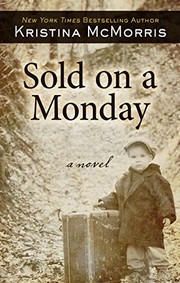
Sold on a Monday
2,501-word summary 11 min read 352 pages in the book
- First published
- 2018
- Publisher
- Sourcebooks Landmark
- Pages
- 352
- ISBN
- 9781492663997
Reading options
What's inside (8 sections)
I came to Sold on a Monday because a friend sent me the old newspaper image that inspired it. Two small children sitting under a painted sign offering children for sale. It stops you cold. Kristina McMorris first published this novel in 2018 with Sourcebooks Landmark, about 352 pages in the standard print edition, and she moves that shock back to 1931, into the hardest years of the Great Depression. It is a gentle book about an ugly choice, and I finished it in two evenings with a knot in my chest.
The story follows Ellis Reed, a struggling newspaper photographer and reporter in Philadelphia who wants a staff job and a steady wage. He shares rooms, counts coins, drinks too much coffee in the newsroom, and tries to look useful around editors who have seen everything. With him, often ahead of him in sense, is Lillian Palmer, a secretary at the paper who types fast, remembers everything, and keeps her own past locked tight.
McMorris writes in short, clear chapters that move between Ellis present and Lillian private history. The tone is warm even when the material is bleak. She is not trying to shock you with misery. She is trying to show how decent people talk themselves into a wrong step and then spend years trying to walk it back.
Philadelphia, 1931, and a picture he should not take
The opening takes Ellis out of the city on an assignment that is supposed to be minor. He is meant to photograph something ordinary for the paper, to prove he can handle routine work. On the way back, cutting through farmland in southeastern Pennsylvania, he sees a farmhouse that looks half abandoned. Paint peeling. A porch sagging. A field gone to weeds. Outside, on a blanket or a bench depending how you picture it, sit two small boys in patched clothes. Above them hangs a hand painted sign with large uneven letters offering four children for sale.
McMorris handles this well because she slows down. Ellis stops the car. He watches. He tells himself this cannot be what it looks like. A dog barks. A curtain moves. No adult comes out. The boys stare at the camera the way children stare when they are used to being looked past. Ellis lifts his camera almost by habit. He takes the shot. He takes another.
Then he does the thing that drives the whole book. Back in the darkroom, he prints the image and sees how strong it is. The sign, the small shoes, the blank faces. He knows it could get him noticed. He also knows he took it without permission and without knowing the family story. So he submits it to his editor without his name on it. He tells himself the paper can use it as an unsigned feature, that the truth of the image matters more than credit, that he will sort it out later. It is cowardice dressed as modesty, and he knows it even then.
I liked Ellis right away in a complicated way. He is not a bad man. He is ambitious and broke and tired of being invisible. He wants to help his mother, to pay rent without panic, to be the kind of reporter editors call by name. That hunger makes his bad choice understandable without making it right. McMorris does not excuse him. She lets the photo do its work and lets Ellis squirm.
A signature hidden and a career made
The photo runs and hits hard. Readers write in. Other papers pick it up. Donations come. The editor is thrilled. Ellis is sick with guilt and thrill at once. When the paper learns he took it, he is not fired. He is rewarded. He gets the staff interview he wanted, then assignments, then a desk that feels more secure. Every step up reminds him of the step down he took to get there.
This is the strongest moral thread in the novel, and McMorris keeps pulling it. Ellis tells himself the publicity might help the family. Maybe someone will help the mother. Maybe the children will be adopted into better lives. Those thoughts are comforting and mostly false. He has no idea who the woman was, whether she consented, whether the sign was desperation or a cruel joke or something in between. He published children as symbols. Symbols do not get to answer back.
Lillian watches all this from her desk by the door.
One detail I appreciated is how McMorris shows reporting work in the 1930s. Phones with party lines. Flashbulbs and heavy cameras. Notes in pencil. Trains and borrowed cars. To check a fact you drove there. To find someone you knocked. That slowness matters for the plot, because Ellis has no database to query. He has to go back to that road and ask.
A fair criticism starts here too. McMorris stacks coincidences to keep Ellis moving. He happens to see the right file. He happens to meet someone who knows someone. Lillian happens to have exactly the skill he needs at the moment he needs it. Each one alone is fine. Together they make Philadelphia feel small, like a stage set where everyone enters on cue. If you like tidy plots, you will not mind. If you want mess, you will notice.
Lillian Palmer and the newsroom
Lillian is the other half of the book, and for many readers she will be the better half. She is twenty something, unmarried, competent, polite in a way that hides grief. She lives in a boarding house, sends money home, goes to church when she feels like being judged, stays home when she does not. The other secretaries like her. The reporters rely on her. Nobody asks much about her life before Philadelphia.
Her past comes out in pieces. As a young woman she loved a man who did not stay. She became pregnant. Her family, respectable and frightened, arranged for the baby to be placed quietly with another family. She was told it was for the best. She signed papers she barely read. She never held her son long enough to memorize him. She has spent years wondering if he is alive, if he is kind, if he hates her.
McMorris does not use Lillian pain as decoration. It shapes how Lillian hears Ellis story. When Ellis finally tells her he took the photo and hid his name, she does not comfort him right away. She asks what he knows about the mother. She asks what right he had. She knows what it is to have a child taken and turned into paperwork. Her anger is quiet and steady, and it lands harder than shouting would.
The friendship between them grows the way office friendships did then. Shared lunch. A walk to the trolley. Help with a difficult editor. Ellis brings her coffee when she works late. Lillian edits his copy without making him feel small. There is attraction, but McMorris keeps it restrained. They are both carrying shame, and shame makes people careful.
I found Lillian chapters more moving than Ellis chapters, partly because McMorris gives her a rich interior life without melodrama. Lillian prays, doubts, writes letters she does not send, keeps a small box of keepsakes. She is not a symbol of motherhood. She is a working woman who made a painful decision under pressure and now types other people news while her own news stays buried.
If there is a weakness here, it is that Lillian goodness can feel too steady. She is patient, wise, forgiving, brave. The men around her get flaws and jokes and bad habits. She gets sorrow and strength. I wanted one scene where she was petty or funny or wrong about something small, just to make her fully human. McMorris gives her a little sharpness with Ellis, which helps, but not much elsewhere.
Looking for the woman in the photo
Guilt finally pushes Ellis to act. He and Lillian drive back to the farmhouse to find the family and learn the truth. The house is empty. Neighbors are wary. A storekeeper remembers a woman with children and a husband who drank and vanished. A pastor remembers a collection taken up. A schoolteacher remembers two boys who stopped coming. Nobody has a full story. Everyone has a piece that does not quite fit with the others.
This search section is long, and it is where the book feels most like historical fiction in the best sense. McMorris shows rural Pennsylvania in 1931 with care. Mortgaged farms. Men riding rails for work. Women taking in washing, selling eggs, mending for neighbors. Children pulled from school to pick or mind babies. The county poor office overwhelmed. Churches doing what they can. Pride keeping people from asking until it is too late.
Ellis and Lillian learn the mother name and trace her to relatives, then to a town, then to a rented room. I will keep names and final details loose here because the pleasure is in following their steps, but the shape is this. The mother loved her children and could not feed them. The husband was gone or useless or dangerous depending who tells it. She put up the sign in a moment of panic and despair, hoping for help, fearing the poorhouse, believing at least one wild story that a rich family might take the children and raise them well. After the photo ran, strangers offered money with strings, and others offered judgment without money.
They also learn the children were separated. One boy went to a couple who wanted a son and had a stable home. Another went to harsher circumstances, passed along, put to work, treated as help rather than kin. McMorris does not linger on abuse for shock. She shows neglect through small facts. Thin coats. Missed meals. Chores too heavy for small arms. A child flinching when a door slams. It is enough.
Ellis pride fights his conscience.
The quiet talks between Lillian and the mother carry the weight here.
Adoption, papers, and men who profit
As Ellis digs, he finds a second layer that turns the book from personal guilt toward social criticism. Adoption in the early 1930s, especially outside big cities, was often informal. There were agencies and homes, but there were also lawyers, doctors, ministers, and fixers who arranged placements for a fee. Paperwork could be thin. Oversight could be thinner. A desperate mother signing a paper might not understand she was signing away all rights forever. A couple paying expenses might not ask where the extra money went.
McMorris introduces men who live in that gray space. A local attorney who handles placements and takes a cut. A farmer looking for cheap labor who calls it adoption. A well meaning matron at a home who is overwhelmed and cuts corners. None of them see themselves as villains. That is what makes them believable. They talk about finding good homes, about saving children from starvation, about practical realities. Ellis, who once told himself similar stories about his photo, hears his own excuses in their mouths and hates it.
Lillian own search runs alongside this, through a settlement house contact. The trail is cold. Names changed. Records lost.
One strong passage lets Lillian watch a boy who might be hers from a distance and choose restraint.
Ellis helps by driving and waiting, and slowly learns to listen.
Criticism belongs here too. The villains are soft. The attorney is sleazy but never truly threatening. The harsh farmer is cruel in predictable ways. The system is the real villain, which is true to history but less satisfying in a novel. If you want a courtroom showdown or a villain exposed in headlines, you will be disappointed. McMorris prefers private reckonings to public ones, and the book loses some momentum because of it.
What the ending gives and what it smooths over
Without giving away every turn, Ellis finds a way to print the truth without reusing the children as bait. He writes about what he did, names himself, explains the harm, and points readers toward the broader problem of families broken by poverty rather than toward one mother address. His editor, to his surprise, backs him after a fight. The paper takes a risk. Readers respond with less frenzy and more care than the first time, which feels right. Sensation fades. Responsibility stays.
The family story resolves with a mix of comfort and loss. One placement holds and proves loving. Another child is moved to safer kin after pressure and paperwork and Lillian stubborn help. The mother gets support without being turned into a mascot. Not everything is repaired. A brother bond is strained by years apart. A mother grief does not vanish because rent is paid. McMorris lets some wounds stay open, and the book is better for it.
Ellis and Lillian end together, in love but not magically healed. He respects her boundaries. She trusts his remorse because he acted, not because he promised. There is a hint about her son that offers hope without a neat reunion bow. Some readers will love that restraint. Others will feel teased. I landed in the middle. I was glad McMorris did not manufacture a perfect reunion, but I wanted one more letter, one more concrete fact, to settle Lillian nights.
So who should read it. If you like historical fiction centered on family, mothers under pressure, and the Depression era, this will fit. If you care about journalism ethics, it gives you a clear case to argue about. Was Ellis wrong to submit the photo anonymously. Was he wrong to publish at all. Does his later search repay the harm. Book clubs will have plenty to discuss there.
Who might struggle. The prose is plain and tender, sometimes too tender. McMorris explains feelings that a sterner writer would leave unsaid. She ties threads with care, and at times that care feels like smoothing. Real poverty in 1931 was messier, smellier, more violent than this book shows. Real newsrooms were rougher too. If you want the hard edge of a James Agee account or a Dorothea Lange contact sheet with all its grit, this novel will feel washed. It wants to comfort as well as witness, and comfort requires some softening.
I still recommend it, with that caveat stated up front. I believed in Ellis guilt. I believed in Lillian watchfulness. I believed in a mother who could love her children and still put up a sign she hated because hunger makes philosophers of no one. The image that started it stays with me, not as a twist but as a question. What do we owe people we photograph, write about, share. McMorris answer is simple and hard. Go back. Learn names. Stay longer than the shutter speed. Help without needing applause. Ellis takes most of the book to learn it. I was glad to walk with him while he did.
FAQ
Is Sold on a Monday based on a true story?
No, but it was inspired by a real 1948 newspaper photo that showed four children under a sign reading 4 Children for Sale. McMorris moved the event to 1931 and built fictional characters around that image.
Who is Ellis Reed in Sold on a Monday?
Ellis Reed is a fictional Philadelphia reporter in 1931 who photographs children offered for sale, hides his name from the photo, and later tries to find the family to correct his error.
What subjects does the novel focus on?
The book deals with poverty, adoption, guilt, and mothers forced to give up children during the Great Depression. Readers who prefer hard crime or fast action may find it slow and tender.
Similar books

The Storm Sister
Ally D'Aplièse loses her father and her lover within weeks, then follows a brass frog and a Norwegian biography into Anna Landvik's music and the world of…
2,376-word summary · 11 min read
The Mothers
Nadia hides abortion from church Mothers while Luke and Aubrey circle for years.
2,078-word summary · 9 min read
Roll of Thunder, Hear My Cry
In Depression-era Mississippi, nine-year-old Cassie Logan learns what her Black family's land costs and why they keep it.
2,273-word summary · 10 min read

The Great Believers
Yale builds a Chicago art collection as AIDS takes his friends, and Fiona searches Paris for her daughter thirty years later.
2,742-word summary · 12 min read
Tell the Wolves I'm Home
A grieving fourteen year old secretly befriends her late uncle's boyfriend in 1980s New York, testing family loyalty and love.
3,014-word summary · 13 min read

Golden Girl
A dead novelist watches her three kids for one summer with three nudges to help.
2,052-word summary · 9 min read
For One More Day
A ruined ballplayer spends an impossible day with his dead mother.
1,989-word summary · 9 min read
When He Was Wicked
Widowed Francesca Bridgerton falls for her late husband cousin Michael, who loved her silently for years.
2,055-word summary · 9 min read

Hamnet
Agnes Hathaway holds her Stratford family together while her husband works in London, until plague takes eleven-year-old Hamnet in 1596.
3,164-word summary · 14 min read

The Long Winter
Dakota Territory, 1880: seven months of blizzards cut a town off from the railroad, and a family survives on twisted hay, ground wheat, and a dangerous wheat…
2,210-word summary · 10 min read

The Japanese Lover
A Polish refugee and the son of a Japanese gardener fall in love in San Francisco in 1939, then keep the affair secret for nearly seventy years.
2,286-word summary · 10 min read

The Shadow Sister
Star D'Apliese steps out of her sister's shadow and follows a bookshop clue into the Edwardian life of Flora MacNichol, a woman who gave up love for duty.
2,260-word summary · 10 min read

Little Town on the Prairie
In the spring after the Long Winter, fifteen-year-old Laura sews shirts, studies for a teaching certificate, and helps send her blind sister Mary to college.
2,071-word summary · 9 min read

Mrs. Everything
Two Jewish sisters in Detroit grow up, apart and together, across seven decades of American life, from the 1950s to the 2016 election.
2,362-word summary · 10 min read

Sam's Letters to Jennifer
A grieving journalist reads her grandmother's letters and finds a decades-long love affair that changes how she sees her family.
2,310-word summary · 10 min read

We Are Okay
Marin fled San Francisco after her grandfather vanished and stopped answering anyone. When Mabel visits her college dorm, she has to say what happened.
2,253-word summary · 10 min read

Two by Two
Sparks's twentieth novel turns from first love to a marriage breaking up: Russell Green loses his wife and his job, then rebuilds his life around his…
2,192-word summary · 10 min read
The House We Grew Up In
The Bird family of the Cotswolds breaks apart after a suicide and spends twenty years not talking about what happened.
2,198-word summary · 10 min read

At First Sight
Jeremy and Lexie are married and expecting a baby when anonymous emails tell him the child may not be his.
2,317-word summary · 10 min read

A Spool of Blue Thread
Four generations of the Whitshank family in Baltimore, and the silences, resentments and quiet love they hand down without ever saying so.
2,408-word summary · 11 min read

What the Wind Knows
Annie scatters her grandfather's ashes on Lough Gill and is pulled into 1921 Ireland, where she becomes the missing Anne Gallagher and falls for Dr. Thomas…
2,056-word summary · 9 min read
In an Instant
After a family camper crashes down a snowy mountain, sixteen-year-old Finn watches from the afterlife as survivors make impossible choices and try to live with…
2,130-word summary · 9 min read

Delilah Green Doesn't Care
Delilah returns to Bright Falls to photograph her stepsister's wedding and falls for Claire, a bookstore owner and single mother, while a cruel bet threatens…
2,315-word summary · 10 min read

And Every Morning the Way Home Gets Longer and Longer
An elderly grandfather, his son, and his grandson share memories and fears as the old man's mind begins to fade, in a short novel about grief and love.
2,078-word summary · 9 min read

A Painted House
In 1952 Arkansas, seven-year-old Luke Chandler picks cotton with his family and learns how quickly poverty, violence, and adult secrets can end a childhood.
2,060-word summary · 9 min read

The Tiger's Wife
A young doctor in a war-scarred Balkan country chases the stories her grandfather left behind, including a deathless man and a deaf girl who loved an escaped…
2,232-word summary · 10 min read
The War That Saved My Life
Ten-year-old Ada has never left her London flat, hidden away because of her clubfoot. Wartime evacuation sends her to Kent, where a reluctant guardian and a…
2,252-word summary · 10 min read

Someone Like You
Halley and her best friend Scarlett face a summer of grief, a surprise pregnancy, and Halley's dangerous first romance in Sarah Dessen's 1998 young adult novel.
2,218-word summary · 10 min read
On the Banks of Plum Creek
The Ingalls family trades their horses for a dugout on Plum Creek and bets a single wheat harvest on a house above ground, in Wilder's fourth Little House book.
2,090-word summary · 9 min read
Maame
Maddie Wright, 25, has spent years as the responsible one in her Ghanaian British family, and the year she finally tries to live for herself is the year…
2,108-word summary · 9 min read