
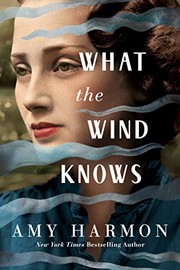
What the Wind Knows
2,056-word summary 9 min read 416 pages in the book
- First published
- 2019
- Publisher
- Lake Union Publishing
- Pages
- 416
- ISBN
- 9781542040075
Reading options
What's inside (8 sections)
What the Wind Knows opens with a woman alone on a lake in a rowboat, carrying her grandfather's ashes. Annie Gallagher is American, a writer, and she has come to Lough Gill in Ireland to do what Eoin asked: scatter him on the water he loved. The fog is thick. Then a boat appears, three men shoot at her, and she is hit. When she wakes, she is in 1921.
That is the setup, and it is a good one. Amy Harmon's 2019 novel is a time-travel romance, but it is also a family mystery and a history lesson about the Irish War of Independence and the Civil War that followed. Annie does not just land in the past. She lands in her own family's past, in the household of a six-year-old boy who will grow up to be her grandfather. She is mistaken for his mother, Anne Gallagher, who disappeared during the Easter Rising in 1916. To survive, she has to become a woman she is not.
The novel is careful with its history. Annie arrives in 1921, during the truce that led to the Anglo-Irish Treaty. She meets Michael Collins, Arthur Griffith, and Countess Markievicz. She sits in the gallery during the treaty debates. She sees how the fight for independence splits into a fight over what independence means, and how quickly former allies become enemies. Harmon does not use the past as wallpaper. The political violence presses on the love story, and the love story is shaped by the violence.
Waking in 1921
Annie wakes in the home of Dr. Thomas Smith. He found her by the lake and brought her inside. He knows the Gallagher family. He was in love with Anne before she married Declan, Eoin's father, and he has been helping care for Eoin since Anne vanished. When Annie appears, looking like Anne and knowing things she should not know, Thomas is suspicious and drawn to her at the same time.
Annie recognizes Eoin immediately. He is six years old, and he is her grandfather. The man she buried in 2001 is standing in front of her as a child. She cannot explain time travel without sounding insane, so she lets people believe she is Anne. The identity gives her a place in the household and a way to protect Eoin. It also traps her in a lie that becomes more dangerous as the novel goes on.
The early sections are domestic and tense. Annie learns the routines of the house. She gets to know Brigid, Liam, and Ben Gallagher, Declan's brothers and Eoin's uncles. Liam is hostile from the start. He watches Annie too closely. He knows the real Anne in a way that Annie cannot fake. Brigid is warmer but protective of the family's reputation. The household is still grieving Declan, who was killed in the Easter Rising, and Anne, who disappeared during the evacuation.
Thomas is the steady center of the 1921 sections. He is a doctor, a friend of Michael Collins, and a man who has spent years loving a woman he could not have. He is not a brooding romantic hero. He is practical, tired, and kind. He notices that Annie is not Anne, or at least that she is different, but he does not push her away. He gives her a place to sleep, work to do, and someone to care for. The relationship grows through shared meals and shared fear rather than grand speeches.
Eoin
The bond between Annie and Eoin is the emotional core of the book. Annie knows what Eoin will become. She knows the stories he will tell her, the Irish songs he will sing, the way he will raise her after her parents die. She also knows that he is a child who has lost his mother and father and does not understand why. She cannot tell him the truth. She can only be present.
Eoin is a bright, affectionate boy. He likes stories. He likes the lake. He likes Thomas, who is the closest thing he has to a father. When Annie enters his life, he accepts her as his mother with a child's directness, and that acceptance is both a gift and a wound. Annie is not his mother. She is his granddaughter. The novel does not resolve that paradox so much as let it live. Love crosses the generations in both directions.
Thomas proposes to Annie with two wedding bands. The proposal is not a surprise, but it is still a risk. Marrying Thomas gives Annie protection and a place in the community. It also makes her lie more official. The wedding is small, and Eoin blesses it. For a while, the three of them have something like a family. Annie cooks, Thomas works, Eoin goes to school. The ordinary happiness is fragile because the country is falling apart.
The treaty and the war
The political sections are where the novel becomes more than a romance. Annie travels to Dublin for the treaty debates. She meets Countess Markievicz, who is fierce and funny and on the anti-treaty side. She watches the arguments about the oath, the border, and the future of the country. She knows how the story ends. She knows that the treaty will pass, that de Valera will resign, and that Ireland will slide into civil war. Knowing does not help her stop it.
Michael Collins is a warm, restless presence in the book. Thomas is his friend, and Annie meets him through Thomas. Collins is charming, impatient, and aware of his own danger. Annie tries to warn him about his assassination. She cannot tell him exactly how she knows, and he would not listen if she did. He refuses to let foreknowledge run his life. He dies in an ambush in Cork on August 22, 1922, as history says he must.
Annie writes an alternative account of Collins's death, a story in which she saves him. She writes it as a way to cope, maybe as a way to imagine a better ending. The manuscript later becomes evidence against her. Brigid and Liam find it and decide it proves Annie was involved in a plot against Collins. The misunderstanding is plausible in a country where everyone is looking for traitors, and it shows how dangerous a story can be when the wrong person reads it.
The return
Annie is pregnant with Thomas's child when the danger closes in. Liam takes her at gunpoint and forces her into Lough Gill. Robbie O'Toole follows them and shoots Liam as Liam pushes Annie into the water. Annie disappears beneath the surface and wakes in 2001, where she crawls ashore and is rescued by Jim Donnelly. She is still pregnant. The child she carries is proof that the 1921 life was real.
The 2001 sections are quieter but no less painful. Annie learns that a woman named Anne Gallagher drowned in the lake years earlier. The historical record says Anne died, and Annie has been living in her place. Thomas's journals eventually explain what happened. During the Easter Rising evacuation, Liam accidentally shot the real Anne. He hid the body and kept her wedding ring. When Annie appeared in 1921, Liam recognized that she was not the woman he had killed. His hostility was not just suspicion. It was guilt.
Annie inherits Garvagh Glebe. Eoin inherited the house when Thomas died, and after Eoin's death it passes to Annie. The inheritance is a neat piece of plotting, and it is also a way for the novel to bring the past into the present. Annie walks through the house where she lived in 1921. She sees Thomas's paintings of Anne. She reads his journals. She finds the book she wrote in 1922, published later as a commemorative work. The objects are not just clues. They are the physical evidence of a life that no one else remembers.
Maeve O'Toole, who worked at Garvagh Glebe as a young woman, returns as an old woman and recognizes Annie. The recognition is impossible and matter-of-fact. Maeve knows that Annie Gallagher is the same Anne Smith who disappeared in the lake. The novel does not try to explain how. It lets the past and present recognize each other.
The 2001 sections also carry the shock of the September 11 attacks. Annie hears the news while she is pregnant, grieving, and trying to write. The attacks do not connect directly to her Irish story, but they give the present its own historical rupture. Annie has spent months trying to understand a war that happened eighty years earlier, and now she is living through a new one. The parallel is not forced. It reminds the reader that every generation thinks its moment is the end of the world, and that people keep making breakfast and falling in love anyway.
Thomas crosses
The ending is the part that will divide readers. Annie is at Lough Gill when the fog lifts and she hears a familiar whistle. She calls Thomas's name, and he appears in a boat. After Eoin left for New York in 1933, Thomas tried to use the lake to reach Annie in 2001. He succeeds. The lovers reunite in the present. Annie can show him the Ireland he dreamed of, a free country beyond the violence he lived through. Michael Collins is still dead. The civil war still happened. The novel does not rewrite history to give everyone a happy ending.
The reunion is romantic and a little absurd. The lake has no rules. It takes Annie when the plot needs her to go, and it delivers Thomas when the plot needs him to arrive. Readers who want science fiction logic will be frustrated. Readers who accept the lake as a fairy-tale threshold will be moved. I fall somewhere in between. The ending made me smile, but I did not believe it. The novel had already given me a harder and better ending: Annie pregnant in 2001, carrying a child from a man who has been dead for decades, trying to build a life out of grief and evidence.
The historical ending is the one that stays with me. Annie cannot save Collins. She cannot save Anne. She cannot stop the civil war. She can only love the people in front of her and preserve their stories. That is a modest kind of heroism, and Harmon treats it with respect.
What works and what does not
The atmosphere is the book's greatest strength. Lough Gill, the fog, the big house, the wet green fields, the sound of the wind. Harmon writes Ireland as a place that remembers. The Yeats poetry and the local stories give the novel a mythic frame without turning it into fantasy. The 1921 sections feel researched but not overloaded. The treaty debates, the Black and Tans, the divisions within the IRA, the small details of rationing and fear all add texture.
The romance is warm but sometimes too easy. Thomas is almost too patient, too understanding. Annie's lie is discovered by the people who need to discover it, and the couple's main obstacle is history rather than personality. The 2001 sections rely on coincidence: the inheritance, the journals, the paintings, Maeve's memory, the grave. Each piece fits too neatly. The lake's mechanics are never explained, which is fine for a fairy tale but leaves the plot without rules.
Still, the book has a big heart. It is about a woman who loses her grandfather and finds him as a child, and who learns that the stories he told her were not just nostalgia. They were a way of keeping a family alive. The final image of Thomas appearing in the fog is the kind of ending that romance readers want, and Harmon earns it emotionally even if she does not earn it logically.
I would recommend What the Wind Knows to readers who like historical romance, Irish history, and time-travel stories that care more about feeling than physics. It is a good book for a rainy afternoon, and it will make you want to read Yeats and book a trip to Sligo. It will also make you think about the people in your family you never met, and the stories they left behind.
FAQ
Does Annie end up with Thomas in What the Wind Knows?
Yes. After Eoin leaves for New York in 1933, Thomas attempts to cross the lake to Annie's time. He arrives in 2001, and they reunite at Lough Gill.
Is Annie the real Anne Gallagher?
No. The real Anne, Eoin's mother, was accidentally shot by Liam during the 1916 Easter Rising evacuation. Annie resembles her and takes her place in 1921, but she is a different woman from 2001.
Does the novel change Michael Collins's death?
No. Annie warns Collins about his assassination, but he refuses to let foreknowledge run his life and is killed in the Cork ambush on August 22, 1922, as history records.
Similar books
The Fiery Cross
Jamie musters militia for Tryon while Brianna and Roger wed on the Ridge, ending at Alamance with a hanging that steals Rogers voice.
2,719-word summary · 12 min read
Drums of Autumn
Brianna crosses stones to save parents, finding love, assault fallout, and a home to build.
2,003-word summary · 9 min read

The Japanese Lover
A Polish refugee and the son of a Japanese gardener fall in love in San Francisco in 1939, then keep the affair secret for nearly seventy years.
2,286-word summary · 10 min read

The Shadow Sister
Star D'Apliese steps out of her sister's shadow and follows a bookshop clue into the Edwardian life of Flora MacNichol, a woman who gave up love for duty.
2,260-word summary · 10 min read

The Storm Sister
Ally D'Aplièse loses her father and her lover within weeks, then follows a brass frog and a Norwegian biography into Anna Landvik's music and the world of…
2,376-word summary · 11 min read
Anne's House of Dreams
Newlyweds Anne and Gilbert start in a seaside house with kind neighbors.
2,465-word summary · 11 min read
The Rules of Magic
Franny, Jet, and Vincent Owens test strict family rules and a love curse in 1960s Manhattan and Massachusetts in Alice Hoffman's warm prequel about love, loss,…
2,686-word summary · 12 min read
The House at Riverton
In 1999, ninety eight year old maid Grace Bradley tapes the truth about a 1924 shooting at Riverton Manor, poet Robbie Hunter, two sisters and a lie held for…
2,433-word summary · 11 min read
Written in My Own Heart's Blood
1778 war splits Jamies and Claires across rebellion and time as Brianna hunts a kidnapped son.
2,008-word summary · 9 min read

The Seven Sisters
Maia follows Pa Salt clue from Geneva to Rio and Christ the Redeemer.
2,210-word summary · 10 min read
Once and Again
Novak women can redo one moment; Lauren must decide whether to use hers.
2,330-word summary · 10 min read

The Girl You Left Behind
Two women a century apart fight for what they love, joined by a portrait painted in wartime France and claimed in modern London.
2,613-word summary · 12 min read
It's in His Kiss
Julia Quinn's seventh Bridgerton novel pairs sharp tongued Hyacinth with Gareth St. Clair as an old Italian diary leads them toward hidden jewels and Lady…
2,908-word summary · 13 min read
A Breath of Snow and Ashes
Jamie and Claire Fraser face the coming Revolution on Fraser's Ridge, torn between Crown oaths and rebel neighbors as old enemies return.
2,362-word summary · 10 min read
The Things We Cannot Say
A Florida mother travels to Poland to answer her silent grandmother's plea, uncovering a wartime love story and a decades-old identity swap.
2,365-word summary · 11 min read
The Henna Artist
In 1950s Jaipur, a henna artist to rich women rebuilds her life until the sister she never knew arrives.
2,104-word summary · 9 min read
Small Things Like These
A coal merchant in 1985 Ireland finds a girl locked in a convent and must act.
2,799-word summary · 12 min read
When He Was Wicked
Widowed Francesca Bridgerton falls for her late husband cousin Michael, who loved her silently for years.
2,055-word summary · 9 min read
To Sir Phillip, With Love
Outspoken Eloise writes a grieving botanist, visits unchaperoned, and stays for twins.
2,013-word summary · 9 min read
Voyager
Claire returns through the stones in 1968 after learning Jamie survived Culloden.
2,901-word summary · 13 min read
Romancing Mister Bridgerton
Colin Bridgerton returns and discovers Penelope Featherington is Lady Whistledown.
2,388-word summary · 11 min read
Dragonfly in Amber
Claire 1968 recalls Jacobite Paris with Jamie to stop Culloden.
2,530-word summary · 11 min read
An Offer From a Gentleman
Benedict falls for a masked Sophie at a ball, then finds her working as a housemaid after her stepmother evicts her.
2,320-word summary · 10 min read
The Viscount Who Loved Me
Anthony Bridgerton vows to marry without love until Kate Sheffield challenges him at every turn.
2,666-word summary · 12 min read

Before the Coffee Gets Cold
In a Tokyo cafe where guests can revisit the past until their coffee cools, four visitors seek words left unsaid with lovers and kin.
2,233-word summary · 10 min read
The Duke and I
Daphne Bridgerton and Simon Basset fake a courtship that turns real, then face truth about children.
2,107-word summary · 9 min read

Outlander
Nurse Claire Randall slips through Craigh na Dun from 1945 to 1743 Scotland, torn between Frank and Jamie Fraser as clan politics, war and witch trials close…
2,190-word summary · 10 min read

What Happened to Goodbye
Mclean has reinvented herself in four towns since her parents divorced. In Lakeview she uses her real name, and for the first time staying put becomes a choice.
2,796-word summary · 12 min read
The Stationery Shop
Two teenagers fall in love in a Tehran stationery shop in 1953, are separated by the coup and a family deception, and meet again sixty years later.
2,024-word summary · 9 min read

The Long Winter
Dakota Territory, 1880: seven months of blizzards cut a town off from the railroad, and a family survives on twisted hay, ground wheat, and a dangerous wheat…
2,210-word summary · 10 min read