
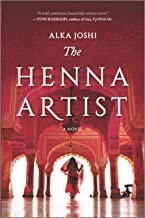
The Henna Artist
2,104-word summary 9 min read 368 pages in the book
- First published
- 2020
- Publisher
- MIRA Books
- Pages
- 368
- ISBN
- 9781488055447
- Series
- The Jaipur Trilogy (#1)
Reading options
What's inside (8 sections)
The Henna Artist by Alka Joshi was first published in 2020 by MIRA Books, a 368 page hardcover with ISBN 9781488055447. It is book one of The Jaipur Trilogy. I picked it up because a friend kept talking about Jaipur in the 1950s and a woman who made a living painting hands. That sounded small until I started reading. Then the city took over.
Lakshmi Shastri is thirty and living on her own in Jaipur, which in 1955 is already a statement. She left her village and an abusive husband when she was seventeen. She has not seen her parents since. Her plan is simple and stubborn. Earn enough as a henna artist to buy a small house, bring her parents to live with her, and earn forgiveness for running away. She keeps notebooks with appointments and money owed. She saves. She walks everywhere with her supply bag. She knows which lane floods, which guard takes bribes of tea, which client pays late.
What surprised me early is how businesslike Lakshmi is. This is not a dreamy artist waiting to be found. She is a working woman with regulars. She paints brides and mothers and aunties. She listens while the paste dries. Rich women tell her things they do not tell their husbands. Who is pregnant. Who is afraid. Who needs help avoiding another pregnancy. Lakshmi also knows herbs from her late mother in law, and she makes small cotton sachets and teas that help with pain or, quietly, with preventing conception. Samir Singh, a well known architect, buys those sachets from her for women he knows. That connection got her introduced to Jaipur society in the first place.
Jaipur work
Jaipur feels alive in these early chapters. Pink walls. Markets full of marigolds and silver. Courtyards where women gather on low stools while Lakshmi works.
She has a routine. Malik, a clever boy of seven or eight who carries her bags and runs messages, meets her in the morning. They go from house to house. Mrs. Iyengar is her landlady. Mr. Pandey, another tenant, gives music lessons. Kanta and Manu are a younger couple Lakshmi befriends, childless and kind, who treat her like family.
Her most important clients are the Singhs. Samir Singh is charming and rich, from a high Rajput family. His wife Parvati is beautiful, proud, and well connected to the old royal circle. Lakshmi paints Parvati regularly. Parvati likes to talk about her sons at boarding school, about parties, about who is building what. Samir flirts with Lakshmi. She flirts back a little. It feels like an old habit between them, warm but kept inside lines. She knows he pays her well and sends her new clients. She also knows his wife could end her with one sentence.
Lakshmi likes this balance even if it tires her. She is respected for her designs. Her henna is fine lined, with peacocks and paisleys that other artists copy badly. She gives advice on rashes and cramps and tired feet. She keeps secrets. That trust is her real capital. One loose word about a client and the whole network would close.
There is a nice thread about her house fund. She counts and recounts. She looks at plots. She imagines her mother sitting in shade. That longing gives the working chapters weight. She is surviving day to day, and she is also trying to buy her way back into her family.
Radha arrives
Then the past walks in. Hari, the husband she left thirteen years ago, finds her in Jaipur. With him is a thirteen year old girl named Radha. Her sister. Lakshmi did not know she existed. Her parents died. Radha has no one else.
I found these scenes uncomfortable in a good way. Hari is not a monster in the doorway. He is smaller, older, asking for money to go away. Lakshmi gives him money and he leaves for the slums. Radha stays.
Radha is thirteen and furious and grieving. Villagers called her bad luck. She is loud where Lakshmi is careful. She talks back. She eats mangoes over the sink. She follows Lakshmi to jobs when told to stay home. She resents being the village girl in a city house. Lakshmi, who has lived alone for years, suddenly has to be a guardian. She enrolls Radha in school. She sets rules. She fails to explain the rules.
Malik helps here. He shows Radha the shortcuts, where to buy pencils, how to dodge Mrs. Iyengar when she is angry about noise. The three of them make a strange small household. Lakshmi cooks thin dal. Radha complains. Malik eats everything and asks for more. For a few chapters it feels like it might hold.
But Lakshmi keeps Radha a secret from her clients at first. An unmarried working woman with a teenage sister looks different to Parvati and the others. Respectability is thin. Lakshmi is afraid that news of a husband, a village family, a girl sleeping on her floor will change how she is seen. So she hides Radha, and Radha feels the hiding.
That hiding is the crack where later trouble gets in. Radha wants to belong somewhere. If not in Lakshmi house on Lakshmi terms, then somewhere else.
Trouble at the Singh house
Lakshmi takes Radha along to help at a big henna party at the Singhs. It feels practical. Extra hands. A chance to show Radha good manners.
Ravi, the older Singh son, home from Mayo College, notices Radha. He is seventeen, bored, used to getting attention. Radha is thirteen and hungry for it. They talk in corners. They pass notes. Lakshmi is busy painting feet and calming mothers and does not see it until it is already a mess.
When Lakshmi finds out, she is scared and angry. She confronts Samir after finally giving in to that long flirtation, hoping he will help manage Ravi. He does not. He protects his son. He tells Lakshmi she was paid to handle problems. It is an ugly moment. The friendship tilts and shows the money underneath. He sees her as staff when it matters, not as a friend.
Parvati hears versions. Whether Radha chased Ravi or Ravi chased Radha hardly matters in gossip. What matters is that Lakshmi brought a village girl into a rich house and trouble followed. Parvati starts talking. Other clients cool. Appointments cancel. Someone says Lakshmi herbs caused a miscarriage. Someone else says she encourages loose behavior. The trust she built over years thins in weeks.
At the same time Radha is pregnant and says she wants to keep the baby. She is thirteen. Lakshmi panics. She thinks of reputation, of school, of what her landlady will say, of what Parvati will do with the story. She pushes Radha toward ending the pregnancy. Radha refuses. They fight in a way that leaves marks no paste can cover.
I liked that Joshi does not make this clean. Lakshmi, who has helped other women control their own choices, tries to control her sister. Radha, who has obeyed no one since her parents died, clings to the one choice that is hers. Both are understandable. Both handle it badly.
The house fund dies here too. Money saved for plots goes to bribes and doctors and quiet arrangements. Lakshmi pride in independence looks fragile. One rumor and the whole structure shakes. That feels true to the time. A single woman with no husband and no family name behind her rented rooms on good opinion.
Shimla
Lakshmi sends Radha, and goes herself, to Shimla in the hills. An old contact and Dr. Jay Kumar, a doctor Lakshmi knew from earlier days, help arrange care.
Shimla is cooler in every sense. Pine air after Jaipur dust. A small hospital where Lakshmi can use her knowledge of herbs and care without the weight of society watching. She assists, she learns, she sits with women in labor. Dr. Jay is steady and kind, widowed, fond of her from before. He does not press her. He offers work and respect.
Radha has her baby there. The decision about the child is painful and practical. Kanta and Manu, the childless couple from Jaipur who always wanted a family, adopt the baby. Radha agrees, though it costs her. It gives the child a stable home and gives Radha a chance to grow up before becoming a mother. I found those pages sad but honest. No one calls it happy. They call it the best option they have.
Lakshmi also faces Hari again in a final way. She stops running from the fact that she left. She writes, she pays what is owed, she accepts that her parents are gone and no house will bring them back. The dream changes from buying forgiveness to building a life she can stand inside.
The closing movement lets the sisters breathe apart and together. Radha goes to school properly. Lakshmi stays in Shimla for a time, working at the hospital, planting a small garden. Samir sends a letter with money and apology mixed together. Lakshmi takes what is useful and leaves the rest. Parvati power fades with distance. What lasts is the work of hands, mixing paste, holding a wrist steady, listening.
What lands and what drags
The best of the book is texture without showing off. Food. Fabric. The way henna smells when it dries. The way a courtyard sounds when women are all talking at once. Joshi grew up hearing these rhythms and it shows. Jaipur in the years after independence feels caught between old rules and new money, with architects building modern houses for people who still consult astrologers. Lakshmi moves between those worlds daily, painting tradition onto hands while handing out modern advice about spacing children. That middle position is the whole novel.
Malik is a joy. Every scene with him lifts. He barters, he teases, he remembers every debt. Kanta warmth also helps. Those friendships keep Lakshmi from turning into a symbol.
Fair criticism belongs here too. The middle sags a little when gossip repeats. Parvati warns, client cancels, Lakshmi worries, repeat. I got the point about reputation early and did not need three more turns of the same screw. Radha can also grate. She makes the same defiant choice several times, and after a while I wanted someone to sit her down for one plain talk instead of another slammed door. The Samir confrontation, though strong, leans on him turning cold very fast. A slower cooling might have hurt more.
The prose sometimes explains customs a beat too much, as if for readers new to India. A sentence about what a sari fold means or why marigolds matter is welcome. Three sentences in a row pulls me out of Lakshmi head and into a guidebook. Small thing, but noticeable across 368 pages.
Still, I closed the book fond of Lakshmi. She is not perfect. She judges village women while depending on village knowledge. She sells discretion but cannot keep her own secret. She mothers Radha by rules she never agreed to. That mess feels human. She wants a house and ends up wanting something harder to draw. A way to be useful without permission.
Read the Jaipur books in order. This one sets Lakshmi and Radha and the Singhs. The next books follow other women in the same circle, and they read better if you know where Lakshmi started. Give the first hundred pages time. The paste needs time to stain.
Jaipur circle
A few people asked me who is who, so here is the shape without spoiling the turns.
Lakshmi is the center. Henna artist, healer, saver of rupees, keeper of secrets. Radha is the sister who arrives late and changes every plan. Hari is the husband left behind who will not stay in the past. Malik is the boy assistant with a memory for favors.
Samir and Parvati Singh are the rich couple whose patronage lifts Lakshmi and whose anger nearly sinks her. Ravi is their son, seventeen and careless. Kanta and Manu are the kind younger couple who cannot have a child. Dr. Jay Kumar is the Shimla doctor who offers Lakshmi honest work.
No one here is only good or only bad. Samir helps and harms. Parvati protects her family by hurting another woman. Hari asks for cash and also tells truth Lakshmi avoids. Even gossiping aunties share real warnings inside the malice. That mix is why the book club arguments run long. Everyone has a point. No one has clean hands, except maybe Malik, and he is eight and already learning to bargain.
FAQ
When was The Henna Artist published?
First published in 2020 by MIRA Books. The standard hardcover runs 368 pages with ISBN 9781488055447.
Is The Henna Artist part of a series?
Yes. It is book one of The Jaipur Trilogy, followed by The Secret Keeper of Jaipur and The Perfumist of Paris. Read in order.
Who are the main characters?
Lakshmi Shastri, her young sister Radha, Malik the errand boy, Samir and Parvati Singh, and Dr. Jay Kumar in Shimla.
Similar books
More from The Jaipur Trilogy first, then related titles.

The Japanese Lover
A Polish refugee and the son of a Japanese gardener fall in love in San Francisco in 1939, then keep the affair secret for nearly seventy years.
2,286-word summary · 10 min read

The Shadow Sister
Star D'Apliese steps out of her sister's shadow and follows a bookshop clue into the Edwardian life of Flora MacNichol, a woman who gave up love for duty.
2,260-word summary · 10 min read
Last Night at the Telegraph Club
The 2021 National Book Award winner follows Lily Hu, a Chinese American teenager in 1954 San Francisco, as she falls for Kath and learns what it costs to be…
2,336-word summary · 10 min read
2 States: The Story of My Marriage
A Punjabi boy from Delhi and a Tamil Brahmin girl from Chennai meet at IIM Ahmedabad, and turn a love marriage into a campaign to convince two families.
2,634-word summary · 12 min read

What the Wind Knows
Annie scatters her grandfather's ashes on Lough Gill and is pulled into 1921 Ireland, where she becomes the missing Anne Gallagher and falls for Dr. Thomas…
2,056-word summary · 9 min read
A Painted House
In 1952 Arkansas, seven-year-old Luke Chandler picks cotton with his family and learns how quickly poverty, violence, and adult secrets can end a childhood.
2,060-word summary · 9 min read
The Storm Sister
Ally D'Aplièse loses her father and her lover within weeks, then follows a brass frog and a Norwegian biography into Anna Landvik's music and the world of…
2,376-word summary · 11 min read
Anne's House of Dreams
Newlyweds Anne and Gilbert start in a seaside house with kind neighbors.
2,465-word summary · 11 min read
The Rules of Magic
Franny, Jet, and Vincent Owens test strict family rules and a love curse in 1960s Manhattan and Massachusetts in Alice Hoffman's warm prequel about love, loss,…
2,686-word summary · 12 min read
The House at Riverton
In 1999, ninety eight year old maid Grace Bradley tapes the truth about a 1924 shooting at Riverton Manor, poet Robbie Hunter, two sisters and a lie held for…
2,433-word summary · 11 min read
The Seven Sisters
Maia follows Pa Salt clue from Geneva to Rio and Christ the Redeemer.
2,210-word summary · 10 min read

The Girl You Left Behind
Two women a century apart fight for what they love, joined by a portrait painted in wartime France and claimed in modern London.
2,613-word summary · 12 min read
The Things We Cannot Say
A Florida mother travels to Poland to answer her silent grandmother's plea, uncovering a wartime love story and a decades-old identity swap.
2,365-word summary · 11 min read
When He Was Wicked
Widowed Francesca Bridgerton falls for her late husband cousin Michael, who loved her silently for years.
2,055-word summary · 9 min read

The Fiery Cross
Jamie musters militia for Tryon while Brianna and Roger wed on the Ridge, ending at Alamance with a hanging that steals Rogers voice.
2,719-word summary · 12 min read

Drums of Autumn
Brianna crosses stones to save parents, finding love, assault fallout, and a home to build.
2,003-word summary · 9 min read

What Happened to Goodbye
Mclean has reinvented herself in four towns since her parents divorced. In Lakeview she uses her real name, and for the first time staying put becomes a choice.
2,796-word summary · 12 min read
The Stationery Shop
Two teenagers fall in love in a Tehran stationery shop in 1953, are separated by the coup and a family deception, and meet again sixty years later.
2,024-word summary · 9 min read
The Long Winter
Dakota Territory, 1880: seven months of blizzards cut a town off from the railroad, and a family survives on twisted hay, ground wheat, and a dangerous wheat…
2,210-word summary · 10 min read

Anatomy: A Love Story
In 1817 Edinburgh, a noblewoman who wants to be a surgeon disguises herself to study anatomy and falls for the grave robber who supplies her with bodies.
2,031-word summary · 9 min read

Little Town on the Prairie
In the spring after the Long Winter, fifteen-year-old Laura sews shirts, studies for a teaching certificate, and helps send her blind sister Mary to college.
2,071-word summary · 9 min read
Mrs. Everything
Two Jewish sisters in Detroit grow up, apart and together, across seven decades of American life, from the 1950s to the 2016 election.
2,362-word summary · 10 min read

The Valley of Horses
Exiled from the Clan, Ayla survives alone in a hidden valley, tames a horse and a cave lion, and nurses a wounded stranger back to life.
2,311-word summary · 10 min read
Ricochet
Lily Calloway tries to stay celibate for ninety days while Loren is in rehab, leaning on Rose, Connor, and Ryke as therapy forces her to face her childhood.
2,575-word summary · 11 min read

Under Locke
Iris Taylor moves to Austin broke and wary, takes a front-desk job at a tattoo shop, and spends the book learning that Dex Locke’s blunt cruelty and unexpected…
2,591-word summary · 12 min read

Sam's Letters to Jennifer
A grieving journalist reads her grandmother's letters and finds a decades-long love affair that changes how she sees her family.
2,310-word summary · 10 min read

Act Your Age, Eve Brown
Eve Brown crashes into a Lake District bed and breakfast, breaks the owner's arm, and talks her way into his kitchen. A grumpy-sunshine romance about work,…
2,474-word summary · 11 min read
The Rumor
Two Nantucket best friends, Madeline and Grace, watch a summer of small indiscretions get retold into gossip that reshapes both their households.
2,017-word summary · 9 min read

Two by Two
Sparks's twentieth novel turns from first love to a marriage breaking up: Russell Green loses his wife and his job, then rebuilds his life around his…
2,192-word summary · 10 min read
Between Sisters
Estranged sisters Meghann and Claire reunite in Washington when Claire announces a rushed wedding, then face their mother's desertion and a medical crisis.
2,467-word summary · 11 min read