
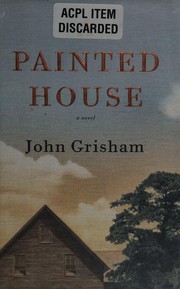
A Painted House
2,060-word summary 9 min read 388 pages in the book
- First published
- 2001
- Publisher
- Doubleday
- Pages
- 388
- ISBN
- 9780385501200
Reading options
What's inside (8 sections)
I came to A Painted House after reading too many Grisham novels about lawyers who drive nice cars and get shot at. This one has no courtroom, no corporate conspiracy, and no hero with a briefcase. It is a quiet book about cotton, rain, and a seven-year-old boy who learns that adults lie for reasons that are not always selfish. That sounds like a small novel. In practice, it is one of the most unsettling things Grisham has written.
The farm and the people who work it
Luke Chandler is seven years old. He lives with his parents, Jesse and Kathleen, and his grandparents, Pappy and Gran, in a sharecropper's house outside Black Oak, Arkansas. The year is 1952. The family rents eighty acres and grows cotton, and the house they live in has never been painted. The unpainted boards are a constant reminder that the Chandlers are poor and that poverty is not a temporary condition you can fix with one good season.
The cotton has to be picked by hand, and the Chandlers cannot do it alone. They hire two groups of workers. The Spruills are a family from the Ozarks: an old man, a hard woman, several children, and Hank, a large, violent young man who is useful in a fight and dangerous in every other way. The Mexican workers are led by Miguel, and they are treated by the town with a mixture of necessity and contempt. The two groups camp on the farm, work side by side, and watch each other.
Luke is fascinated by Tally Spruill, who is seventeen and already knows more about the world than he does. He is also afraid of Hank, and he is curious about Trot, Tally's younger brother, whose withered arm gives him an excuse to avoid the hardest work. Trot is quiet and decent. He also has a secret: he is painting the Chandler house, one board at a time, with paint he has somehow acquired. Luke notices the changes without understanding them at first. The house becomes a small mystery inside the larger one.
The period details are not decorative. The family listens to the 1952 pennant race on the radio, and the distant drama of the Cardinals and the Dodgers gives the men something to argue about that is not cotton or money. The Korean War is present through Ricky's letters and through the anxiety of a family waiting for news. Both the radio and the letters connect Black Oak to a larger world, but they also show how far away that world is. The Chandlers can follow a baseball game in St. Louis and still have no idea how to change their own circumstances.
The fight in town
The novel's central moral event happens in town. Luke goes with the family and the Spruills, and he sees Hank confront Jerry Sisco. Jerry is a local man, and the argument turns physical. Hank picks up a two-by-four and hits Jerry in the head. Jerry dies later from the injury.
Sheriff Stick Powers comes to the farm to investigate. Hank lies and says he was breaking up the fight. He tells the sheriff that Luke saw it and will back him up. Luke is standing there, seven years old, being asked to choose between the truth and the family's survival. If Hank is arrested, the Spruills will leave, and the Chandlers will not have enough hands to bring in the crop. The crop is the difference between making it through the winter and losing the farm.
Luke lies. He says Hank was trying to help. The lie works, at least for now, and Luke becomes someone who has told a consequential lie to a law officer. Grisham does not turn this into a melodrama. The scene is quiet, and the pressure comes from the adults' silence as much as from anything they say. Luke understands that he has been used, and he understands why, and those two understandings do not make him feel better.
This is the point where the novel stops being a nostalgic farm story. Luke has crossed a line, and the book is honest about the fact that he cannot cross back. He keeps the secret, and the secret keeps him.
The other secrets
There are several other adult secrets, and Luke stumbles into most of them. The Latchers are neighboring sharecroppers, even poorer than the Chandlers. Their fifteen-year-old daughter, Libby, is pregnant. She refuses to name the father, and then one of her siblings says it is Luke's uncle Ricky, who is serving in Korea. Ricky is a young man Luke admires, a figure of adventure and possibility. The accusation complicates that admiration without resolving it. The baby is born during the novel, and Luke and Tally sneak out to watch the birth. It is a scene that belongs in a different, more sentimental book. Here it is just another thing Luke sees before he is ready.
Tally and Cowboy, one of the Mexican workers, begin a relationship that crosses the racial and social lines the farm depends on. Luke watches them, partly because he is curious and partly because he is jealous. Hank finds out, or suspects, and his violence becomes more focused. During a baseball game between the Mexican workers and the local men, Hank throws a fastball at Cowboy and breaks his ribs. Later, at a carnival, Hank wins two hundred and fifty dollars by beating a strongman in a boxing match. The money makes him less dependent on cotton work, which makes him more dangerous. He starts throwing rocks at the Mexican workers at night, and the farm becomes a place where the adults are constantly managing a man who cannot be managed.
The killing
Sheriff Powers returns and says he plans to arrest Hank. A relative of Jerry Sisco has escaped from jail and is looking for Hank, which means the situation is about to become even more violent. Pappy asks the sheriff to wait until the cotton is harvested. Gran proposes a different solution: warn Hank that he is being hunted and let him run. The plan works. Hank leaves at night.
Cowboy follows him. Luke follows Cowboy. In the dark, Cowboy kills Hank with a switchblade, takes money from the body, and pushes it into the river. Then he sees Luke. He threatens to kill Luke's mother if Luke tells anyone. Luke goes home with another secret, this one heavier than the first.
The novel handles the murder without sensationalism. There is no triumph in it. Hank was a brute, and Cowboy is not a hero for killing him. The killing is another act of violence produced by a system that needs cheap labor and has no real way to protect the people doing it. Luke's reaction is not moral clarity. It is fear, and the fear stays with him.
Grisham is also honest about the racial hierarchy of the farm. The Mexican workers are necessary, but they are housed separately, paid less, and treated as temporary. Hank's violence against them is not an aberration. It is an extreme version of the contempt that surrounds them. Luke does not have the language to name this, but he sees the way the adults talk about Miguel's crew and the way the workers have to absorb insults in order to keep their jobs. The novel does not congratulate itself for noticing. It simply lets the injustice sit there, part of the same landscape as the cotton and the river.
Tally and Cowboy disappear together in Pappy's truck. The sheriff finds the truck at a bus station and learns they are heading north. The Spruills leave the farm. Before they go, Trot gives Luke his paintbrush. It is a small, generous gesture from a boy who has been treated as damaged and useless. Luke decides to finish painting the house himself.
The rain
The last third of the book is about weather. The cotton harvest is interrupted by rain, then delayed, then threatened by a rising river. Luke spends his savings on paint, and the Mexican workers help him paint the house when the fields are too wet to work. The house begins to look different. It is still a sharecropper's house, but it is a sharecropper's house with a coat of paint, and that matters to Luke more than it matters to anyone else.
The river floods. The cotton crop is destroyed. The Latchers lose almost everything, and the Chandlers take a boat to their house and bring them back to the barn. The rescue is not heroic. It is what neighbors do when there is no one else to do it. The flood also makes it clear that the Chandlers cannot stay. There is no crop, no income, and no future in Black Oak under the current arrangement.
Jimmy Dale, a relative from the North, visits with his wife and his new car. He works in an automobile factory and speaks about the North as if it is a different country. His condescension toward the farm workers makes Luke aware of class in a way he has not been before. The visit also plants the idea of leaving. Jesse and Kathleen decide to move north so Jesse can work in the same factory. Luke is upset, then gradually accepts it. He will leave the farm, his grandparents, and the only life he has known.
Before they go, Luke tells Pappy the truth about Hank and Jerry Sisco. Pappy listens and agrees to keep it between them. He also promises to finish painting the house before Luke comes back. The novel ends with the family driving away and Luke looking at the unfinished house. It is a hopeful ending, but the hope is modest. They are not escaping poverty. They are moving toward a different version of work and uncertainty.
What the book is doing
A Painted House is often described as Grisham's departure from legal thrillers, which is true but a little misleading. It is still a book about rules, evidence, and who gets away with what. The difference is that the law is represented by a small-town sheriff who is outmatched, and the real system is the cotton economy. The Chandlers are not innocent, and the Spruills are not simply villains. Everyone is making decisions inside a structure that leaves them very little room.
The novel is also about the price of knowledge. Luke learns about sex, violence, race, class, and death in a single season. He does not become wise. He becomes quieter. The adult narrator's voice is one of the book's limitations: sometimes Luke sounds like a grown man remembering, and the seven-year-old's perspective slips. But the voice also gives the story its ache. You can feel the adult looking back at the boy and wishing he could have protected him.
The pacing is slow, especially in the middle, and readers who want a plot engine will find the cotton fields repetitive. That is partly the point. The repetition is the work. The book wants you to feel how long a season takes and how many small decisions go into surviving it. It also wants you to see how a child can be present for everything and understand almost none of it.
The ending is more ambiguous than it first looks. The family leaves, but the house stays unfinished. Pappy promises to finish it, and Luke believes him, but the reader knows that the promise may be a way of saying goodbye. The move north is not a solution to poverty. It is a change of location. Grisham does not pretend that the factory will make the Chandlers free. He only lets them leave, which is more than the Latchers can do.
I would recommend A Painted House to readers who liked To Kill a Mockingbird but want something less polished and more rural, or to anyone who has read Grisham's thrillers and wondered whether he could write a quieter book. He can. It is not perfect, but it has a real sense of place and a real sense of shame. The painted house is not a symbol of triumph. It is a symbol of the thing the family was trying to become and did not quite manage.
FAQ
Is A Painted House a legal thriller?
No. It is a coming-of-age novel set on a cotton farm in Arkansas in 1952.
Is it autobiographical?
It draws on Grisham's childhood in Arkansas, but it is fiction.
What does the title mean?
The Chandlers paint their house, a small act of dignity and hope in a life defined by debt and hard labor.
Similar books

Little Town on the Prairie
In the spring after the Long Winter, fifteen-year-old Laura sews shirts, studies for a teaching certificate, and helps send her blind sister Mary to college.
2,071-word summary · 9 min read
Cold Sassy Tree
In 1906 Georgia, fourteen-year-old Will Tweedy watches his widowed grandfather marry a much younger woman three weeks after his grandmother's funeral.
2,154-word summary · 10 min read
Tell the Wolves I'm Home
A grieving fourteen year old secretly befriends her late uncle's boyfriend in 1980s New York, testing family loyalty and love.
3,014-word summary · 13 min read
Summer of '69
Four Levin siblings split for summer 1969 as Vietnam, pregnancy and first love pull the family apart.
2,886-word summary · 13 min read
Ordinary Grace
In 1961 Minnesota, thirteen-year-old Frank Drum faces a summer of deaths that tests his minister family and forces him to weigh truth, guilt, and mercy.
2,948-word summary · 13 min read

The Henna Artist
In 1950s Jaipur, a henna artist to rich women rebuilds her life until the sister she never knew arrives.
2,104-word summary · 9 min read
The Cider House Rules
Homer Wells grows up in a Maine orphanage under Dr. Larch, who delivers babies and performs illegal abortions.
2,985-word summary · 13 min read
The Lincoln Highway
Emmett and Billy plan California in 1954, but two escapees steal their car and drag them east to New York.
2,954-word summary · 13 min read
Hotel on the Corner of Bitter and Sweet
A Chinese American boy befriends a Japanese American girl in wartime Seattle, then loses her to the internment camps.
2,973-word summary · 13 min read
The Secret Life of Bees
Lily runs from her father with Rosaleen to Tiburon, finding shelter with beekeeping sisters.
2,207-word summary · 10 min read

The Client
Eleven-year-old Mark Sway learns a mob secret in Memphis and hires lawyer Reggie Love for one dollar.
2,536-word summary · 11 min read

What Happened to Goodbye
Mclean has reinvented herself in four towns since her parents divorced. In Lakeview she uses her real name, and for the first time staying put becomes a choice.
2,796-word summary · 12 min read

The Long Winter
Dakota Territory, 1880: seven months of blizzards cut a town off from the railroad, and a family survives on twisted hay, ground wheat, and a dangerous wheat…
2,210-word summary · 10 min read

The Japanese Lover
A Polish refugee and the son of a Japanese gardener fall in love in San Francisco in 1939, then keep the affair secret for nearly seventy years.
2,286-word summary · 10 min read
The Art Forger
A disgraced Boston painter agrees to copy a Degas stolen from the Gardner Museum, then begins to suspect the original she is copying is itself a forgery.
2,117-word summary · 9 min read
Brown Girl Dreaming
Jacqueline Woodson retells her childhood in verse, moving from Ohio to South Carolina to Brooklyn while the civil rights movement reshapes the world around her.
2,727-word summary · 12 min read

The Shadow Sister
Star D'Apliese steps out of her sister's shadow and follows a bookshop clue into the Edwardian life of Flora MacNichol, a woman who gave up love for duty.
2,260-word summary · 10 min read
The Power of One
A boy in apartheid South Africa decides to become welterweight champion of the world, and the novel follows every mentor, fight, and loss that gets him there.
2,145-word summary · 10 min read
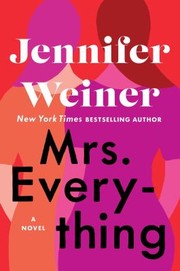
Mrs. Everything
Two Jewish sisters in Detroit grow up, apart and together, across seven decades of American life, from the 1950s to the 2016 election.
2,362-word summary · 10 min read
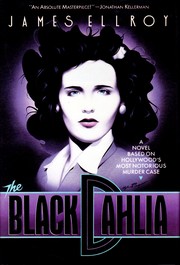
The Black Dahlia
James Ellroy builds a fiction around the real Black Dahlia murder, following two Los Angeles cops whose partnership and obsessions destroy them.
2,533-word summary · 11 min read

The Age of Miracles
A California girl grows up while the Earth's rotation slows, and ordinary adolescence continues alongside slow catastrophe.
2,417-word summary · 11 min read
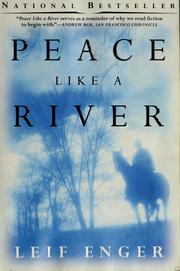
Peace Like a River
An asthmatic boy in the early 1960s narrates his family's search for his older brother, who is accused of two killings and has escaped custody.
1,969-word summary · 9 min read

The Chosen
A shattered pair of glasses in a 1944 Brooklyn softball game starts a friendship between a Hasidic boy and his Orthodox neighbor, and their fathers pull them…
2,443-word summary · 11 min read
Last Night at the Telegraph Club
The 2021 National Book Award winner follows Lily Hu, a Chinese American teenager in 1954 San Francisco, as she falls for Kath and learns what it costs to be…
2,336-word summary · 10 min read
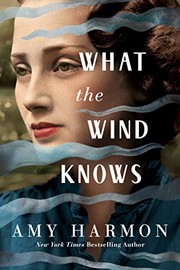
What the Wind Knows
Annie scatters her grandfather's ashes on Lough Gill and is pulled into 1921 Ireland, where she becomes the missing Anne Gallagher and falls for Dr. Thomas…
2,056-word summary · 9 min read

The Second Summer of the Sisterhood
Four friends share the traveling pants through a summer of grandmothers, first loves, and mothers who are learning to let go.
2,209-word summary · 10 min read
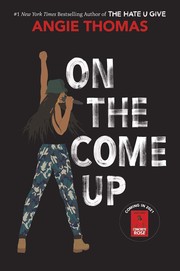
On the Come Up
Bri Jackson, a sixteen-year-old rapper in Garden Heights, chases a record deal while a viral song turns her into a symbol she never wanted to be.
2,034-word summary · 9 min read
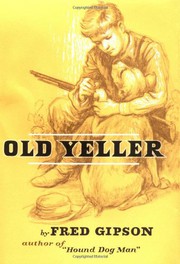
Old Yeller
Travis Coates takes in a stray yellow dog that protects his family on the Texas frontier, and learns about loyalty and loss.
2,165-word summary · 10 min read
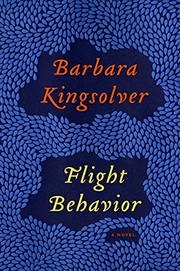
Flight Behavior
Dellarobia Turnbow is stuck in a Tennessee farm marriage until a valley full of monarch butterflies, and the scientist who comes to study them, force her to…
2,051-word summary · 9 min read

Aristotle and Dante Dive into the Waters of the World
Ari and Dante return for senior year in El Paso, navigating first love, AIDS, family grief, and the cost of being openly gay in 1987 Texas.
2,188-word summary · 10 min read