
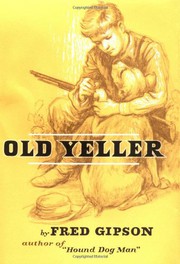
Old Yeller
2,165-word summary 10 min read 158 pages in the book
- First published
- 1956
- Publisher
- Harper & Brothers
- Pages
- 158
- ISBN
- 9780060115456
Reading options
What's inside (8 sections)
I put off Old Yeller for years because everyone told me how it ends. That is a strange way to approach a children's book, but the warning is part of its reputation. When I finally read it in one sitting, I found that the famous ending is not a trick. It is the point of the whole story, and the eighty or so pages before it earn the grief.
Fred Gipson published the novel in 1956 through Harper & Brothers, with illustrations by Carl Burger. It received a Newbery Honor in 1957. The setting is the Texas Hill Country in the late 1860s, in a fictional settlement called Salt Licks in Mason County. This is a narrow world of scrub, rocky soil, corn patches, hogs, and weather that can ruin a family in a week. The book never pretends that the Coates family is comfortable. They are making do, and the father's absence makes every small task feel larger.
The narrator is Travis Coates, who is fourteen when the story begins. His father has signed on for a cattle drive to Abilene, Kansas, and he leaves Travis in charge of the ranch, his mother, and his little brother, Arliss. The instruction is simple and impossible: be the man of the family. Travis takes it seriously. He has a list of chores and a clear idea of what a man does. He does not yet understand that most of the job is not about being tough. It is about paying attention, asking for help, and accepting that some problems cannot be solved by wanting them to go away.
A Yellow Dog With No Manners
The dog arrives as a nuisance. Travis goes to the storehouse for meat and finds a big, dingy yellow animal sleeping on the ground with a full belly. The dog has eaten the family's pork, and Travis chases him off with a stick. Arliss, who is small and stubborn, decides the dog is his friend. He screams until Mama lets the animal stay. Travis is furious. The dog is a thief, a moocher, and a bad influence on his little brother. The name comes from the animal's color and from a bark that sounds almost human, a long, rising yell that carries across the valley.
What changes is not one dramatic moment. It is a series of small ones. The dog starts to work. He helps Travis hunt, he keeps varmints out of the corn, and he stands between the family and animals that would hurt them. Gipson is good at showing the practical side of frontier life. A dog is not a decoration. A dog is another pair of eyes and ears, and a body that can take a hit. Old Yeller becomes useful before he becomes loved, which feels honest. Travis is not won over by cuteness. He is won over by competence.
The relationship grows through work. Travis and the dog hunt together, and Travis begins to talk to him the way a boy talks to a friend who cannot interrupt. The dog's loyalty is not sentimental. It is physical and immediate. When a bear comes near the cabin and threatens Arliss, Yeller charges it. When Travis is attacked by wild hogs, Yeller wades in. These scenes are exciting, and Gipson writes them with enough detail to make the danger feel real. The hogs are not cartoon villains. They are sharp-tusked animals that can gut a boy in a muddy clearing.
The Man of the House
The book's real subject is Travis's idea of manhood. His father's parting speech gives him a role, and he tries to fill it with rules. He wants to be calm, decisive, and unafraid. He is none of those things for long. He gets scared. He gets angry at Arliss. He resents the dog. He worries that his mother sees him as a child. The gap between the role and the boy is where the story lives.
Mama is the steady center of the novel. She runs the household, makes decisions, and refuses to indulge Travis's fantasy of total control. She does not mock him. She simply keeps working, and her competence quietly shows him that being an adult is not a performance. There is a scene where Travis tries to take charge of a situation and Mama corrects him without making a speech. It is a small moment, but it matters. The book is not interested in humiliating Travis. It is interested in teaching him.
Arliss is the other teacher. He is young enough to be pure need, and his attachment to Yeller forces Travis to share. Travis has to protect a brother who does not understand danger and a dog who does not understand property. The two of them make him less self-centered. He starts to see that the family is not a hierarchy with him at the top. It is a set of obligations that run in every direction.
Lisbeth Searcy and her father, Bud, add another layer. The Searcys are neighbors, and Lisbeth is a girl close to Travis's age. She is not a love interest in any modern sense. She is a person with her own work and her own view of Travis. When Travis is injured, she helps around the house, and her presence makes him uncomfortable in a way that is never spelled out. Gipson is good at leaving that discomfort alone. Travis is at an age when he does not know what to do with a girl who is competent and unimpressed. The book does not turn her into a prize. She is simply there, doing her share.
The Owner and the Trade
The plot takes a turn when a man named Burn Sanderson arrives looking for his dog. Sanderson is the rightful owner, and he has a bill of sale and a story. Travis's first instinct is to hide the dog, which tells you how much he has changed. The family cannot keep what is not theirs, and Sanderson can see that Arliss loves the animal. He agrees to trade the dog for a horned toad and a home-cooked meal. It is a funny, generous scene, and it could have been the ending of a smaller book.
Instead, Gipson uses the trade to raise the stakes. The dog now belongs to the family in a way that feels settled. That makes the later loss worse. The middle of the novel is a series of episodes: hog hunting, corn guarding, a trip to town, a run-in with a family that has its own troubles. Some of these chapters are stronger than others. The hog hunt is vivid. The bear scene is quick and frightening. A few of the domestic scenes drift, and the book sometimes feels like a collection of stories stitched together. That is not a fatal flaw, but it is why the novel reads more like a memoir than a tightly plotted novel.
The prose is plain and direct, with a Texas flavor that never becomes unreadable. Gipson uses dialect lightly. He does not fill the page with apostrophes. Travis's voice is believable because it is limited. He notices what a boy would notice: the heat, the smell of the hog pen, the way a dog's ears move before he charges. He does not offer adult analysis of his own feelings. That restraint is what makes the emotional scenes work.
The Rabid Wolf
The crisis begins with rabies. A rabid wolf is moving through the countryside, and the family hears reports of sick animals and frightened neighbors. Gipson builds the fear slowly. Rabies in this setting is not a medical condition that can be managed. It is a death sentence, and everyone knows it. When the wolf comes to the cabin, Mama and Lisbeth are outside. Yeller fights the wolf and kills it, but he is bitten in the process.
Travis sees the wound and understands what it means. The book does not drag out the decision. It also does not make it easy. Travis loves the dog. He also knows that a rabid dog can turn on Arliss, on Mama, on anyone. The family cannot wait to see whether the bite takes. They cannot chain the dog and hope. Travis takes his rifle and does what he has to do.
The scene is famous for a reason. Gipson does not use a lot of words. Travis walks the dog away from the house, talks to him, and shoots him. The brevity is the point. A lesser writer would have filled the page with tears and speeches. Gipson trusts the reader to feel the absence. The aftermath is quiet. Travis buries the dog, and the family goes on. The world does not stop. The chores still need doing. That is the most honest part of the book. Grief does not pause life on a frontier. It sits alongside it.
I had heard people call the ending manipulative. I understand the complaint. A dog dying is one of the easiest ways to make a reader cry, and Gipson knows it. But the death is not random. It comes from the same logic that has governed the whole novel. Yeller is a working dog. He protects the family. Protecting them is what kills him. Travis's love for the dog is inseparable from the choice he has to make. The ending is sad because the story has been honest about what love costs in a place where survival is not guaranteed.
The Puppies and the Next Morning
The novel does not end with the gunshot. Yeller has sired puppies, and one of them stays with the family. Travis resists at first. He does not want a replacement. The puppy is not Yeller, and the book does not pretend that it is. But the puppy is alive, and it needs him. The final image is not happiness. It is continuation.
That ending has been criticized as too neat, and I think the criticism has some force. The puppy softens the blow in a way that feels designed for younger readers. But it also says something true. A family on a Texas ranch cannot afford to stop. There is another dog to train, another crop to protect, another morning to get through. The puppy is not a consolation prize. It is a reminder that the work goes on, and that love can survive in a different form.
The sequel, Savage Sam, follows the puppy, and there is a third book, Little Arliss. I have not read them, and I am not sure I need to. Old Yeller stands alone. It is a complete story about a boy, a dog, and a family that has to make a hard decision. The later books feel like extensions of a world rather than necessary chapters.
What Has Aged and What Has Not
The book is a product of its time. Its idea of manhood is old-fashioned. Travis is told to be the man of the house, and much of his growth is measured by how well he performs that role. The female characters are supportive and capable, but they are not given the same interior life. Mama is patient and wise. Lisbeth is helpful and slightly mysterious. Neither gets a chapter of her own. A modern reader will notice that.
The frontier setting also carries assumptions about land, animals, and violence that are not examined. The family kills animals for food and protection, and the book treats that as ordinary. It is ordinary for them. Gipson does not pretend otherwise. He also does not ask whether the hogs or the bear have a claim on the land. That is not the book he wrote.
What has not aged is the central relationship. Travis and Yeller are not sentimentalized. They work together, misunderstand each other, and learn to trust each other. The dog is not a furry therapist. He is a living creature with a job. That makes the bond feel real. When Travis has to shoot him, the reader feels the weight of a practical decision made by a boy who is not ready to make it.
The book is also shorter than it looks. The first edition ran 158 pages, and the chapters move quickly. It is a good book for a young reader who is ready for a sad ending, and a good book for an adult who wants to understand why the story has lasted. It is not a great novel in the sense of style or structure. It is a great story about a boy learning that love and responsibility are the same thing.
I finished it on a weekday afternoon and sat with it for a while. The ending is not a surprise, but it still lands. That is the difference between a sad story and a true one. Old Yeller is true to its world, and that is why people still warn each other about it.
FAQ
Is Old Yeller based on a true story?
No. Fred Gipson drew on his Texas upbringing and stories he heard, but the novel is fiction.
What happens to Old Yeller?
He is bitten by a rabid wolf while protecting the family, and Travis has to shoot him.
What is the book's main theme?
Loyalty, responsibility, and the pain of growing up. Travis learns that love can require a hard choice.
Similar books
Where the Red Fern Grows
Billy earns two hounds and hunts raccoons in the Ozarks with love and loss.
2,990-word summary · 13 min read
The Borrowers
A family of tiny people live under the floorboards of an English house, borrowing what they need until a lonely boy and a suspicious housekeeper change…
2,164-word summary · 10 min read

The Story of Edgar Sawtelle
A mute boy on a Wisconsin dog-breeding farm relives Hamlet as his uncle returns, his father dies in the barn, and the dogs inherit what is left.
2,392-word summary · 11 min read
Stuart Little
A two-inch boy in a New York family befriends a canary, loses her, and drives off alone to find her.
2,591-word summary · 12 min read

What Happened to Goodbye
Mclean has reinvented herself in four towns since her parents divorced. In Lakeview she uses her real name, and for the first time staying put becomes a choice.
2,796-word summary · 12 min read

The Long Winter
Dakota Territory, 1880: seven months of blizzards cut a town off from the railroad, and a family survives on twisted hay, ground wheat, and a dangerous wheat…
2,210-word summary · 10 min read
Ship of Magic
A sentient ship wakes when her captain dies, and the family that owns her starts to come apart over who gets to sail her.
2,026-word summary · 9 min read
Brown Girl Dreaming
Jacqueline Woodson retells her childhood in verse, moving from Ohio to South Carolina to Brooklyn while the civil rights movement reshapes the world around her.
2,727-word summary · 12 min read

Little Town on the Prairie
In the spring after the Long Winter, fifteen-year-old Laura sews shirts, studies for a teaching certificate, and helps send her blind sister Mary to college.
2,071-word summary · 9 min read

The Age of Miracles
A California girl grows up while the Earth's rotation slows, and ordinary adolescence continues alongside slow catastrophe.
2,417-word summary · 11 min read
Peace Like a River
An asthmatic boy in the early 1960s narrates his family's search for his older brother, who is accused of two killings and has escaped custody.
1,969-word summary · 9 min read

The Chosen
A shattered pair of glasses in a 1944 Brooklyn softball game starts a friendship between a Hasidic boy and his Orthodox neighbor, and their fathers pull them…
2,443-word summary · 11 min read

Starsight
Spensa Nightshade goes undercover aboard the Superiority space station Starsight to steal a hyperdrive, and finds a frightened bureaucracy where she expected…
2,568-word summary · 11 min read

The Second Summer of the Sisterhood
Four friends share the traveling pants through a summer of grandmothers, first loves, and mothers who are learning to let go.
2,209-word summary · 10 min read
Saga, Volume 3
Marko, Alana, and Hazel hide on the planet Quietus with the reclusive author who inspired their romance, while assassins and a prince close in.
1,989-word summary · 9 min read
On the Come Up
Bri Jackson, a sixteen-year-old rapper in Garden Heights, chases a record deal while a viral song turns her into a symbol she never wanted to be.
2,034-word summary · 9 min read
Magician: Apprentice
An orphan kitchen boy and a smith's son grow up in a frontier castle just as invaders from another world open a rift and begin a war that will change both of…
2,114-word summary · 9 min read
In the Hand of the Goddess
Alanna, still disguised as a boy, survives war, court plots, and a death duel as the Goddess's chosen warrior in the second Song of the Lioness book.
2,018-word summary · 9 min read

Aristotle and Dante Dive into the Waters of the World
Ari and Dante return for senior year in El Paso, navigating first love, AIDS, family grief, and the cost of being openly gay in 1987 Texas.
2,188-word summary · 10 min read
A Painted House
In 1952 Arkansas, seven-year-old Luke Chandler picks cotton with his family and learns how quickly poverty, violence, and adult secrets can end a childhood.
2,060-word summary · 9 min read
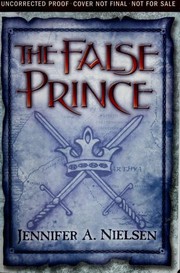
The False Prince
A nobleman buys four orphans and tells them only one will survive to impersonate the missing prince. The narrator, a defiant thief named Sage, has other plans.
2,044-word summary · 9 min read
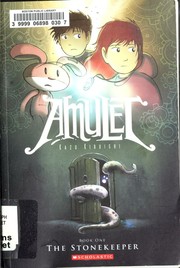
The Stonekeeper
After their father's death, Emily and Navin chase a monster into a hidden world to save their mother, and Emily's great-grandfather's amulet offers power at a…
2,753-word summary · 12 min read

Someone Like You
Halley and her best friend Scarlett face a summer of grief, a surprise pregnancy, and Halley's dangerous first romance in Sarah Dessen's 1998 young adult novel.
2,218-word summary · 10 min read
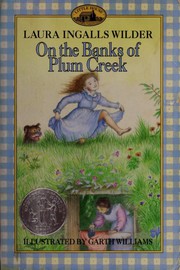
On the Banks of Plum Creek
The Ingalls family trades their horses for a dugout on Plum Creek and bets a single wheat harvest on a house above ground, in Wilder's fourth Little House book.
2,090-word summary · 9 min read
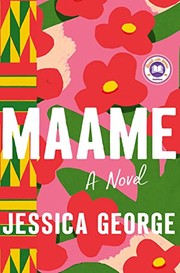
Maame
Maddie Wright, 25, has spent years as the responsible one in her Ghanaian British family, and the year she finally tries to live for herself is the year…
2,108-word summary · 9 min read
La Belle Sauvage
Philip Pullman's prequel to His Dark Materials follows eleven-year-old Malcolm Polstead as a secret message, a hunted baby, and the flood of the century carry…
2,530-word summary · 11 min read
Foster
A girl spends a summer with relatives on a Wexford farm and is cared for properly for the first time. A spare novella about family and what children notice…
2,043-word summary · 9 min read
Cold Sassy Tree
In 1906 Georgia, fourteen-year-old Will Tweedy watches his widowed grandfather marry a much younger woman three weeks after his grandmother's funeral.
2,154-word summary · 10 min read

Clap When You Land
Two half sisters, one in Sosúa and one in Queens, discover each other after their father dies in a plane crash, in Elizabeth Acevedo's novel in verse.
2,890-word summary · 13 min read

News of the World
Captain Kidd carries captive Johanna home across 1870 Texas.
2,571-word summary · 11 min read