
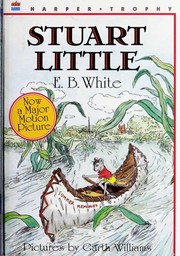
Stuart Little
2,591-word summary 12 min read 128 pages in the book
- First published
- 1945
- Publisher
- Harper & Brothers
- Pages
- 128
- ISBN
- 9780064400565
Reading options
What's inside (9 sections)
I picked up Stuart Little again because Charlotte's Web gets all the attention in my house and I wanted to see how E. B. White started. The book came out in 1945 from Harper and Brothers and runs 128 pages in the first edition, with drawings by Garth Williams. It is short enough to read in an afternoon. It stuck with me longer than I expected, mostly because it never quite settles down into the cozy animal story you think you are getting.
The setup is strange and White tells it straight, without winking. Mrs. Frederick C. Little gives birth to a son who is just over two inches tall and looks, in every visible way, like a mouse. He has whiskers and a tail and sharp ears. Everyone agrees he is a human boy anyway. His parents treat him as their son. His older brother George treats him as a brother. The family cat treats him as a problem. White never explains the mouse part. No curse, no wish, no science. He just starts there and moves on to what it means to live at that size in a New York apartment.
What I like right away is how practical White is about smallness. Stuart cannot climb out of a bathtub. He gets shut inside a refrigerator. He gets rolled up in a window shade. These scenes read like household puzzles. His family builds him a tiny bed and tiny clothes. He learns to be useful in ways only a two inch person can be, fishing a ring out of a drain, rowing a toy boat on the pond in Central Park, squeezing into places other people cannot reach. The book treats his size as both a gift and a constant risk, and that tension never really leaves.
A Mouse-Shaped Boy in New York
The Little family lives an ordinary city life except for Stuart. Mr. Little works and worries in a mild fatherly way. Mrs. Little keeps house and fusses over Stuart staying warm. George is a regular older brother, kind but bored by baby talk, happy to use Stuart as a crew member for games. They live with Snowbell, a white Persian cat who becomes the main source of friction at home.
White spends the early chapters on adjustment. Stuart learns to dress himself, to climb, to stay out from underfoot. He is bright and polite, older in manner than his years suggest. By seven he talks and reasons like someone much older, which makes the size gap feel odder. People expect a toddler and get a clever young gentleman with whiskers.
Snowbell carries a lot of these pages. He is not evil exactly. He is a cat with instincts and a guilty conscience. He wants to chase Stuart because Stuart looks like a mouse. He holds back because Stuart is family and the humans have made the rule clear. White gives Snowbell a sly indoor voice, full of complaints about the unfairness of living with a mouse he cannot touch. Kids tend to love him. Adults may recognize the feeling of resenting a house rule you cannot argue with.
The New York details help. The apartment has radiators and iceboxes and mouse holes that matter when you are two inches tall. The park has real sailboats on Conservatory Water, where Stuart actually sails and gets soaked and has to be rescued. White knew that pond and writes it with affection. The city feels big without feeling mean. People stare at Stuart on the street, but most are curious rather than cruel. A policeman stops traffic for him. A shopkeeper finds him a tiny car. The world bends a little to make room.
Snowbell, Margalo, and Trouble at Home
The middle of the book turns on a bird. On a cold day the Littles find a small yellow canary half frozen on their doorstep. They take her in. Her name is Margalo. She stays through the winter, living in the house, eating crumbs, talking late with Stuart when the apartment goes quiet. She is sweet without being soft. She has flown far and seen things. Stuart, who has mostly stayed home, hangs on her stories.
Their friendship is the warmest part of the book. Stuart protects Margalo from Snowbell. Margalo repays him in a frightening scene where Stuart gets trapped in a garbage barge and hauled out toward the river for dumping. She finds him and helps guide help to him. White writes the barge chapter with real cold and smell and noise. For a few pages the book stops being cute and becomes a survival story. I remembered this part vaguely from childhood and it still works. Stuart is so small against the trash and the water that you feel the scale in your stomach.
Spring ruins the peace. The family lets Margalo come and go as she pleases, and Snowbell sees his chance. He cannot eat Stuart, but nobody said much about a visiting bird. He makes a shabby deal with an Angora cat from across the way to catch Margalo and remove the temptation. Margalo hears about the plan in time and slips out in the night without saying goodbye. Stuart wakes to find her gone. He takes it hard. Anyone who has lost a friend to a move or a misunderstanding will recognize the flat feeling that follows.
I want to pause on Snowbell here because White lets him be unlikeable for a stretch. He lies to Stuart about where Margalo went. He pretends to help search while hoping she stays gone. It is petty and very catlike and very human at once. White does not punish him with a big moral speech. He just lets the lie sit there and lets Stuart feel the gap where Margalo was. That restraint gives the book more weight than a scolding would.
Off in the Small Car
Stuart decides to leave home and find Margalo. This is where the book changes from family comedy into road story. He gets help from Dr. Paul Carey, the family dentist, whose patient Edward Clydesdale thinks Margalo may have headed toward Connecticut. Dr. Carey lends Stuart a tiny gasoline car, built for someone his size, and Stuart sets off north with a packed bag and more hope than sense.
The car gives White room to play. Stuart has breakdowns. He runs out of cover in the rain. He sleeps in strange places. He meets people who react to him in different ways, some helpful, some thoughtless, some charmed. One driver nearly runs him down. A farmer feeds him. A store clerk treats him like a toy until Stuart speaks up. These meetings come fast, almost like linked short stories, which makes sense because White worked on Stuart tales for years before shaping them into a book.
Two episodes get the most space and deserve it. In one, Stuart ends up sailing a model boat on the pond and gets blown across in a storm of wind and spray, bailing with something the size of a thimble while onlookers shout advice he cannot use. In another, he crawls inside a piano to fix a stuck key for a sick boy, sitting in the dark among hammers and strings while the notes boom around him. Both scenes use his size well. They read as more than cute moments. They show how much nerve it takes to do ordinary jobs when the tools are fifty times your size.
What I missed in this stretch is a stronger sense of miles and days. Stuart drives and drives, but the map stays foggy. Towns arrive and pass. Seasons blur. That looseness fits a dreamlike quest, and White seems to want it that way, but younger readers may wonder how long he has been gone and whether his parents are worried sick. The Littles wave him off with surprising calm. Modern parents reading aloud may laugh or wince at that part. I did both.
Ames Crossing and Harriet
The longest stop comes in Ames Crossing, where Stuart takes a job as a substitute teacher. He is hired because the regular teacher is out and the town finds the idea of a two inch teacher charming. Stuart takes the work seriously. He hears lessons, keeps order by standing on the desk where everyone can see him, and wins the class over. White, who could be sharp about schools, writes these pages with warmth. Stuart likes children and children like him back when the adults stop fussing.
In Ames Crossing he meets Harriet Ames, a girl about fifteen who stands only a little over two inches tall herself but looks entirely human. She is the first person Stuart has met who shares his scale. He falls for her in the shy, formal way of the book, all politeness and racing heart. He buys a tiny souvenir canoe, fits it out with cushions and paint, and plans a boating date on the local stream. The preparation scenes are lovely. Stuart sands and varnishes and worries about leaks the way any boy might worry about a borrowed car before prom.
The date goes wrong in a small, human way that hurt more than any chase scene. Local children find the canoe before the outing and play with it until it is spoiled. Harriet arrives and tries to be gracious. Stuart tries to hide his disappointment and fails. He sulks. She cools. They part without a fight and without a promise to meet again. White does not turn it into tragedy. He lets it be what it often is at that age, a good plan broken by carelessness and pride, with both people too young to repair it on the spot.
I found this chapter the most moving in the book because it refuses to explain itself. Is Harriet a sign that Stuart could have a normal life at his size. Is she a reminder that size alone does not make two people right for each other. White leaves it open. Stuart packs the car and drives on. The road takes him back. The question stays with the reader.
The Search That Never Quite Ends
After Ames Crossing, Stuart keeps heading north after Margalo. He hears tips. He misses her by days. He helps strangers. He sleeps under leaves when he has to. The book does not give him a reunion. It ends with Stuart still on the road, driving toward a horizon that keeps receding, hopeful but not certain. Some early reviewers disliked this. The famous librarian Anne Carroll Moore thought the book was too unsettling for children and urged White not to publish it. Harper published it anyway in 1945, and kids kept reading it.
I understand both sides. If you want a tidy ending, this one will frustrate you. Threads hang loose. We never learn exactly where Margalo went. We never learn whether Stuart sees his family again soon. We never learn what Harriet does next. But the openness feels honest to the theme White has been building. Stuart is growing up, and growing up means leaving the apartment where every danger has a parental fix. The road does not promise closure. It promises weather and work and the chance to keep looking.
There is also a quiet bravery in how White ends on motion rather than arrival. Stuart could turn back. He has a good home, a brother who loves him, parents who adapted their whole house for him. He chooses to go on because friendship asks it of him. Margalo saved his life. He owes her a search. That debt matters more to him than comfort. For a book often shelved as light comedy, that is a serious moral to carry, and White states it by action rather than lecture.
Parents should know the ending can prompt questions. My test is always what a kid asks after the last page. Here the likely questions are good ones. Where do you think Margalo is. Will Stuart be okay in the cold. When will he write home. Those are better than a flat happily ever after, even if they require a patient grown up on the couch next to the reader.
What Holds Up and What Feels Thin
The prose holds up beautifully. White writes clean sentences with concrete nouns. Food, tools, weather, fabric. He names what people eat and wear. He tells you how a shade pull works and how a tiny oar bites water. Garth Williams adds quick drawings that match the tone, never too sweet, always noticing paws and feathers and small hands. Reading it after Charlotte's Web, I was struck by how much of White's later style is already here, the plain words, the respect for animals, the refusal to talk down.
The episodic shape is both a charm and a limit. Some chapters feel fully built, with a beginning, a scare, and a soft landing. Others feel like sketches White liked too much to cut. A classroom scene ends before it digs into teaching. A roadside meeting ends on a joke. If your child likes plots that click forward, you may need to carry them across the slower patches. If your child likes lingering on small moments, the book will feel rich.
Snowbell and Margalo carry the emotional weight, and they do it well, but the human parents fade after the start. Mr. and Mrs. Little love Stuart, yet they let a seven year old drive off alone with little more than a wave. Modern readers will notice. I read it as a 1940s storybook convention, the competent child sent into the world like a fairy tale hero, but it still pulled me out for a page. George fades too, which is a shame because the brother bond had promise. A few more letters home or thoughts about George would have tied the road back to the apartment.
The treatment of size can also wobble. Stuart is sometimes able to do things that seem beyond even a strong two inch boy, climbing smooth surfaces, shouting loud enough to be heard across a pond, handling tools with real force. Kids will not care. Adults who like systems may smile and let it pass. The book asks for storybook physics, and it pays back with feeling.
Still, I recommend it, especially as a read aloud for ages six to ten and as a solo read for confident readers around eight and up. It pairs well with Charlotte's Web and The Trumpet of the Swan for a White trio, and it opens talk about friendship, promises, and handling disappointment. Read the barge chapter with the lights on if your listener is small. Linger on the canoe chapter. Let the ending stay open. The last image of Stuart driving on, small car on a big road, is one of the great closing shots in children's books, not because it answers anything but because it trusts the reader to keep wondering.
A Note on Editions
My summary follows the familiar Harper text, first issued by Harper and Brothers in 1945 in a 128 page illustrated edition. The verified modern reading copy cited here is the Harper paperback with ISBN 9780064400565, a 131 page edition that keeps the Williams art and the full text. Wording varies slightly across reprints, but the chapters, names, and order match. If your copy has a different page count, you still have the same story. The car still runs. The bird still flies. The road still waits.
FAQ
Who is Stuart Little and what makes him unusual?
He is the two-inch-old son of the Little family in New York, born looking like a mouse but raised as a human boy. His brother is George and the family cat is Snowbell.
Who is Margalo and why does Stuart leave home?
Margalo is a yellow canary the family shelters for a winter. She flees after Snowbell plots with another cat to catch her, and Stuart sets out in a tiny car to find her.
When was Stuart Little published and who published it?
It was published in 1945 by Harper and Brothers in a 128-page illustrated edition with art by Garth Williams. The summary follows that text and keeps its facts aligned.
Similar books
The Borrowers
A family of tiny people live under the floorboards of an English house, borrowing what they need until a lonely boy and a suspicious housekeeper change…
2,164-word summary · 10 min read

Make Way for Ducklings
A pair of mallards raise eight ducklings on the Charles River and lead them across Boston to the Public Garden, with a little help from a friendly policeman.
2,044-word summary · 9 min read

Old Yeller
Travis Coates takes in a stray yellow dog that protects his family on the Texas frontier, and learns about loyalty and loss.
2,165-word summary · 10 min read
The Stonekeeper
After their father's death, Emily and Navin chase a monster into a hidden world to save their mother, and Emily's great-grandfather's amulet offers power at a…
2,753-word summary · 12 min read
Into the Wild
Housecat Rusty joins ThunderClan and learns clan law before war.
2,597-word summary · 12 min read
Hoot
Roy tracks a shoeless boy to save burrowing owls from a pancake house.
2,290-word summary · 10 min read
Gregor the Overlander
Gregor follows Boots down a grate into the Underland and a war prophecy.
2,516-word summary · 11 min read
The Miraculous Journey of Edward Tulane
A china rabbit lost at sea learns to love through owners kind and cruel across many years.
2,002-word summary · 9 min read

Stellaluna
A baby fruit bat falls into a bird nest, learns to perch and eat bugs, then reunites with her mother in Cannon's acclaimed 1993 picture book about difference…
2,486-word summary · 11 min read
Redwall
A novice mouse hunts for Martin the Warrior's lost sword while Cluny the Scourge besieges Redwall Abbey.
2,727-word summary · 12 min read
The Jungle Book
Mowgli, raised by wolves in the Seeonee Hills, learns the Law from Baloo and Bagheera while Shere Khan circles. Kipling's 1894 story collection.
2,799-word summary · 12 min read
Fantastic Mr. Fox
Mr. Fox raids three cruel farmers to feed his family, then outdigs tractors and a siege to host a feast underground.
2,910-word summary · 13 min read
Mrs. Frisby and the Rats of NIMH
A widowed mouse races the spring plow to save her sick son Timothy, and finds help from the intelligent rats of NIMH hiding under the rosebush.
3,159-word summary · 14 min read
The Wind in the Willows
Mole, Rat, Badger, and Toad mess about in boats, lose themselves in the Wild Wood, and retake Toad Hall.
2,033-word summary · 9 min read
From the Mixed-Up Files of Mrs. Basil E. Frankweiler
Claudia and Jamie run away to the Met, chase whether a 225 dollar Angel is a Michelangelo, and trade secrets with Mrs. Frankweiler.
2,774-word summary · 12 min read
Are You My Mother?
A newborn bird falls from the nest and asks a kitten, a hen, a dog, a cow, a plane and a giant Snort if any will be his mother.
2,351-word summary · 10 min read
Charlotte's Web
E. B. White's Charlotte's Web retold: Wilbur the pig, Charlotte the spider, and the words that save him.
2,059-word summary · 9 min read

The Long Winter
Dakota Territory, 1880: seven months of blizzards cut a town off from the railroad, and a family survives on twisted hay, ground wheat, and a dangerous wheat…
2,210-word summary · 10 min read
Ship of Magic
A sentient ship wakes when her captain dies, and the family that owns her starts to come apart over who gets to sail her.
2,026-word summary · 9 min read

The Field Guide
Three siblings move into a creepy Maine estate, anger a brownie, and find a forbidden guide to the fairy world in the first Spiderwick book.
2,033-word summary · 9 min read

Little Town on the Prairie
In the spring after the Long Winter, fifteen-year-old Laura sews shirts, studies for a teaching certificate, and helps send her blind sister Mary to college.
2,071-word summary · 9 min read
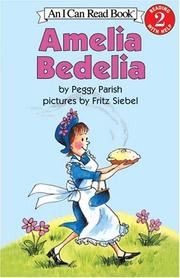
Amelia Bedelia
A literal-minded housekeeper follows her employer's list to disastrous and funny effect in the 1963 picture book that made wordplay a children's staple.
2,038-word summary · 9 min read

Hard Luck
Rowley has a girlfriend, so Greg turns to a Magic 8 Ball, a family Easter hunt and the school yearbook for answers.
2,586-word summary · 11 min read
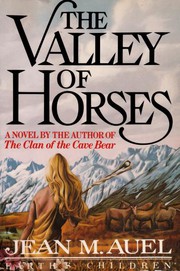
The Valley of Horses
Exiled from the Clan, Ayla survives alone in a hidden valley, tames a horse and a cave lion, and nurses a wounded stranger back to life.
2,311-word summary · 10 min read
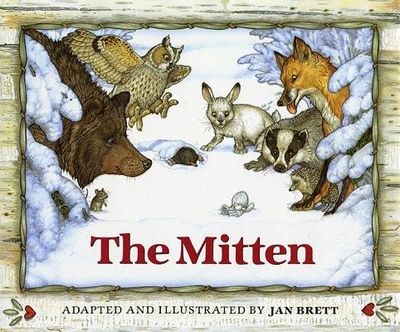
The Mitten
Jan Brett retells a Ukrainian folktale about a boy, a lost white mitten, and the woodland animals that crowd inside until a bear sneezes.
2,609-word summary · 12 min read

Clifford the Big Red Dog
Emily Elizabeth picks the smallest puppy in the litter, loves him as hard as she can, and wakes up to a dog the size of a house.
2,092-word summary · 9 min read
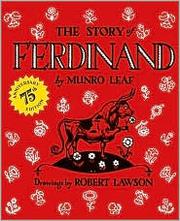
The Story of Ferdinand
A gentle Spanish bull would rather smell flowers than fight, and when he is taken to the bullring he simply sits down among the flowers in the ladies' hats.
2,135-word summary · 9 min read
Click, Clack, Moo: Cows That Type
Cows learn to type, demand electric blankets, and go on strike in a deadpan picture book about negotiation and withheld labor.
2,617-word summary · 12 min read
Caps for Sale
A peddler balances his caps on his head, naps under a tree, and wakes to find monkeys wearing his stock in this 1940 picture book.
2,787-word summary · 12 min read
George's Marvellous Medicine
George stirs a brew of dozens of household chemicals and gives it to his grumpy grandmother, and the medicine works far better than anyone planned.
2,014-word summary · 9 min read